

Institute for Philosophy
Impact
The Institute of Philosophy aims to demonstrate its social relevance through high-quality research, excellent teaching and a range of outreach activities. A few highlights:
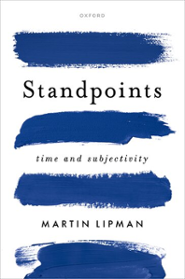
Book: Standpoints. Time and Subjectivity.
Many phenomena can only be understood from a particular perspective, without any single perspective claiming to hold the absolute truth. In 'Standpoints', Martin Lipman, a lecturer and philosopher, introduces an innovative philosophical framework in which time, consciousness and subjective experience are explained without granting the present or the individual a privileged position.
Blog: Secrecy, Democracy, Necessity
Transparency is regarded as a core value of democracy, but governments often shield their decision-making from public scrutiny. This blog by Dorota Mokrosinska, professor of practical philosophy, examines how the invocation of secrecy is justified, why confidentiality is so persistent, and what consequences this has for democratic oversight and political accountability.

Book: Oneindigheid. Een filosofische gids (Dutch)
Victor Gijsbers, a lecturer and philosopher, guides the reader through the most important questions concerning infinity in mathematics, nature, reality and human life. The infinite is endlessly fascinating. As finite beings, we will never be able to fully comprehend the infinite. Yet the subject keeps cropping up in philosophy – apparently, we cannot escape it either.

Book: Inertia, Resistance, Revolution
Why are people sometimes unable to change, even when they want to? Why is it so difficult to reform political institutions or to move away from outdated ways of thinking? In this book, Bart Zantvoort shows that we can better understand the phenomenon of resistance to change, both in individuals and in institutions, by returning to Hegel, one of the most influential philosophers on historical and political change.

Book: Ontveld denken (Dutch)
Susanna Lindberg, Professor of Continental Philosophy and Scientific Director of the Institute of Philosophy, identifies a tipping point: in a rapidly changing, technology-driven world, we are losing both our certainties and the language we use to make sense of those changes. She explores how globalisation, climate devastation and the crisis of knowledge are putting our world view under pressure — and what new perspectives this necessitates.
Interview: Susanna Lindberg met Garant
Due to the selected cookie settings, we cannot show this video here.
Watch the video on the original website or
Book: Introducing Chinese Philosophy. From the Warring States to the 21st Century
In this book, Douglas Berger, Professor of Comparative Philosophy, offers an accessible introduction to the key themes, thinkers and texts, philosophical schools of thought and profound insights of the Chinese philosophical tradition. It covers the development of Chinese thought from its foundations in the sixth and fifth centuries BC right up to contemporary philosophy.