
Joachim van Guyse
Assistant Professor
- Name
- Dr. J.F.R. van Guyse
- Telephone
- 071 5274314
- j.f.r.van.guyse@lacdr.leidenuniv.nl
- ORCID iD
- 0000-0001-5725-6531
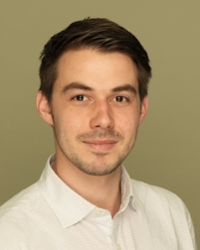
Joachim Van Guyse is an assistant professor at the Division of BioTherapeutics at the Leiden Academic Center for Drug Research
More information about Joachim van Guyse
PhD candidates


News
-
 How does interdisciplinary collaboration work in practice? Three takeaways for teachers
 -
 IACA symposium honours the legacy of Dr Andrzej T. Antczak
 -
 House of Orange reaped benefits of colonialism but rarely shaped it
 -
 Clodagh Murphy in Smithsonian magazine: ‘Emotion in Elizabeth I’s correspondence often carefully constructed by her secretaries’
 -
 Andrew Gawthorpe on France24: ‘Discussions with the CIA director may be more discreet’
 -
 Languages and cultures alive and thriving at sold-out festival
 -
 Elizabeth den Hartog on The Conversation: ‘Buildings on the Bayeux tapestry give an idea of 11th-century built environment’
 -
 Florian Schneider on BBC Afrique: ‘Renewed interest in Mao not simply a matter of nostalgia’
 -
 Pro wants to remove abortion from Dutch Criminal Code
 -
 Are you balanced bilingual? It comes at a cost to emotional regulation (but don’t worry)
 -
 The ocean as a medicine cabinet: Leiden researchers search for useful microbes
 -
 Fundings for research into Parkinson's disease and sustainable solutions inspired by nature
 -
 Mariana Françozo appointed Professor of Museums, Collections and Society
 -
 A first look at International Diplomacy in The Hague
 -
 Language shapes your view of the world: ‘Mountains can lead to more references to height in your language’
 -
 New research on the menopause and MS raises awareness of women’s health
 -
 Renewal of the UNESCO Chair on Diversity and Inclusion in Global Science
 -
 Ivo van Vulpen in Trouw: ‘Bringing the worlds of the humanities and sciences closer together’
 -
 Professor Eiko Fried wants to diagnose mental disorders in a radically different way
 -
 Law and empirical research: how does the law actually work in practice?
 -
 UN under pressure, but indispensable: reform is needed
 -
 Video podcast: colorful travel guides and alluring destinations
 -
 The immune system’s key role in cardiovascular disease: Leiden researchers explore what happens inside artery walls
 -
 Forbidden protection: amulets in early Christianity
 -
 Huizinga Lecture: The Right to Wonder
 -
 Recovery after intimate partner violence: new study reveals what works
 -
 How many animals can you capture on camera? Take the challenge with the new Hortus game
 -
 Call for Papers: Literary Topographies: Storied Landscapes of the Premodern Muslim World c. 650-1650 CE
 -
 Implications of US sanctions for the ICC
 -
 Teun Schneiders, the new Den Tonkelaar: ‘I have a great love for the history of Leiden’
 -
 Rita de Sousa e Silva in The Conversation: local residents help nature flourish around street trees
 -
 From law student to director of Rituals in China
 -
 Six myths about the EU AI Act debunked
 -
 A first for the Netherlands: Endowed chair International Child Abduction
 -
 Podcasts to help you unwind after 3 October
 -
 Leiden University launches annual series of lectures on Asia
 -
 Rijn Vogelaar’s PhD research on enthusiasm featured in Psychology Today
 -
 Should the International Law Commission take international organizations more seriously?
 -
 Who is responsible for limiting global warming to 1.5 degrees?
 -
 Caspar Jacobs investigates what physical theories actually tell us about the world
 -
 Research Public Administration at Leiden University among world’s best
 -
 ‘Domestic violence in particular is something we should be treating in a more integrated way'
 -
 Weekend of Science: discover how science works in Leiden and The Hague
 -
 Why returning rejected asylum seekers is difficult
 -
 25 Years of the ‘War on Terror’
 -
 In memoriam Frank Israel (1946 – 2026)
 -
 Andrew Gawthorpe on NBC News: ‘Trading stop with Iran would damage Moscow’s credibility’
 -
 Andrew Gawthorpe on NPR: ‘Iranian government is already one of the most heavily sanctioned in the world’
 -
 Andrew Gawthorpe on Time: ‘Burnham needs to appear like a strong leader’
 -
Andrew Gawthorpe on France24: ‘The Trump administration is acting as a mouthpiece for the American business community’
-
 Gerrit-Jan Zwenne: ‘The problem is not the GDPR, but the lack of knowledge about it’
 -
 Can AI build a beautiful city in Minecraft? These Leiden students did it better
 -
 Daniel Pantoja wins Cardinal Mercier Prize
 -
 In Memoriam: Vojtech Šimáček
 -
 Research into Roman board game nominated for ‘Research of the Year’
 -
 Universities strengthen research collaboration with Ministry of Defence
 -
 Rector Sarah de Rijcke: academic freedom makes reliable knowledge possible
 -
 How bacterial breathing could contribute to sustainable energy and new antibiotics
 -
 New members of Leiden Teachers’ Academy dedicated to educational innovation
 -
 Nils Pauliks in The Conversation: e-waste could help secure Europe’s supply of critical materials
 -
 No holds barred? New bill gives Dutch intelligence services more leeway
 -
 Prinsjesdag: who will foot the bill?
 -
FGGA researchers spotlighted in The Conversation
-
 Podcast: The Science of Breathing
 -
 Kathleen Gregory joins Young Academy Leiden
 -
 From doorstep to dashboard: how neighbourhood police officers use technology
 -
 Bart Custers: 'Don't assume AI will deliver savings straight away'
 -
 Japan Through the Arts - The Reading List
 -
 A degree 36 years later: ‘It’s never too late to study’
 -
 European scientists sign open letter on relaxation of pesticide regulations
 -
 Summer School Shanghai: a month immersed in the Chinese legal system
 -
 Victim research: helping a friend or family member in an unsafe relationship
 -
 A new perspective on cancer: the power of the immune system
 -
 From bystander to upstander: the role of men in street harassment
 -
 Anthropologist Tanja Ahlin on The Conversation on "digital addiction"
 -
 Godfrey Odongo Appointed Honorary Chair for Children’s Rights 2026/2027
 -
 More speed, more power… less energy? This is how researchers are reducing the energy consumption of computers
 -
 Contacts between Early Farmers and Hunter-Gatherers Explored Through Rubicon Grant
 -
 ‘Young Academy Leiden is an incredibly diverse group, and that’s what makes it strong’
 -
 Not all roads lead to Rome, researchers conclude in Nature
 -
 Ancient trees reveal how the climate and landscape changed
 -
 Arianna Canzi: ‘The Dutch openness and directness really appealed to me’
 -
 Joost Backer: ‘The International Studies programme was full of lovely people to get to know’
 -
 Centuries-old Leiden songbook republished: ‘You’re giving people their city back’
 -
 From Ukraine to Afghanistan: What NATO can learn from warnings
 -
 What if you only see part of a network? And how do you spot meaningful connections?
 -
 We should evaluate medical interventions based on their real health benefits
 -
 New genetic toolkit opens the door to undiscovered antibiotics
 -
 From the defence bill to Box 3: an historic Prinsjesdag
 -
 From Egypt to Panama: Erasmus+ International Credit Mobility grants awarded
 -
 Symposium Taiwan: Island of Diversity
 -
 Crystal Ennis on New Arab: Trump’s threat to Oman signals more than the end of US diplomacy
 -
Clodagh Murphy on The Conversation: ‘Elizabeth I’s emotion in her letters was carefully constructed by secretaries’
-
 Louis Sicking in Dag og tid on the legacy of Archbishop Olav Engelbrektsson
 -
 Anne-Isabelle Richard on thehig.eu: ‘European countries have supported European cooperation out of direct self-interest’
 -
 New tool reveals why no two cities’ food emissions look the same
 -
LDE-Nairobi Interdisciplinary Master's Thesis Lab
-
 New exhibition sheds light on Jerusalem’s rich history
 -
 Worlds on a string: how beads in the sixth century travelled the world
 -
 Leiden Law School at the ELU-S Annual Conference in Lisbon
Joachim F. R. Van Guyse studied Chemistry at Ghent University in Belgium. After graduating in 2014, he pursued a Ph.D. degree in Chemistry under the supervision of Prof. Richard Hoogenboom at Ghent University, where his work focused primarily on the development of synthetic methodologies to obtain new functional poly(2-oxazoline) and poly(acrylamide)-based materials with biomedical potential, in addition to the development of supramolecular materials.
After obtaining his Ph.D. in 2019, he joined the group of Prof. Kazunori Kataoka at the Innovation Center of NanoMedicine (ICONM) in Kawasaki, Japan, where he developed poly(2-oxazoline)s block-copolypeptides for biomedical applications, more specifically for promoting therapeutic efficacy and/or gene delivery. In 2020, he was awarded a post-doctoral fellowship from the Japan Society for the Promotion of Science (JSPS) for the development of polymer-micelle carriers for mRNA delivery.
In 2022, he was appointed as assistant professor at Leiden university, where his research focusses on the development of polymers for the delivery of biotherapeutics. So far, Joachim Van Guyse has contributed over 30 research papers, book chapters and patents covering a broad range of topics, including polymer chemistry, supramolecular chemistry, surface functionalization and nanomedicine.
Assistant Professor
- LACDR
- Divisie Biotherapeutics