
Leiden University Centre for Digital Humanities
Education
LUCDH are delighted to offer students of the Humanities a range of courses in the Digital Humanities and Cultural Analytics minor to develop their digital skills and critical thinking.
Digital Humanities and Cultural Analytics Minor Sept-Dec 2026 Semester
The Digital Humanities and Cultural Analytics minor will take place in the first semester (15 ECs in Block 1 and 15 ECs in Block 2) of the new 2026 Academic year (starting September 2026) with the following courses:
Hacking the Humanities: Introduction to Computational Thinking and Analysis (10 EC, Block 1, 2)
Digital texts, from social media posts and online discussions to news articles and historical documents, have become an important source for research in the humanities. This course introduces students to computational thinking and cultural analytics, focusing on how digital methods can be used to analyze large collections of texts.
Students will learn how to use the Python programming language to explore and analyze textual data. Through practical exercises, they will work with methods from text mining, social media analysis, and computational discourse analysis to identify patterns, themes, and trends in digital texts. The course emphasizes hands-on learning and demonstrates how computational approaches can support research in fields such as cultural studies, linguistics, history, and media studies.
No prior programming experience is required.
The Technologies of Digital Culture (5 EC, Block 1)
In today's world, we experience culture—books, films, music, and historical documents—mostly through digital platforms. But how do these materials get online, what happens to them in the process, and how does digitization change our understanding of them? This course introduces students to the technologies that shape digital culture, with a focus on text. You'll explore how physical texts are transformed into digital objects, how computers can "read" printed and handwritten materials, and how we can organize, annotate, and visualize cultural data.
Through hands-on projects, you'll gain practical experience in digitizing, describing, and presenting texts using accessible tools and methods. The course offers a thorough understanding of the processes behind the digital culture you encounter every day and shows how texts change when represented digitally. The standards and software you'll use are widely employed in galleries, museums, archives, publishing, and research, making the course useful for anyone considering work in these fields.
Digital Media, Society and Culture (5 EC, Block 1)
What happens when I "google" something? How do the things I post on social media reflect and shape my own networks and identity? Do we control digital technologies or do they control us? How did we even get to today's digital world? How can I leverage digital media and technologies as a positive force for science, society, and my own personal life?
In this course we will explore these and other major questions and debates surrounding the digital transformation of our societies and cultures together. Topics that will be covered in this class include an in-depth look at the history of computing, search technologies, social media, as well as key concepts such as virtual worlds, cyborgs, online economies, and digital entertainment. To do so, we will tap into a rich variety of established and new ideas and readings at the intersections of the human, social, and computational sciences.
Cultural Analytics (5 EC, Block 2)
This course is all about finding and working with culture, digitally. In Cultural Analytics, you will apply your newly developed knowledge of Python to cultural data—for example the kinds of datasets that cultural institutions such as galleries, libraries, and museums make available to help us better understand their collections, data from other sources such as Spotify, Netflix or social media, and other humanities data such as historical statistics. For example, you might visualize changing patterns in the Museum of Modern Art's collections, explore how tastes are shaped through Netflix recommendations, or build an interactive map of transatlantic slave voyages from the seventeenth century.
In practical terms, you will build on your Python skills and dive deeper into how the language can be used to work with cultural and humanities data. We will use the Python add‑on pandas to develop core techniques for cleaning, filtering, and merging data in order to analyse and visualize it effectively. You will produce a professional-looking report as your final project. The course will be supported by an interactive course book.
Capstone Course: Special Topics in Digital Humanities and Cultural Analytics (5 EC, Block 2)
In this course, students will deepen their understanding of core problems in digital humanities and gain further experience in one or more of the methodologies learned in the core courses through the development of a digital project.
For inspiration for the type of project you can develop, take a look at the posters DH Minor students have created, published on our dedicated Special Topics website.
With the help of the instructors, students will work on a digital humanities project from start to finish. They will choose roles depending on their interests and abilities, identify relevant literature, collect data, choose appropriate methods, analyse/visualize data and present the results.
Enrollment takes place from 19 May via EduXchange.
Questions? Contact the study coordinator of the DH&CA minor: stuco-digitalhumanities@hum.leidenuniv.nl
-
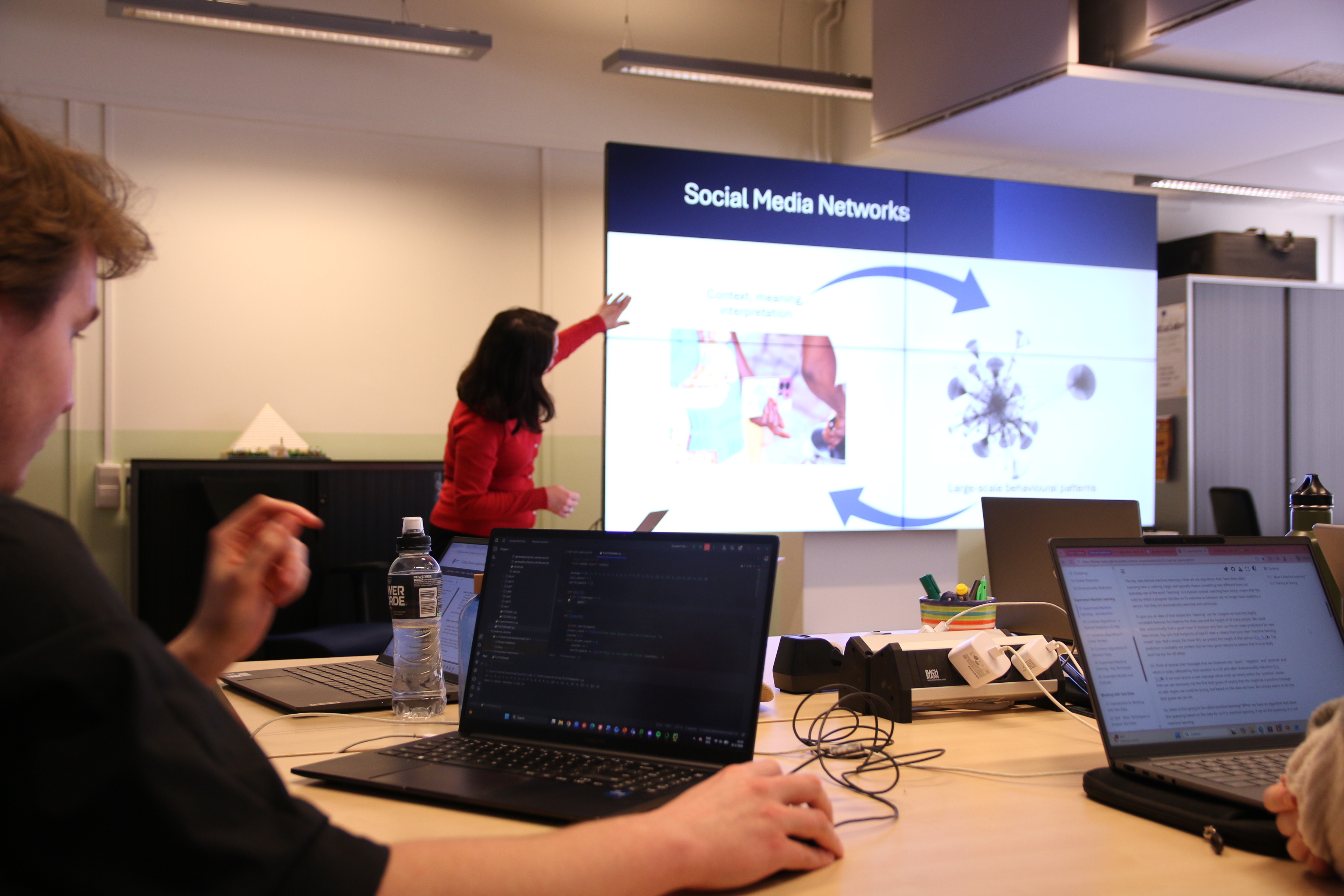
Minor Students in class discussing Social Media data -
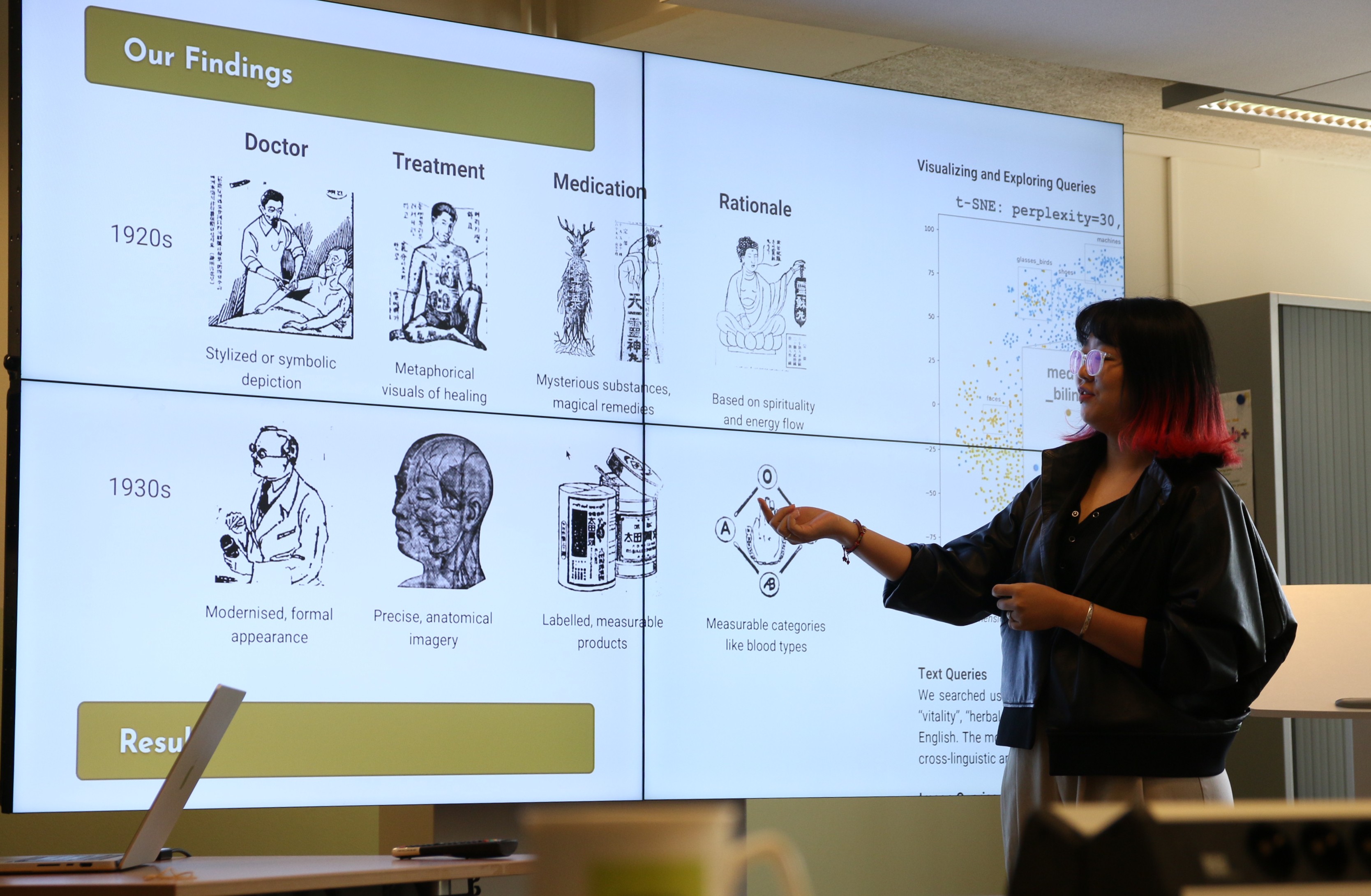
Student presenting final project in the Special Topics course -
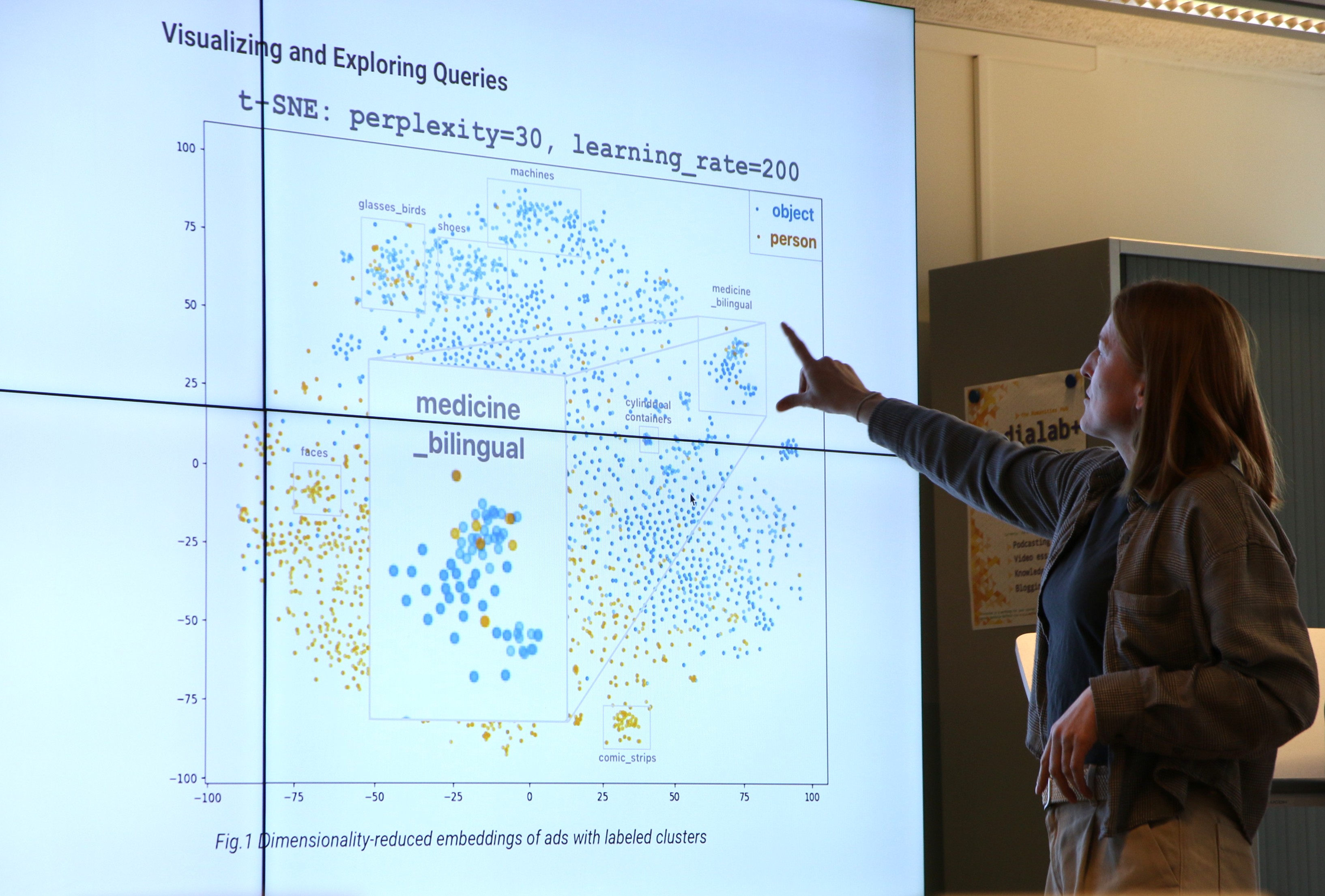
Student presenting final project in the Special Topics course -
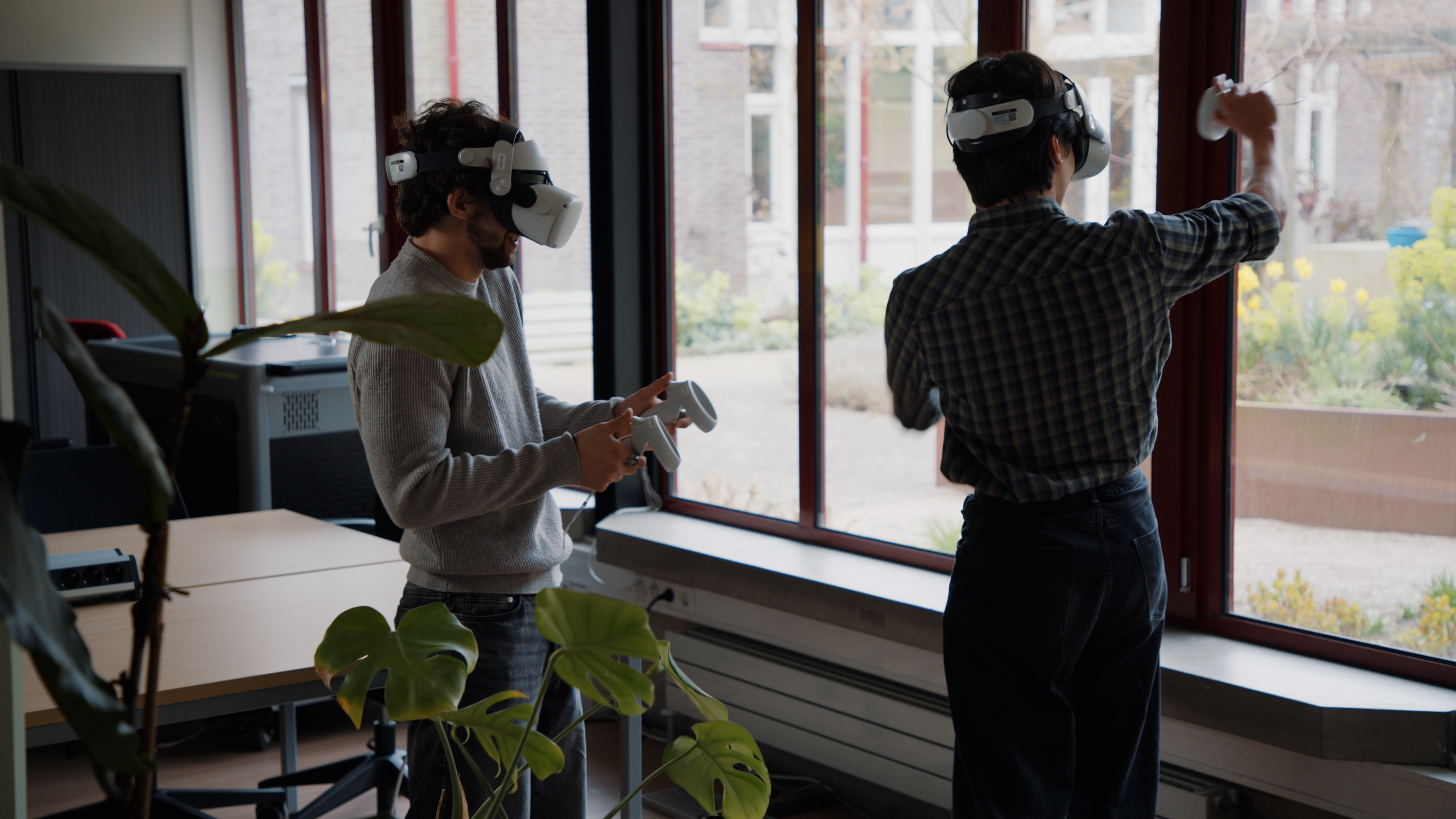
Students testing out VR headsets -
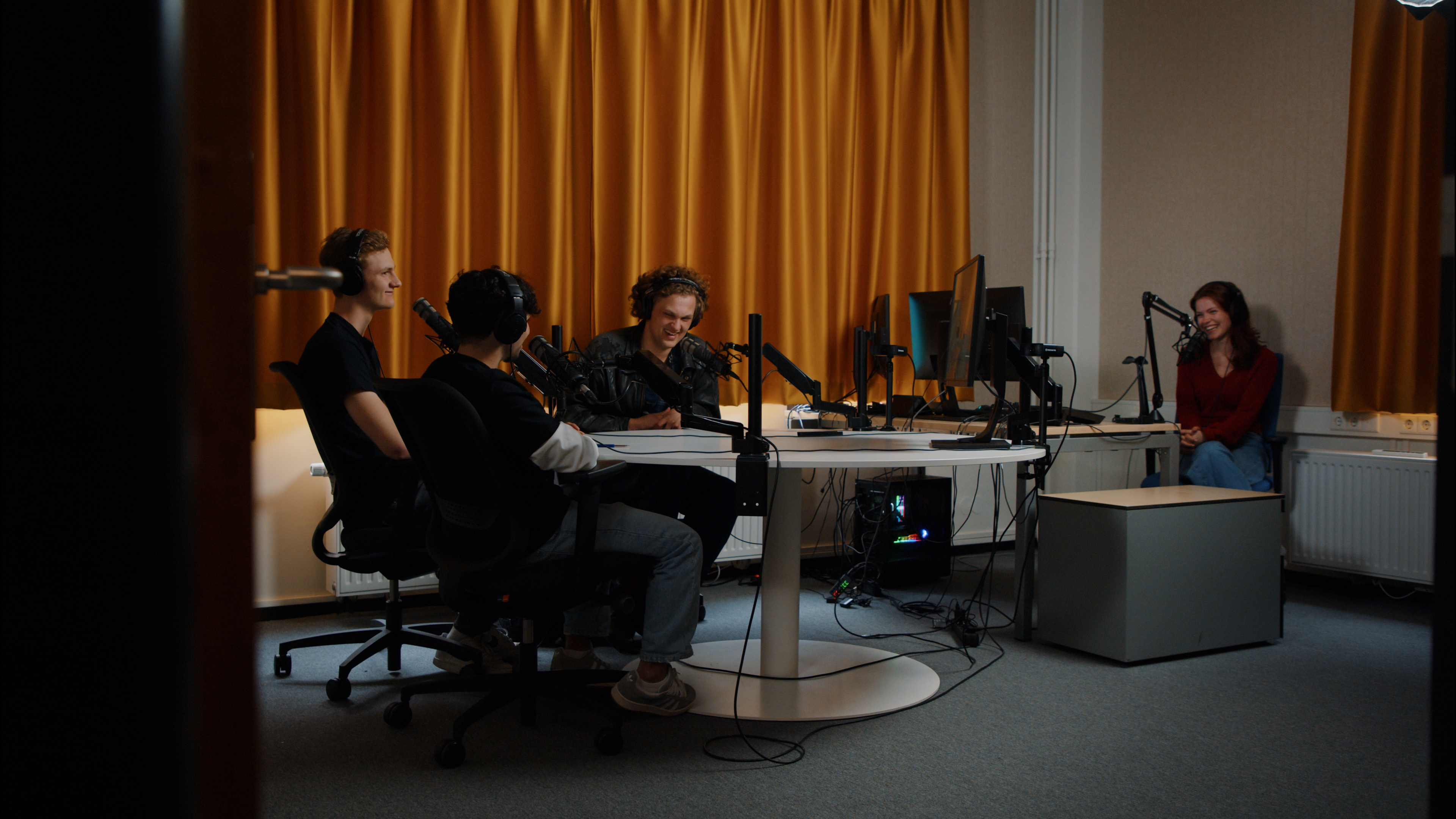
Students recording in the Podcast Studio -
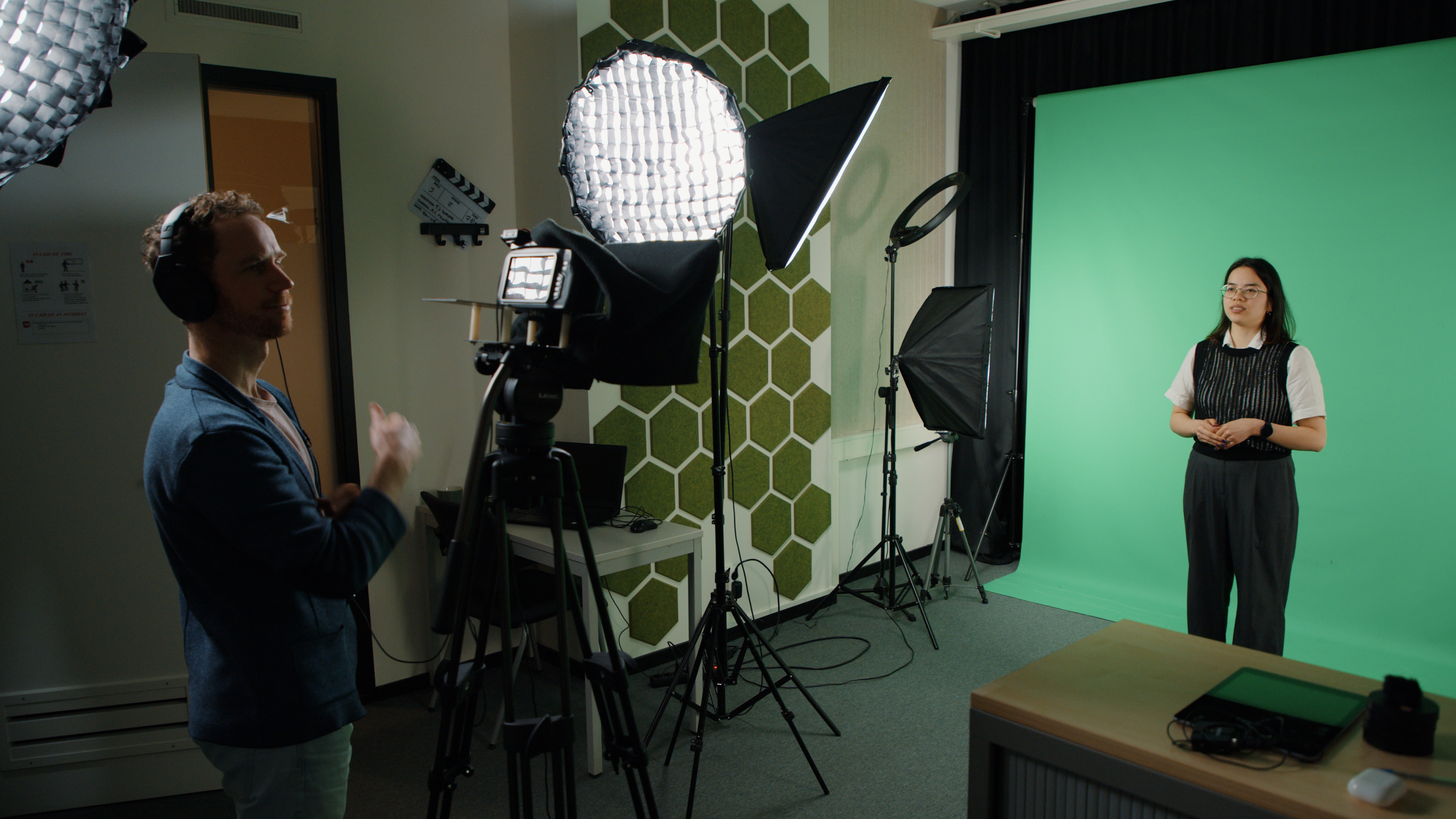
Test recording in film studio
Elective Courses 2026
LUCDH offers five elective courses to improve your practical skills and thinking about digital tools and media. Topics range from statistics and visualisation to critical thinking about the role of digital technologies.
These courses are open and useful for all students of the Humanities.
- See our Electives 2026