
Scientists and journalists in dialogue: What should we do about Trump?
Expert meeting
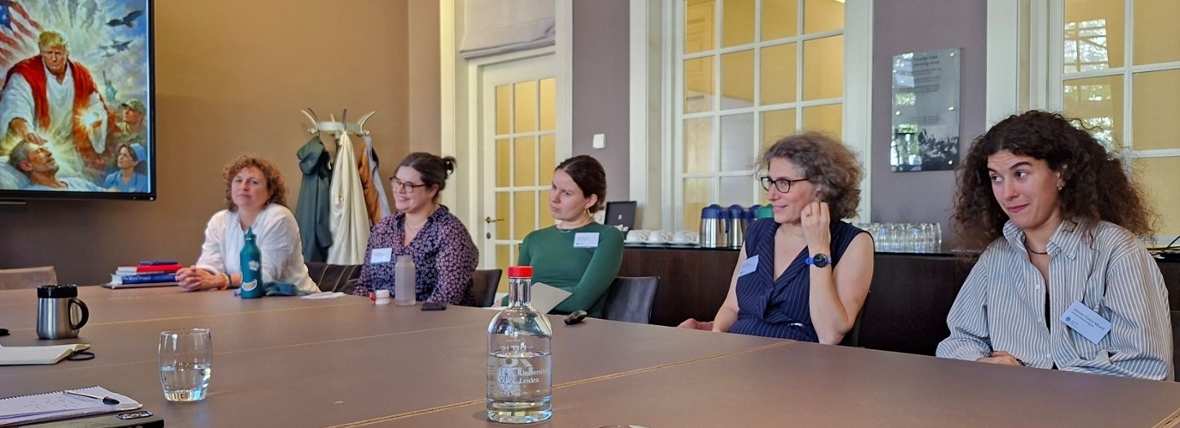
Journalists and FGW researchers gathered at the Academy Building on Monday 5 October. During a round-table discussion, they sought an answer to the question of how to maintain control over their coverage of Trump during the upcoming mid-term elections. ‘Realise that what might seem funny could cost people their lives.’
Ever since Donald Trump became President of the United States, journalists have found themselves caught between a rock and a hard place. When they repeat his statements, they help to spread disinformation and, at times, facilitate incitement. At the same time, you cannot simply ignore the President of the United States. ‘We used to solve that by fact-checking,’ says Trouw’s editor-in-chief Wendelmoet Boersema. ‘That hardly has any effect anymore: our own readership might still read those fact-checks, but they were already anti-Trump anyway. Beyond that, it no longer works.’
‘Focus on the consequences’
A different strategy is therefore needed, as the FGW researchers also note; they are regularly approached to comment on Trump’s bizarre statements and actions. ‘I was recently phoned and asked what the Pope thought of Trump comparing himself to Jesus,’ says Manon Portos Minetti. ‘I didn’t know that, because I don’t know him.’ Like many of her colleagues, she would prefer to see a different kind of reporting. ‘Trump’s bizarre actions may seem funny, but his anti-trans policies cost lives. It would be good if journalism focused more on those kinds of serious consequences.’
NOS editor Robert Chesal agrees with her. ‘We used to distinguish between what someone said and what someone did. That distinction has become somewhat blurred over time, but it’s good to be more aware of it again when it comes to Trump.’
However, there is no completely watertight solution when dealing with a president who turns his Truth Social posts into executive orders at lightning speed. During the two-hour discussion, his ‘game’, as Sara Polak describes it, emerges as a many-headed monster – one that will no doubt be the subject of lively discussion over drinks afterwards.