Ethiopia
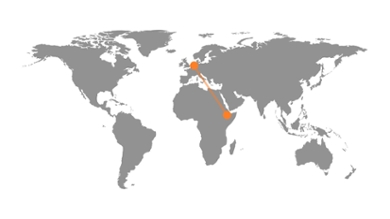
This is an Erasmus+ International Credit Mobility project of Leiden University’s Faculty of Medicine with Haramaya University in Ethiopia.
Types of mobility:
|
Project duration:
|

"I am very happy with the experience, and I encourage continuing this initiative while engaging even more students in the program."
Saba Hailu, teacher at HU
About the project
With support from Erasmus+ ICM, Haramaya University and Leiden University Medical Center (LUMC) have established a promising academic partnership aimed at strengthening research and capacity in maternal and neonatal health. Through this collaboration, Haramaya University trainees and staff, including five PhD candidates, have been hosted at LUMC. Supported by Erasmus+ mobilities for both students and staff, this pilot initiative represents a key step toward improving the early identification and prevention of maternal and child health including Hemolytic Disease of the Fetus and Newborn (HDFN) in Ethiopia, emphasizing community engagement, simple diagnostics, and implementation-focused research.
Phase II: AFRICARhE Clinical Study on Rh Disease
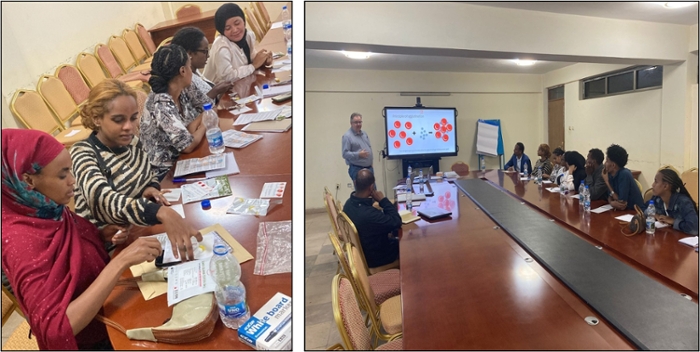
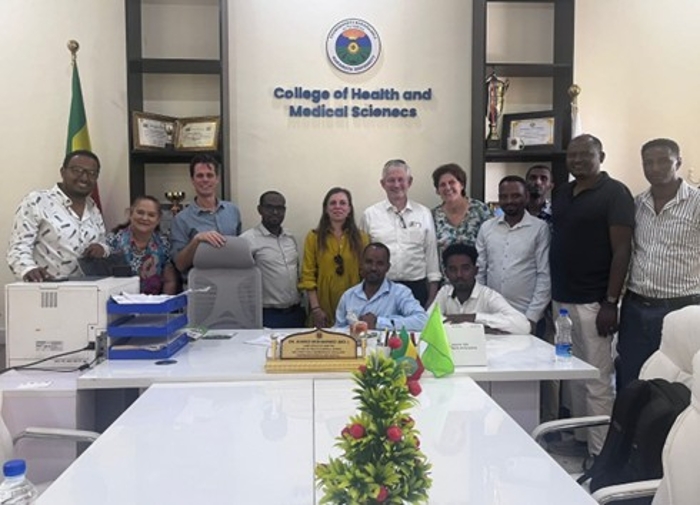
In August 2025, the AFRICARhE team in Ethiopia successfully conducted immunohematology capacity-building training and field research assistant training for the prospective study on HDFN. The training took place at the College of Health and Medical Sciences, Haramaya University, Harar, Ethiopia. The study aims to screen approximately 10,000 pregnant women during their first antenatal care visit for their blood type. Women identified as RhD-negative will be included in the study, with participant enrollment expected to continue throughout 2026. The project represents a major milestone in building local capacity for HDFN prevention and research in Ethiopia.
This digital project dossier showcases some of the major results of the Erasmus+ ICM collaboration between Leiden University and Haramaya University.
Read more about the drafting of the ICM application with HU
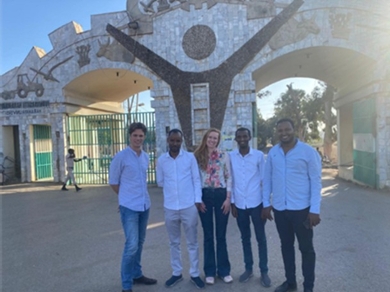
In January 2023, during a visit by Prof. Dr. Thomas van den Akker, accompanied by Suze Kruisheer, Lead LUMC Global, a draft Erasmus+ ICM application was jointly developed by the LUMC delegation and their Ethiopian partners. This collaboration included the two LUMC Global PhD fellows, Sagni Girma and Mohammed Yuya. After the proposal was awarded in Summer 2023, the projects led by the fellows and their LUMC peers received a significant boost, as the programme enabled equal opportunities for international mobility and close collaboration on joint research and educational initiatives.
-
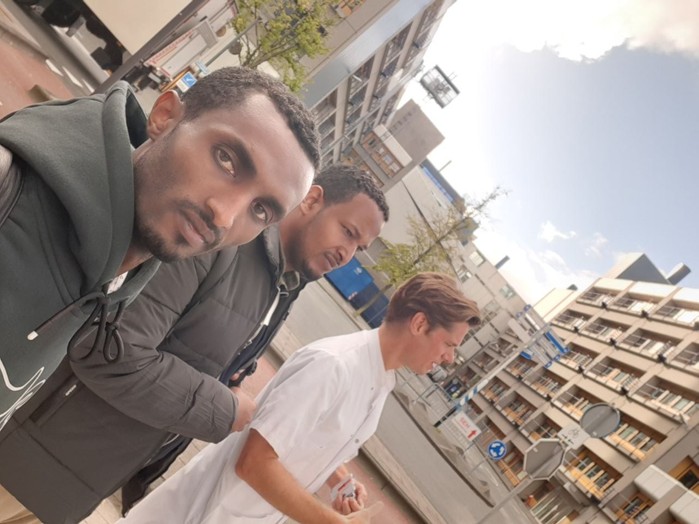
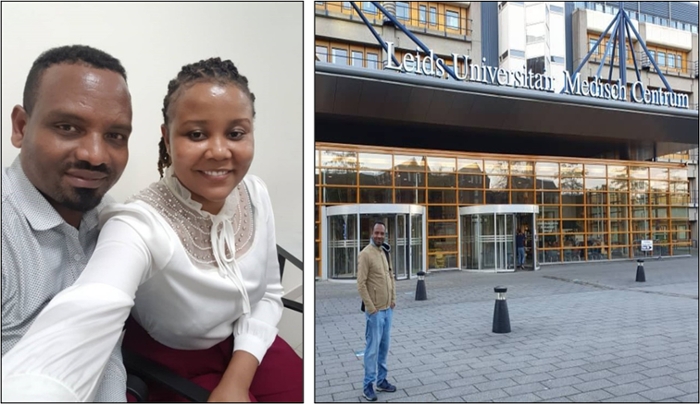
Sagni Girma and Mohammed Yuya, the first batch of LUMC Global PhD candidates from Haramaya University visiting LUMC with their promotor Prof Thomas van den Akker. -
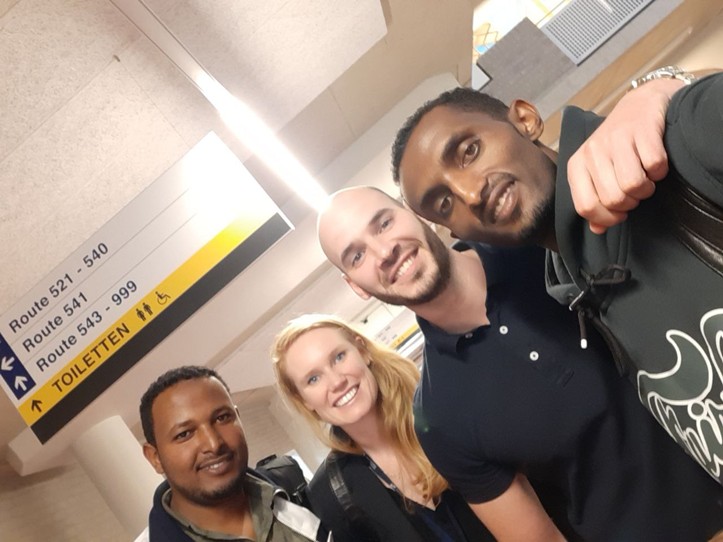
Sagni, and Mohammed meeting with LUMC Global staff Suze and Eoin at the LUMC.
"I participated in training courses, workshops, heard from peers and colleagues, and shared my experiences, and initiated networking with people from across the globe."
Sagni Girma Fage, HU
Establishment of the EthOSS project
In collaboration with Professor Marian Knight (University of Oxford), Prof. Dr. Thomas van den Akker (LUMC) and Dr. Abera Tura (HU), the Ethiopian Obstetric Surveillance System (EthOSS) Project was established in 2021 at a consortium of 13 public hospitals in eastern Ethiopia. The aim is to monitor severe pregnancy related complications and maternal deaths. EthOSS was funded by the Medical Research Council (MRC) in the UK and is supported with Erasmus+ ICM mobilities.
In a one-year period, EthOSS studied 2,043 severe obstetric complications and 70 facility-based maternal deaths from 38,782 live births in the 13 included hospitals. It has also established a confidential enquiry committee and piloted regional confidential enquiry into maternal deaths.
Read more about EthOSS
Details of EthOSS establishment and the findings were published:
EthOSS has laid a foundation to establish and strengthen the collaboration between HU, LUMC and University of Oxford. As such, it later led to a Memorandum of Understanding (MoU) between HU and LUMC Global which was immediately followed by a staff capacity building with a scholarship and admission of the first two PhD students (Sagni Girma and Mohammed Yuya) at LUMC in 2022 being jointly supervised by Prof. Dr. Thomas van den Akker (LUMC), Professor Marian Knight (University of Oxford), and Dr. Abera Tura (HU). The research publication that emerged from these LUMC Global PhD students' work can be found below.
The PartoMa Project
The PartoMa project, funded by the Laerdal Foundation and supported with Erasmus+ ICM mobility funding, aims to improve the quality of intrapartum care through the co-creation of context-specific clinical guidelines and low-dose, high-frequency training (the PartoMa approach). This approach was expanded from Tanzania to Ethiopia in 2023, and was embedded in the ongoing Ethiopian Obstetric Surveillance System (EthOSS) project.
Under this project, Mr. Habtamu Bekele from Haramaya University was admitted as a PhD candidate at LUMC.
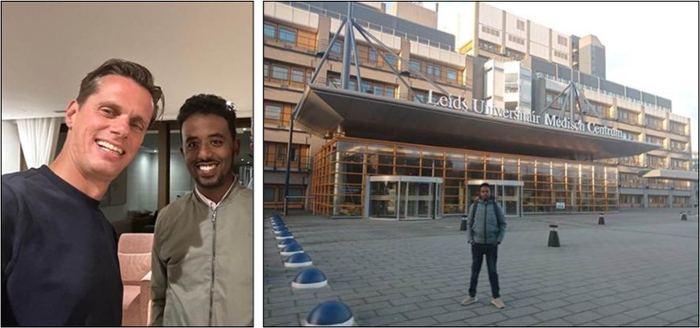
Read more about PartoMa
The PartoMa project is led by Dr. Abera Kenay Tura (HU), Prof. Dr. Thomas van den Akker (LUMC), Prof. Jos van Roosmalen (LUMC), Dr. Nanna Maaløe (University of Copenhagen), and Dr. Natasha Housseine (Aga Kahn University/ University of Copenhagen).
The PartoMa-Ethiopia study has four phases:
- A mixed-methods baseline situational analysis of current intrapartum practice and birth outcomes, clinical challenges and current CPG use;
- co-creation of context-specific CPGs, which is based on
- the Tanzanian PartoMa CPGs,
- the situational analysis, and
- focus group discussions with birth attendants, local health managers and women;
- pilot implementation combined with a mixed-method evaluation of the adapted PartoMa intervention in two of the hospitals; and
- analysis of lessons learned from intercountry adaptation of the PartoMa intervention.
To date, several activities have been completed, and the co-creation of context-specific clinical guidelines is in its final stage. To strengthen project outcomes, the PartoMa team in Tanzania was invited to share their experience.
AFRICARhE and the hidden burden of Rh disease in Ethiopia
The AFRICARhE-Ethiopia project aims to assess the burden of Hemolytic Disease of the Fetus and Newborn (HDFN) and introduce context-specific interventions in eastern Ethiopia. The long-term vision is to establish a strong evidence base that will serve as the foundation for implementing nationwide screening and prevention programs for HDFN in Ethiopia and across Africa.
To achieve this, the project focuses on robust research to determine the true burden of Rh disease. This includes retrospective studies, systematic reviews, landscape analyses, and prospective cohort studies. In parallel, the project promotes awareness creation at multiple levels, engaging the WHO, national governments, professional societies, national blood banks, and patient communities to elevate HDFN as a public health priority.
The project also addresses the 'Anti-D divide' by working toward sustainable solutions for equitable access to Anti-D prophylaxis. This includes collaboration with the International Society of Blood Transfusion (ISBT), the WHO, and the National Bioproducts Institute of South Africa (NBI SA) to explore production and supply strategies within Africa.
Under this project, Mr. Assefa Desalew from Haramaya University was admitted as a PhD candidate at LUMC. He is supervised by Dr. Abera Kenay Tura (HU), Dr. Tadesse Gure (HU), Dr. Joanne Verweij (LUMC), Prof. Ellen van der Schoot (Sanquin) and Prof. Thomas van den Akker (LUMC).
Read more about AFRICARhE-Ethiopia
The AFRICARhE-Ethiopia study has two phases:
Phase I
A retrospective cohort study regarding RhD alloimmunization in pregnancy and hemolytic disease of the fetus and newborn in Africa and adverse perinatal outcomes as proxy for HDFN among pregnant women.
Phase II
- Prospective clinical study to find out the prevalence of anti-Rh(D) alloantibodies and associated perinatal outcomes among pregnant women in eastern Ethiopia;
- Assessment of knowledge and management practices of obstetric care providers regarding RhD alloimmunization and HDFN;
- Mixed-methods study exploring knowledge, experiences, and challenges faced by Rh-negative women in eastern Ethiopia.
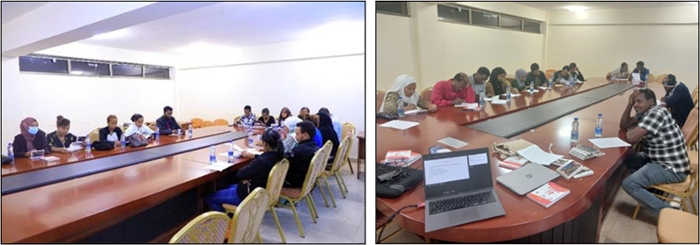
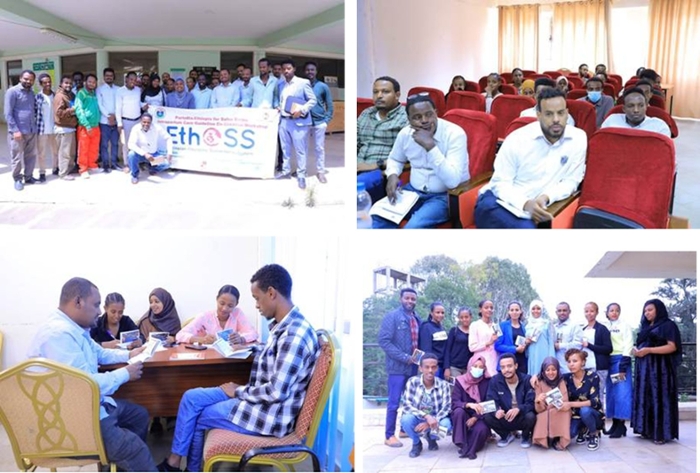
Erasmus+ ICM has allowed the PhD candidate of AFRICARhE Ethiopia to reside in the Netherlands for 3 months to follow courses, meet stakeholders and for supervision. In addition, AFRICARhE Ethiopia organized a stakeholders meeting to discuss the status of HDFN screening, prevention and management, in which Dutch LUMC colleagues participated. Last but not least, a train-the-trainers workshop was organized focusing on HDFN clinical management, laboratory skills, and data collection skills.
Rh disease in Africa: New evidence, major gaps
Congratulations to our PhD candidates Mr. Assefa Desalew and Dr. Rafiki Mjema for AFRICARhE’s published systematic review on Rh Disease in Africa. The publication highlights lack of data from African countries on the burden of RhD alloimmunization and Rh Disease in Africa.
- Publication: Hemolytic disease of the fetus and newborn
With support from Erasmus+, Dr. Mjema and Mr. Desalew spent three months in the Netherlands in 2025 to work on the systematic review together with their supervisors and mentors Ellen van der Schoot, Joanne Verweij, Henk Schonewille, Abera Kenay Tura, Tadesse Gure, Thomas van den Akker, Derek de Winter, Jeremia J Pyuza and Steven Spitalnik.
Preventing and managing Rh disease
An AFRICARhE-Ethiopia stakeholder meeting conducted on 8 April 2024 in Ethiopia addressed the challenges and opportunities in preventing and managing Rh disease, a preventable yet life-threatening condition causing hemolytic disease of the fetus and newborn (HDFN).
Experts highlighted the high burden of neonatal morbidity and mortality due to limited access to safe blood, Anti-D prophylaxis, and specialized care, particularly in rural and low-resource settings. Cultural misconceptions, weak health system infrastructure, and insufficient data further exacerbate the problem. Stakeholders, including local and international healthcare professionals, academia, policymakers, and organizations like WiRhE, FIGO, MOH, and ESOG emphasized the need for universal screening, public awareness campaigns, and inclusion of Anti-D in essential medicine lists.
Strategies discussed included primary prevention through school- and community-based education, secondary prevention via antenatal screening and prophylaxis, and tertiary interventions such as intrauterine transfusions and NICU support. The meeting concluded that coordinated, multisectoral action, strengthened blood transfusion services, local production of Anti-D, and implementation research are essential to eradicate Rh disease in Ethiopia and serve as a model for Africa.
Read more about the visit of Thomas van den Akker and Joanne Verweij to Ethiopia in April 2024 and about the background of their project:
2nd International Alloimmune Conference
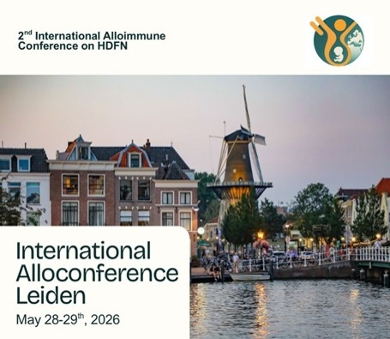
The LUMC, Sanquin, WIRhE Foundation (Worldwide Initiative for Rh Disease Eradication) and AFRICARhE are organizing the 2nd International Alloimmune Conference on Hemolytic Disease of the Fetus and Newborn in collaboration with International Society of Blood Transfusion (ISBT).
This meeting will bring together clinicians, researchers, patients and policymakers to discuss the latest science, clinical practice and global challenges in alloimmune diseases of pregnancy. The semi-final programme is now online, and registration is open. Visit the website for details.
ICM funding allows for the participation of Ethiopian and Tanzanian partners, which is especially useful on the first day of the conference about findings solutions for the global shortage of anti-D. We will also use their time in the Netherlands to organize personal trainings and clinical observerships.
Equitable partnerships
The LUMC collaborates with partners around the world to share knowledge and improve healthcare. But equal collaboration is not something that happens automatically.
Power and funding are often concentrated in the Global North, while Global South partners possess indispensable knowledge. How do you make sure one side does not dominate the other? AFRICARhE coordinator Tienke Vermeiden knows from experience what it takes to find that balance:
The topic of Equitable Partnerships was also explored during an ICM-funded workweek between African and Leiden scientists in March 2025. The LUMC participated as well:
Train-the-trainers by AFRICARhE
In July 2025, AFRICARhE trained research midwives and laboratory staff at Haramaya University (Ethiopia) and KCMC (Tanzania). This training was made possible by Erasmus+ ICM mobilities, allowing for African-European transdisciplinary collaboration to build capacity on Hemolytic Disease of the Fetus and Newborn, Good Clinical Practice, survey and interview techniques, using point-of-care blood tests, and hands-on laboratory training. Those trained will work on a clinical study on the prevalence of Rh disease in eastern Ethiopia and northern Tanzania.
Read more about the 'training of trainers' project:
> Training of trainers in Ethiopia
> Training at KCMC in Tanzania