
Caroline Waerzeggers
Hoogleraar
- Naam
- Prof. dr. C. Waerzeggers
- Telefoon
- 0715272033
- c.waerzeggers@hum.leidenuniv.nl
- ORCID iD
- 0000-0003-4186-6540
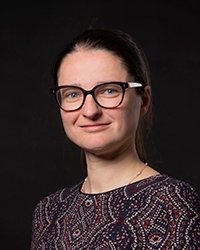
Caroline Waerzeggers is hoogleraar Assyriologie aan de Universiteit Leiden. Zij is gespecialiseerd in de geschiedenis van Mesopotamië in het eerste millennium v.Chr., met een focus op imperiale transformaties onder het Nieuw-Babylonische, Perzische en Seleucidische bewind. In haar onderzoek besteedt zij bijzondere aandacht aan lokale reacties op imperiale machtsstructuren. Haar onderzoek combineert filologische analyse van spijkerschriftteksten met methoden en perspectieven uit de sociale, economische, literaire en archiefgeschiedenis.
Meer informatie over Caroline Waerzeggers
Nieuws


Curriculum Vitae
Caroline Waerzeggers studeerde Assyriologie en Bijbels Hebreeuws aan de Universiteit Gent (België), waar ze haar BA (1995), MA (1997) en PhD (2001) behaalde. Hierna bekleedde ze postdoctorale functies in België en Oostenrijk, waar ze onderzoek deed naar de economische geschiedenis van Babylonië in het START-project van Michael Jursa (2003-2004) en naar tempelprebenden in Borsippa in een FWF-project (2004-2005). Vervolgens was ze universitair docent (UD) Assyriologie aan de Vrije Universiteit Amsterdam (2006-2010) en docent Oude Nabije Oosterse Geschiedenis aan het University College London (2010-2012), voordat ze in 2012 als universitair docent (UD) Assyriologie aan de Universiteit Leiden kwam werken. In 2014 werd ze bevorderd tot universitair hoofddocent (UHD) en in 2016 benoemd tot hoogleraar Assyriologie. Van 2018 tot 2019 was ze directeur van het Nederlands Instituut voor het Nabije Oosten (NINO).
Onderzoek
Het onderzoek van Caroline Waerzeggers richt zich op de geschiedenis van Mesopotamië in het eerste millennium v.Chr., met bijzondere aandacht voor lokale reacties op imperialisme en onderwerping. Zij bestudeert onder meer de sociale geschiedenis van verzet, de gevolgen van imperiale heerschappij voor geletterdheid en archiefpraktijken, de dagelijkse leefwereld van zowel ontheemde gemeenschappen als elites, en literaire herinterpretaties van het verleden. In 2009 ontving zij een ERC Starting Grant voor het onderzoeksproject By the Rivers of Babylon: New Perspectives on Second Temple Judaism from Cuneiform Texts (2009–2015). In dit project reconstrueerde zij samen met haar team de Babylonische context van Judese gedeporteerden en bracht zij de gemeenschappen in beeld die terugkeerden om de Tweede Tempel in Jeruzalem te herbouwen. In 2016 werd haar een ERC Consolidator Grant toegekend voor het project Persia and Babylonia: Creating a New Context for Understanding the Emergence of the First World Empire (2016–2021). Via archiefonderzoek en sociale en politieke analyse liet dit project zien hoe het Perzische Rijk - het eerste wereldrijk - politieke cohesie en macht uitoefende over een uitgestrekt gebied van India tot Libië.
Tot haar publicaties behoren twee monografieën: een studie naar het priesterschap en de cultus in de tempel van Borsippa, de ‘tweede stad’ van Babylonië (NINO, 2010), en een microhistorische studie die het leven volgt van een provinciale Babylonische man die via zijn persoonlijke, economische en politieke netwerken de ingrijpende veranderingen onder de Perzische heerschappij aan den lijve ondervond. Deze studie laat zien hoe een mondiaal imperium lokale samenlevingen hervormde (Marduk-rēmanni: Local Networks and Imperial Politics in Achaemenid Babylonia, Peeters, 2014). In 2024 publiceerde Caroline Waerzeggers samen met Melanie Gross de gezamenlijk geredigeerde bundel Personal Names in Cuneiform Texts from Babylonia (ca. 750–100 v.Chr.) (Cambridge University Press). Dit werk belicht het meertalige en multi-etnische karakter van de Babylonische samenleving en reikt methoden en analytische kaders aan om via persoonsnamen toegang te krijgen tot de sociale geschiedenis van het oude Nabije Oosten. Samen met Melanie Gross leidt zij ook het digitale prosopografieproject van Babylonië (prosobab). Haar lopende boekprojecten behandelen de rol van archieven en archiefpraktijken in de Babylonische samenleving (750–350 v.Chr.) en de chronografie van het laat-Babylonische tijdperk.
Daarnaast coördineert zij momenteel het Erasmus+ ICM-project Old Languages and Writings of the Middle East, dat uitwisselingen van staf en studenten met de Universiteit van Sulaimani in Iraaks Koerdistan bevordert, met als doel de studie van oude Nabije-Oosterse talen en schriftsystemen te stimuleren.
Hoogleraar
- Faculteit der Geesteswetenschappen
- Leiden Institute for Area Studies
- Ossendrijver M. & Waerzeggers C. (2025), Babylonian astro-historiography of the late first millennium BCE, Zeitschrift für Assyriologie und Vorderasiatische Archäologie 115: 216-226.
- Waerzeggers C. (2025), Silence as Message: Cyrus and the End of the Babylonian Tradition of Royal Inscriptions. In: Boer R. de & Zomer E. (red.), Memorial Volume W.H. van Soldt. PIHANS. Uitgaven van het Nederlands Instituut voor het Nabije Oosten te Leiden nr. 136. Leuven: Peeters and NINO. 381-405.
- Waerzeggers C. & Gross M.M. (red.) (2024), Personal names in cuneiform texts from Babylonia (c. 750–100 BCE): an introduction. Cambridge: Cambridge University Press.
- Waerzeggers C. (2024), Introduction. In: Waerzeggers C. & Gross M.M. (red.), Personal names in cuneiform texts from babylonia (c. 750–100 BCE): an introduction. Cambridge: Cambridge University Press. 1-16.
- Dijkstra E.C.A., Kraaijeveld N.J.C., Tacoma L.E. & Waerzeggers C. (2024), Venster op het verleden?: Romeinse archieven in de archival turn, Tijdschrift voor Geschiedenis 137(3): 283-298.
- Waerzeggers C. (2024), NINO’s Böhl collection of cuneiform tablets. In: Vrolijk A., van Ommen K., Scheper K. & Baarda T. (red.), Prophets, poets and scholars: the collections of the Middle Eastern library of Leiden University. Leiden: Leiden University Press.
- Waerzeggers C. (2023), Cuneiform writing and power at Yahudu and its environs. In: Justel Vicente D. (red.), Judíos en Babilonia: Estudios históricos, teológicos, exegéticos y artísticos nr. 2. Madrid: Universidad San Dámaso. 33-57.
- Waerzeggers C. & Gross M.M. (2022), Prosobab (data file). [dataset].
- Waerzeggers C. & Gross M.M. (2022), Prosobab: prosopography of Babylonia (c. 620-330 BCE): an online database: ERC project Persia and Babylonia (Leiden University). [database].
- Waerzeggers C. (2021), Writing history under empire: the Babylonian chronicle reconsidered, Journal of Ancient Near Eastern History 8(1-2): 279-317.
- Waerzeggers C. (2021), Digital prosopography of Babylonia: new horizons. In: Hess C.W. & Manuelli F. (red.) Bridging the gap: disciplines, times, and spaces in dialogue - Volume 1: sessions 1, 2, and 5 from the conference Broadening Horizons 6 held at the Freie Universität Berlin, 24-28 June 2019. Oxford: Archaeopress. 81-96.
- Waerzeggers C. (2021), The day before Cyrus entered Babylon. In: Gabbay U. & Gordin S. (red.), Individuals and institutions in the ancient Near East: a tribute to Ran Zadok. Studies in Ancient Near Eastern Records nr. 27. Berlin: De Gruyter. 79-88.
- Waerzeggers C. (2021), An unfinished duplicate of a marriage contract from the reign of Darius I, Nouvelles Assyriologiques Brèves et Utilitaires 2021(4): 280-281 (119).
- Waerzeggers C. (2021), Babylonian entrepreneurs. In: Jacobs B. & Rollinger R. (red.) A companion to the Achaemenid Persian Empire. Hoboken: John Wiley & Sons. 993-1004.
- Waerzeggers C. (2020), Changing Marriage Practices in Babylonia from the Late Assyrian to the Persian Period, Journal of Ancient Near Eastern History 7(2): 101-131.
- Waerzeggers C. (2020), Priestly courses and the administration of time in Neo-Babylonian temples. In: Ganzel T. & Holtz S.E. (red.), Contextualizing Jewish Temples. The Brill Reference Library of Judaism nr. 64. Leiden/Boston: Brill. 23-48.
- Waerzeggers C. (2019), Een wandeling door 100 jaar assyriologie in Leiden, Phoenix: bulletin uitgegeven door het Vooraziatisch-Egyptisch Genootschap Ex Oriente Lux 65(3): 6-31.
- Waerzeggers C. & Seire M. (red.) (2018), Xerxes and Babylonia: The Cuneiform Evidence. Orientalia Lovaniensia Analecta nr. 277. Leuven, Paris and Bristol: Peeters Publishers.
- Waerzeggers C. (2018), Licht op de Babylonische Ballingschap, Met Andere Woorden 37(1): 46-55.
- Waerzeggers C. (2018), Manuscript and archive: who wrote and read Babylonian chronicles?. In: Finck S. & Rollinger R. (red.), Conceptualizing past, present and future: Proceedings of the Ninth Symposium of the Melammu Project. Held in Helsinki / Tartu May 18-24, 2015. Münster: Ugarit-Verlag. 335–346.
- Waerzeggers C. (2018), Introduction: Debating Xerxes’ Rule in Babylonia. In: Waerzeggers C. & Seire M. (red.), Xerxes and Babylonia: The Cuneiform Evidence. Orientalia Lovaniensia Analecta nr. 277. Leuven: Peeters. 1-18.
- Waerzeggers C. (2018), The network of resistance: archives and political action in Babylonia before 484 BCE. In: Waerzeggers C. & Seire M. (red.), Xerxes and Babylonia: The Cuneiform Evidence. Orientalia Lovaniensia Analecta nr. 277. Leuven: Peeters. 89-133.
- Gross M.M., Seire M. & Waerzeggers C. (2018), Prosobab – Prosopography of Babylonia (c. 620–330) – an online database. 64th Rencontre Assyriologique Internationale “The Intellectual Heritage of the Ancient Near East”, Innsbruck. 16 juli 2018 - 20 juli 2018. [conferentie poster].
- Waerzeggers C. (2017), The Prayer of Nabonidus in the Light of Hellenistic Babylonian Literature. In: Popović M., Schoonover M. & Vandenberghe M. (red.), Jewish Cultural Encounters in the Ancient Mediterranean and Near Eastern World. Leiden: Brill. 64-75.
- Waerzeggers C. (2017), Herodotus, Xerxes en de Babylonische opstanden van 484 v. Chr, Phoenix: Tijdschrift voor de archeologie en geschiedenis van het Nabije Oosten 63(2): 48–61.
- Waerzeggers C. (2017), Collations of CUSAS 28, Nouvelles Assyriologiques Brèves et Utilitaires 2017(3): 154-158.
- Waerzeggers C. (2017), Cuneiform Literacy and Control in the First Persian Empire [EABS-SBL meeting Berlin, 8 August 2017]. .
- Waerzeggers C. (2017), A Window on the Exile: Colony, State, and Writing at Yahudu [17th World Congress of Jewish Studies, Jerusalem, 6 August 2017]. .
- Waerzeggers C. (red.) (2017), Series Editor, Assyriological section. Handbuch der Orientalistik.
- Waerzeggers C. (2016), The silver has gone: temple theft and a divided community in Achaemenid Babylonia. In: Kleber K. & Pirngruber R. (red.), Silver, Money, and Credit. A Tribute to Robartus J. van der Spek on the Occasion of his 65th Birthday on 18th September 2014 nr. 128. Leiden: NINO. 73-85.
- Nielsen J.P. & Waerzeggers C. (2016), Interactions between temple, king and local elites: the hanšû land schemes in Babylonia (8th-6th centuries BC). In: Moreno Garcia J.C. (red.), Dynamics of Production in the Ancient Near East, 1300-500 BC.. Oxford and Philadelphia: Oxbow Books. 331-344.
- Waerzeggers C. (2016), Cuneiform writing and control in the community of Al-Yahudu [SBL meeting 2016, San Antonio, 21 November 2016]. .
- Waerzeggers C. (red.) (2016), Series Editor, Assyriological section. Handbuch der Orientalistik.
- Waerzeggers C. (red.) (2016), Series Editor, Assyriological section. Handbuch der Orientalistik.
- Silverman J.M. & Waerzeggers C. (red.) (2015), Political Memory in and after the Persian Empire nr. 13. Atlanta: SBL.
- Stökl T.J. & Waerzeggers C. (red.) (2015), Exile and Return: The Babylonian Context. Beihefte zur Zeitschrift für die alttestamentliche Wissenschaft nr. 478. Berlin: De Gruyter.
- Stökl T.J. & Waerzeggers C. (2015), Introduction. In: Stökl T.J. & Waerzeggers C. (red.), Exile and Return: The Babylonian Context nr. 478. Berlin: De Gruyter. 1-6.
- Waerzeggers C. (2015), Babylonian Kingship in the Persian Period: Performance and Reception. In: Stökl J. & Waerzeggers C. (red.), Exile and Return: The Babylonian Context nr. 478. Berlin: De Gruyter. 181-222.
- Silverman J.M. & Waerzeggers C. (2015), Assessing Persian Kingship in the Near East: An Introduction. In: Silverman J.M. & Waerzeggers C. (red.), Political Memory in and after the Persian Empire nr. 13. Atlanta: SBL. 1-6.
- Waerzeggers C. (2015), Shangu. In: Orlin E. (red.), Routledge Encyclopedia of Ancient Mediterranean Religions. New York: Routledge. 868.
- Waerzeggers C. (2015), Shatammu. In: Orlin E. (red.), Routledge Encyclopedia of Ancient Mediterranean Religions. New York: Routledge. 689.
- Waerzeggers C. (2015), The Neo-Babylonian chronicle about Sabium and Apil-Sîn: a copy of the text (BM 29440), Nouvelles Assyriologiques Brèves et Utilitaires 2015(2): 85.
- Waerzeggers C. (2015), Facts, Propaganda, or History? Shaping Political Memory in the Nabonidus Chronicle. In: Silverman J.M. & Waerzeggers C. (red.), Political Memory in and after the Persian Empire nr. 13. Atlanta: SBL. 95-124.
- Waerzeggers C. (2015), Review article of Laurie E. Pearce and C. Wunsch, Documents of Judean exiles and West Semites in Babylonia in the collection of David Sofer, Strata: Bulletin of the Anglo-Israel Archaeological Society 33: 179-194.
- Waerzeggers C. (2015), Dating Cuneiform Literary Texts (Persian and Post-Persian Periods) [European Association of Biblical Studies annual conference, Cordoba, 15 July 2015]. .
- Waerzeggers C. (red.) (2015), Series Editor, Assyriological section. Handbuch der Orientalistik.
- Waerzeggers C. (2014), “A Statue of Darius in the Ebabbar temple of Sippar”. In: Kozuh M., Henkelman W.F.M., Jones C.E. & Woods C. (red.), Extraction and Control: Studies in Honor of Matthew W. Stolper. Studies in Ancient Oriental Civilization nr. 68. Chicago: The Oriental Institute of the University of Chicago. 323–329.
- Waerzeggers C. (2014), Locating contact in the Babylonian exile: some reflections on tracing Judean- Babylonian encounters in cuneiform texts. In: Gabbay U. & Secunda S. (red.), Encounters by the Rivers of Babylon: Scholarly Conversations between Jews, Iranians and Babylonians in Antiquity 131-146.
- Waerzeggers C. (2014), Marduk-remanni. Local Networks and Imperial Politics in Achaemenid Babylonia. Orientalia Lovaniensia Analecta nr. 233. Leuven: Peeters.
- Waerzeggers C. (2014), Social Network Analysis of Cuneiform Archives: A New Approach. In: Baker H.D. & Jursa M. (red.), “Social Network Analysis of Cuneiform Archives: A NeDocumentary Sources in Ancient Near Eastern and Greco-Roman Economic History: Methodology and Practice. Oxford: Oxbow. 207-233.
- Waerzeggers C. (2014), The Persian Kings in Hellenistic Babylonian Historiography [International Conference Political Memory during and after the Persian Empire, Leiden University, 18-20 June 2014]. .
- Waerzeggers C. (2014), The plot thickens...On archival patterns and political factions in Babylonia in 484 BC [International workshop Xerxes and Babylonia: the Cuneiform Evidence, Leiden University, 15-17 Januray 2014]. .
- Waerzeggers C. (red.) (2014), Series Editor, Assyriological section. Handbuch der Orientalistik.
- Waerzeggers C. (2013), In de voetsporen van Marduk-rēmanni: Een Perzisch-Babylonische microgeschiedenis, Phoenix: bulletin uitgegeven door het Vooraziatisch-Egyptisch Genootschap Ex Oriente Lux 59(1): 3-19.
- Waerzeggers C. & Stökl J. (2013), The Babylonian temple enterer and the Judean kohen - a comparative study [Jerusalem International Conference of Jewish Studies, 28 July - 1 Aug 2013]. .
- Waerzeggers C. (2012), Happy Days: The Babylonian Almanac in Daily Life. In: Boiy T., Bretschneider J., Goddeeris A., Hameeuw H., Jans G. & Tavernier J. (red.), The Ancient Near East, A Life! Festschrift Karel Van Lerberghe. Leuven: Peeters. 653-664.
- Waerzeggers C. (2012), Very Cordially Hated in Babylonia? Zēria and Rēmūt in the Verse Account, Altorientalische Forschungen 39(2): 316-320.
- Waerzeggers C. (2012), The Babylonian Chronicles: Classification and Provenance, Journal of Near Eastern Studies 71(2): 285-298.
- Waerzeggers C. (2012), The Babylonian Temple Enterer [Society of Biblical Literature Meeting, Amsterdam, 24 July 2012]. .
- Waerzeggers C. (2012), The Network of Resistance [Rencontre Assyriologique Internationale 58 (Private and State in the Ancient Near East), Leiden, 18 July 2012]. .
- Pirngruber R. & Waerzeggers C. (2011), Prebend prices in first millennium BC Babylonia, Journal of Cuneiform Studies 63: 111-144.
- Waerzeggers C. (2011), The Babylonian Priesthood in the Long Sixth Century, Bulletin of the Institute of Classical Studies 54(2): 59-70.
- Waerzeggers C. (2011), The Pious King: Royal Patronage of Temples. In: Radner K. & Robson E. (red.), The Oxford Handbook of Cuneiform Culture. Oxford: Oxford University Press. 725-751.
- Frame G. & Waerzeggers C. (2011), The prebend of temple scribe, Zeitschrift für Assyriologie und Vorderasiatische Archäologie 101: 127-151.
- Waerzeggers C. (2010), The Ezida temple of Borsippa: priesthood, cult, archives. Leiden: Nederlands Instituut voor het Nabije Oosten.
- Jursa M., Hackl J., Jankovic B., Kleber K., Payne E.E., Waerzeggers C. & Weszeli M. (2010), Aspects of the Economic History of Babylonia in the First Millennium BC. Economic Geography, Economic Mentalities, Agriculture, the Use of Money and the Problem of Economic Growth. Münster: Ugarit-Verlag.
- Waerzeggers C. (2010), Babylonians in Susa. The travels of Babylonian businessmen to Susa reconsidered. In: Jacobs B. & Rollinger R. (red.), Der Achämenidenhof / The Achaemenid Court. Akten des 2. Internationalen Colloquiums zum Thema “Vorderasian im Spannungsfeld klassischer und altorientalischer Überlieferungen”, Landgut Castelen bei Basel, 23.-25. May 2007. Wiesbaden: Harrassowitz. 777-813.
- Waerzeggers C. (2010), KU 14: a Neo-Babylonian tablet about Susa in Amsterdam, Notes Assyriologiques Brèves et Utilitaires 2010/45: 52-53.
- Jursa M. & Waerzeggers C. (2009), On Aspects of Taxation in Achaemenid Babylonia: New Evidence from Borsippa. In: Briant P. & Chauveau M. (red.), Organisation des pouvoirs et contacts culturels dans les pays de l’empire achéménide. Paris: Éditions de Boccard. 237-269.
- Waerzeggers C. (2008), On the Initiation of Babylonian Priests, Zeitschrift für Altorientalische und Biblische Rechtsgeschichte 14: 1-23.
- Waerzeggers C. & Siebes R. (2007), An Alternative Interpretation of the Seven-Pointed Star on CBS 1766, Notes Assyriologiques Brèves et Utilitaires 2007/40: 43-45.
- Waerzeggers C. (2006), Neo-Babylonian Laundry, Revue d'Assyriologie et d'Archéologie Orientale 100: 83-96.
- Waerzeggers C. (2006), The Carians of Borsippa, Iraq 68: 1-22.
- Waerzeggers C. (2005), The dispersal history of the Borsippa archives. In: Baker H.D. & Jursa M. (red.), Approaching the Babylonian Economy: Proceedings of the START Project Symposium held in Vienna, 1-3 July 2004. Münster: Ugarit Verlag. 343-363.
- Waerzeggers C. (2005), Neo-Babylonian Tablets in the Royal Museums of Art and History in Brussels, Akkadica 126: 133-158.
- Waerzeggers C. (2004), A misidentified daughter of Nabonidus, Notes Assyriologiques Brèves et Utilitaires 2004/103: 104-104.
- Waerzeggers C. (2004), The Babylonian Revolts Against Xerxes and the ‘End of Archives’, Archiv für Orientforschung 50: 150-173.
- Jursa M., Paszkowiak J. & Waerzeggers C. (2004), Three Court Records, Archiv für Orientforschung 50: 255-268.
- Waerzeggers C. (2002), Endogamy in Mesopotamia in the Neo-Babylonian Period. In: Wunsch C. (red.), Mining the Archives. Festschrift for Christopher Walker on the Occasion of his 60th Birthday. Dresden: ISLET Verlag. 319-342.
- Waerzeggers C. (2000), The Records of Inşabtu of the Naggāru Family, Archiv für Orientforschung 46/47: 183-200.
- Waerzeggers C. (1998), A new šangû at Neo-Babylonian Sippar, Notes Assyriologiques Brèves et Utilitaires 1998/122: 114-115.
- Waerzeggers C. (1997), Le précatif: forme de politesse en néo-babylonien, Akkadica 101: 30-35.
- voorzitter stichtingsbestuur
- treasurer