
International Studies (BA)
Study programme
In the International Studies programme, you will develop both the knowledge and the critical insight needed to gain regional expertise within a global context. In addition, you will acquire the practical and professional skills that will help you in making your first steps in your career, whether you want to continue in a master's programme, join an international business, aim for a career in diplomacy or public service, or set out as an entrepreneur.
Some of the courses
First year: Introduction to International Studies
What is International Studies? This course offers a new academic approach to analyseanalyse today’s global complexities and challenges, such as climate change, social inequality and security. You will explore the various approaches of this discipline in order to come to a comprehensive understanding of these large global issues and and to reflect on the role of individuals in these issues. The course is divided into thematic issues like international justice, regionalisation, migration, sustainable development, armed conflicts, resources and food production.
First year: Economics
This course provides an introduction to the main concepts used by the economics profession, including supply and demand, inflation, unemployment, monetary policy and fiscal policy. Its main goals are to provide a base for your economics pillar at International Studies, as well as a basis for understanding how economists and financiers shape global policies. In addition, the course will provide an intro to the political and social context of these economic discourses, which will be explored more fully in your 2nd year political economy course.
First year: Cultural Studies
As a student in International Studies, you will learn how to be attuned to cultural differences and the way they shape how people understand the world they live in. The course introduces you to a range of theoretical frameworks that can be used to analyse how culture interacts with politics, media, and globalisation.
Second year: International Relations
In this course you will study the theory and practice of global politics and international relations in the post-Cold War era and in a rapidly transforming world order. You will study global developments and analyse how while the state remains a crucial actor in international affairs, power is also concentrated in global and regional institutions and how non-state actors are increasingly influence global politics. Also, we encourage you to look into critical approaches from a non-Western perspective; a central element to consider how people across the world perceive and shape global politics today.
Third year: Practising International Studies (PRINS)
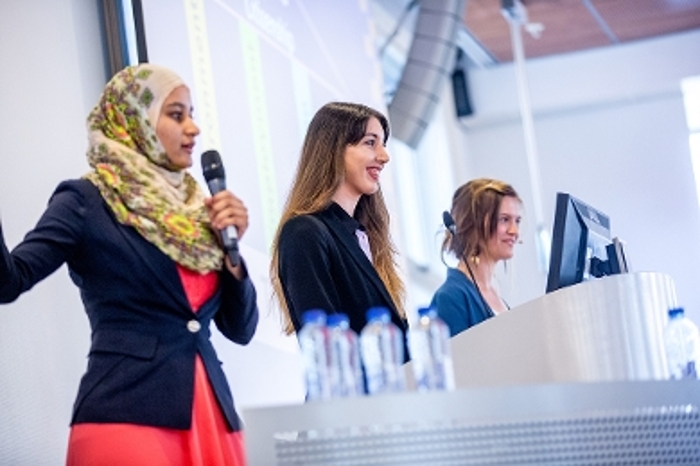
Practising International Studies is a 12-week consultancy project course where teams of 3rd year students analyse real-life cases and problems presented by leaders from international organisations. Student teams use their broad multi-perspective background to come up with novel solutions and insights for these organisations.
Shaping the focus of your studies
International Studies gives you the flexibility to shape the focus of your studies. In the first year you will choose your region, as well as the regional language you will study. In the first and second semester of your second year, you can choose both a research methods course and a thematic seminar. These seminars help you develop your research skills and allow you to explore International Studies from different perspectives and through a set of key themes. The ‘elective space’ in the first semester of the third year provides you with the additional freedom to go on an internship, to spend a semester abroad or to study a minor in another subject area.
Detailed programme
Below you can find an overview of the curriculum for academic year 2026-2027. For a detailed description of the courses, check the Prospectus. Please note that this guide applies to the current academic year. The curriculum for next year differs slightly.

Get a taste of the International Studies PRINS consultancy project
Due to the selected cookie settings, we cannot show this video here.
Watch the video on the original website or