
Human Osteology and Funeral Archaeology
Education
The Faculty of Archaeology at Leiden University offers education in Human Osteoarchaeology. We offer courses in our one-year Master’s track in Archaeological Science, resulting in a Master of Science degree after completion.
The skeleton as a source of information
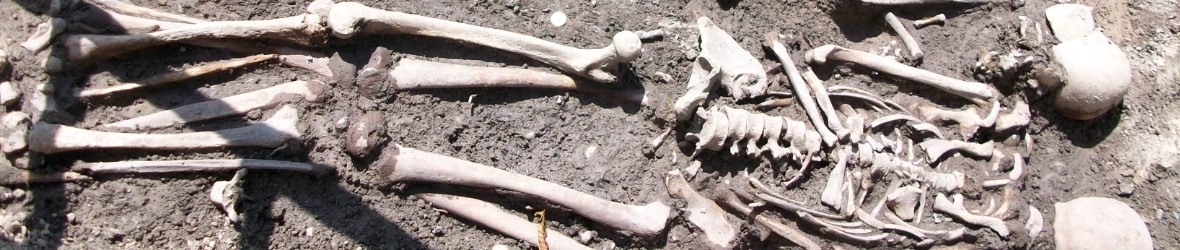
Human skeletal remains provide a unique method of reconstructing past lifeways and constitute the most direct evidence of human history. Osteoarchaeology (the study of archaeological human remains), is a dynamic, interdisciplinary field that draws on a variety of approaches, ranging from macroscopical examination of the whole skeleton to the microscopical and chemical analysis of samples. Major and minor events such as demographic shifts, environmental changes, migrations, numerous diseases, violence and conflicts are all likely to leave traces on the skeleton.
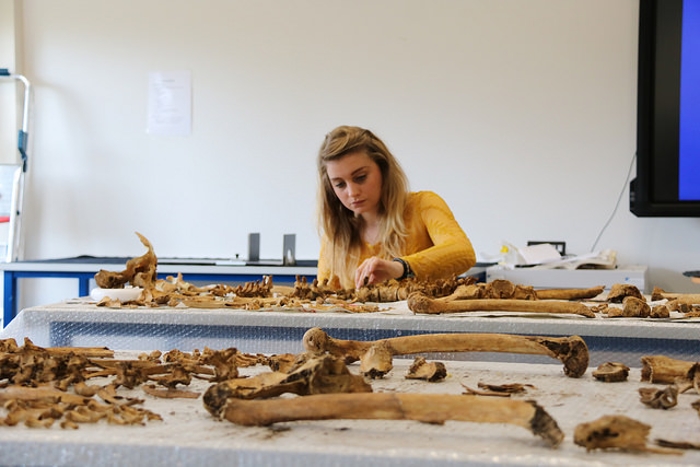
Human osteoarchaeological research aims to improve our knowledge about the lifeways of past peoples in order to understand who we are as a species, and how we got to be this way. At Leiden University, students will take part in lectures and practical work with real archaeological skeletal assemblages. Consequently, they will learn to reliably determine a skeleton’s age-at-death, sex, stature, disease, and activity patterns.
Master’s in Archaeological Science
During the Master’s in Archaeological Science track, students have the opportunity to learn about sub-fields within the field of Human Osteoarchaeology, including forensic archaeology, growth and development, taphonomy, and skeletal and dental metric and non-metric traits. Much emphasis is put on the sub-field of paleopathology, the diagnosis of diseases and abnormalities from the bones and teeth. These topics are addressed both in lectures and in hands-on laboratory settings.