
Week 5a: 1-4 February 2026
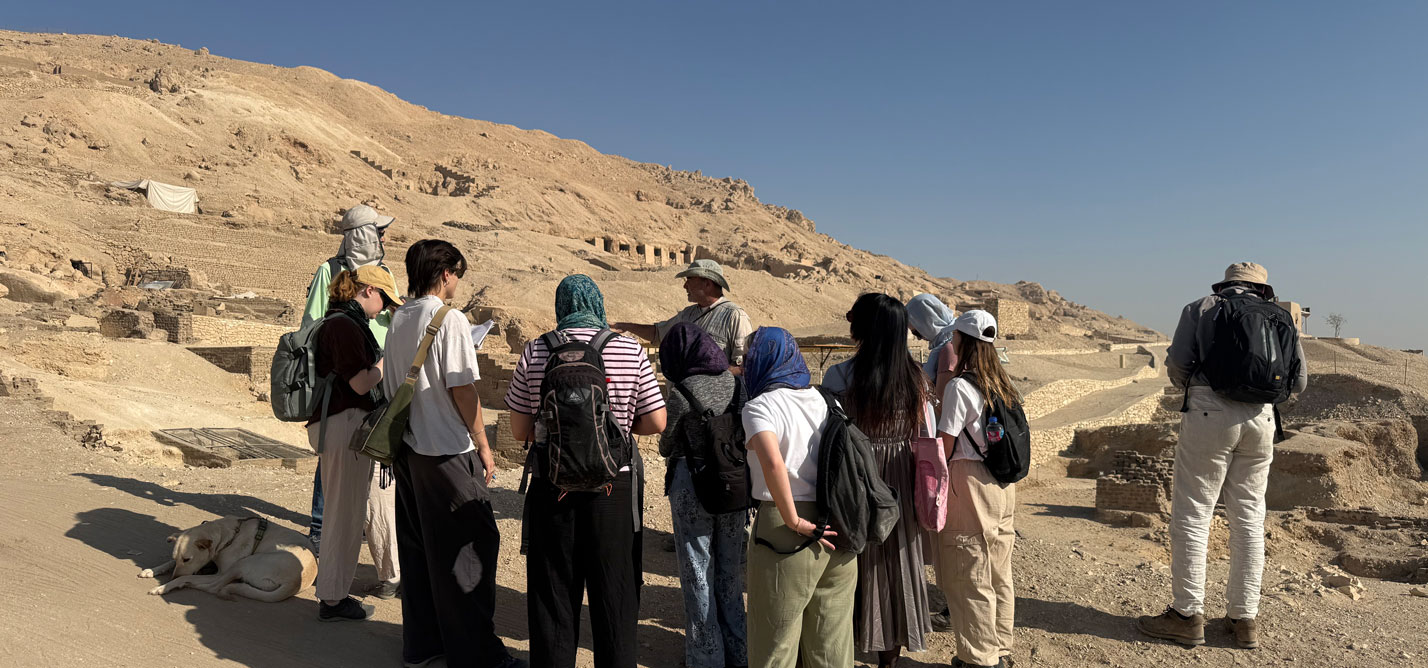
On Sunday, it was time to cook ourselves in the desert, while visiting the Theban tombs at Dra Abu el-Naga South. First, we went to TT16, where the team led by Dr. Suzanne Onstine is doing phenomenal work in conserving and recording the beautiful paintings inside the tomb. After visiting, one of the team members, Daniel Warne, was excited to show us how they do their epigraphic work. There was also a very cute cat named Arthur on the site, who totally stole the show.
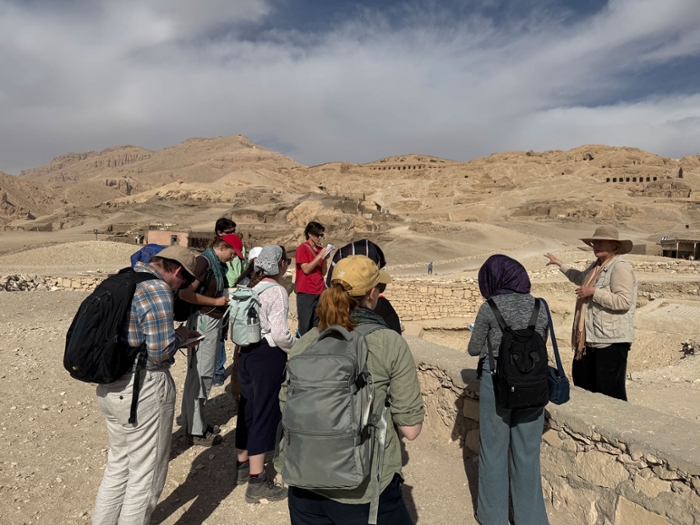
After this, we visited TT45, where Dr. Carina van den Hoven showed us around the concession. TT45 was originally made in the 18th Dynasty for a man named Djehuty, but was later reused and extensively modified in the Ramesside period by a man named Djehutyemheb. The team initially worked on conservation, documentation, and site management, but is now also doing more excavation as their concession expanded. Carina also showed us the nearby tombs TT136 and Kampp 529, which are now also part of the concession. The most important part was, of course, Ariel giving her cheese to Carina.

Afterwards, we explored the area further on our own and visited TT96 and TT100 before we met up with JJ Shirley at TT110. This is the only tomb in the area that depicts both Hatshepsut and Thutmosis III. Before leaving, we made a quick stop at TT55, which is special for depicting both pre-Amarna- and Amarna-style art. Arriving back at the hotel, we went searching for ice cream and spent the rest of the afternoon by the pool, working on our projects/presentations and relaxing.
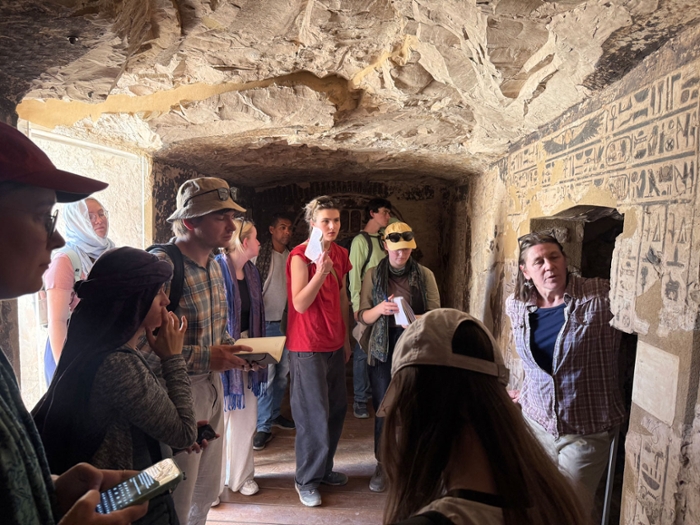
The following day, we went to visit Dra Abu el-Naga North. Lead excavator Dr. José Galan gave us a tour of the site. Another site, another pet, and today José’s dog Tutu got our attention. He is truly living his best life on the site. The mission at the moment is looking for information on the orientation of the shafts. José showed us their famous funerary garden, with the replica on top and Tombs TT12, TT11, and TT148. A remarkable part about TT12 is the focus on women in the tomb and the lack of male representation. In TT11, it was clear that the owner, Djehuty, fell into disfavor during his life, which is perhaps not hard to imagine given his big ego, as can be seen in the banquet scene where he only depicted himself.
On Tuesday, we first went to Medinet Habu where Dr. Brett McClain gave a tour of the ongoing work. He first showed us the Small Amun Temple and the epigraphic work being done there. Keli Alberts and Dr. Jen Kimpton explained the steps that a drawing of a relief goes through before it can be published. We also went into the three chapels of the Gods’ Wives. After a quick visit to the block yard, we had an hour to explore the main temple at Medinet Habu on our own. This stunning temple was built by the most famous king of the 20th dynasty, Ramses III. Because his successors did not have much success, the temple was not used as a quarry for later monuments and remained very well preserved.

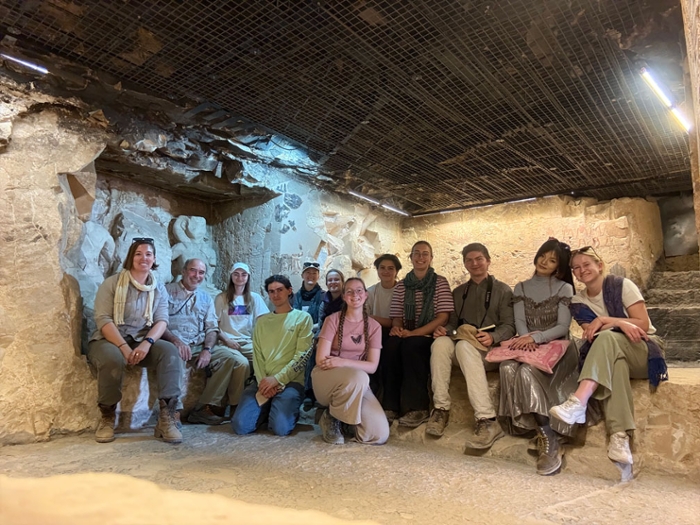
At 11:00, we left for Deir el-Medina, which some people in the group were very excited about. After a hike up the mountain on the site, we arrived at the stunning excavation house. There, Dr. Elisabeth Bettles explained more about the site. She first took us to TT216, which was the tomb of Neferhotep, a chief of the workmen. Dr. Stéphane Polis gave us more information about TT211, which had one of the most beautiful funerary reliefs we have ever seen. After the tour, we walked over to the Great Pit and the temple of Hathor.

On Wednesday, it was time to say goodbye to Luxor and hello to Aswan. On the way there, we first stopped at Esna to visit a Ptolemaic temple in the middle of the city. Sadly, only the pronaos remains, but it is still beautiful inside with a lot of the paint remaining. There is also the infamous hymn to Khnum inside, which was, in hindsight, quite underwhelming to see. Afterwards, we continued our road trip with a final stop at Elkab. Here, Jana gave her presentation on the New Kingdom rock-cut tombs. We visited the tombs of Reneny, Ahmose Son-of-Ibana, Pahery, and Setau, where a thorough explanation about the iconography was given in each of them. We also briefly stopped at the Temple of Thoth and Shesmetet before making the rest of the three and a half hour drive to the hotel in Aswan, where we will be staying.

Jana Ceuleers