Week 1: 8-10 January 2026
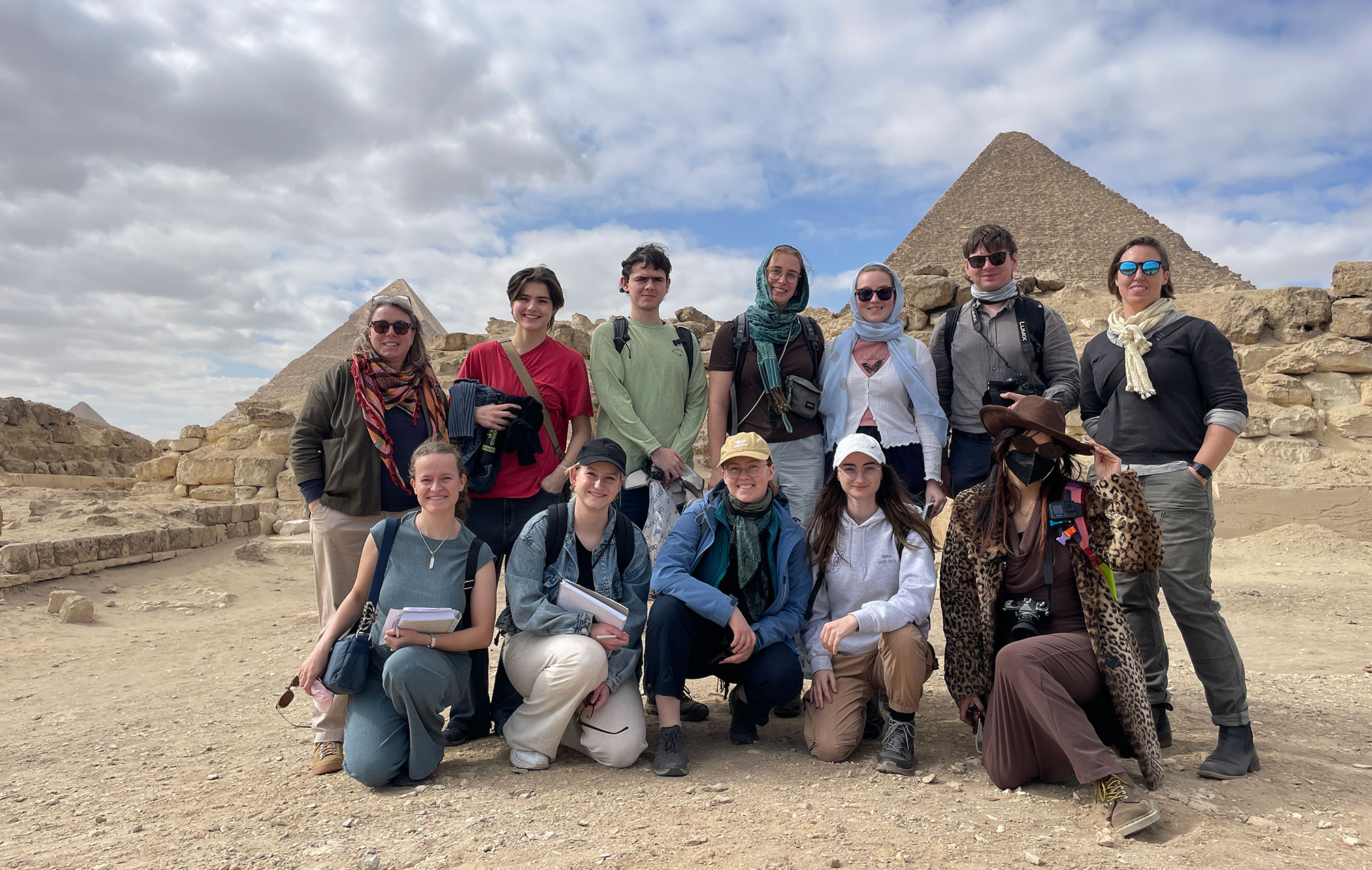
This year, the semester in Cairo gathers 10 students: four from Leiden, four from Leuven and two “outsiders” (UCLouvain & Harvard). The shared excitement of being in Egypt for the very first time, combined with the curiosity for each other’s interests, quickly brought the group together.
While some students had to finish a paper for their home university, a few of us had the opportunity to wander around Cairo before the official start of the semester. A tour of the medieval city was very much appreciated before exclusively focusing on the antique remains! We visited the impressive, surprisingly empty Mosque of Ibn Tulun, with its minaret, which we climbed. Despite the fear of going up without any railing, the view was totally worth it! We also saw the Mosque of ‘Amr Ibn al-‘As and Coptic Cairo with its beautiful churches.

Beyond simply visiting Cairo, those first four days were greatly needed and productive as we met with a broker, easily found a flat, discovered Zamalek, and began to adjust to this never-sleeping megalopolis.
On 8 January, the program finally started: we got an introduction about the program by Ariel and a politico-historical overview of Egypt by Marleen. After that, we enjoyed a delicious lunch on the institute’s rooftop prepared by the great and welcoming staff of the NVIC, then went on a bus tour of Cairo with Ariel as a guide.

We passed by important modern squares and buildings, by the Islamic necropolis, by the Moqattam hills (unfortunately, the weather didn’t allow us to see the pyramids from afar), by several mosques, and by the Citadel of Saladin.

On the same evening, we had our very first lecture at NVIC by Filippo Mi (who participated in the Cairo Semester 9 years ago!). He shared his methodology for mapping the religious spaces of Saqqara and Dahshur in the Late and Ptolemaic periods. It was particularly interesting to see how he proceeded to recreate maps of these sites using the earliest plans made by the first archeologists.

We had Friday free to either enjoy the city or start working already. After that, we finally got to go to our personal holy land: Giza. We started the tour by going to Khufu’s pyramid, and Marleen told us about the history of the excavations to help us better understand why some artefacts are in Boston or in Hildesheim. Then we quickly went to the most interesting—though very underrated—part: the mastabas and their chapels.

The tomb of Meresankh III was our first Egyptian tomb. After seeing so many examples of photos in my courses, it definitely felt emotional and surreal to be there. The illustrations inside were still colorful and beautiful: boats, birds, bread production, musicians, dancers, prayers, …
We had lunch at Ankhhaf’s tomb while the sun was making its definitive way out of the clouds to stay with us all afternoon.

After seeing Khafra’s pyramid, we had free time to visit the sphinx and the interior of Menkaure’s pyramid. This final excursion into the heart of the pyramid through its narrow passage left us feeble but very much satisfied. What a good way to begin this Egyptology semester!

Zoe Golenvaux