
Proefschrift
Plastic Detectives and Wildlife Guardians: impact of volunteers monitoring plastic pollution and wildlife on science, society, and nature
Environmental challenges such as plastic pollution and biodiversity loss require extensive monitoring. Citizen science, in which members of the public participate in scientific research, has therefore become an important approach in environmental science.
- Auteur
- L. Rambonnet
- Datum
- 03 februari 2026
- Links
- Thesis in Leiden Repository
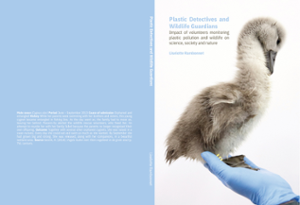
Despite its rapid growth, questions remain about who participates, how participation affects volunteers’ motivation, attitudes, and knowledge, and what impact citizen science has on science, society, and nature.
This dissertation examines the impact of volunteers who monitor plastic pollution and wildlife, using surveys, longitudinal research, interviews, and analyses of publicly shared observations. It approaches citizen science as a continuum, ranging from structured monitoring projects to more incidental forms of contribution.
The research shows that plastic pollution monitoring mainly attracts highly educated participants, yet participation still increases volunteers’ knowledge. At the same time, this raises questions about inclusivity and societal reach. In contrast, wildlife rehabilitation centers offer an opportunity to broaden participation: their volunteers form a group that is more representative of the general population in terms of educational level, yet their involvement and existing data collection practices remain only weakly connected to scientific research. Finally, the dissertation demonstrates that observations shared through news and social media can provide valuable insights into the impacts of plastic pollution on wildlife, particularly during the COVID-19 pandemic.
Together, this dissertation argues that recognising and supporting diverse forms of public contribution is essential for increasing the scientific, societal, and environmental impact of citizen science.