
Alumni meet in Brussels: ‘Contributing to the values of the future with Leiden building blocks’
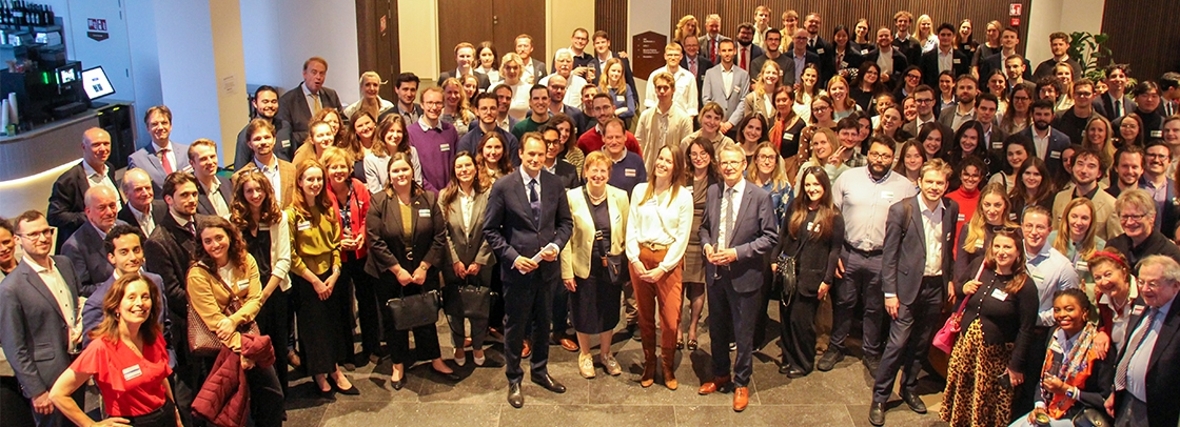
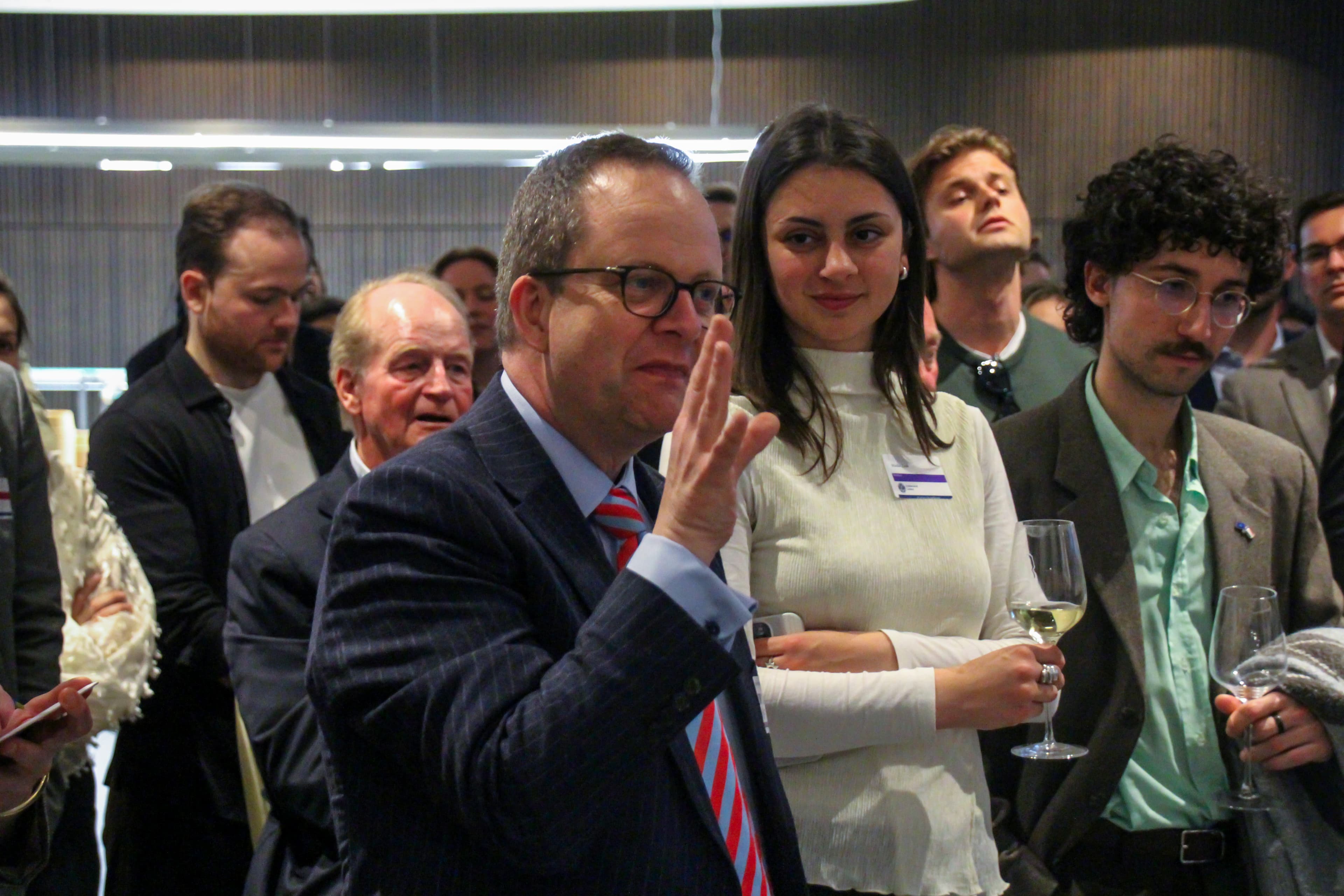
As many as 180 Leiden University alumni met in Brussels last week. A young, diverse and international group, they listened attentively to speeches by Luc Sels, President of the Executive Board, and Geoffrey van Leeuwen, NATO Chief of Staff and Leiden alumnus.
The annual Alumni in Brussels event is organised by the Faculty of Humanities, Leiden Law School, the Faculty of Governance & Global Affairs and the institute of Political Science, supported by Leiden University’s central Alumni Office. This year, the Brussels office of law firm King & Spalding provided a splendid venue in the lobby of the new Louise Tower.
The event emphasises the importance of meeting up with the international alumni community. ‘I had such a great time at Leiden that I was delighted to be able to see some familiar faces again in the city where I now live and work,’ said Marie-Louise, who graduated in International Law last year.
Ambassadors of the university
First to speak was Luc Sels, President of the Executive Board. This was the first time that many of the alumni had met this university administrator, who took office in November. For him, however, as a Leuven alumnus, it was a ‘home game’. In his speech, he highlighted Leiden University’s excellent partnerships within the Netherlands and Europe and thanked the alumni present for acting as ambassadors. ‘You are our university’s strongest global representatives’.
Sels called on other alumni to also revisit their alma mater. ‘You are always most welcome to come back. You can support the university financially, but attending events like this is another good way to show support and strong commitment. I see it as a kind of intangible donation.
Concerns about international law
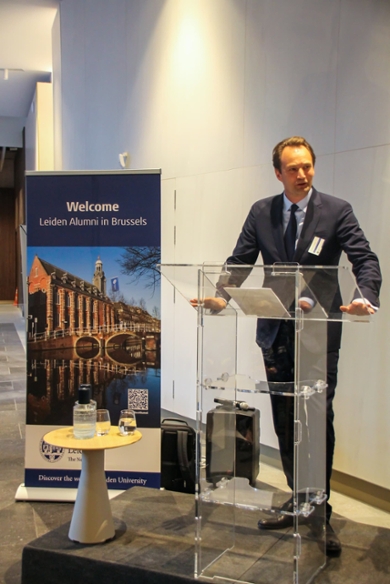
The keynote speaker of the evening was Geoffrey van Leeuwen, Chief of Staff at the North Atlantic Treaty Organisation (NATO). He argued that threats from China and Russia, among others, mean that investing in security and defence is more important than ever. According to Van Leeuwen, there are two options: ‘Wait and see, clinging to the world as we know it, or embrace the new world order and transform it into a system that we ourselves want.’
In the Q&A that followed, the alumni’s main concern was the role of international law; one questioner reported that this system had even been ‘pronounced dead’ by her students. The alumni also expressed their concerns about how the sharp increase in defence expenditure will be funded, although Van Leeuwen stressed that the countries themselves can decide how to cover the costs.
‘It doesn’t have to be at the expense of education and science; for example, the Dutch government has decided to raise the retirement age. Education is important, but in times of war you must also be able to defend it. Without good defence, education and social security have little worth.’
Although Van Leeuwen’s preference is also a just global order, he believes that this is only feasible in reality if everyone participates. ‘Do you think China is guided by international law? That law isn’t dead, but it hasn’t actually kept us secure. NATO, on the other hand, has ensured our security.’
A meeting of ‘the future of Europe’
Another remarkable feature of the evening was the average age of the alumni: most of them were under 35. This gives Luc Sels cause for optimism: ‘These young people are working within the circles of European politics and the European Union. By bringing them together, Leiden is making an indirect contribution to what Europe may become.’
Geoffrey van Leeuwen emphasised that, despite the state of the world, young alumni should remain positive. ‘I see that young people today can soon feel downhearted about everything, but in principle things are better now than when I had just graduated.’ [Van Leeuwen graduated in the mid-1990s - Ed.]
Luc Sels also urged the alumni to make the world what they want it to be. ‘It’s encouraging to see alumni from so many different faculties here; most of you are also involved in policy circles. I therefore call on you to use the building blocks you brought from Leiden in constructing an excellent outcome in Brussels and the world; and to contribute to the institutions and values of the future.’
-
Leiden Law School alumnus Arnoud Willems (left) of King&Spalding, our host of the evening -
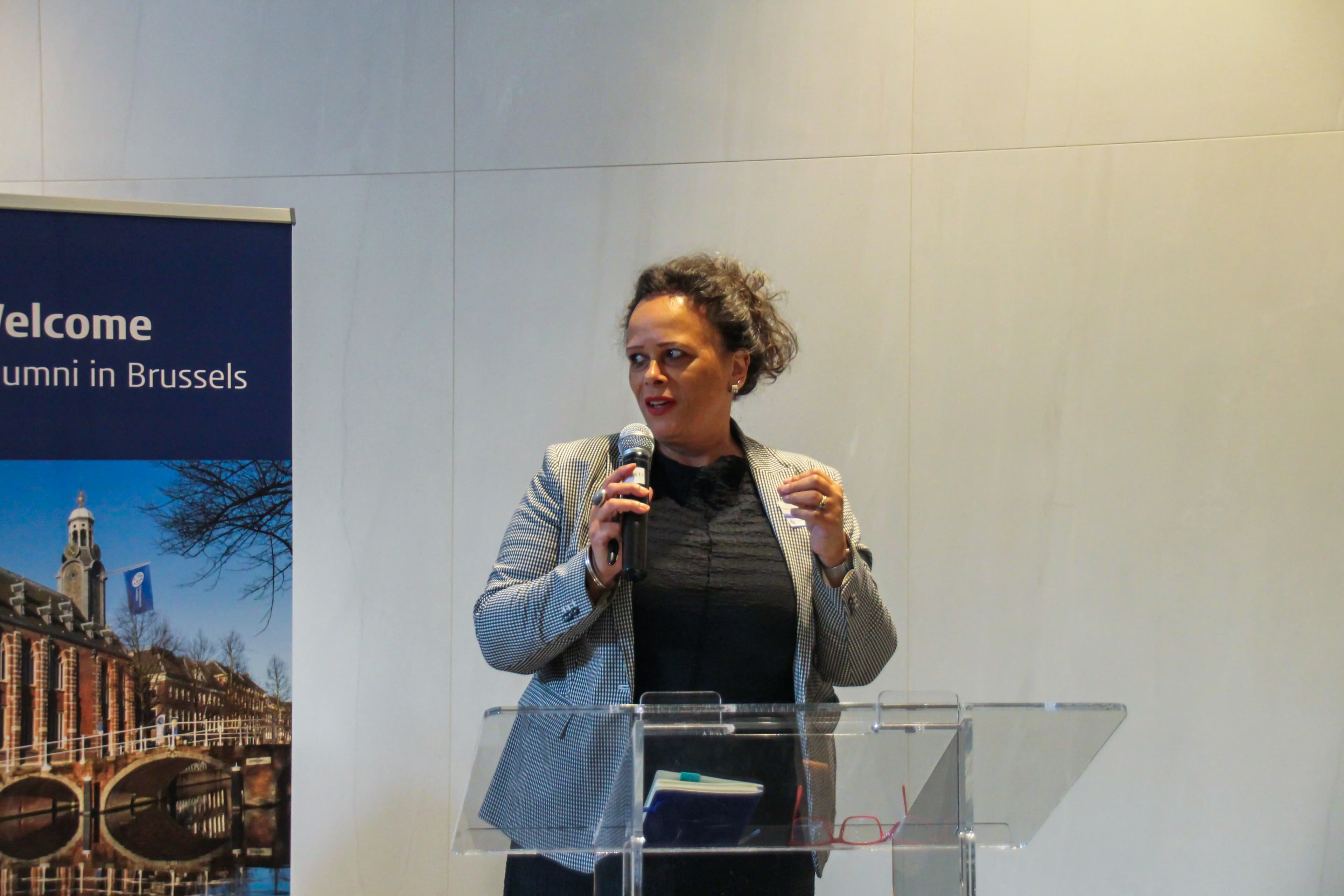
Moderator Maxine David (Humanities) -
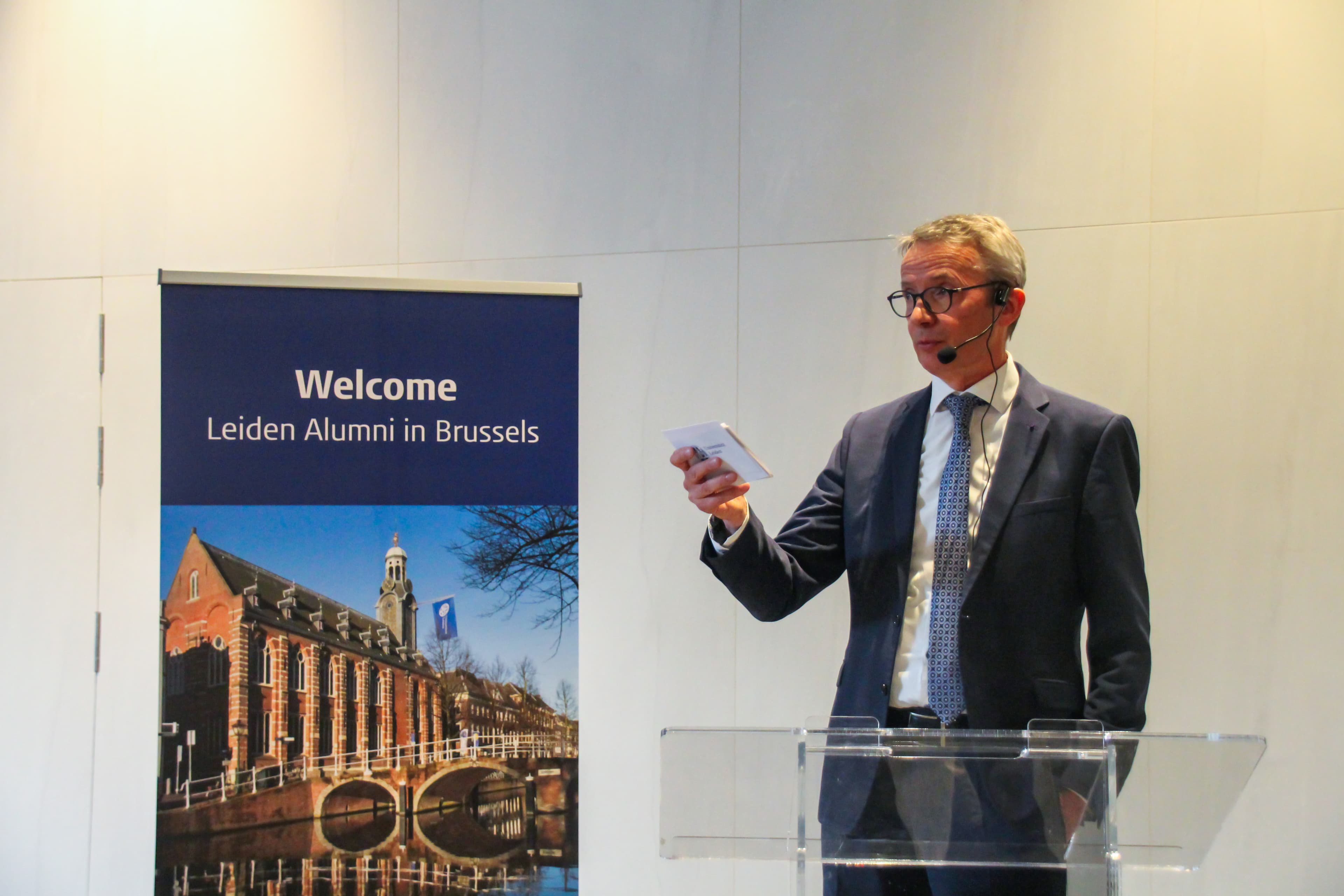
Luc Sels, President of the Executive Board -
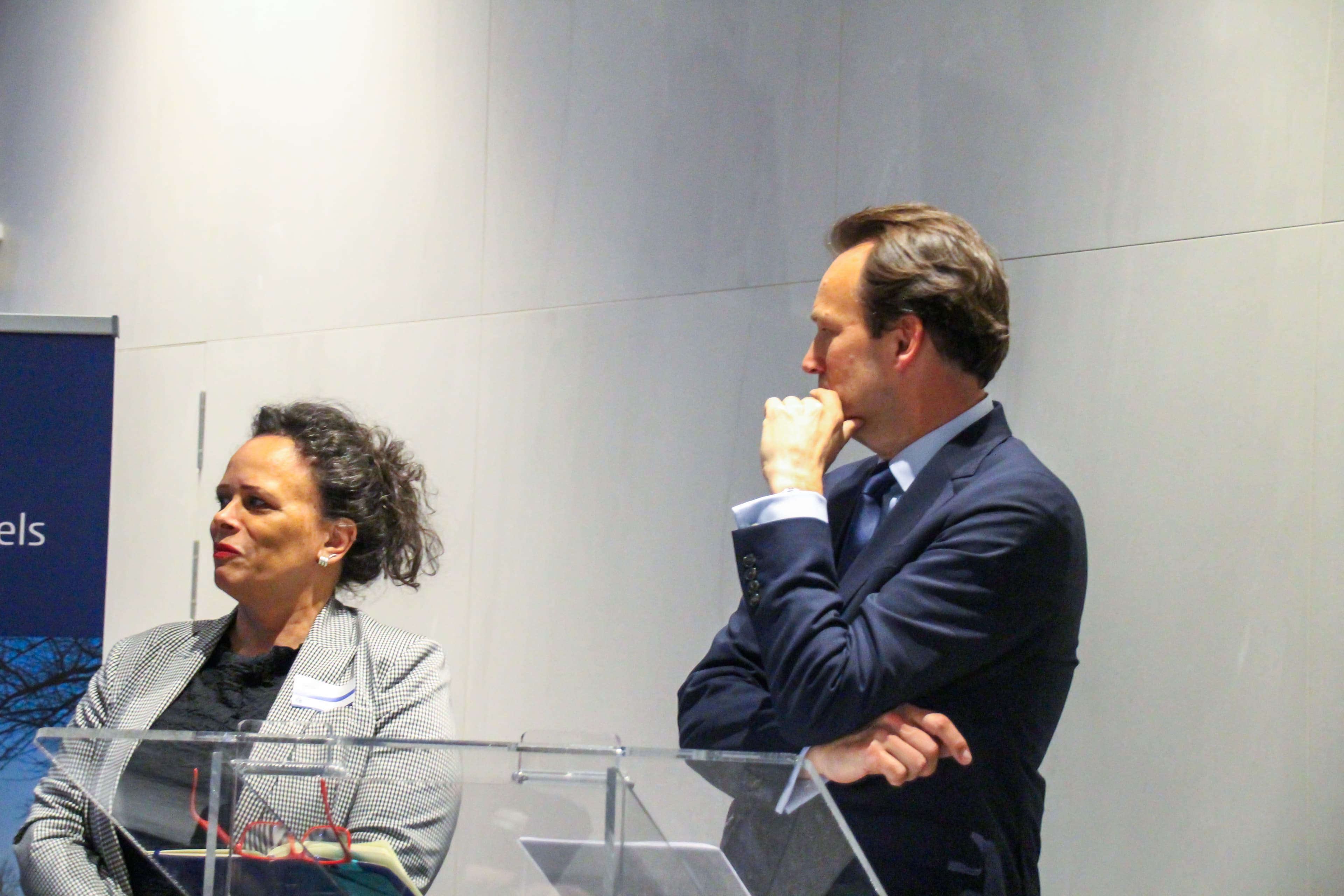
Maxine David with Geoffrey van Leeuwen -
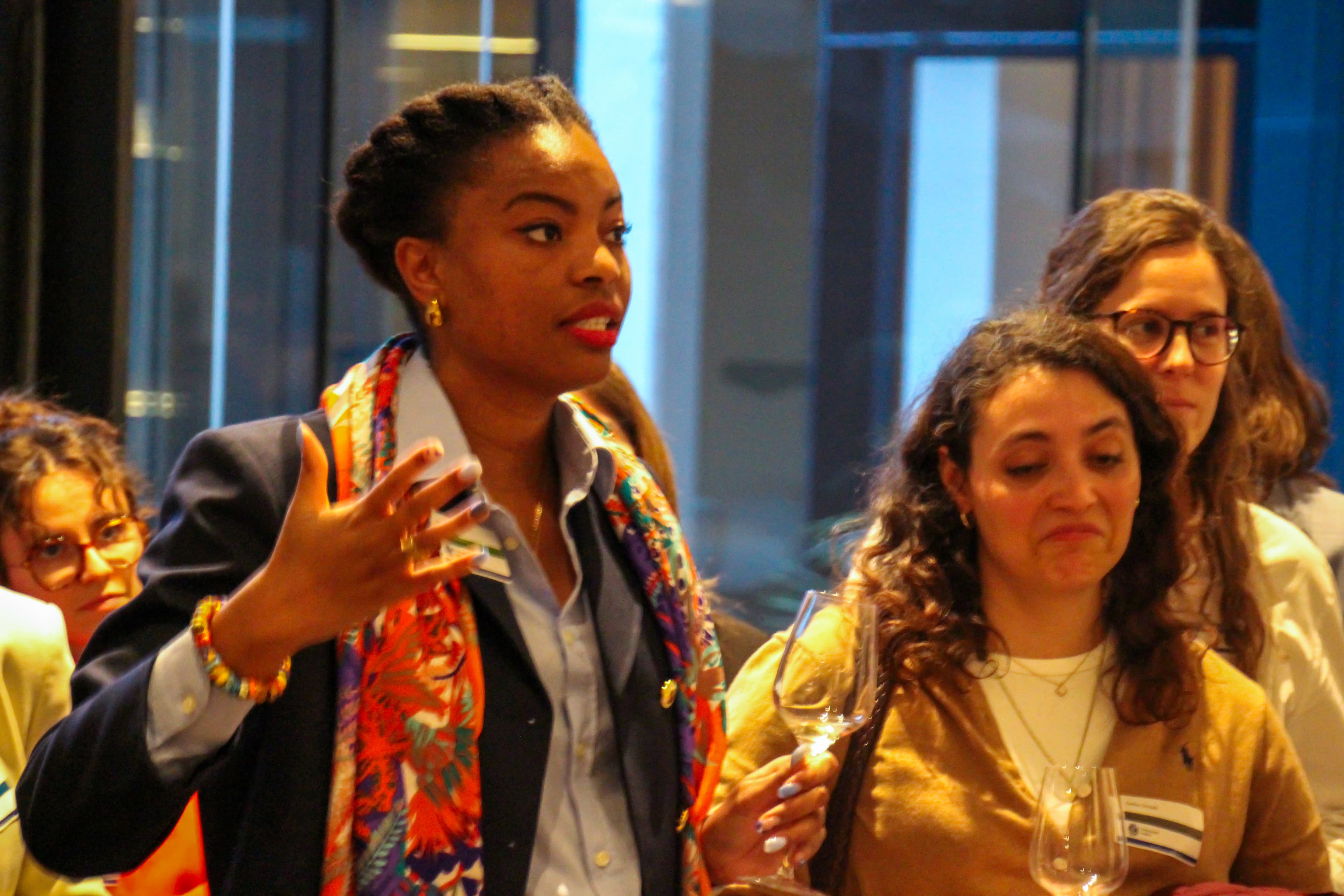
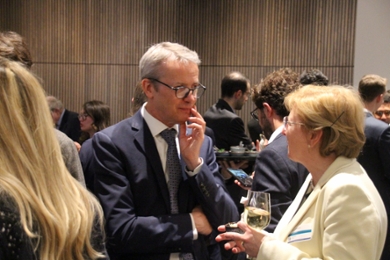
During the Q&A after the keynote -
-
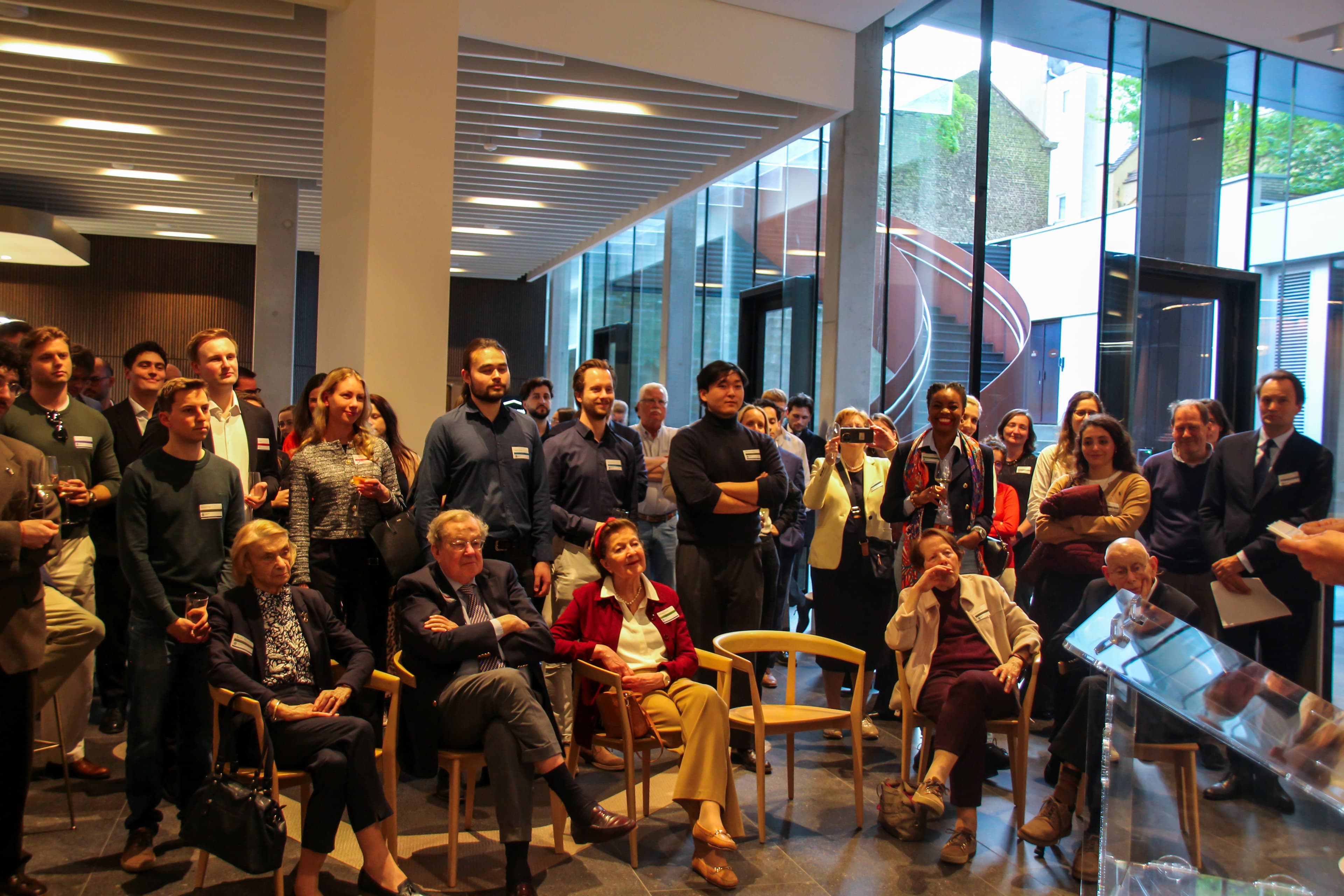
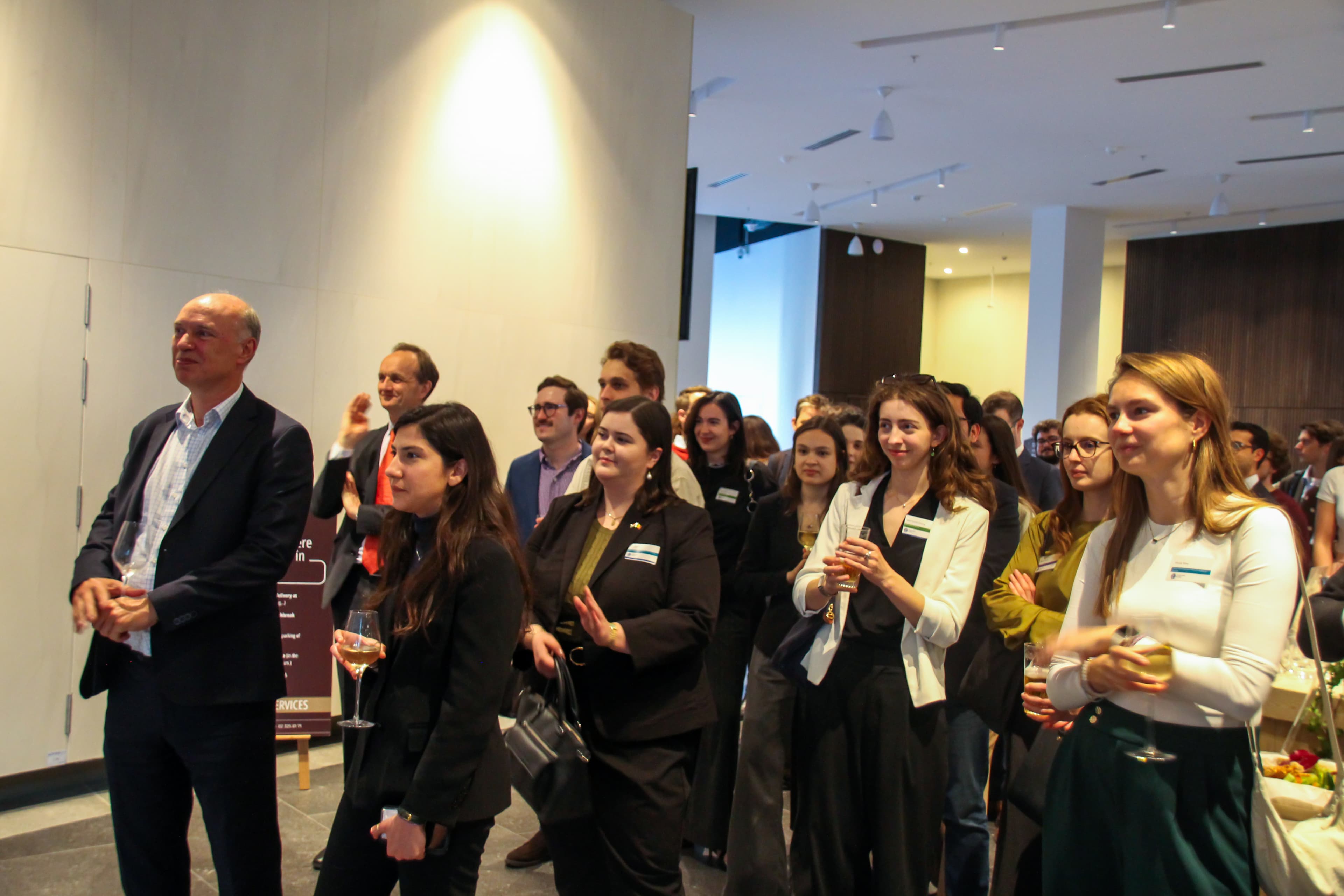
Attentive audience -
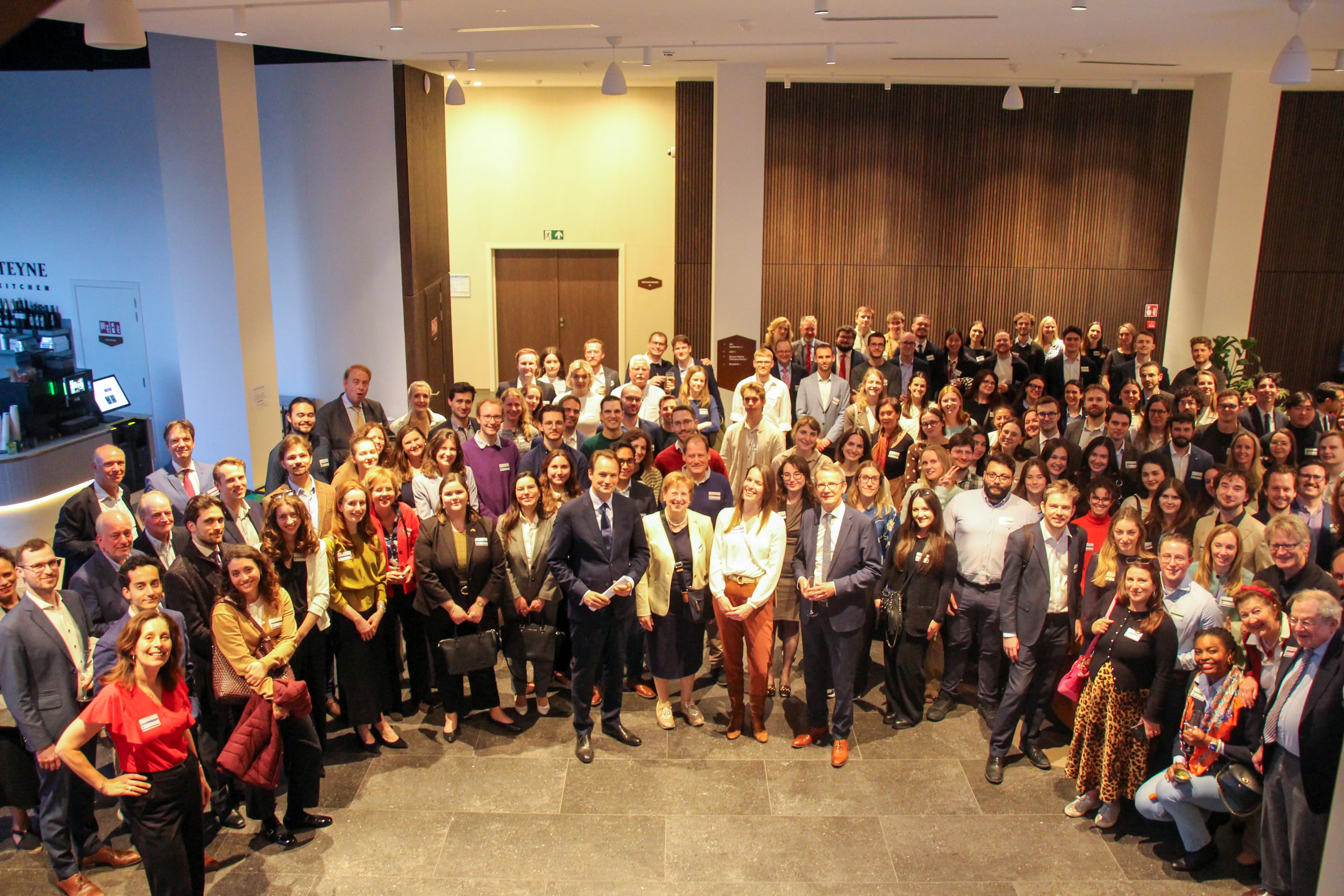
The yearly group photo
Aftermovie - Leiden Alumni in Brussels 2026
Due to the selected cookie settings, we cannot show this video here.
Watch the video on the original website or