
Lecture
LCCP Colloquium "The crisis of democracy and images of the body"
- Date
- Thursday 5 March 2026
- Time
- Series
- Centre for Continental Philosophy 2025 - 2026
- Location
-
Lipsius
Cleveringaplaats 1
2311 BD Leiden - Room
- 1.28
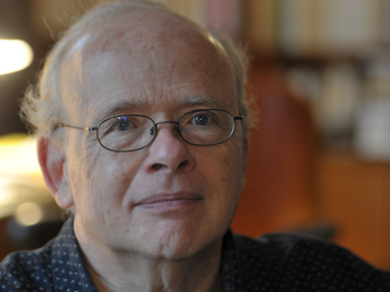
The Leiden Centre of Continental Philosophy is pleased to announce a lecture by Jacob Rogozinski, emeritus professor of Philosophy at the University of Strasbourg. His research is focusing on contemporary French philosophy, on political philosophy and on phenomenological thinking of the Ego and the body.
The body of the King, the body of the Leader, virile bodies
We are currently facing a profound political crisis. It is reflected in the rise and coming to power of movements that movements that seek to weaken or destroy the rule of law. They target immigrants and what they condemn as “wokeism,” that is, the defense of ethnic and sexual minorities. Like the totalitarian regimes of the 20th century, these movements are characterized by their fascinated submission to a charismatic leader and the designation of an “enemy within.”
According to Lefort, modern democracy involves a process of disincorporation of society, whereas totalitarianism aims, on the contrary, to reincorporate it in the form of a People-One merging with its Leader. Is it the same aim of reincorporation that reappears in these pre-fascist, pre-totalitarian movements we are confronted with today? Is it not prompted by the anxiety of indifferentiation caused by the deconstruction of the political Body and hierarchies—between the dominant and the dominated, men and women, “nationals” and foreigners—that this image of the body legitimized? To answer this question, we must analyze the schema of the "King's two bodies" and the institution of a sovereign "super-body"—at once infallible, omnipresent, and immortal—that characterized certain societies of the Ancien Régime, particularly the French absolute monarchy. It may well be that the “super-body” of the King continues to haunt democratic societies and reappears in a distorted form not only in the figure of the totalitarian leader, but also in the stereotype of the “virile body” that has been contrasted since the 19th century with “effeminate” or “degenerate” bodies destined to be “normalized” or eliminated.