

Science for Sustainable Societies (BSc)
Get to know the students
Meet the students behind Science for Sustainable Societies! In this section, you will find monthly interviews with the students who are following this programme. They will share what drives them, what they enjoy about their study, their views on our programme and what inspires them about sustainability. We hope these stories help you to get a sense of who we are!
Interviews
Newsletter Summer 2026 - Interview Fleur
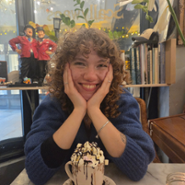
Can you tell us a bit more about your background?
I grew up in the Netherlands, but I have travelled a lot with my family. This made me appreciate nature a lot, specifically animals. Growing up, I also went out into the dunes and forests in the Netherlands on the weekends, which I think has fueled my love for the outdoors as well.
What inspired you to apply for Science for Sustainable Societies?
I graduated from high school in 2023, and started a bachelor in Astronomy here at Leiden University. I soon learned that it wasn’t for me; I found it too theoretical. Because of this, I started a degree in Animal Husbandry at a University of Applied Sciences (HBO). However, I found this too practical. That’s when I came across Science for Sustainable Societies. I thought it was the perfect mix between theoretical knowledge and practical application. I am also interested in a wide variety of subjects, which this bachelor offers!
What was/is your favorite course thus far?
My favorite course thus far was Applied Ecology. I liked learning about the theories surrounding biodiversity and there were a lot of practical elements as well. We went out and sampled water from a pond to see what kind of organisms lived in the pond. We also visited the dunes at Meijendel to learn more about the different landscapes and species there. I really liked learning more about biology, as I did not have biology as a subject in high school.
What was/is your favorite assignment thus far?
My favorite assignment thus far is an assignment we did for Socio-Economic Policy Evaluation. For this assignment, we researched tropical timber use in Leiden and went to visit multiple stakeholders, like municipality employees and businesses designing and producing street furniture. This taught me a lot about tropical timber, and it was exciting to talk to real stakeholders!
What would you like to do after graduating?
As I mentioned before, I am really fond of animals. That is why I would like to do the MSc Biodiversity & Sustainability at Leiden University, in order to get a career in wildlife conservation and/or research.
Newsletter May 2026 - interview Luca
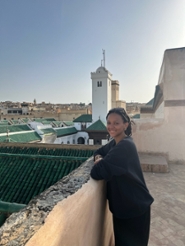
Can you tell us a bit more about your background?
I grew up in Johannesburg, South Africa, and almost four years ago I moved to the Netherlands where I completed my last two years of high school. At school, I enjoyed subjects such as geography, history and biology. Holding both South African and Dutch nationality as well as the fact that Johannesburg is such a culturally rich city to grow up in has driven me to seek out open-minded, diverse and collaborative experiences in life. I am very grateful to have had the opportunity to go on safari every year and I think that has definitely instilled in me the values of environmentalism, conservation and sustainability.
What inspired you to apply for Science for Sustainable Societies?
My background definitely played a large role in pushing me to apply for this programme. For as long as I can remember, I have had a great appreciation for the environment. I also took a gap year after completing high school in which I participated in two volunteer programmes surrounding conservation: one with elephants in Namibia and another with hyenas in Tanzania. I felt that my travels cemented the fact that I wanted to engage with sustainability on a meaningful level in my everyday life. I also considered a similar sustainability programme in Utrecht, however the emphasis on interdisciplinarity and diversity as well as the excitement I felt of potentially studying a bachelor that was so new ultimately pushed me to apply to this programme.
What was/is your favorite course thus far?
That is a hard question, but I would have to say that Anthropology of Sustainability and Governing Sustainability were my favourite courses. Both courses engaged with concepts I had never dealt with in high school, and I really feel I have learnt valuable things in each. I really enjoyed the setup of Anthropology and still find myself attributing concepts in my current block to those I learnt in Anthropology. Governing Sustainability was definitely a challenging and fast-paced course, but it really felt as though I was learning important tools for the future and cemented the fact that policymaking and governance should be key components when transitioning to a sustainable society.
What was/is your favorite assignment thus far?
I enjoyed the stakeholder debate surrounding GMOs in the introductory course as well as the writing up of a climate policy framework for a given for Governing Sustainability. I feel that both assignments allowed us as bachelor students to actualise real-world sustainability problems and engage with the types of work current policymakers, governments and institutions are dealing with.
What would you like to do after graduating?
After graduating, I hope to pursue a master’s degree, preferably in the UK. I am not too sure in which direction I want to go, and what my future thereafter looks like, however I am not too worried about job prospects as sustainability is increasingly becoming an essential element to be familiar with.
Newsletter May 2026 - Interview Elias
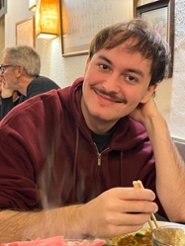
Can you tell us a bit more about your background?
Originally, I was born in Galapar (Spain) but my family moved to a small town near Madrid when I was just 2 years old. I only have good memories of my hometown, you know everyone, the guy at the fruit shop, the elders sitting outside.. It is a place I will always miss.
When I was around 16 years old, I moved to Amsterdam. I completed my high school there, where after finishing it, I decided to study software engineering in Eindhoven, but quit after only 3 months. Then I decided to work and then volunteer around Europe, meeting wonderful people and creating new experiences.
What inspired you to apply for Science for Sustainable Societies?
Living in a small town surrounded by nature made me appreciate more what nature has to offer, and when I saw this program, I knew it was the right one. All the classes offered sounded interesting and fun in their own way. What hooked me the most was the interdisciplinary aspect of the program; in my opinion, you can never go wrong when connecting social and natural sciences.
What was/is your favorite course thus far?
I had many enjoyable courses like Governing Sustainability and Introduction to Sustainable Societies, but if I had to choose it would be Anthropology for Sustainability. I really enjoyed that every week we learnt a new topic related to sustainability and a social issue. It was genuinely fun going to all the seminars and every week learning something that I didn't even know about.
What was/is your favorite assignment thus far?
My favorite assignment was the one we did for Anthropology for Sustainability. You had to write an essay about a sustainability topic you were interested in, but also connect it to an article that we had discussed in class. The process of making this essay was fun and challenging; it made me go outside of my comfort zone.
What would you like to do after graduating?
Honestly that something that I still need to think about, however I do have some things in mind like working in conservation of ecosystems. I would love to work next to the ocean or near any tropical place.
Newsletter April 2026 - Interview Ginevra Mancin
Can you tell us a bit more about your background?
I come from a very small village in the countryside of Northern Italy, where I had the chance to grow up surrounded by nature and all kinds of animals. Spending most of my time outdoors and in such close contact with the environment from a young age inevitably made protecting it feel like the most natural goal I could pursue in the future.
In high school, I followed more of a humanities path, focusing on languages, but with the same goal in mind. I then decided to move to the Netherlands to continue my studies, initially enrolling in an International Relations programme with the intention of specialising in environmental policy later on.
However, when I discovered that the Science for Sustainable Societies programme had just been created, I knew it was exactly what I had been looking for and decided to make the switch.

What inspired you to apply for Science for Sustainable Societies?
I feel like many bachelor’s programmes require you to choose one single area and look at the world through only one approach. What I found unique about Science for Sustainable Societies, and what inspired me to apply, is the possibility to explore the social sciences, natural sciences and governance all at once, without having to focus in isolation on just one of them, something essential given the complex context of environmental issues.
What was/is your favorite course thus far?
My favorite course so far has been Applied Ecology because of its hands-on approach. It was well balanced between theoretical knowledge and practical skills, as a great part of what we discussed in class, we had the opportunity to test out in the field. For instance, we learned how to sample terrestrial and aquatic biodiversity and how to estimate population size during excursions. We were also introduced to the use of GIS to understand ecosystems, habitats, and environmental changes. These are all basic and fundamental skills within the field that connect with the kind of career I’d like to pursue. That said, there are also many courses, especially in the second year, that interest me, and that could easily become new favorites!
What was/is your favorite assignment thus far?
I would say my favorite (group) assignment was the one from Governing Sustainability last block. What we had to do was develop and propose a strategy to help an assigned country reduce its climate impact. We first identified significant stakeholders and laws within climate policy, assessed the specific challenges the country faces, and then came up with policy directions to overcome them. It was, of course, quite a big project, but it was also very engaging for us to step into the role of designing a political strategy and apply what we were learning in a practical way.
What would you like to do after graduating?
Wildlife conservation is what I have always been most drawn to and involved in, so I can definitely see myself pursuing my studies in that direction and working within the field one day. More recently, through the programme, I have also developed an interest in ecotoxicology and the way pollutants and chemicals affect ecosystems.
Environmental policy is also an option I’d like to keep open.
I have many different interests, and there are many different paths I could pursue after graduating, so the future is still widely open!
Newsletter March 2026 - Interview Gergo
Can you tell us a bit more about your background?
I grew up in the agglomeration of Budapest, the capital of Hungary. In high school, I was particularly drawn to the natural sciences. I studied biology and chemistry at an advanced level, and I also chose advanced geography as an elective.
Beyond my formal education, I am also a member of the Association of the Hungarian Friends of Minerals, an organization dedicated to mineralogy and the appreciation of geological sciences. Through this interest, I have developed a fascination with Earth sciences and the processes that shape our planet. More generally, I have always been deeply interested in nature and the environment.

What inspired you to apply for Science for Sustainable Societies?
My previous answer already reflects much of what motivates me. At the same time, I have always been open to exploring new perspectives and engaging with different fields rather than limiting myself to a single area.
What particularly attracted me to the Science for Sustainable Societies programme is its unique combination of natural sciences and social sciences. This interdisciplinary approach is relatively rare and encourages thinking about complex issues from multiple perspectives. In today’s world, sustainability is not only an emerging concept but an essential one especially with consideration of our future.
What was/is your favorite course thus far?
Environmental Psychology stands out to me, even though it is not strictly a natural sciences course. What I find particularly interesting about it is that it focuses not only on society as a whole but also on individuals, who I believe represent an important unit of change. Even relatively small behavioral shifts at the individual level can accumulate and lead to significant outcomes.
The course examines the motivations behind human behavior and the possible interventions that can influence it. Understanding these mechanisms is essential not only for effective policy design, but also for gaining insight into what drives people’s decisions and, more importantly, Why?
What was/is your favorite assignment thus far?
I am not entirely sure if they count as assignments, but the excursions have been among my favorite parts of the programme so far. It is one thing to learn about concepts in the classroom, and another to experience them directly in the field. Being able to observe landscapes, ecosystems, or environmental processes in person adds the practical dimension that complements theoretical learning.
For me, the value of these excursions goes beyond simply spending time in nature although that is certainly an important aspect. What makes them particularly meaningful is the opportunity to better understand the processes and drivers behind what we study. Seeing how these concepts manifest in real environments helps connect abstract ideas with examples and deepen overall understanding.
What would you like to do after graduating?
After graduating, I plan to continue my studies by pursuing a master’s degree in geology, allowing me to build on my current academic background while moving closer to a long-standing personal goal of working more deeply within the Earth sciences.
Ideally, this path will give me the opportunity to focus on what I find most meaningful: studying the processes that shape our planet and contributing, in some capacity, to the broader scientific community. I also hope that this work can have relevance beyond academia and add to wider societal discussions related to the environment and sustainability.
Newsletter February 2026 - Interview Keizhava

Can you tell us a bit more about your background?
I grew up in Jakarta, Indonesia, a lively and chaotic city in the best way. There are always new restaurants, bars, interesting people to meet, and spaces to hang out, plus traffic at every hour.
After completing the Indonesian national curriculum in high school, I began my undergraduate studies in biomedical engineering in China. The programme pushed me to think quantitatively and solve problems under pressure, which strengthened my technical skills.
What inspired you to apply for Science for Sustainable Societies?
I knew that switching programmes and countries was not a small decision because I had already committed to a technical path. Over time, though, the scale of the questions I wanted to ask expanded. While working on engineering problems, I found myself increasingly curious about the systems around them. Science for Sustainable Societies stood out because it allowed me to build on my technical background while engaging with those broader systems questions. This programme also aligns closely with how I believe sustainability should be approached, as it combines environment, governance, and society within one framework.
What is your favorite course thus far?
My favorite course so far is Governing Sustainability. I really liked that we had to work with countries’ policy documents and reports while having to question the feasibility of their targets. It shifted how I think about sustainability by showing that ambition alone is not enough, implementation and institutional design matter just as much.
What was/is your favorite assignment thus far?
Definitely the Python modelling project! I did not expect to enjoy it that much. Building the model and testing different logic was genuinely satisfying, especially when the code finally ran correctly. The process was fun and interesting because we worked with actual climate data, such as temperature trends and carbon levels.
What would you like to do after graduating?
I would like to work in a role that keeps me close to data and real-world problem solving but also involves people and variety. Consulting appeals to me right now because it exposes you to multiple sectors, which aligns well with this major, and requires translating analysis into practical recommendations. I enjoy the human side of the work as well, working with stakeholders, presenting, and figuring out what’s realistic in messy situations.
You are also in the Programme Committee of the programme, as one of the student members. Can you tell us about your role as a student member of the Programme Committee?
My two student classmates and I represent the student perspective on the Programme Committee. We hold discussions about the overall quality of the programme, which includes reviewing course evaluations and considering how the programme evolves over time and how courses fit together. I appreciate the committee's openness and constructiveness. Being part of the committee has given me insight into how academic decisions are made, while also pushing me to communicate clearly and contribute constructively in structured discussions.
Newsletter December 2025 - Interview Zenna
Why did you choose this programme?
Honestly, I just thought it looked fun! I was thinking about a lot of different programmes, and when I saw this, the interdisciplinary aspect really appealed to me. I visited the Open Day of Leiden University, and I accidentally stumbled upon SfSS and went to the information session: I was hooked right away.
And how is it going so far?
Good! I like that the programme lets me explore different disciplines and that there is a nice balance between academic theory and hands-on, practical components. And very important: I’ve also met new people and made new friends.

Can you tell us a bit about the courses you’re currently taking?
In the first block, my favorite course was Introduction to Science for Sustainable Societies. The diversity of topics and the interactive format really stood out. We had excursions, real-life case studies, and even a guest panel from the Mabuwaya Foundation, who shared their experiences in wildlife conservation in the Philippines. It showed how different disciplines are in conversation work and how all of them connect in real life.
This block, I’m following Anthropology of Sustainability, Social Science Methods, and Governing Sustainability. I’m really enjoying Anthropology of Sustainability. There’s a lot of reading, but the discussions about the readings make it worthwhile. We talk about concepts such as colonialism, capitalism, social (in)justice, and environmental issues. These discussions help you understand different perspectives and think more critically about sustainability issues.
What would you like to do after graduating?
I’d love to work in biodiversity and ecosystem conservation, either in marine or tropical environments. Therefore, I’m especially looking forward to taking the Earth Systems Science course this year, and the Biodiversity and Livelihoods, and Integrated Field Methods courses in the second year.
Newsletter September 2025 - Interview Sadhna and Esha
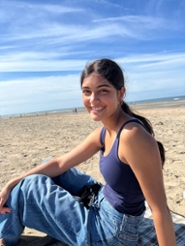
Voices from the First Cohort: Meet Sadhna and Esha
In this interview, we speak with Sadhna and Esha, two students from our Science for Sustainable Societies programme. Both have been passionate about sustainability from a young age and believe that we have to ensure a more secure and abundant future for humanity and all other species.
For both of them, sustainability is about collective action and shared responsibility. ‘Collective action could maybe heal the fragmentation within society and we overcome our differences to solve this collective issue’ Esha says. Sadhna adds, ‘even if you are not studying sustainability, it is going to impact you… we need to work together to help solve it.’
They also share a deep appreciation for nature’s beauty, Esha is drawn to protecting forests and coastlines, while Sadhna is especially concerned about the shrinking glaciers and the Cascade mountain range, where her grandparents live.
What motivated you to choose the Science for Sustainable Societies programme?
Sadhna: ‘For me, it was the interdisciplinary aspect. I have always struggled to choose just one path, and this programme brings together different areas in a really meaningful way. I also liked that it is not just about theory, but also developing practical skills that we can actually use.’
Esha: ‘Yeah, I can relate to that. I really enjoyed subjects like biology and geography and this programme combining natural and social sciences just made sense to me. Sustainability is such a complex issue, we need both perspectives to really make a difference.’
You are now a few weeks in the programme. What is something new or surprising you have learned in these first weeks?
Esha: ‘Content-wise, it feels like a deeper dive into topics I have seen before. For example in ecology, it is more in-depth than in school, but not totally new. What has been surprising for me is more on the skills side. I had never really learned how to read scientific papers properly, and now we are being taught that, which is super useful.
Sadhna: ‘I took a gap year before starting university, so these first weeks have been about getting back into the academic mindset for me. Although I did not do my high school biology examens, and ecology is brand-new for me, it is very interesting and doable. I did chemistry and geography in high school and there is some overlap.’
What are you looking forward to in the rest of the year?
Sadhna: ‘I am really looking forward to the anthropology course coming up next block. It is always been something I have wanted to explore. I have heard a lot about it, but I have never actually had the chance to study it properly, so I am excited for that.’
Esha: ‘The same for me content wise, but skills wise I am also curious about the programming part, since I have never really done that before. And beyond the courses, I am also looking forward to just getting to know our cohort better. We are already starting to connect more, and I think it will be really fun to grow together throughout the year.’
How does it feel to be part of a new programme?
Esha: ‘I think it is pretty cool that we are the first cohort. I was actually surprised that a programme like this did not already exist. I am just really glad I ended up being part of it.’
Sadhna: ‘Yeah, same here. I was definitely a bit nervous before starting, I even emailed the study advisors about it! But it has been amazing so far. I really enjoy it and feel like I made the right choice.’
Esha: ‘Yes, contacting the study advisors is really easy and they are very responsive!’
How have the first few courses shaped your understanding of sustainability so far?
Esha: ‘I think the Introduction to Science for Sustainable Societies course brought up some really interesting points, especially from a social science perspective, like questions around responsibility: who should be in charge of solving these issues, and how do we work together?’
Sadhna: ‘And in ecology, although it is applied, we learn the ecological foundation that is necessary. You kind of need to understand the basics before you can fully see the bigger picture.’
Esha: ‘In mathematics we learned about the Earth’s energy balance. I’m not sure how it is contributing to my understanding of sustainability yet, but I certainly learned something new.'
And last question, what is the most sustainable thing that you have every done?
Sadhna: ‘Hmm... I have actually never really thought about that. I am vegetarian and we do have solar panels at home though. Maybe just choosing to study this programme!’
Esha: ‘Yeah, same it is not something I have thought about much either. But I guess one of the most sustainable things I have done is taking an Interrail trip over the summer instead of flying. Some of my friends chose to fly, but I decided to take the train. It felt like a conscious choice.’