
Bio-organic Synthesis
Research
Research at the BIOSYN group is comprised of the following research themes:
Synthetic carbohydrate chemistry for glycobiology (Jeroen Codée)
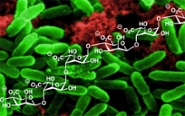
Carbohydrates are the most diverse and complex class of biomolecules from both a structural and biological activity point of view. Our research focuses on the development of synthetic tools and strategies, including automated solid phase procedures, to efficiently assemble well-defined oligosaccharides and glycoconjugates to unravel their mode of action at the molecular level. State-of-the-art synthetic chemistry is used to generate synthetic vaccine modalities (directed at bacterial infections and cancer) and in the design and synthesis of inhibitors and probes to study carbohydrate metabolism.
Physiological processes in glycobiology and immunology (Hermen Overkleeft)
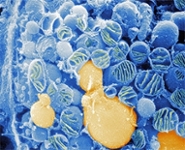
Irreversible, or mechanism-based, inhibitors are attractive tools in chemical biology. Attachment of a reporter entity, which can be a biotin, a fluorophore, a bioorthogonal tag, a radiolabel or a combination of these, allows for the identification, visualization, identification and spatiotemporal study of the modified enzyme(s) using various techniques and in complex biological systems ranging from cell extracts, living tissue to animal models. This is the field of activity-based protein profiling (ABPP).
Within the group we develop activity-based probes (ABPs) for proteases, glycosidases and a range of other hydrolases and apply these in immunological and glycobiological studies related to health and disease. Together with these ABPs we develop focused libraries of (competitive) inhibitors. Together, this toolset allows us to perform a number of conceptual experiments. In comparative ABPP ABPs are used to discover new enzyme activities and to compare enzyme expression levels in different tissue. In competitive ABPP the focused inhibitor libraries are included to study efficacy and selectivity of these in complex biological samples. In fluorescence polarization ABPP we develop assays amenable for high-throughput screening to discover new chemical entities for inhibiting one of our target enzymes.
Artificial stimuli-responsive transmembrane transport systems and dynamic self-assembling materials to study and manipulate biological systems (Sander Wezenberg)
The research in the Wezenberg group is focused on the development of stimuli-responsive molecular receptors and self-assembling materials. Our aim is to use these to study and manipulate biological systems. To this end, a highly interdisciplinary approach is taken, which combines synthetic organic chemistry, supramolecular chemistry, and photochemistry.
A major part of our research program involves photodynamic control of anion binding and liposomal membrane transport as well as inter-liposomal communication. We are also interested in creating polymeric and self-assembled materials with switchable function. Our mission is to find new diagnostic tools and therapeutic agents that improve human health. Read more on the Wezenberg group website