

Nimar: 20 years building bridges between Europe, Africa and the Arab world
Anniversary image: Jabrane Lakhssassi
For 20 years, researchers and students have been studying Moroccan society at the Netherlands Institute in Morocco (Nimar) in Rabat. The institute also acts as a gateway to Africa and the Arab world. During Nimar’s anniversary celebrations, speakers looked back on the past and ahead to the future.

‘Nimar isn’t just an institute; it’s a place where people meet, where partnerships are formed and where knowledge grows through collaboration’, said Sarah de Rijcke during her visit to Rabat. She said the institute had become a trusted bridge between the Netherlands and Morocco. The knowledge gained here about Moroccan society is highly valuable to pressing issues such as migration, inequality and technological change, De Rijcke said.
A broad delegation of researchers and staff from Leiden and Jakarta visited Rabat from 21 to 24 October. Alongside the anniversary celebration, the programme featured meetings with Moroccan universities, the Dutch embassy and Indonesian partners. Nimar also works with other academic institutions abroad, such as KITLV Jakarta, NVIC in Cairo, NIT in Istanbul and NUVONI in Nairobi.
-

The student and staff delegation -
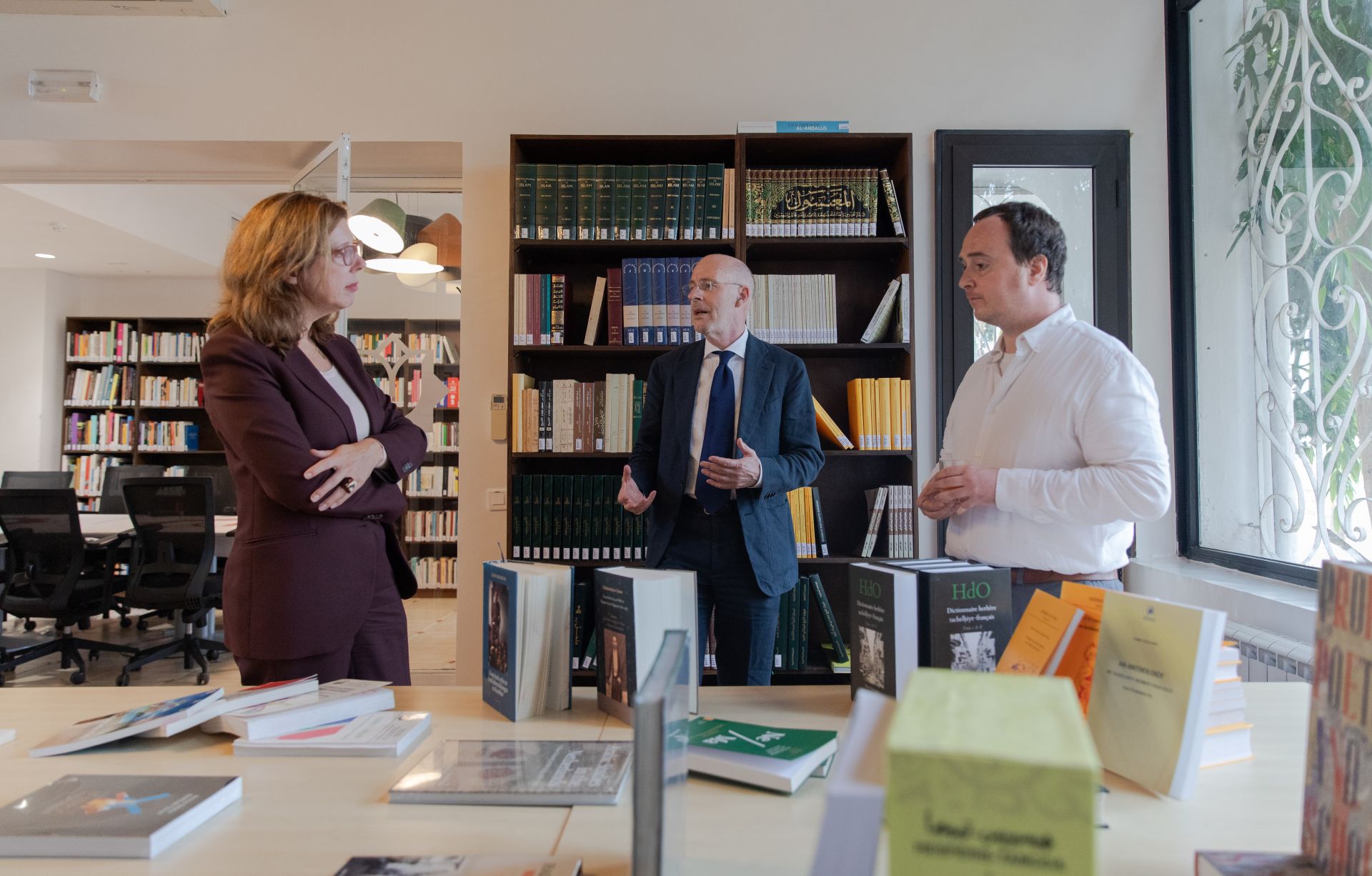
Rector Sarah de Rijcke speaks with Nimar director Léon Buskens (centre) -
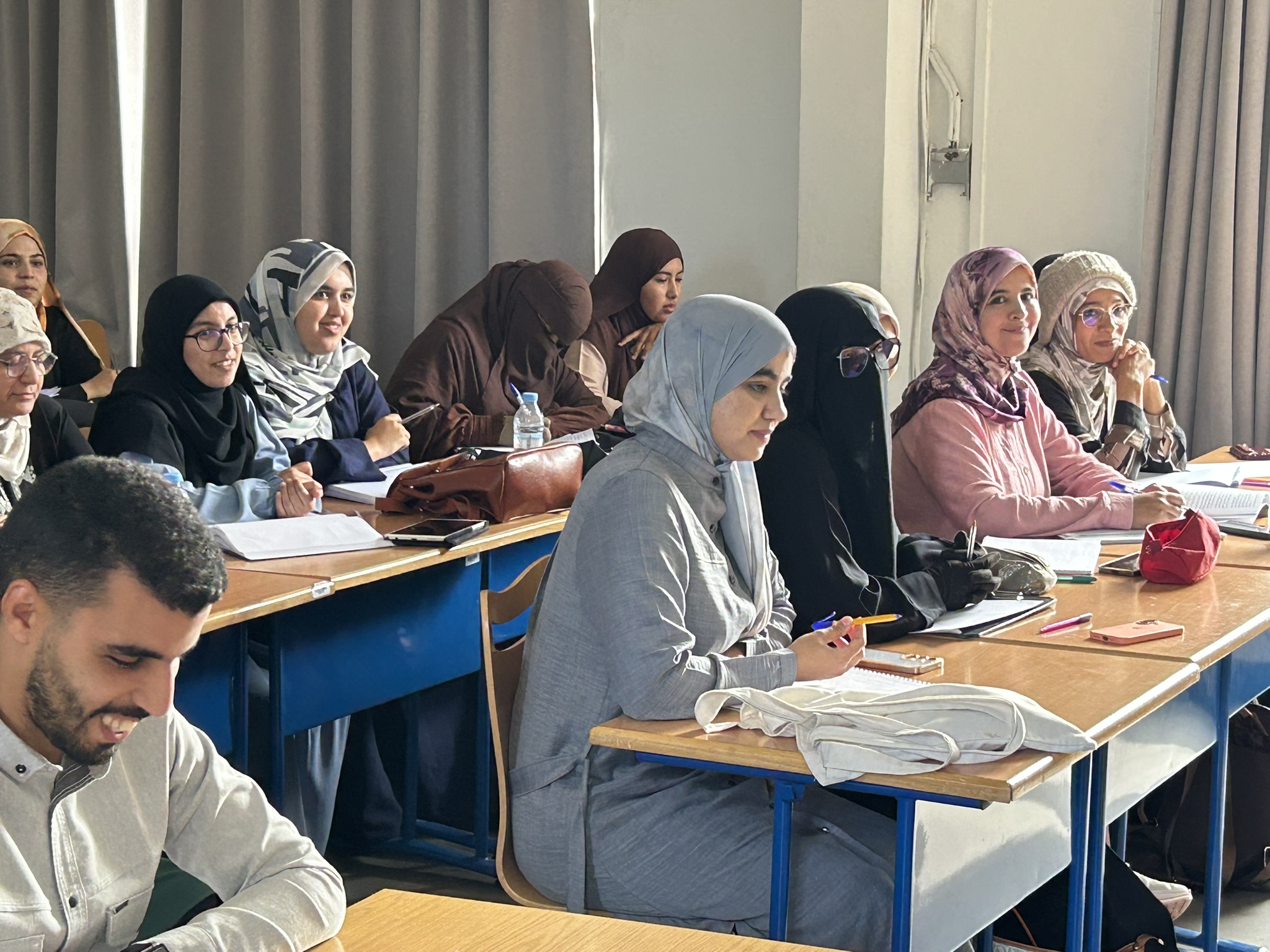
Visiting partner universities -
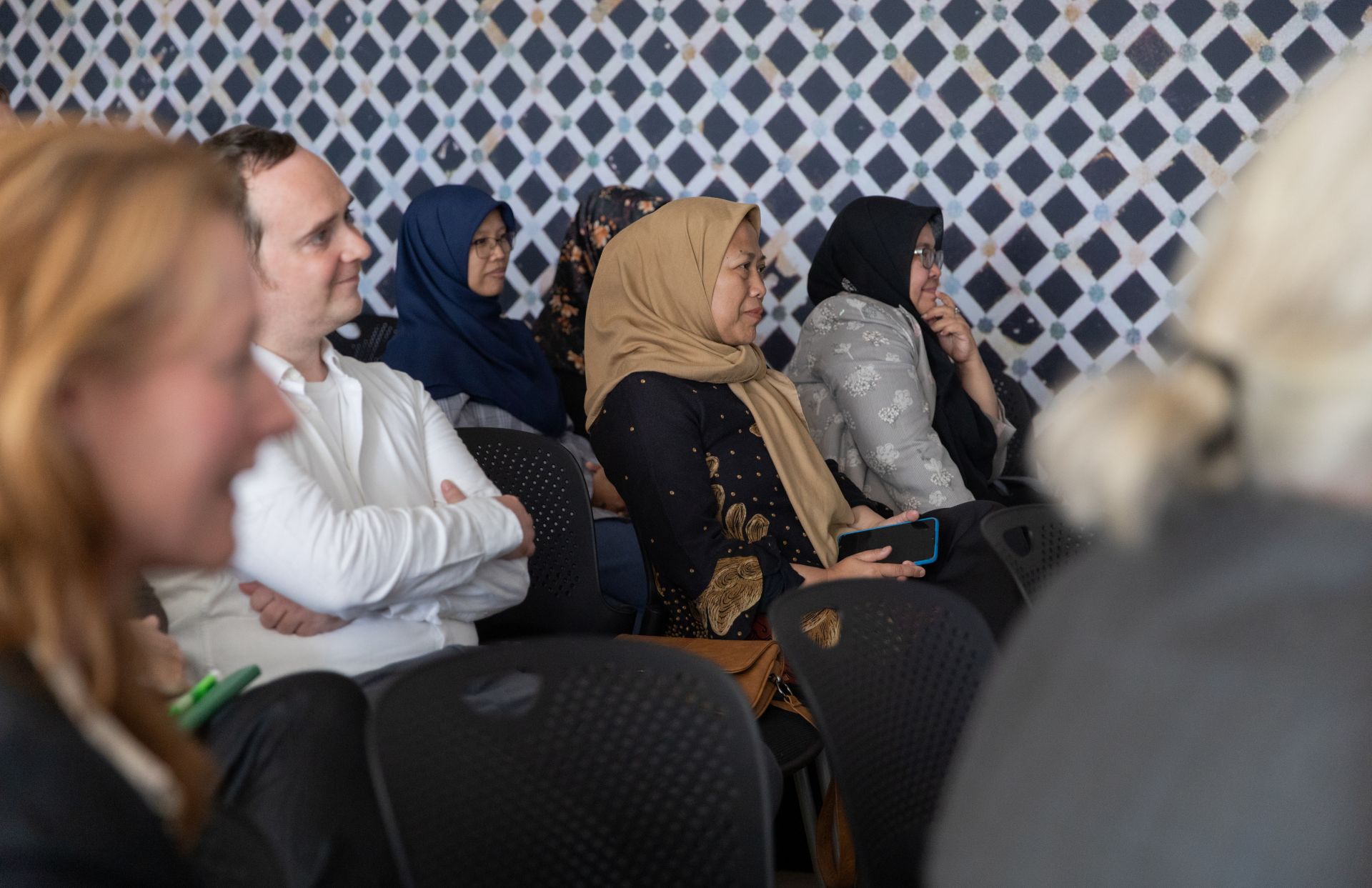
Participants in the anniversary celebration
National mandate
The institute, which was founded in 2006, has been part of Leiden University’s Faculty of Humanities since 2016. But visitors do not just come from Leiden. ‘We have a national mandate’, Nimar director Léon Buskens explains. This means that students and researchers from other Dutch educational institutions can also spend time there. From a legal perspective, the institute is also part of the Dutch Embassy in Rabat.
Window on Africa and the Arab world
The institute facilitates research and teaching not only within academia but also for partners beyond it. For example, Dutch ministries make good use of the contacts and knowledge that Nimar has built up on Africa and research topics such as Islam. ‘The institute also offers a window on Africa and the Arab world’, says Buskens.
In collaboration with Islamic universities and Indonesian delegation members, a symposium on Islamic Studies was held during the anniversary week at Université Mohammed V in Rabat. Rector de Rijcke concluded with a speech about new developments in academic publishing and research quality assessment.
-
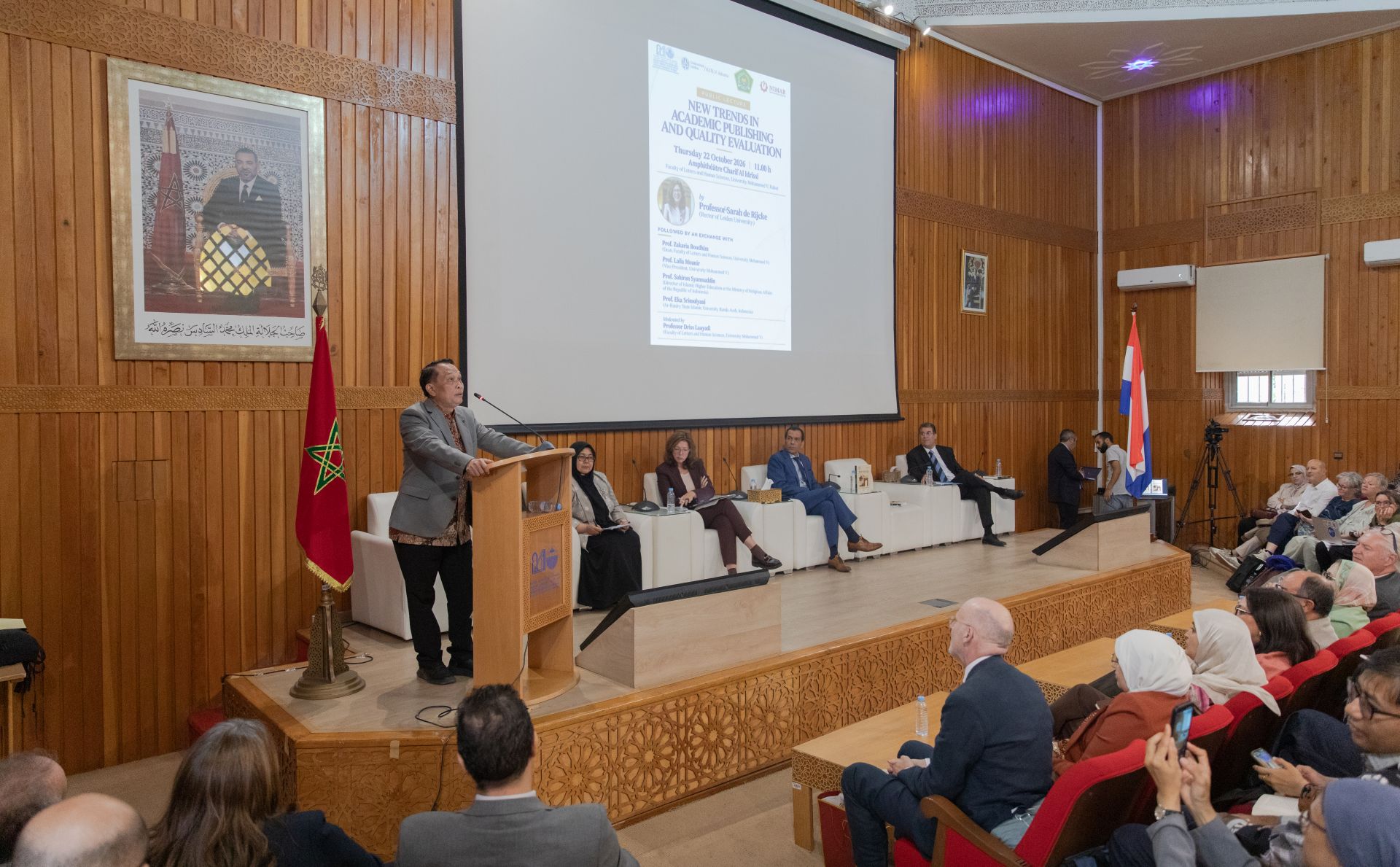
Islamic Studies symposium, also with Indonesian partners -
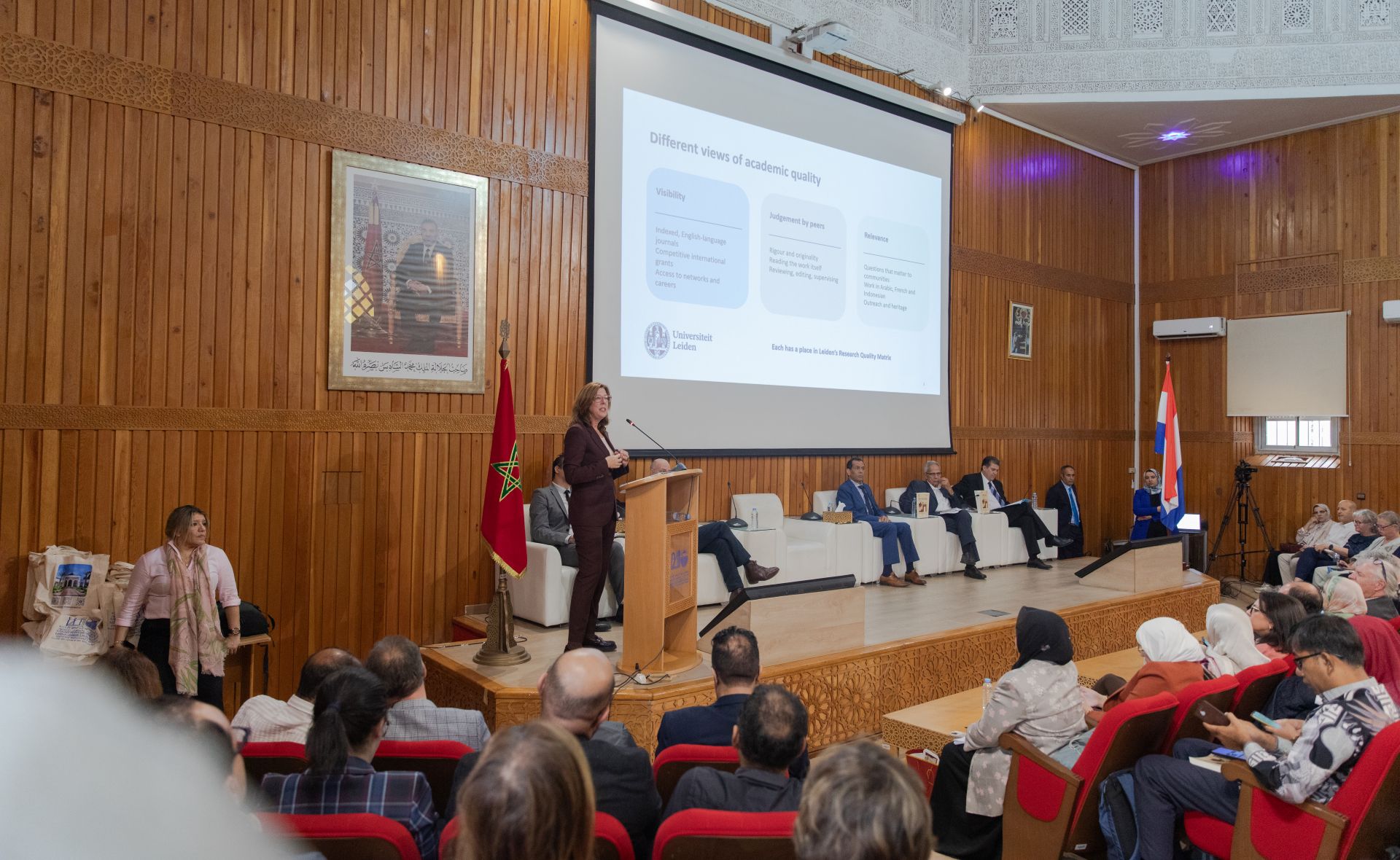
Sarah de Rijcke speaks at the symposium -
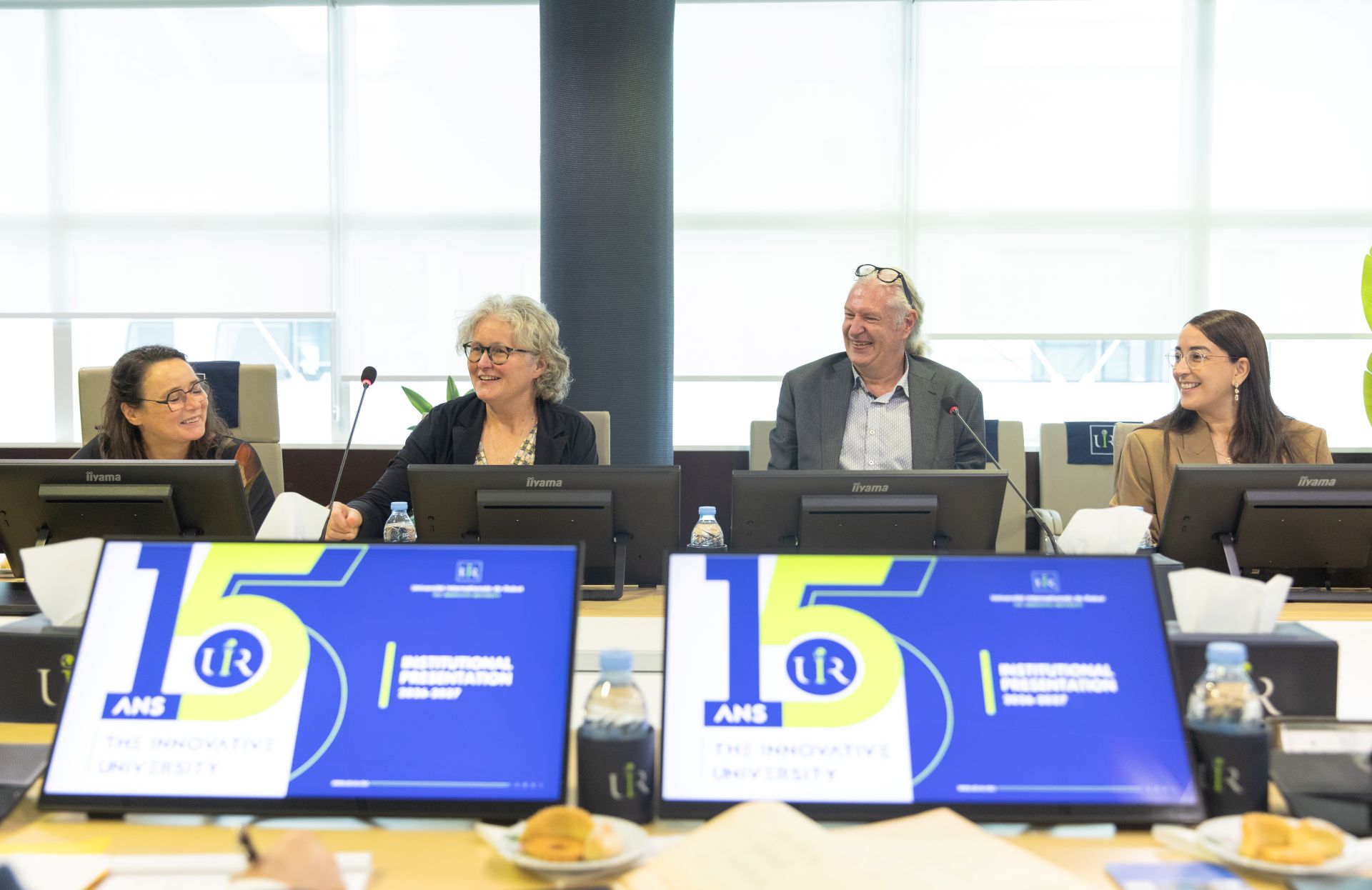
Delegation including Alicia Schrikker, Marleen Dekker and Bart Barendregt -
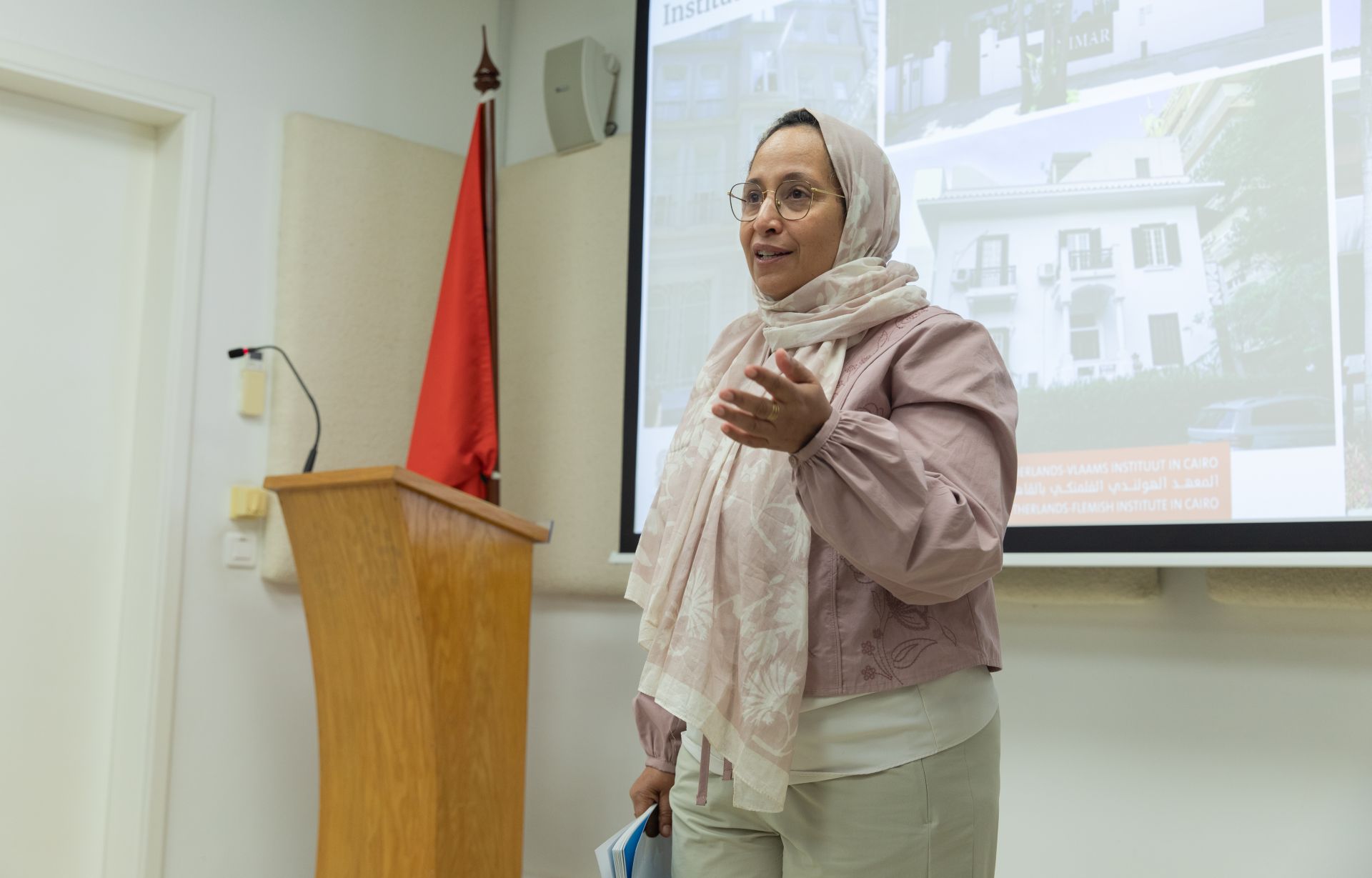
Presentation at Nimar
Africa Studies
The delegation included representatives from key research themes. Professor of African Studies Marleen Dekker mentioned various special projects in her presentation. Nimar and the African Studies Centre Leiden have joined forces to study ports and major infrastructure projects in Morocco and other African countries. Since 2024, the project has included an annual field course for master’s students and PhD candidates. They study how major infrastructure projects affect the development of countries in this region.
Social sciences
The social sciences are also an important research field at Nimar. Dean of the Faculty of Social and Behavioural Sciences, Bart Barendregt, spoke about topics being studied in Morocco. These include urban development, the interaction between technology and society, and developments in artificial intelligence and the creative industries. Nimar’s local knowledge and contacts help Dutch scholars develop research projects and work with Moroccan partners.
Heritage
Another key research theme is heritage. Collaboration on heritage and museum studies links historical knowledge with questions about culture and identity. Heritage specialists Sybille Lammes and Alicia Schrikker explained why this is important. The way societies preserve and present their past reveals how they view that past through the lens of the present. In turn, this offers insight into how they see the future.

Nimar director Buskens also spoke with the delegation about the institute’s social, diplomatic and cultural role. Through collaboration with Moroccan academics, artists, civil society organisations and government, the institute makes a meaningful contribution to bilateral relations between the Netherlands and Morocco.
Learning by being there
Education also featured high on the programme during the celebration. Each semester, the institute offers a 30-credit curriculum. Students can, for example, take the Culture and Society in Morocco minor, where they explore Moroccan society and culture through their own experiences in the country. Nimar also organises study trips and an honours programme.
Student experience
Students from the minor spoke to the delegation about their experiences in Morocco. Studying there helps them understand the country. Aimyn Benrida was one of the students taking the Culture and Society in Morocco minor. Why did he choose to study in Rabat? ‘I have Moroccan roots and had previously visited mainly as a tourist. Living and studying is a very different experience. I also saw it as a great opportunity for personal and professional development.’
-

Student Aimyn Benrida (in blue) during a cultural excursion in Morocco -
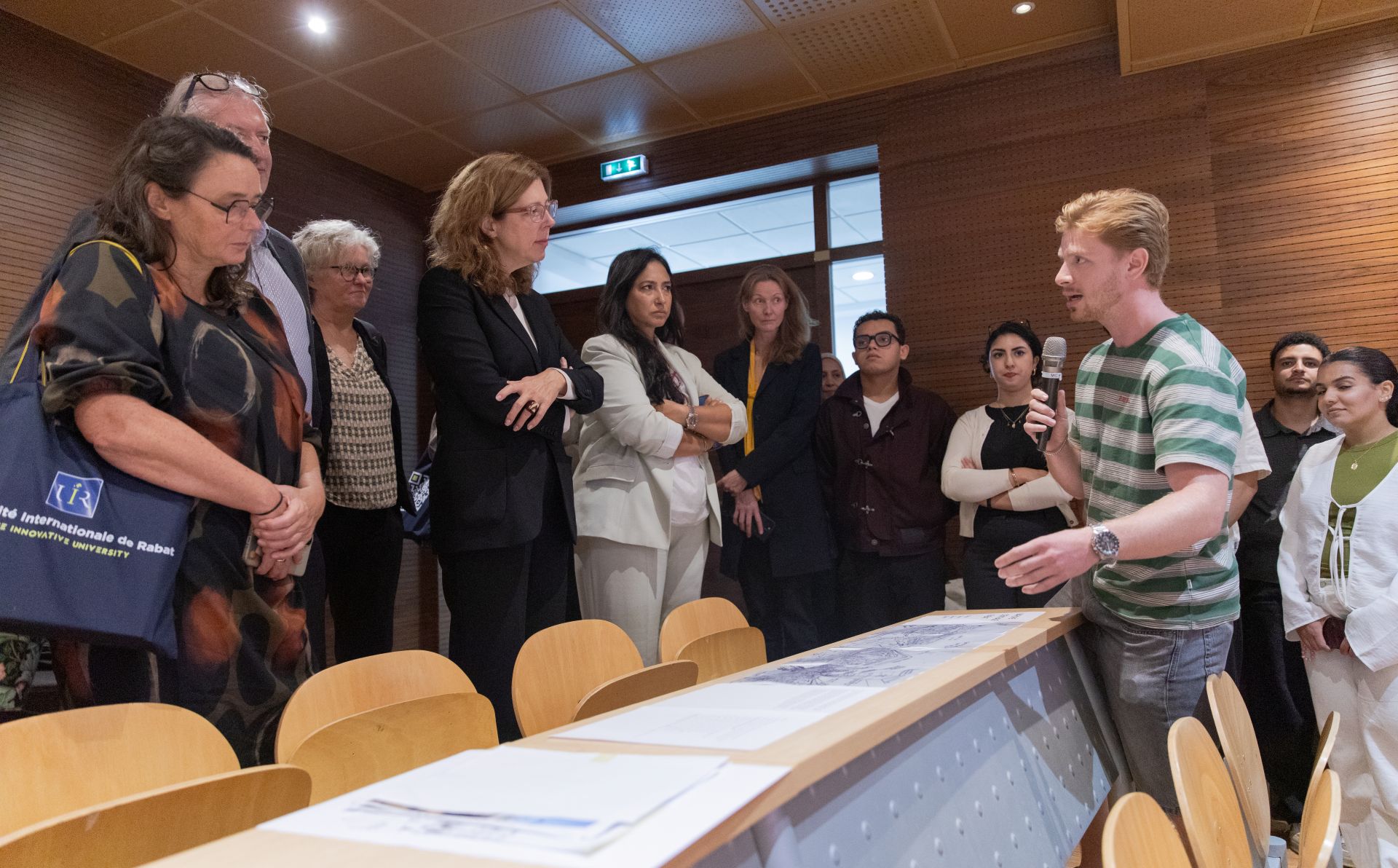
Students present their projects -

-
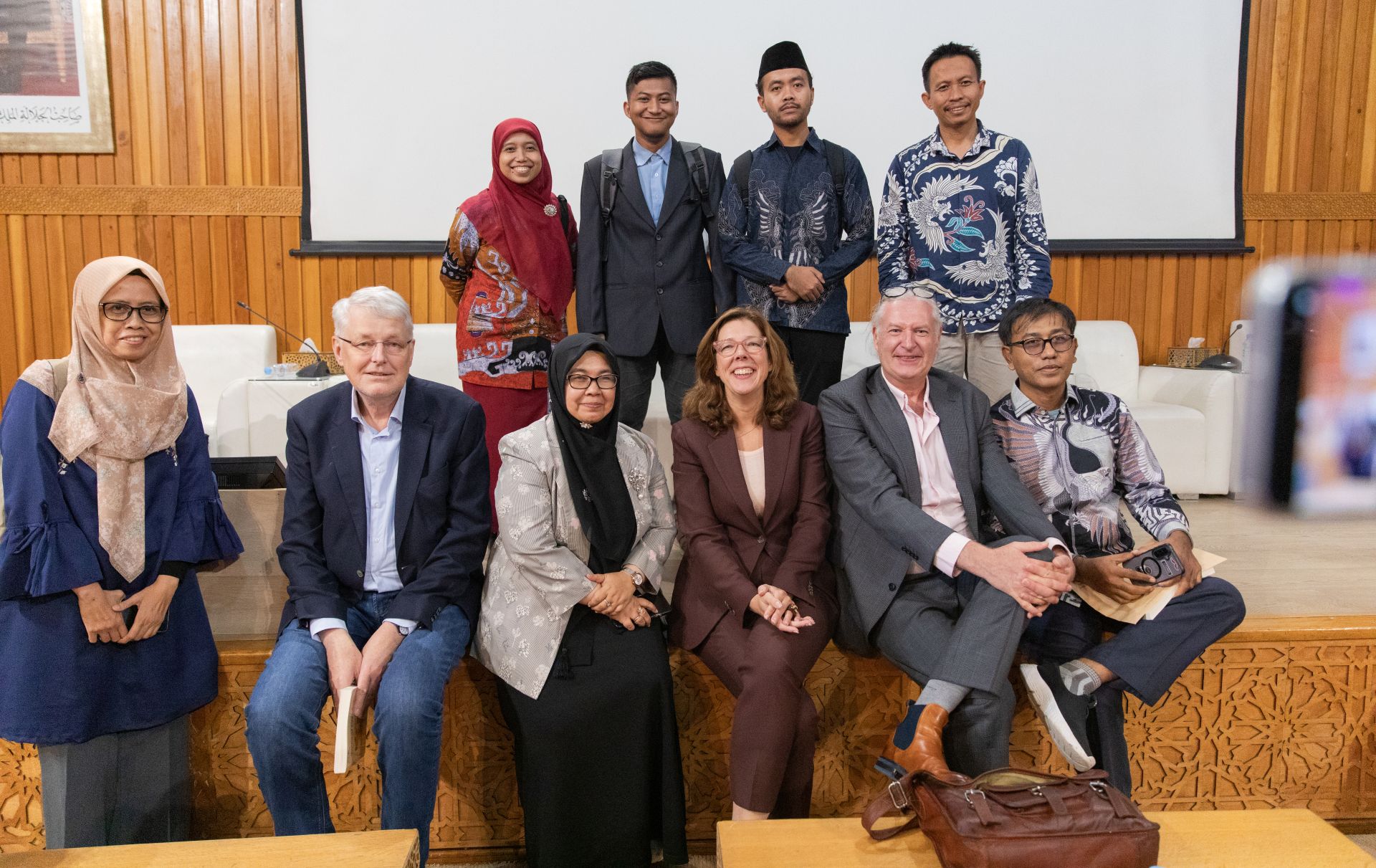
The delegation also included several Indonesian participants
Different perspectives
Being there is definitely beneficial, he says, so he advises other students to consider such a trip. ‘You don’t just learn about Morocco from the textbooks; you experience its culture and society first-hand. Through excursions and contact with local people, you gain a better understanding of the country and of different perspectives. As a result, you learn a great deal not only about Morocco but also about yourself.’
Knowledge diplomacy
And finally, in her anniversary speech, De Rijcke reflected on turbulent geopolitical developments. ‘Nimar plays an important role in what we increasingly refer to as science diplomacy. Universities are uniquely placed to bring people together across borders. Through research, teaching and dialogue, they build relationships that last, even amid political change and geopolitical uncertainty.’