
The future of criminal justice in the EU depends on Member States cooperating
Eurojust visit
As the world changes, transnational crime changes with it. Are EU countries cooperating effectively to combat these evolving forms of crime? Jannemieke Ouwerkerk and Konstantinos Zoumpoulakis discussed this question with members of the EU agency Eurojust during an interactive lecture.
On 2 July 2026, Leiden University welcomed the EU agency Eurojust. The visit brought together over 30 judges and public prosecutors from the 27 EU Member States, including Leiden Law alumnus and Eurojust President Michael Schmid. Around 10 liaison prosecutors from third countries also joined, including Ukraine, Iceland, the US, the UK, Norway, and Switzerland.

Programme at Leiden Law School
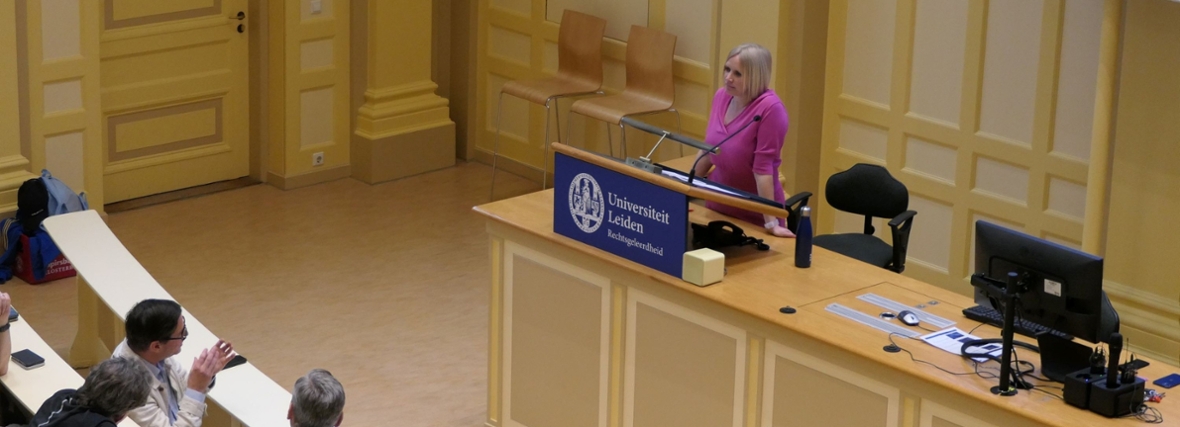
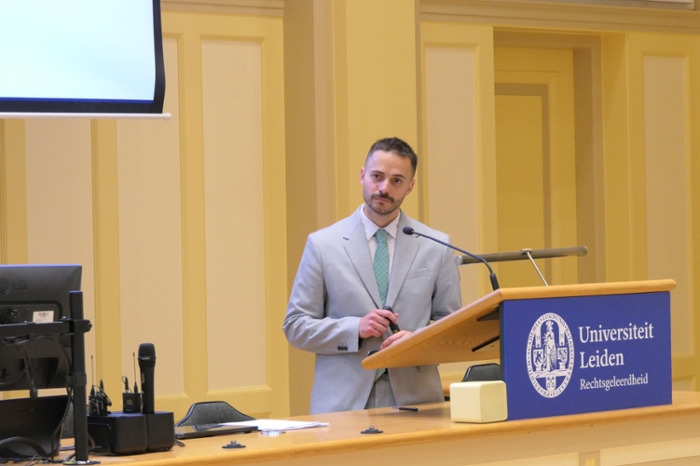
As part of the day’s programme at Leiden Law School, Professor of European Criminal Law Jannemieke Ouwerkerk gave a joint lecture with lecturer and researcher Konstantinos Zoumpoulakis. Their lecture, ‘The Road Ahead: Evolving Competences and the Future of EU Judicial Cooperation in Criminal Matters’, discussed changes in European societies, and the repercussions for European criminal law. Ouwerkerk and Zoumpoulakis explained the aim of their lecture: ‘It’s important to strengthen ties between academia and practice and to exchange perspectives on the future of criminal justice in the EU if we want to meet the challenges posed by an ever-changing criminal landscape.’
The speakers discussed the shared competence of the EU and its Member States to act against (transnational) criminal activity, and the structural barriers to cross-border judicial cooperation.
What is Eurojust?
Eurojust is the European Union Agency for Criminal Justice Cooperation. It supports and coordinates cooperation between national prosecution authorities in cross-border criminal cases. It plays a key role in combating serious organised crime and other forms of transnational criminal activities (criminal activities that cross borders during planning and execution).
Eurojust works closely with other EU institutions, agencies and partners that provide support at various stages of the criminal justice chain, such as law enforcement and anti-fraud bodies. Each participating EU Member State appoints one national member to Eurojust. Together, these national members form the College of Eurojust that is responsible for its organisation and operation.
A vision for European criminal law in a changing world
Jannemieke Ouwerkerk started her lecture by discussing the Report of the High-Level Forum on the Future of EU Criminal Justice, published earlier this year. While this report aims to set out a vision, Ouwerkerk says it lacks a forward-looking vision. Considering how rapidly the world is changing, she believes we need to revisit the normative foundations of EU criminal law to ensure that our legal framework can address new forms of crime and support effective judicial cooperation across borders. She highlighted several factors to explain why this is needed:
- A rapidly changing world and the rise of new phenomena creating both opportunities for crime and new challenges in combating it.
- The increased attention to ‘sensitive’ or ‘moral’ issues in the field of substantive criminal law (including efforts to combat violence against women and protect minority rights), raising questions about the appropriate scope of criminal law intervention.
- The expansion of cross-border cooperation and the growing need for the exchange of evidence between jurisdictions introducing new dimensions to the administration of criminal justice.
What prevents Member States from working together?
Konstantinos Zoumpoulakis delved deeper into the cooperation between EU Member States, and the role of Eurojust. He identified several structural barriers that obstruct cross-border cooperation, including the great diversity of legal systems and traditions among Member States.
He discussed the challenges around the principle of ‘mutual recognition’, which is the ‘cornerstone’ of the European Union's judicial cooperation in criminal matters. It requires Member States to automatically recognise and enforce judicial decisions issued in other EU countries, as if they had been issued domestically. This principle has come under increasing pressure in recent years, particularly due to concerns about the protection of fundamental rights and respect for the rule of law in certain EU Member States.
The way forward
The lecture left Eurojust members with food for thought on how to navigate the evolving criminal landscape. As transnational crime adapts to a rapidly changing world, so too must the foundation standards that govern EU judicial cooperation. To do so, EU institutions and agencies must be equipped with the necessary tools to address emerging forms of crime and new challenges.
The barriers to cooperation are significant, but not insurmountable. The future of European criminal law may well depend on how effectively the EU and its Member States adapt their competences and strengthen their cooperation to meet these challenges head-on.