

Open Science at FGGA: from extra task to a natural way of working
Academia in motion
What does it take to ensure that Open Science does not feel like an additional task, but instead becomes a natural part of good academic practice? During the Faculty Lunch Presentation on 19 March, the report 'The State of Open Science at FGGA' was presented and discussed with colleagues from across the faculty.
The report is based on a 2025 survey among research and teaching staff and shows that there is considerable ambition within FGGA, but also clear obstacles.
Dean Koen Caminada opened the session with a clear invitation: do not view the report as an end point, but as the start of a conversation. The presentation by researchers and FAiM members Andrei Poama and Cristina del Real demonstrated that Open Science within FGGA is a broad and sometimes divergent concept. More familiar practices, such as publishing in open access and broader science communication, are already relatively well established. At the same time, colleagues see promising opportunities for further development in areas such as Citizen Science and Open Education. The report also shows that these ambitions differ per institute and per practice.
-
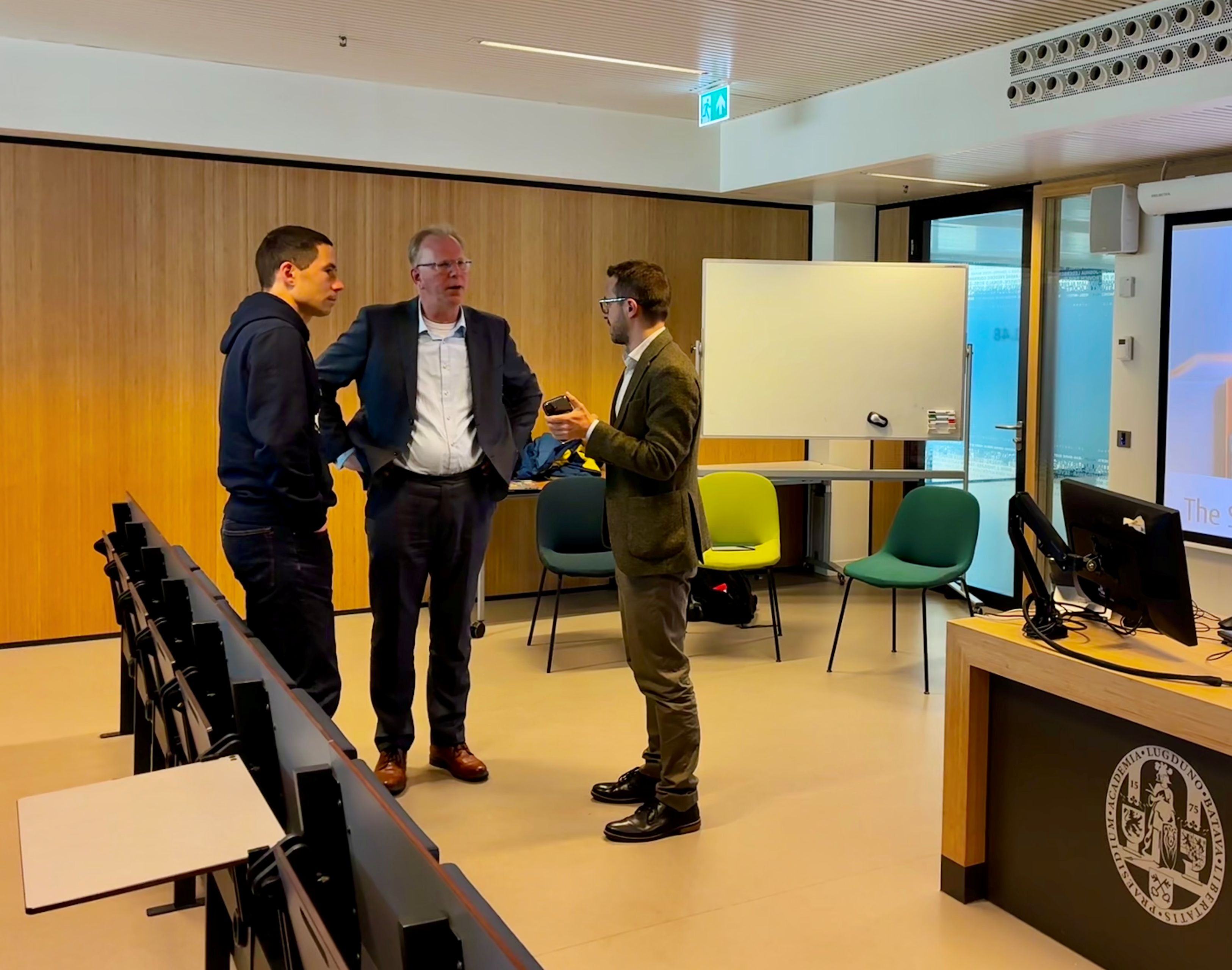
LTR: Ludo Waltman, Koen Caminada en Andrei Poama in conversation -
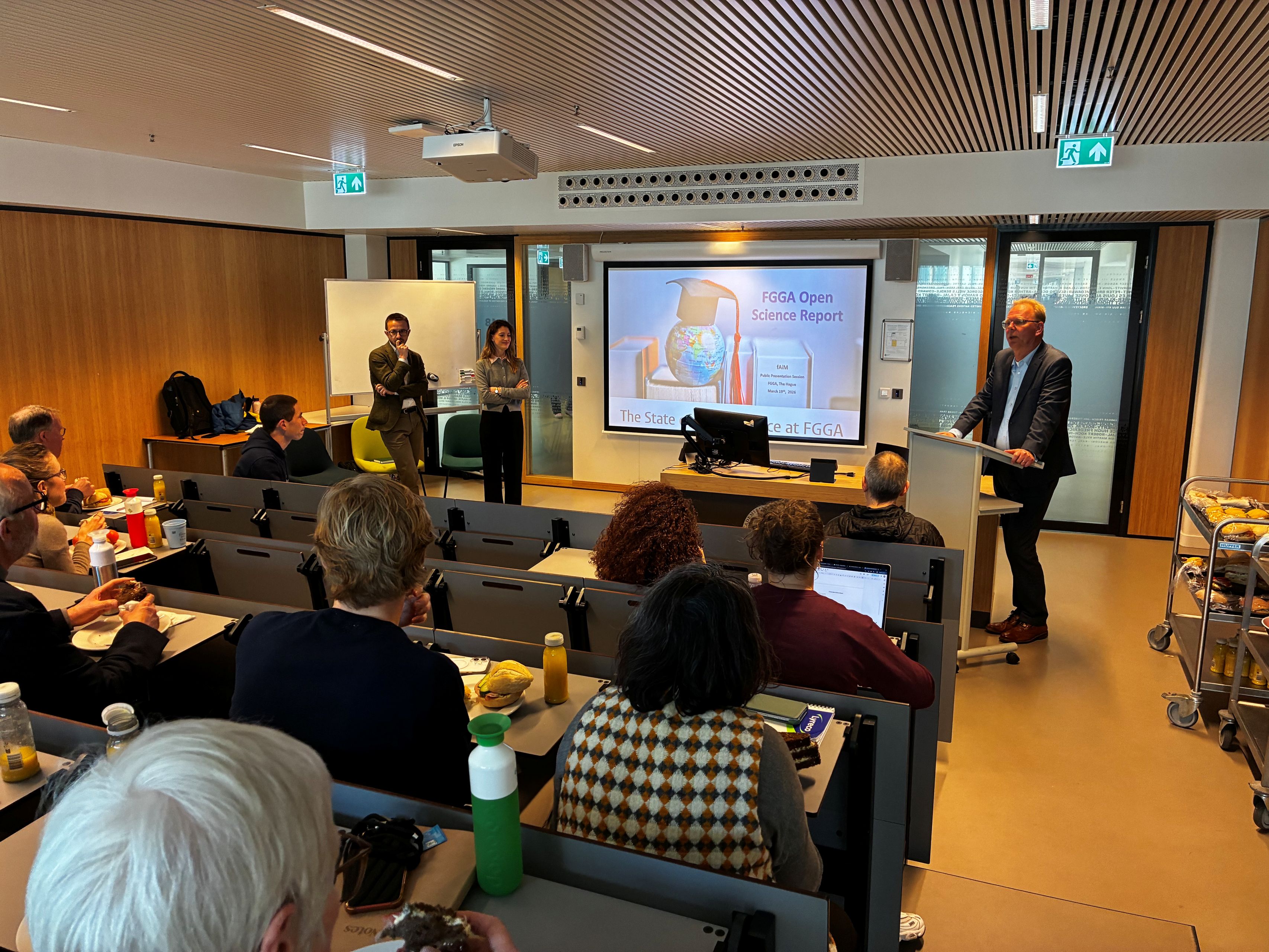
Dean Koen Caminada explains the importance of Open Science -
-
Willingness to work with Open Science
One key outcome of the survey is that there is considerable willingness within FGGA to advance Open Science, but that time and resources form the greatest barrier. For 61% of respondents, this is the main obstacle. Concerns about data privacy and data security also play a role: 34.7% identify this as a barrier. In addition, many colleagues find open access publishing challenging, not only because of costs but also due to publisher policies and wider publication structures.
This picture was explored further during the discussion. Colleagues spoke about publication costs, knowledge security, legal and ethical questions surrounding data sharing, and the sense that teaching materials are sometimes already “too public”. At the same time, an important counterpoint was emphasised: the aim of Open Science is not that everything must always be shared by default. Rather, it is about making the right connections, handling knowledge carefully, and collaborating effectively on knowledge development. As Ludo Waltman (Open Science Ambassador at Leiden University and member of the Academia in Motion steering group) aptly put it during the lunch: 'Open Science is just science done right.'
Open Science training
Training also featured prominently. The report identifies a link between participation in Open Science training and greater familiarity with Open Science practices and recommends strengthening and systematising training within FGGA. During the session, colleagues noted that there is room to do so, for instance by looking more closely at needs in day-to-day practice, sharing expertise more effectively, and using a train-the-trainer model where necessary.
Perhaps the most important message of the lunch session was that Open Science can only take root sustainably if it becomes embedded in the everyday way of working. Not as something “extra”, but as part of how we conduct research, publish, collaborate, develop education, and engage societal partners. This does not require the same contribution from everyone. The report argues instead for a balanced approach, in which Open Science activities can be distributed across teams and more clearly linked to academic quality and support.
The conversation is far from over, and that is exactly the point. The report provides a valuable starting point: it highlights where FGGA is already making progress, where concerns exist, and where further choices are needed.
Would you like to read the report or discuss what Open Science means in your own work? Then please contact the FAiM members within FGGA. Or join the AiM Symposium and Town Hall on 12 May 2026.