

Noise at sea: research on how wind farms affect fish
Biology image: Fien Demuynck
Human activity is making the underwater world increasingly noisy. PhD candidate Fien Demuynck researched how wind farms affect fish and how to minimise any negative impact. ‘We don’t want animals to become stressed, disoriented or deaf.’
Marine biologist Demuynck’s research involved extensive fieldwork. She regularly travelled to wind farms along the Dutch-Belgian coast, where she used sensors to measure how fish respond to wind farm noise. Her research focused on porpoises and their prey: pelagic fish. These include fish such as herring, sprat and mackerel, which swim in the middle of the water column rather than near the seabed.
Surprising effect
Wind farms produce noise both during construction and once in operation. Piling causes intensive noise, whereas operational wind farms emit a more constant, subdued sound. Demuynck explored whether it might be possible to scare the animals away before piling starts by playing non-harmful sounds.
She tested different noises in a basin of wild herring and found that they behaved differently when noise was played, although the type of sound made little difference. Out in the North Sea, however, the fish did not swim away from the acoustic deterrent.
Unexpectedly, the schools of fish did not swim away during piling itself. This is the result of an as-yet unpublished study outside of Demuynck’s thesis.
‘We were baffled’, she says. ‘We don’t know why it is. Piling can be so loud that it can cause temporary hearing loss at distances of two or three kilometres from a wind farm. In the murky North Sea, hearing is an important sense for animals, so you wouldn’t expect it to be in their interest to stay there. Perhaps they do so because they are used to the sounds or have hearing loss from previous piling. Or perhaps they react in another way: for example, by shoaling more tightly. This definitely warrants more research.’
-
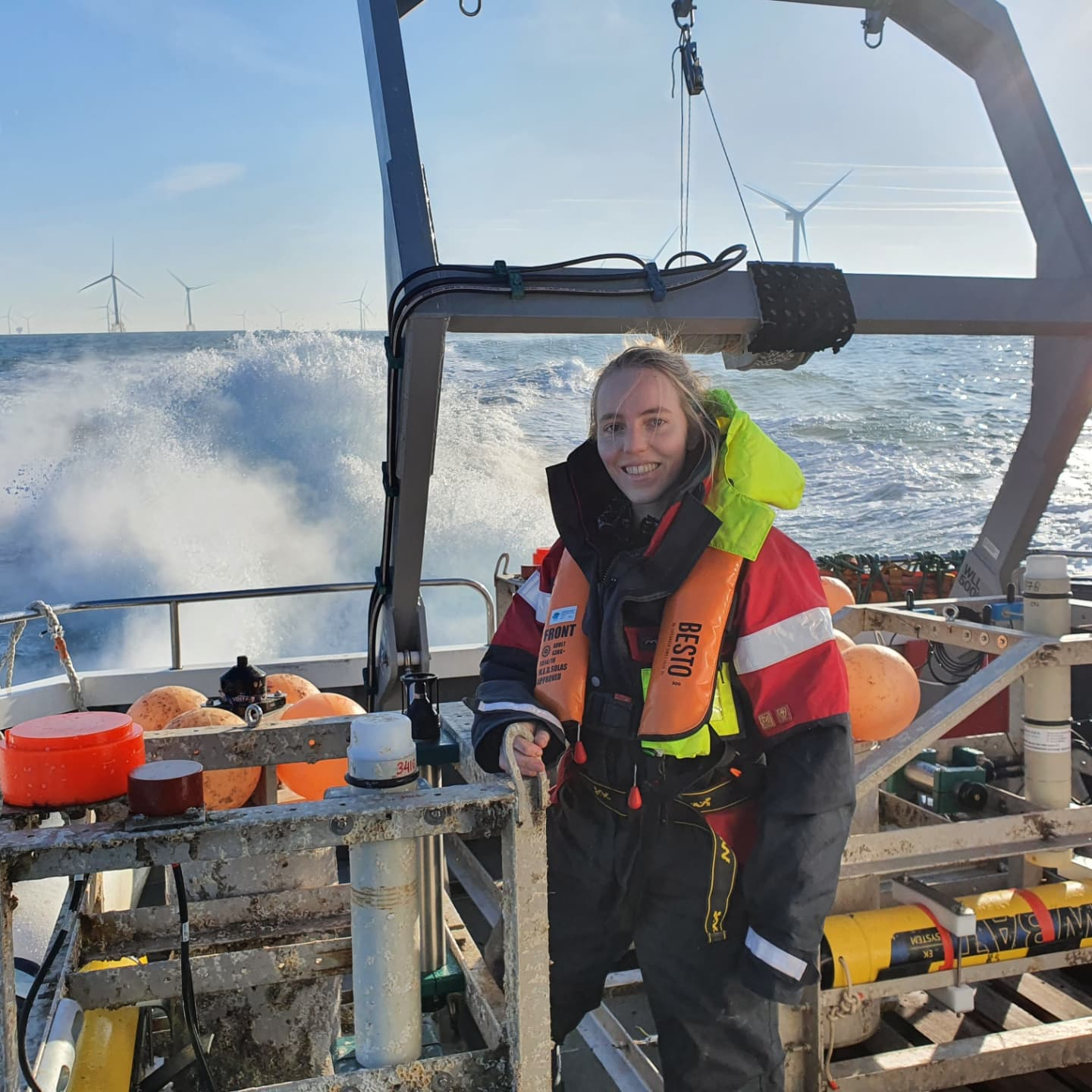
Fien Demuynck during her fieldwork in the North Sea. -
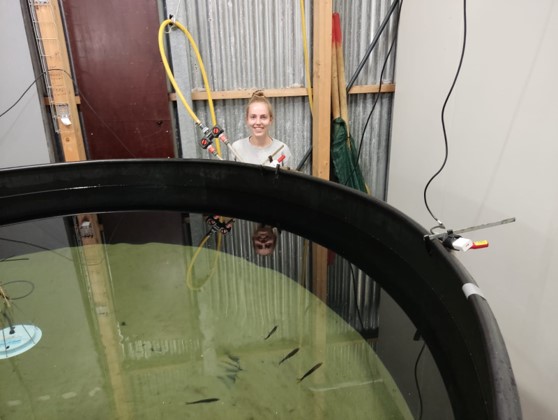
Fien Demuynck tested non-harmful noise in a basin of wild herring. -
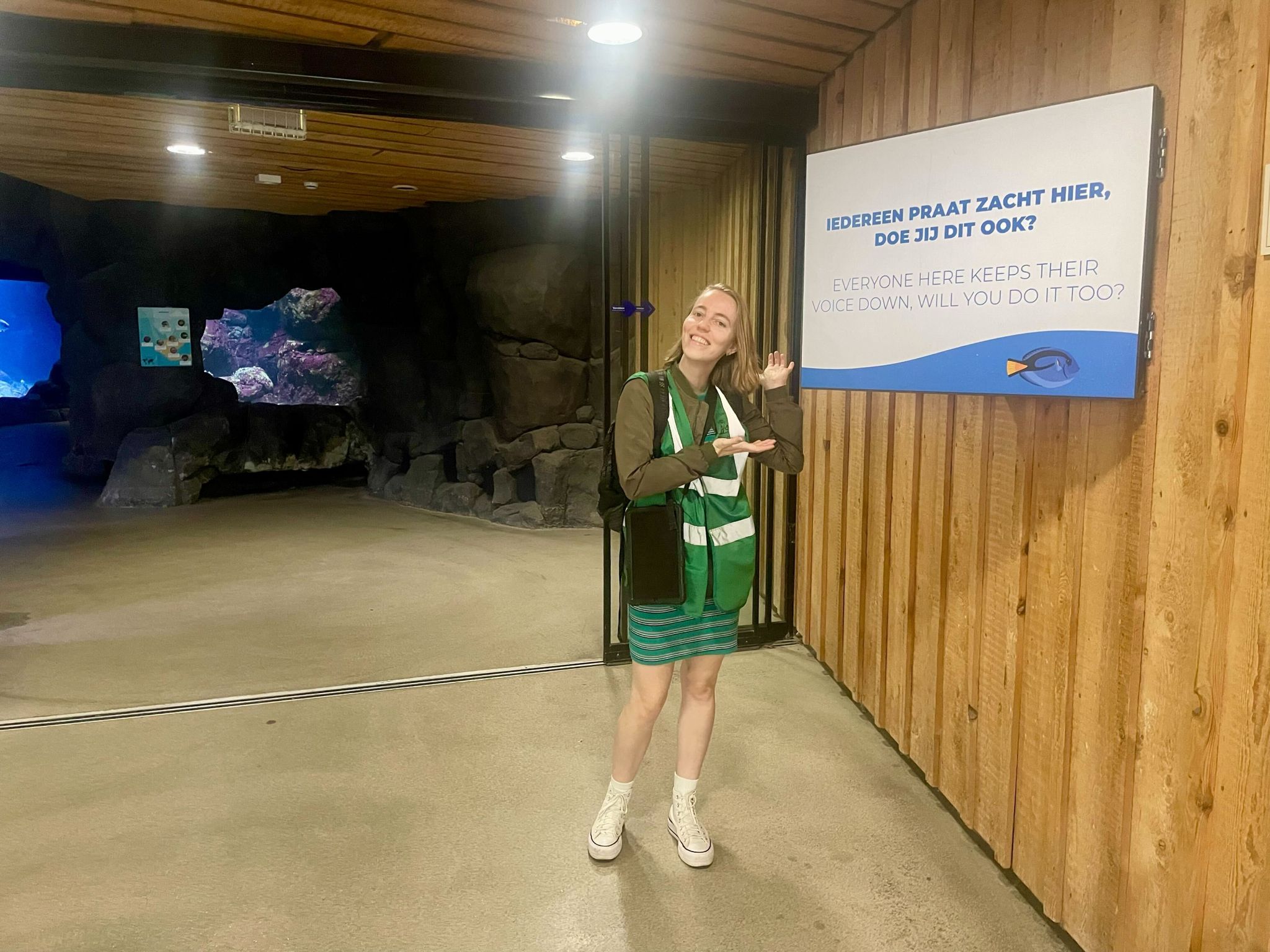
At Rotterdam Zoo, Fien Demuynck tested whether signage encourages aquarium visitors to be quieter. (See bottom of page for more.)
More fish around wind farms
Demuynck had expected operational wind farms to have a positive effect on fish because fishing is prohibited nearby, making them a safe environment. To her surprise, she found fewer pelagic fish around the wind farms along the Dutch-Belgian coast than elsewhere.
‘Something else could be happening to explain their lower numbers. The mixing of the water layers around the poles might reduce plankton production, the main source of food for these fish. But we need further research to confirm this.’
For porpoises, turbines might be an all-you-can-eat buffet here because such structures can attract creatures like mussels. This also deserves more research, says Demuynck.
Reduce the impact
Is it a problem that some fish do not swim away from the harmful noise during the construction of wind farms or that they avoid operational wind farms? Demuynck thinks we should look at the wider context.
‘Marine animals are already facing the effects of global warming and plastic pollution, and on top of that comes noise from human activity. Wind farms help to reduce global warming, and that benefits fish as well. I couldn’t say whether the negative effects outweigh the positive ones for porpoises and pelagic fish. But I do think that with new developments, we should look at their impact on marine life and take steps to limit this.’
Encouraging aquarium visitors to be quieter
In the final year of her PhD, Demuynck also studied whether visitors to the shark tunnel at Rotterdam Zoo were quieter when signs asked them to lower their voices. She designed a series of signs with texts along the lines of ‘quiet please’.
The results showed that the tunnel was quieter (just over 1 decibel on average) when the signs were displayed. Further research could help identify better ways to make visitors aware of how their noise affects the animals around them and their fellow visitors. Survey answers showed that visitors also value a quieter environment.