
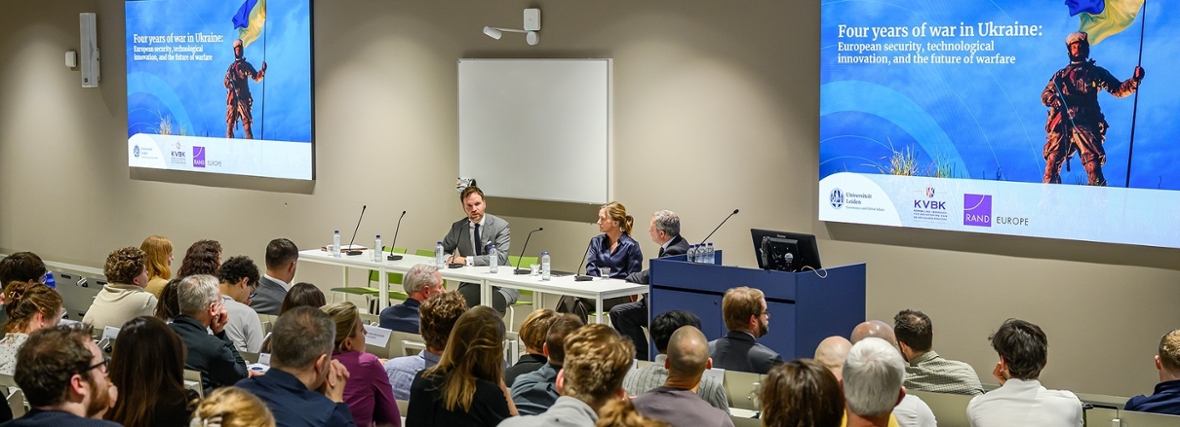
Four years of war in Ukraine: what Europe can learn from the battlefield
Analysis image: Arash Nikkhah
Four years of war in Ukraine have transformed the nature of warfare, with drones, digital defence systems and improvised solutions shaping the battlefield. At a recent symposium, Dutch and Ukrainian experts discussed frontline conditions. What lessons do they see for Europe?
Lesson 1: Invest now to saves lives
‘The war no longer makes the headlines every day in Europe,’ the Ukrainian ambassador Andriy Kostin noted with concern. In a powerful speech in the large lecture hall at Spui Campus, he argued, ‘Ukraine is defending the rest of Europe against Russia. Investing now means saving many lives and resources in the future. Putin will only make concessions if our collective strength is greater.’
On 24 February, exactly four years after the Russian invasion, the speakers reflected on the past and looked to the future.
In his first public appearance as Junior Minister for Arms Procurement and Personnel, Derk Boswijk also warned that European countries are taking too long, ‘More support is needed, and urgently. Ukraine does not need to thank us. We should be thanking Ukraine for defending Europe.’
Lesson 2: Adopt tougher sanctions
Several speakers, including Julia Soldatiuk-Westerveld from the Clingendael Institute, called for tougher economic sanctions to hit Russia harder. She also stressed the need for stronger oversight of Western companies that supply technology used in Russian arms production.
-
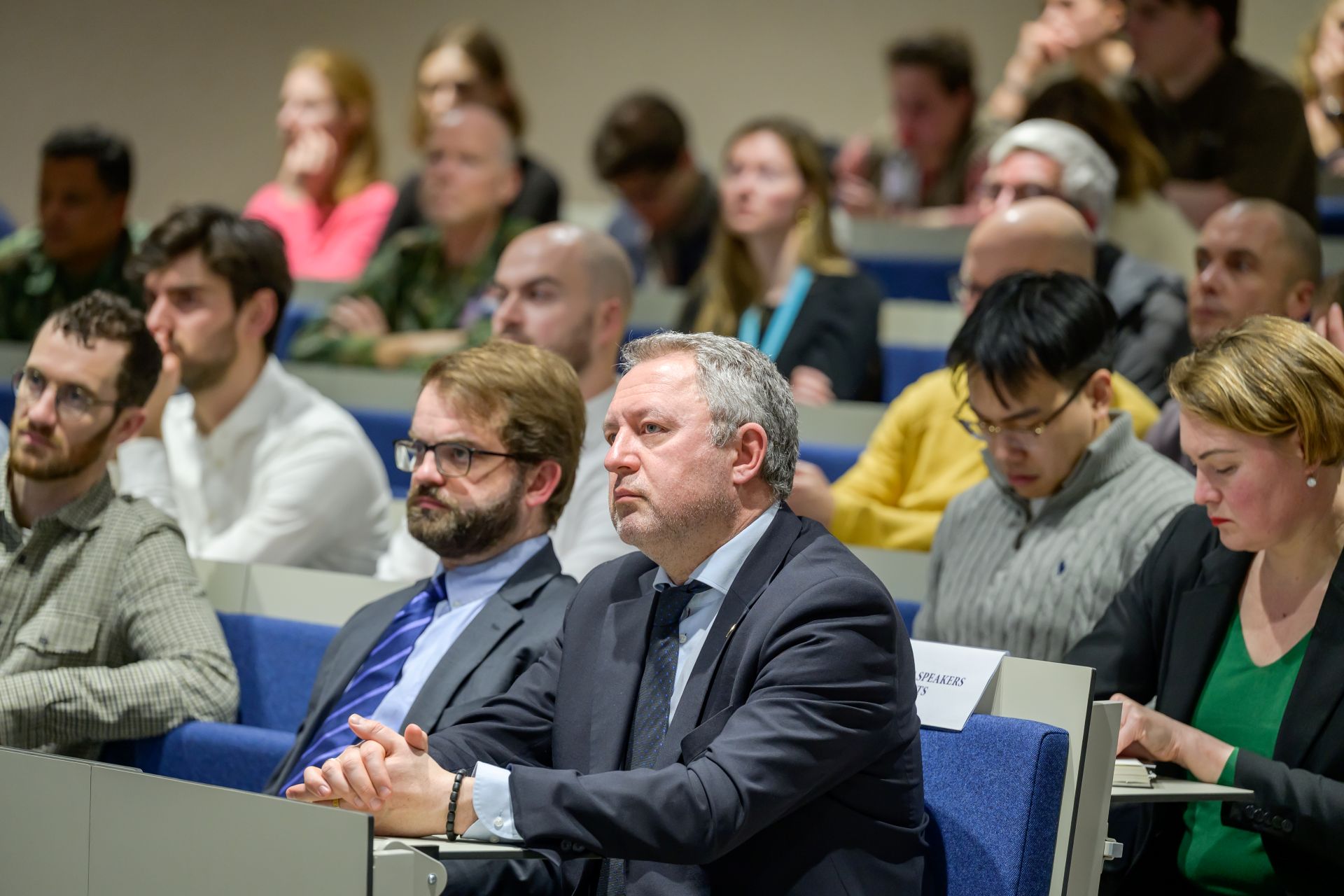
Ukrainian Ambassador, Andriy Kostin. -
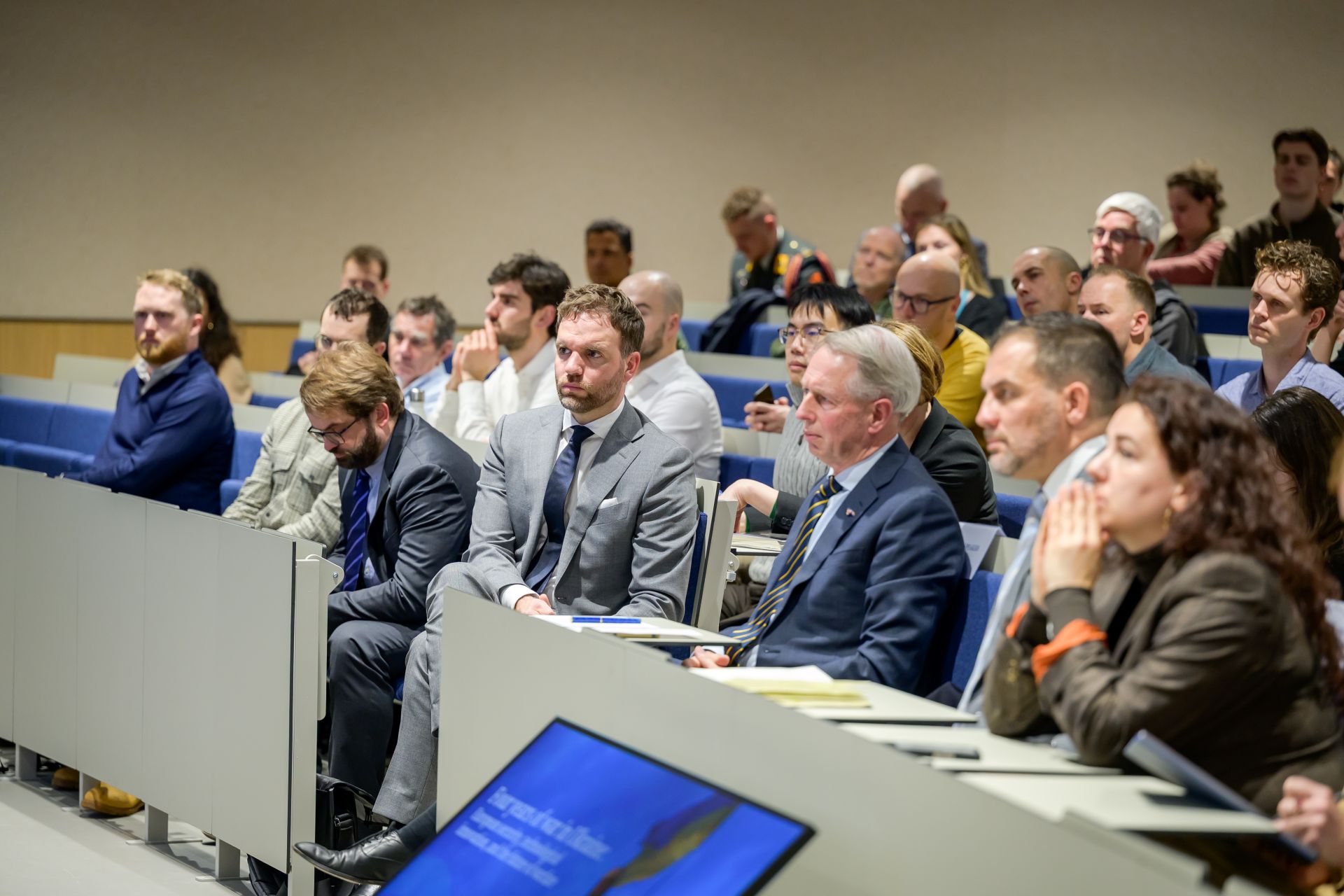
The new Junior Minister for Arms Procurement and Personnel, Derk Boswijk. -
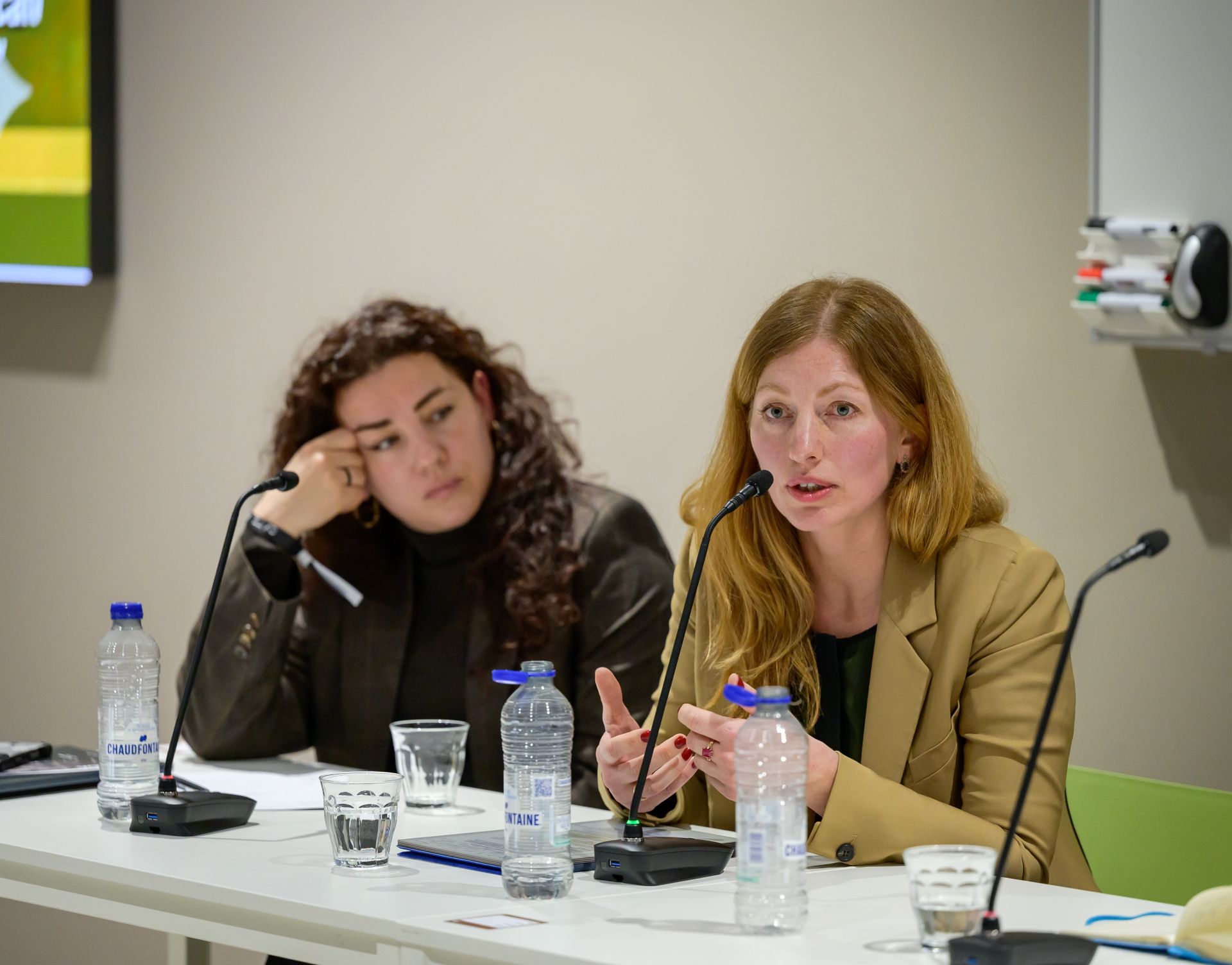
Lesia Orobets and Julia Soldatiuk-Westerveld. -
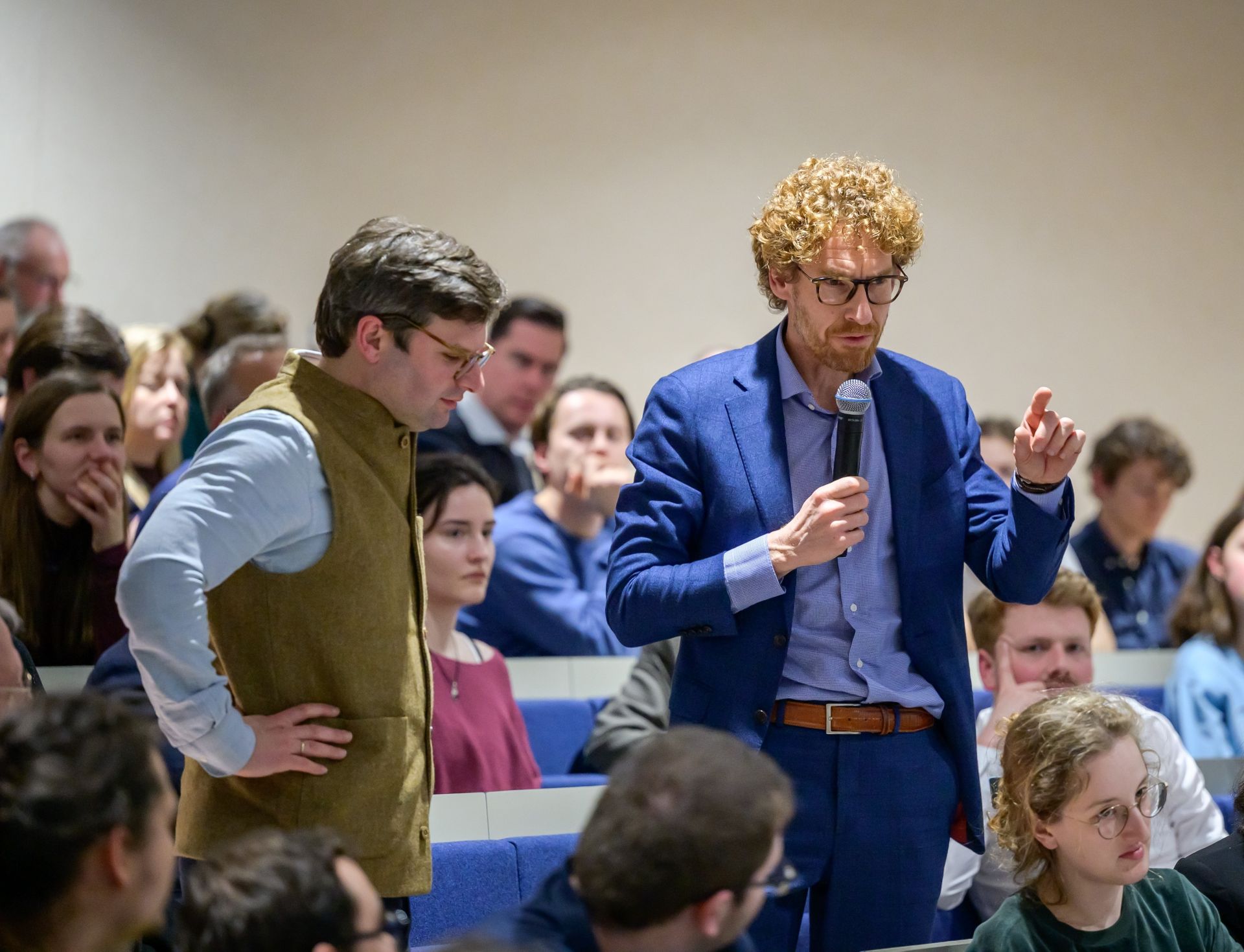
The room was full, with a mix of students, researchers, military personnel and others. The audience could ask questions at the end.
Lesson 3: Do not underestimate or overestimate Russia
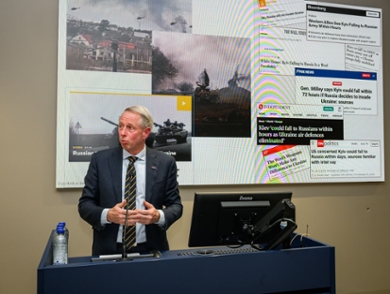
Frans Osinga, Professor of War Studies at Leiden University, outlined how the situation at the front has evolved since the invasion. ‘Four years ago, many experts thought Kyiv would fall within days. Hardly anyone expected Russian losses, now estimated at 325,000 soldiers, to be so high. We should neither underestimate nor overestimate them.’
By comparison, Ukraine has lost an estimated 140,000 soldiers and 15,000 civilians. Russia has now occupied almost a fifth of Ukrainian territory, much the same as in March 2022, according to Osinga.
Lesson 4: Be flexible
The Ukrainians have proven to be remarkably adaptable, said Jacob Parakilas from research organisation RAND Europe. ‘They now operate Russian, European and American defence technology. We should learn from them.’
The technology for drones and their digital defences is developing at breakneck speed, Julia Soldatiuk-Westerveld noted. ‘Design drones that can be rapidly reconfigured.’
Lesson 5: Show leadership in humanitarian crises
The symposium also highlighted the dire humanitarian situation. Russia has struck the electricity infrastructure more than 5,700 times, leaving millions of Ukrainians in the cold during harsh winters and without essential services such as running water.
Some experts argued for using frozen Russian assets to help fund Ukraine’s reconstruction. Kostin noted that many countries still see this as a step too far: ‘We need more courage and leadership in Europe.’
Lesson 6: Be creative
Some non-profit organisations have long since stopped waiting for political action. One example is the Dutch Protect Ukraine initiative. Its founder, Godfried van Lanschot, described how, thanks to donors, the organisation supports Ukrainians in many ways: from evacuation robots and medical training for soldiers to drone‑repair kits, ambulances and even fishing nets used to shield streets from drones. Other speakers echoed the importance of creative solutions such as fake vehicles to deceive drones. Or successfully lobbying Elon Musk to shut down his Starlink internet service for the Russians.
Lesson 7: Learn from experience
Lesia Orobets from the Price of Freedom NGO warned of the threat posed by Russian ballistic missiles, which can strike European cities within minutes. ‘Come to Ukraine and learn from our approach. You don’t win the Olympic Games by watching from the sidelines. Help us protect our airspace, and learn how to protect your own at the same time.’ She also pointed to the waning media attention, ‘The war may no longer dominate front pages, but the lessons are becoming all the more urgent for Europe.’
The symposium was organised by Leiden University in collaboration with the Royal Netherlands Society for War Studies
and RAND Europe to mark four years of war in Ukraine. Organiser Ernst Dijxhoorn noted: ‘I hope that we won’t have to organise this symposium next year.’