

AIVD Director Akerboom in conversation with students: 'Russian threat the most significant'
During the second Arthur Docters van Leeuwen Lecture on 1 December, Director General of the AIVD Erik Akerboom underlined how the changing threat landscape demands reflective leadership, transparency where possible and close cooperation to protect the democratic legal order.
A tribute to Arthur Docters van Leeuwen
Many of the concepts used by the AIVD today, Akerboom stressed, can be traced directly to the ideas of Docters van Leeuwen. He introduced a risk based approach in which threats, national interests and resilience are always assessed together. Akerboom emphasised that despite the secretive nature of the work the service can and should be more open about its activities where circumstances allow.
The annual Arthur Docters van Leeuwen Lecture is an initiative designed to bridge the gap between the intelligence services and society. This was the second edition in a series dedicated to reflecting on leadership within the intelligence community, with particular attention to the role of intelligence in a liberal democracy.

Strategic thinking in a changing threat landscape
During his lecture Akerboom spoke with Willemijn Aerdts, an expert on intelligence and security services at Leiden University. The AIVD Director General described how the organisation has changed over recent decades. Since the post Cold War period, integration has been central: bringing together military and civilian intelligence, cyber expertise and analysis in a single organisation. According to Akerboom this integrated approach is essential for understanding and countering modern threats.
He stressed that threats rarely exist in isolation. 'Russia currently constitutes the most urgent threat because it is close by and the conflict has many faces. It is an economic war, a military conflict, a global conflict and a political conflict. At the same time I cannot say that it removes all other threats.'
According to Akerboom we are now facing a threat multiplier in which multiple risks reinforce one another. The threat posed by China and other state actors, terrorism, organised crime, subversion and counter espionage continues to demand sustained attention from the intelligence services.

Reflective leadership as a necessity
A recurring theme in his remarks was reflection. Akerboom referred to his time under former mentors within the service who placed significant emphasis on the ability not only to evaluate after an action but also to adjust during an operation.
Akerboom argued that this capacity is becoming ever more important: 'Those who can adjust their approach while taking action stay ahead of the adversary.' He illustrated this with examples from the service’s technical teams which have to respond rapidly to digital threats that change by the minute.
Openness and trust as conditions for success
In line with the vision of Docters van Leeuwen, Akerboom highlighted the importance of openness whenever possible. Transparency not only enhances public understanding of the AIVD’s work but also strengthens the trust that is crucial for voluntary reports and so called important walk ins.
However, Akerboom warned of the thin line between informing the public and becoming political. The service must interpret facts without entering political debates. Clear communication about disinformation and anti institutional movements therefore remains essential.
(European) cooperation as a renewed foundation
Akerboom stressed the importance of cooperation both within government and beyond. The ties between the AIVD, MIVD and the police have been strengthened in recent years at both operational and cultural levels. International cooperation with other intelligence services also remains crucial. According to Akerboom the key conditions for success lie above all in personal relationships and mutual trust.
He explained that current political circumstances have led the AIVD to focus increasingly on European cooperation. After the Trump administration signalled that Europe should take greater responsibility for its own security this process accelerated. It was important for the AIVD to seek capable and reliable European partners. 'Those who stand in the front row rather than at the back can exert influence and are interesting partners for cooperation. The only reason American and European services want to work with us is because we have something to contribute,' Akerboom said.
A call to the next generation
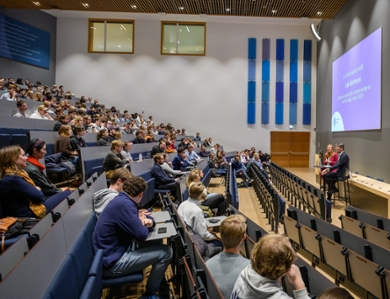
Akerboom concluded by addressing the students and researchers present, emphasising the importance of the democratic legal order and their role in defending it. Asked what advice he would give students considering a career in national security he replied: 'We must recognise that we have something worth protecting. The democratic legal order is under threat and must be safeguarded. Defending it gives real meaning to your professional life.'
-
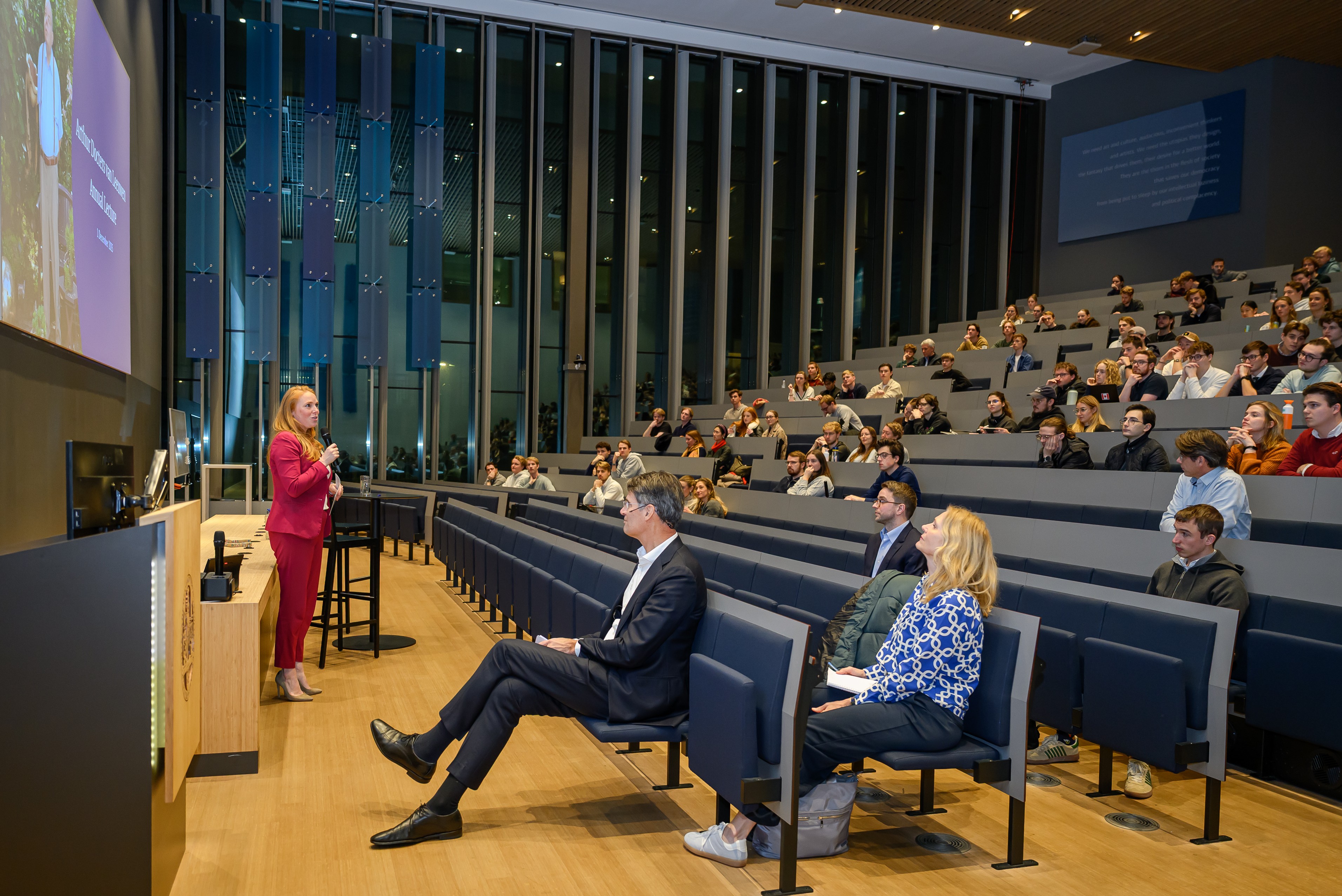
A full auditorium in Wijnhaven -
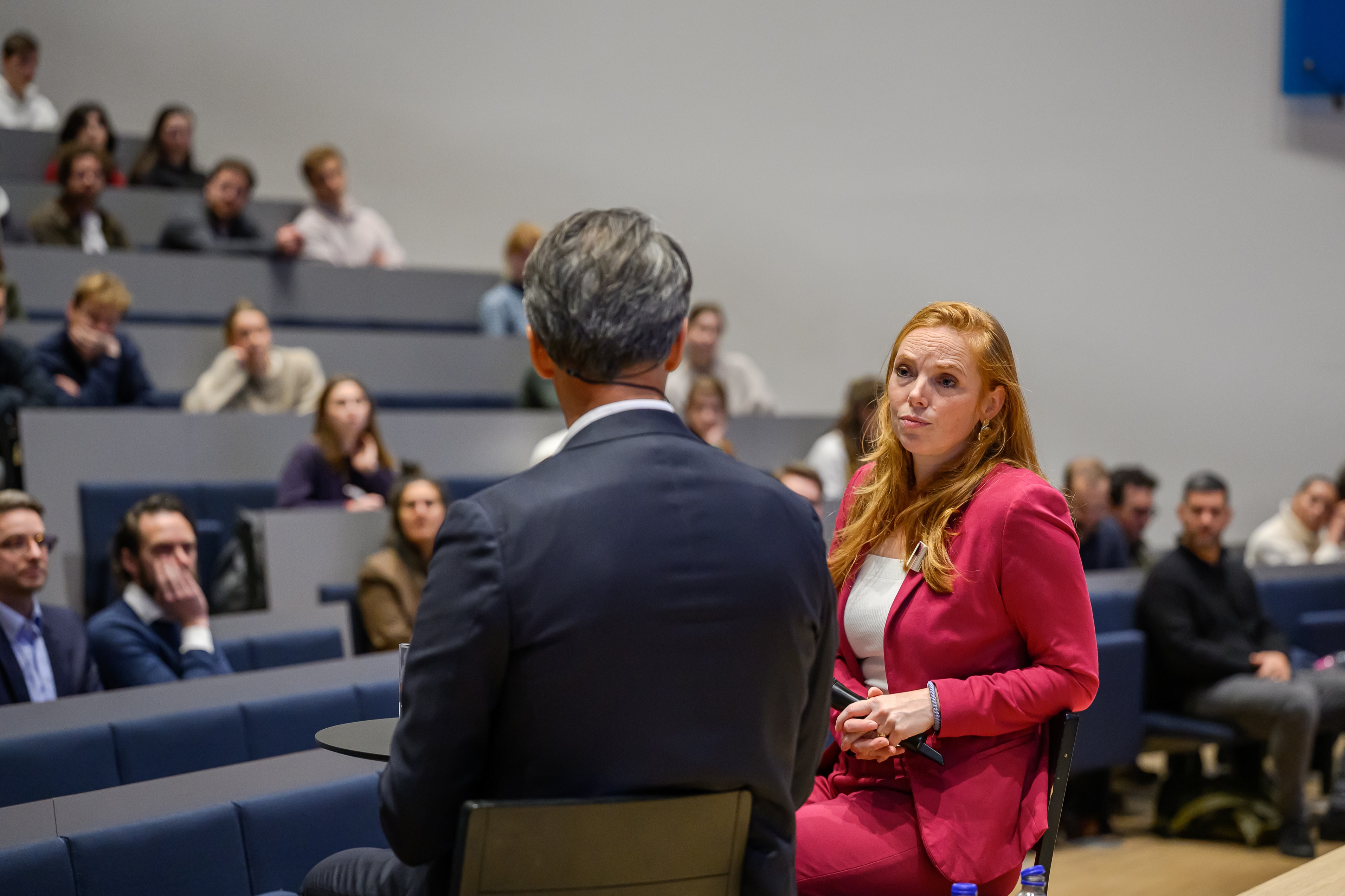
Willemijn Aerdts led the conversation -
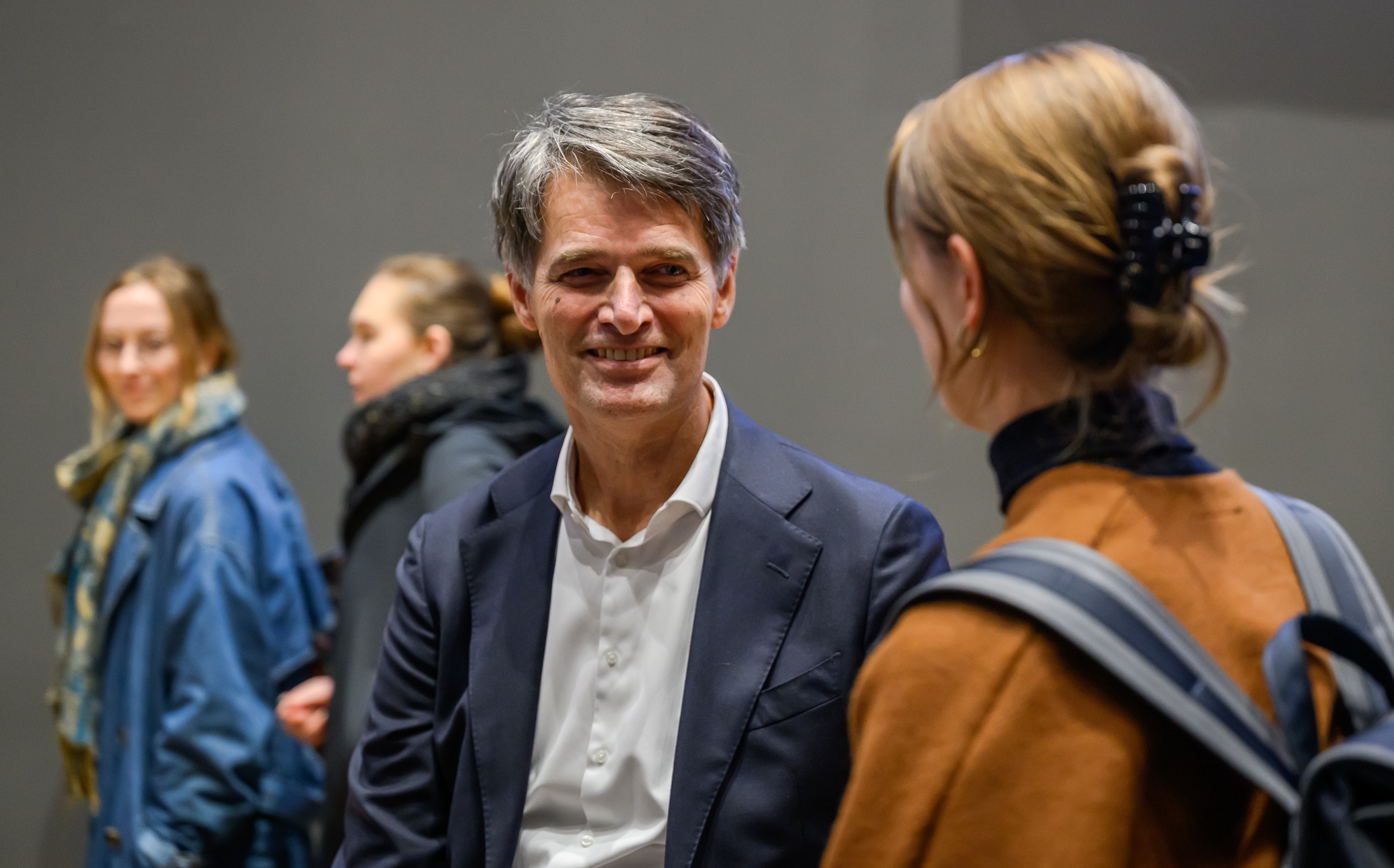
Erik Akerboom in conversation with students -
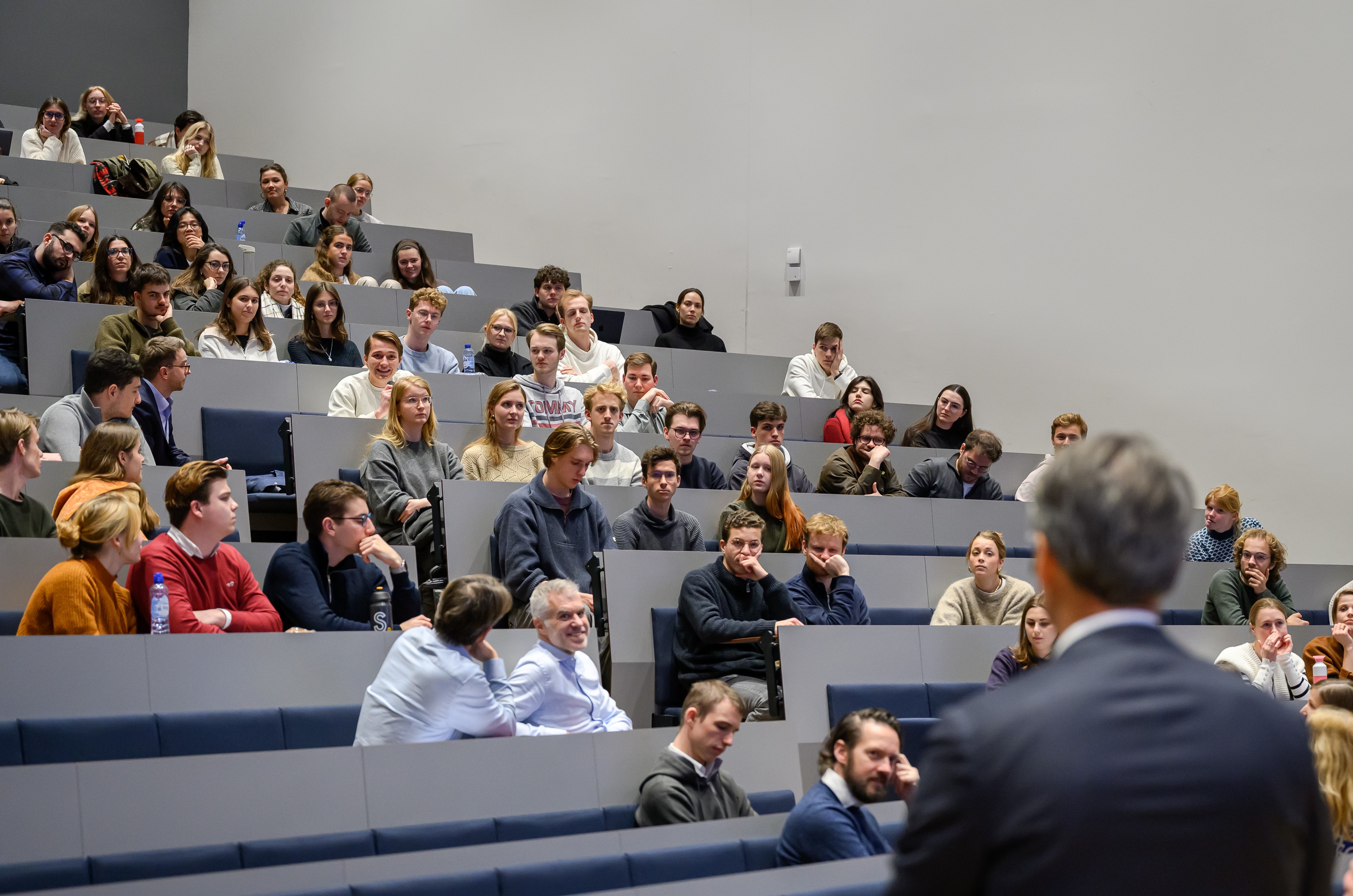
Students asking their questions -
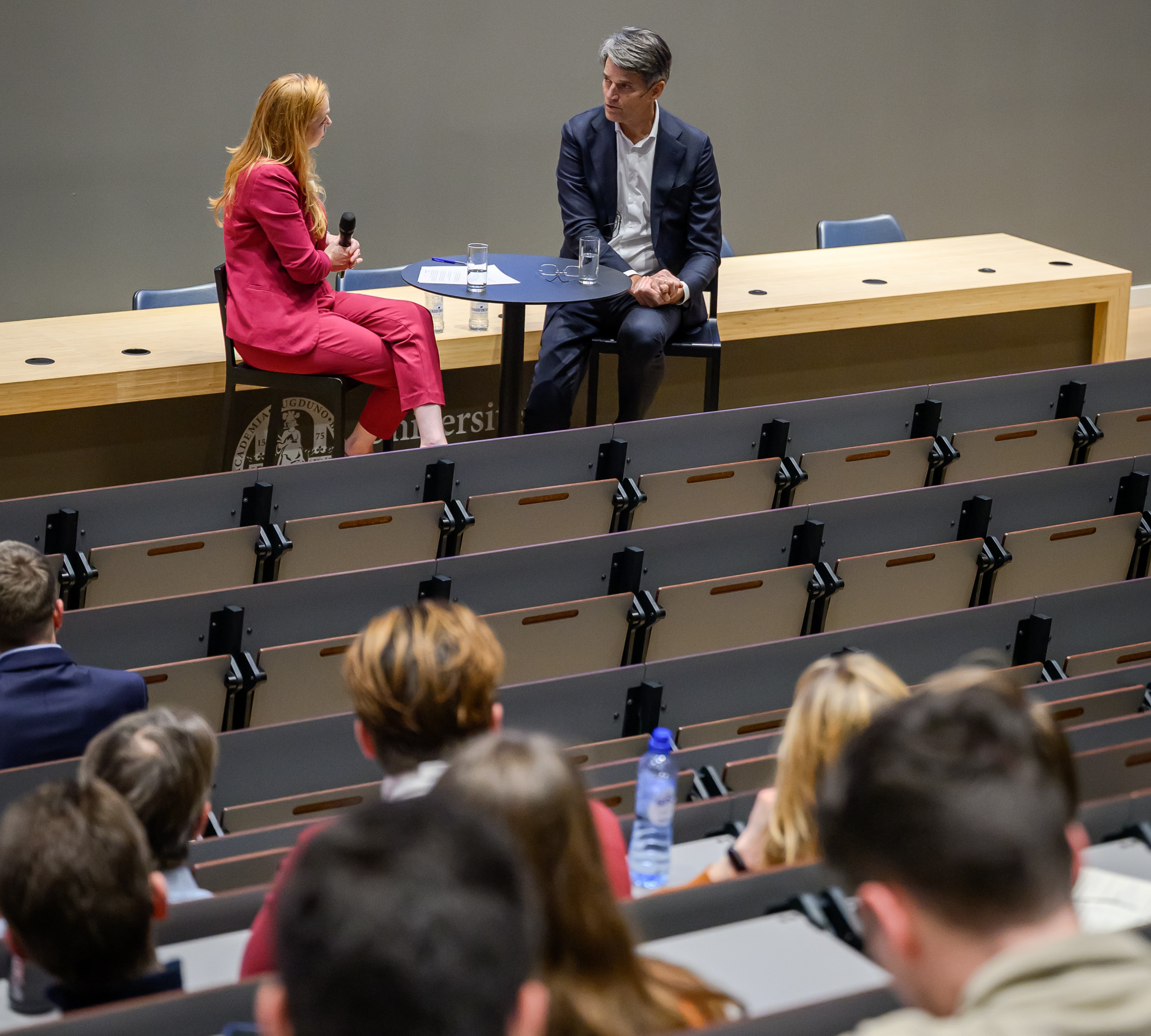
'Those who can adjust their approach while taking action stay ahead of the adversary'
Text: Niels Heukelom
Photos: Arash Nikkhah