
Bill criminalising the glorification of terrorism and terrorist organisations raises questions about the right to protest
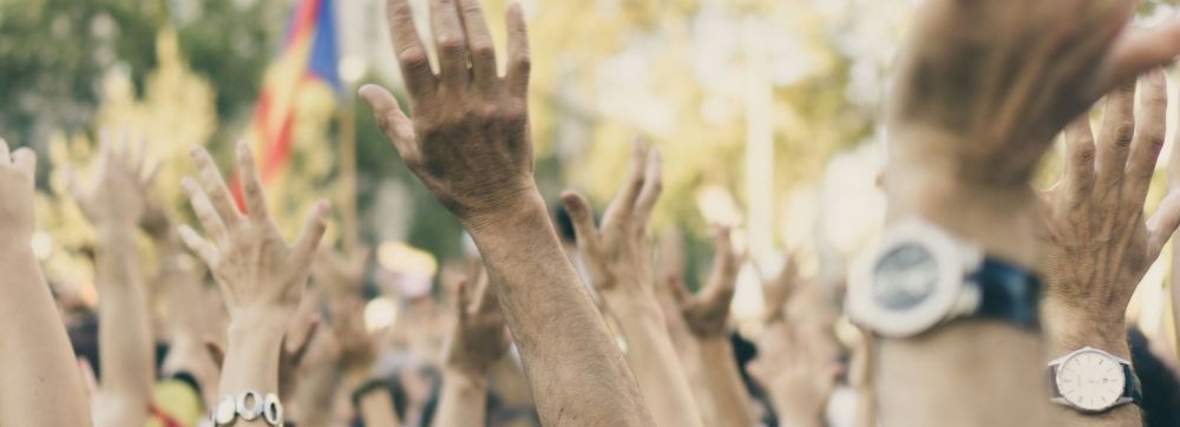
In the media image: Chris Slupski on Unsplash
A recent episode of Eva (NPO 1) focused on how the Dutch government can take action against expressions made during demonstrations that involve the glorification of terrorist organisations. Wim Voermans, Professor of Constitutional Law, shed light on the legal issues.
It appears likely that a majority in the House of Representatives will vote in favour of the proposed legislation that seeks to criminalise the glorification of terrorism and terrorist organisations. The debate centres in part on the question of where freedom of expression ends and criminal liability begins.
Voermans points out that these boundaries are legally complex and are shaped in part by the European Convention on Human Rights. ‘In Amsterdam, Mayor Halsema could not – however distressing the situation was at the time – legally intervene, as long as the demonstration remained peaceful and no criminal offences were committed. Under the right to protest, a great deal is permitted unless public order is at risk.’ The constitutional law expert adds that the content and context of an expression play an important role in determining where those boundaries lie.
In addition to the legal issues, the spreading of political messages also plays a role in the debate. Young people are increasingly getting their news from social media. As a result, political views spread within online communities where users are not always exposed to the different perspectives. This can reinforce polarisation around issues such as these.
The bill criminalising the glorification of terrorism and terrorist organisations, submitted to the House of Representatives by Minister Van Weel on 24 June 2026, has not yet been adopted.