

AI for humans, society and science
Our contribution to society:
Responsible AI for science and a strong and resilient society.
News


Our research and teaching
Artificial Intelligence (AI) offers significant opportunities for science, the economy, and society, while also raising important ethical and societal questions. AI is never entirely neutral: systems are shaped by human choices in data, algorithms, and design. These choices influence how AI recognizes patterns, processes information, and supports decision-making. At Leiden University, we combine technological innovation with critical insight into AI’s impact on people and society.
All the departments and the LUMC are part of this initiative.
We develop AI
Our researchers develop new AI methods and technologies. We conduct both fundamental and applied research in machine learning, language models, trustworthy algorithms, and explainable AI. Through this work, we help create fair, transparent, and responsible AI systems.
We use AI
AI is applied across a wide range of disciplines at Leiden University, from healthcare and the life sciences to law, governance, culture, and the social sciences. By integrating AI throughout the university, we create new opportunities for research, education, and societal innovation.
We reflect upon AI
Alongside technological development, we study the societal, legal, and ethical implications of AI. Researchers from computer science, ethics, law, medicine, and the social sciences work together to examine how AI affects decision-making, public values, and human behavior.
We teach AI
We educate students and professionals to understand, apply, and critically evaluate AI in a responsible and effective way. Acquiring knowledge of AI is embedded throughout our educational programmes, from specialized degree tracks to interdisciplinary courses that connect technology and society.
Through our strong interdisciplinary AI network and close collaboration with public and private partners, including governments, courts, healthcare organizations, and museums, we contribute to AI that is not only intelligent and innovative, but also socially responsible and future-proof.
Research

Experts
-

Joost Batenburg Topics: algebra, artificial intelligence, computational drug design, computational imaging, drug discovery, geometry, number theory, tomography -
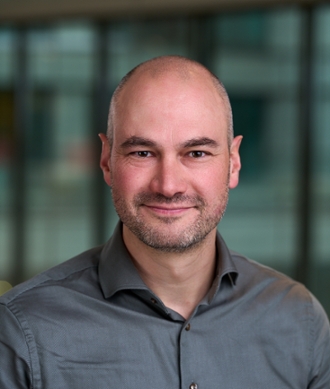
Bram Klievink Topics: artificial intelligence, big data, digital technologies, digitisation, govtech, innovation, public administration, public policy -

Anne Meuwese -

Stephan Raaijmakers Topics: ai and society, communicative ai, the human digital world -

Ili Ma Topics: disinformation, reinforcement learning, social development, social media -

Mark van Buchem Topics: ageing, artificial intelligence, biomedical imaging, immunity, infection and tolerance, radiology, translational neuroscience, vascular and regenerative medicine -

Tuna Kalayci Topics: digital archaeology, landscape archaeology, quantitative methods, remote sensing, urbanism -

Francien Dechesne Topics: algorithmic decisions, artificial intelligence, cybersecurity, ethics & digital technologies, logic, privacy -

Boudewijn Lelieveldt Topics: artificial intelligence -

Gerard van Westen Topics: artificial intelligence, bioinformatics, cheminformatics, chemogenomics, drug discovery, machine learning, proteochemometrics -

Suzan Verberne Topics: artificial intelligence, information retrieval, natural language processing -

Tanja Alderliesten -
Mark de Rooij Topics: artificial intelligence, statistical modeling -

Rita Pucci Topics: biodiversity monitoring application, image analysis, integrated systems, multimodal model -

Tycho de Graaf Topics: artificial intelligence, blockchain, contract law, cryptocurrencies, property law, smarts contracts, technology -

Josette Daemen Topics: artificial intelligence, centre for political philosophy, ethics, political philosophy, political science, public values, security -

James McAllister Topics: philosophy of science, urban studies -

Jelena Prokic Topics: automatic dialect detection, automatic feature extraction, computational ethnography, dialectometry, humane ai, mixed-methods approach, the human digital world -
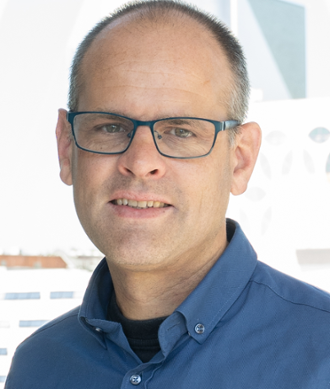
Marius Staring -
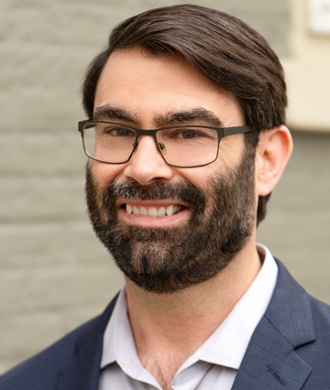
Matt Young Topics: administrative discretion, decision making, institutional change, machine learning, public administration, public management, urban innovation -

Aske Plaat Topics: artificial intelligence, big data, causality, computer science, data science, deep learning, deep reinforcement learning, explainable artificial intelligence, games, machine learning, multi-agent systems, reinforcement learning -

Arno Knobbe Topics: artificial intelligence -

David Holmes Topics: algebra, geometry, mathematics, number theory -

Bart Custers Topics: artificial intelligence, big data, cyber crime, data mining, digital investigation, privacy, profiling, security and threat, social media, technology
Related research

