

A first look at International Diplomacy in The Hague
Student experience
The first-year cohort of the Advanced MSc in International Relations and Diplomacy (MIRD) visited the Organisation for the Prohibition of Chemical Weapons (OPCW), the International Court of Justice (ICJ) and the Peace Palace Library. The visits form part of the course The European Union and the United Nations.
The Hague, the city of peace and justice, provides an ideal environment for MIRD students to explore international affairs, law and diplomacy. During these visits, students learned directly from experts, explored internship opportunities and gained a better understanding of how international institutions function.

The Organisation for the Prohibition of Chemical Weapons
The students were warmly welcomed by OPCW staff, including a familiar face: a current MIRD student completing the mandatory internship module. The group took part in an engaging quiz about the organisation and its area of expertise. The winner received a copy of the Chemical Weapons Convention as a gift.
Following the quiz, the speakers gave an in-depth presentation on the OPCW’s framework, history and current role, both in The Hague and internationally. This was followed by a dynamic question-and-answer session with the students, during which they discussed current affairs, the future of the organisation and many other topics.
To conclude the visit, the students heard from a panel of current OPCW interns and gained insight into the application process and the daily activities of an intern. Finally, the students had the opportunity to view the OPCW’s newest exhibition, which included a special display featuring the organisation’s Nobel Peace Prize, awarded in 2013.

The International Court of Justice and Peace Palace Library
Continuing their introduction to the city, the students and programme staff travelled to the Peace Palace to tour the ICJ and the Library. Home to some of the world’s most prestigious courts and libraries, the Peace Palace offered students the opportunity to experience the atmosphere and beauty of its historic grounds.
During their tours, the speakers explained how the building’s breathtaking architecture and special features reflect contributions donated by country delegations over the years.
Student Bhuvi Gupta shared: 'Our visit to the ICJ was a wonderful opportunity. It was fascinating to learn that different countries had gifted parts of the building itself — doors, woodwork, carpets and more — each a small but powerful symbol of what international cooperation can look like. Having studied international law for years, it was genuinely inspiring to walk around the Peace Palace and sit inside the Great Hall of Justice.'
Learning beyond the classroom
These visits contributed to the students’ experience by giving them first-hand exposure to the important role these institutions play. Student Jean-Paul van Engelen echoed this sentiment: 'During our visit, we were informed about the history of the historic building and its symbolic importance as the world’s centre of justice. Several members of our cohort got the opportunity to ask questions to lawyers working at the ICJ. Through this Q&A, we were able to learn about the experiences of those working at the ICJ and get a better understanding of the institution’s role in the international world order.'
Students also had the opportunity to explore the historic Peace Palace Library and learn about its unique role within the Palace. Throughout the tour, particular emphasis was placed on the Library’s connections to the institutions housed in the Peace Palace and its extensive collection of resources on international law.
The visit provided a fitting conclusion to the programme’s introduction to The Hague and helped prepare students for their upcoming trip to Brussels.
-

First-year MIRD students pose questions to the OPCW speakers on organisational functions and internship opportunities -
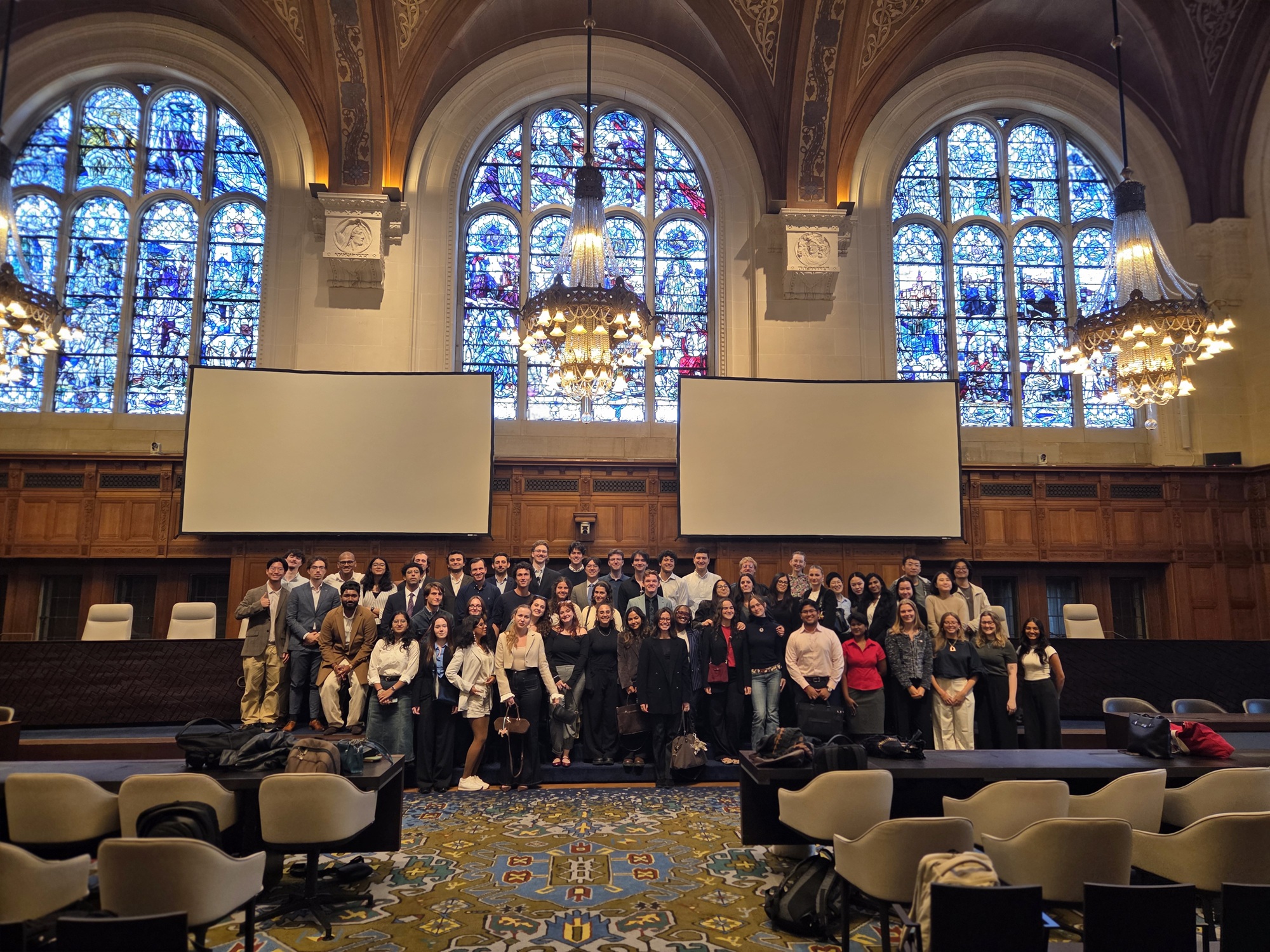
Students inside the main ICJ Courtroom -
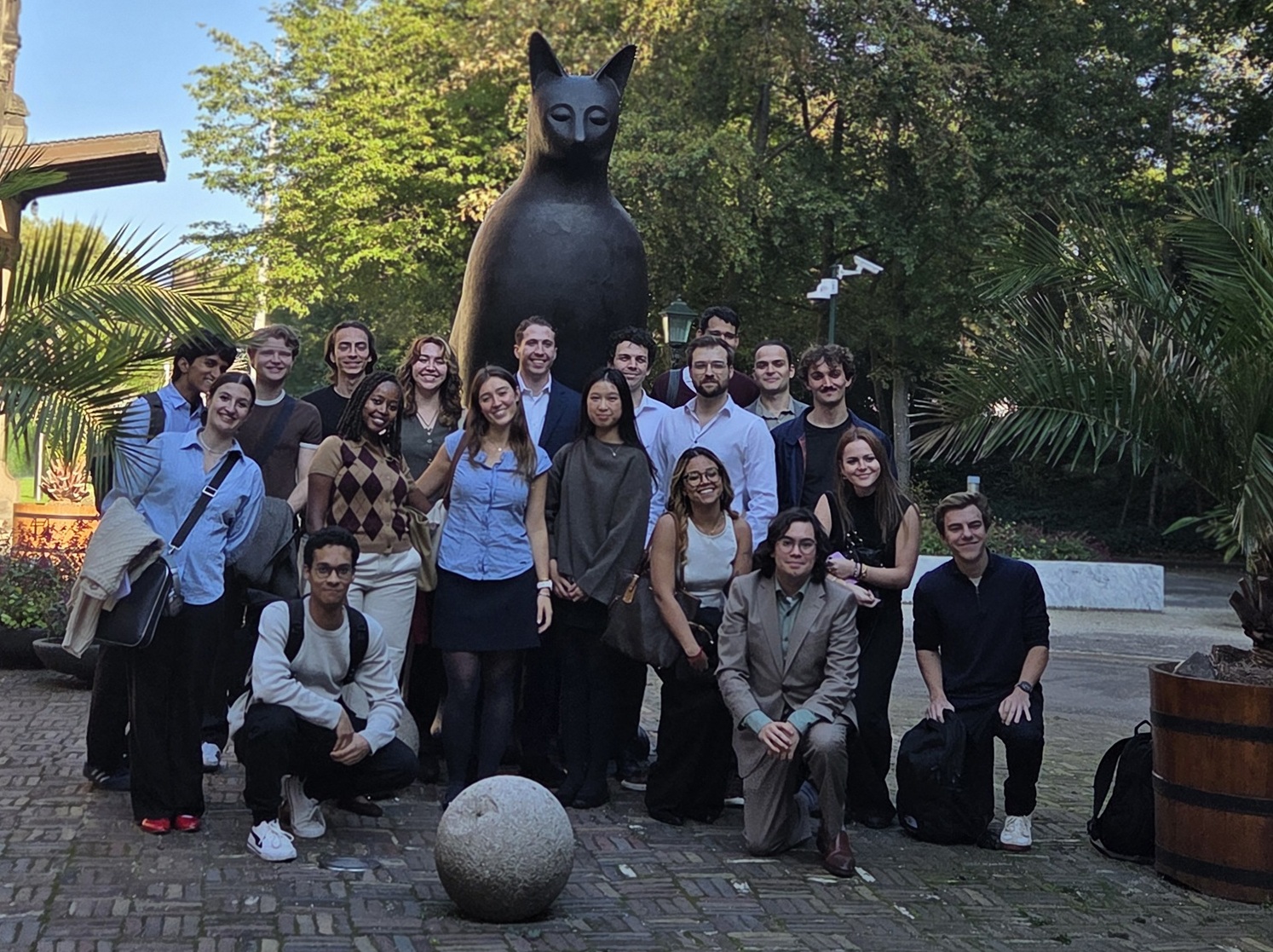
Students in front of the Cat Statue that was gifted by Egypt -

Students outside of the Peace Palace Entrance
MSc International Relations and Diplomacy
The two-year Advanced MSc International Relations and Diplomacy (MIRD) programme offers students a unique blend of academic education in international relations and political science with practical graduate education and training in international negotiation and diplomacy. Students attend a wide range of courses, develop their analytical and research skills, take on an internship, write their master’s thesis, and build network with experts in relevant fields. Upon graduation students are prepared to take on positions in international organisations, politics, and diplomacy; or for PhD research.