
From Ukraine to Afghanistan: What NATO can learn from warnings
Crises are often portrayed as unexpected events, yet research by Nikki Ikani shows that warnings are frequently available in advance. Her work demonstrates that, within NATO, the problem often lies not with the signals themselves, but with what happens to them afterwards.
A warning reaches NATO: In Afghanistan, the Taliban are advancing more rapidly than anticipated, and some parts of the Alliance are warning of the vulnerability of the Afghan government. One might expect member states to act immediately on such warnings to prevent a crisis. In practice, however, the situation is more complex. In report for the NATO Defense College, researchr Nikki Ikani examines how NATO handles differing national warnings and why they do not always produce a unanimous assessment.
Many crises are retrospectively described as a ‘warning failure’. Is that true?
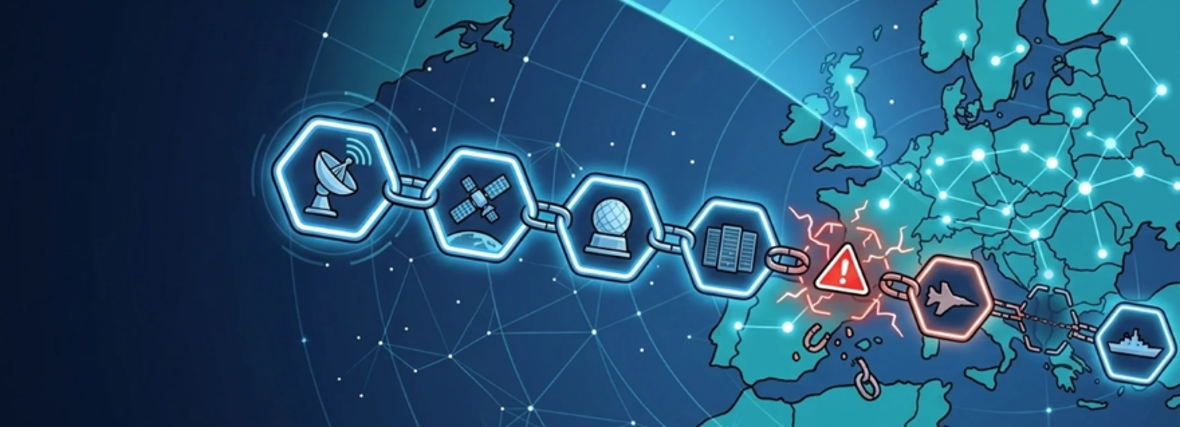
‘We see that, after a crisis, there is a strong tendency to say: ‘Nobody saw this coming.’ Yet, there are often signals and warnings beforehand that, for various reasons, are not acted upon. In my research, I therefore analyse the warning process as a chain. It begins at the point of the detection of something unusual and continues until the warning reaches policymakers. There are many steps in between, and it is precisely there that things often go wrong.
Several intelligence services within NATO, for example, had been warning for months about Afghanistan's vulnerability. Those signals became lost in the process because of earlier political decisions, such as the withdrawal of US troops. The main problem, therefore, lay in what happened to the warnings after they had been issued: they lost their urgency and the political space required for action.'

Your new NATO Defense College paper examines the handling of warnings from Kabul, Ukraine and Niger. What stands out?
'Because I look at the entire process chain, I am not simply trying to determine who was right and who was wrong. I break the warning chain down into different stages. Was the analysis sound? Was it communicated effectively? Did policymakers listen, and was NATO able to address the issue collectively?
Warnings were often analytically robust, but later lost force in the chain because of political assumptions and differing interpretations. We see countries drawing different conclusions from the same information and struggling to develop a shared picture. This was evident in the period immediately before Russia's invasion of Ukraine in 2022: the United States and the United Kingdom considered an invasion imminent, whereas Germany and France continued to believe for longer that diplomacy might still provide a solution, despite having access to largely the same information.
The most surprising finding, in my view, is that more data will not solve this problem. The real challenge lies in how signals are combined and interpreted collectively within an alliance. NATO places considerable emphasis on intelligence sharing, but what I find here is that interpretation sharing may be even more important.’
Why do differing interpretations have such a significant impact on NATO's warning system?
‘Because NATO countries ultimately have to make collective decisions and act on them. Different countries can look at the same signals and still see different possibilities, timelines and policy implications. We saw this during the coup in Niger in 2023. French and American agencies were observing the same deteriorating situation, yet they reached different conclusions and failed to establish a shared assessment before the crisis escalated.
That is why I place 'allied integration' at the centre of my analysis: NATO must be able to achieve consensus. This does not mean that everyone has to think the same way, but an organisation such as NATO does need to know where the differences lie and which minority assessments warrant further investigation.’
What can NATO do when member states interpret the same signals differently?
‘A great deal is already happening, but there are still areas that could be improved. One option is to conduct 'divergence drills'. In these exercises, countries briefly record what they believe will happen, including the probability, timescale and policy implications. This makes it easier to identify where assessments diverge.
There are also so-called 'red teams'. A red team's task is deliberately to challenge the dominant assessment. They question the assumptions we take for granted and ask what happens if an adversary behaves differently from what we consider logical. The aim is to make uncertainty and alternative explanations visible before a crisis emerges.
Finally, I believe it is crucial to prepare certain responses in advance. That way, when a situation escalates, action can be taken quickly.’
What does the collaboration with NATO mean for your research?
‘I have been affiliated with the Defense College for two years now and work there on my research into strategic warning, crisis early warning and EU-NATO relations. This is extremely valuable because it provides an environment in which I can discuss ideas with people who work within these organisations in practice. From the outside, it is often difficult to gain access to the work carried out by organisations of this kind, which makes this fellowship particularly valuable.
It also provides an ideal opportunity to communicate the findings of my research directly to practitioners: the primary audience for these papers consists of NATO Allied Commanders, the most senior military leaders responsible for NATO’s two strategic headquarters.
Sharing the knowledge generated through our academic research and ensuring that it has societal relevance is something we do particularly well at the Institute of Security and Global Affairs. Many of us work on substantial academic questions that also have clear societal significance. This fellowship contributes directly to that mission.'
How do you view the future of crises and warnings?
'Over the past decades, our capacity to collect signals has increased significantly. We now have technologies capable of monitoring a vast range of developments and actively issuing alerts when something deviates from the expected pattern. Yet the organisational challenges that follow remain persistent. Organisations are working hard to address them. NATO’s intelligence architecture, for example, is far more structured than it was ten years ago.
Nevertheless, bottlenecks remain, and not only within NATO. In areas such as epidemics, infrastructure risks and disinformation, warnings can still lose force as a result of bureaucracy, competing priorities and political considerations. Through my research, I seek to identify which specific components of these systems can be improved. We can never eliminate surprise entirely, but we can become much better at making use of the warnings we already have.'
Heed the warning: how NATO can find and fill the gaps in its warning systems is a practice-oriented application of the WARN Veni project. In an earlier article Ikani examined how success and failure in the warning process can be measured. This paper adds the practical question of what exactly happens when multiple countries and organisations must come together to take collective action.