

Urban nature expedition: 3,939 species found
Biodiversity image: Agnes Westelaken
In May and June, 2,636 residents of Leiden, Leiderdorp, Oegstgeest and Katwijk found 3,939 species of plants, animals and fungi. From oysters to orchids and from voles to vetch, nothing was overlooked in this survey of urban nature.
Expeditie Stadsnatuur was open to all. Residents of the four municipalities used the free ObsIdentify app to identify and record nearby species. They could also take part in over 50 expeditions searching for moths, riverside plants, newts, lichens and many other animals, plants and fungi.
Following urban nature
‘We want to organise Expeditie Stadsnatuur every spring, so that, after five or ten years, we can see trends within certain species’, says Frederic Lens, the coordinator of the Leiden Biodiversity Network. ‘Some species may be increasing, whereas others are declining significantly. Scientists can then research why this is. These findings will help us to advise municipalities on which species need a helping hand. That will enable us to improve the natural environment around us, benefiting not just nature itself, but people too.’
Unique observations
During this edition, 491 species were observed for the first time in one of the four municipalities. Of the 3,939 species found, 65 are extremely rare in the Netherlands. In May, a bearded vulture was spotted flying over Katwijk, a soprano pipistrelle bat was heard squeaking in a city park and a giant longhorn beetle found creeping around a food forest in Leiden. The latter has only been seen 25 times in the world.
-
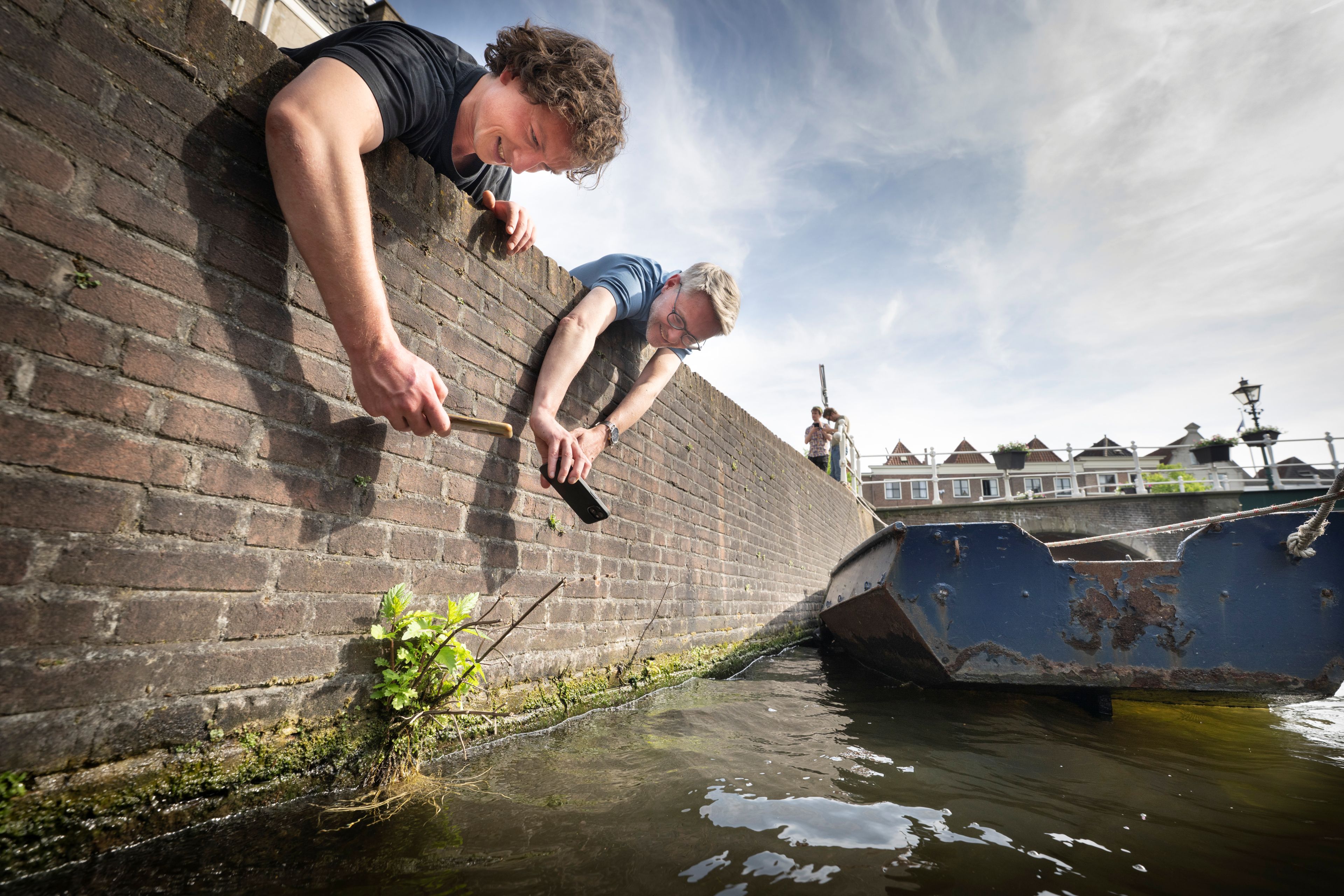
• Jordy Janssen (left) and Frederic Lens (right) use the ObsIdentify app to identify a plant. Photo: Taco van der Eb -
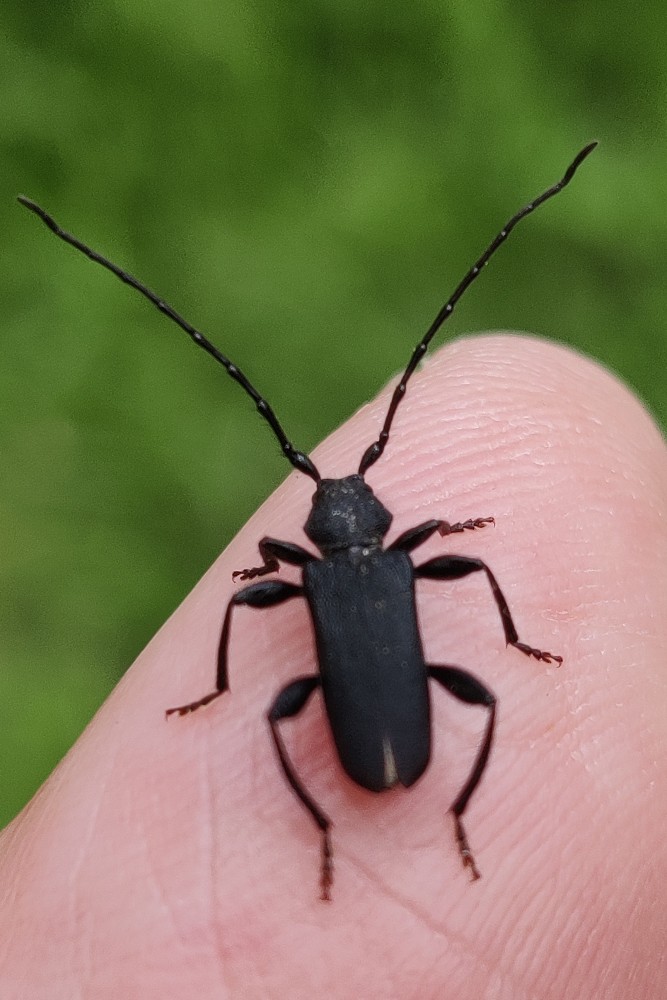
The giant longhorn beetle, which has only been seen 25 times in the world. Photo: Johannes Müller
Differences between municipalities
Each municipality has its own number 1 species. The common carder bee was seen most often in Leiden, the red admiral butterfly in Oegstgeest and bedstraw broomrape (a plant) in Katwijk. A bird topped the list in Leiderdorp: the common reed warbler. ‘It’s great to see so many birdwatchers active in Leiderdorp. The top ten in Leiderdorp are all birds’, says Lens.
Experts continue the work
The actual number of species is probably much higher than 3,936. Although ObsIdentify is good at identifying larger groups, some species are more difficult to determine. It regularly says ‘non-biting midge, unknown’ or ‘long-jawed spider, unknown’. Experts from ObsIdentify and their partners are working to improve the app so that these species can be identified in the future.
A national expedition?
In 2025, only Leiden took part in Expeditie Stadsnatuur, whereas this year Leiderdorp, Oegstgeest and Katwijk joined in too. ‘Biodiversity doesn’t stop at municipal boundaries. If we want to know how nature is doing in Leiden and the surrounding area, we need to get as clear a picture as possible’, says Lens. The aim is for more and more municipalities to take part each year. ‘Who knows? Perhaps one day we’ll even be able to organise a national expedition. That would be fantastic.’