
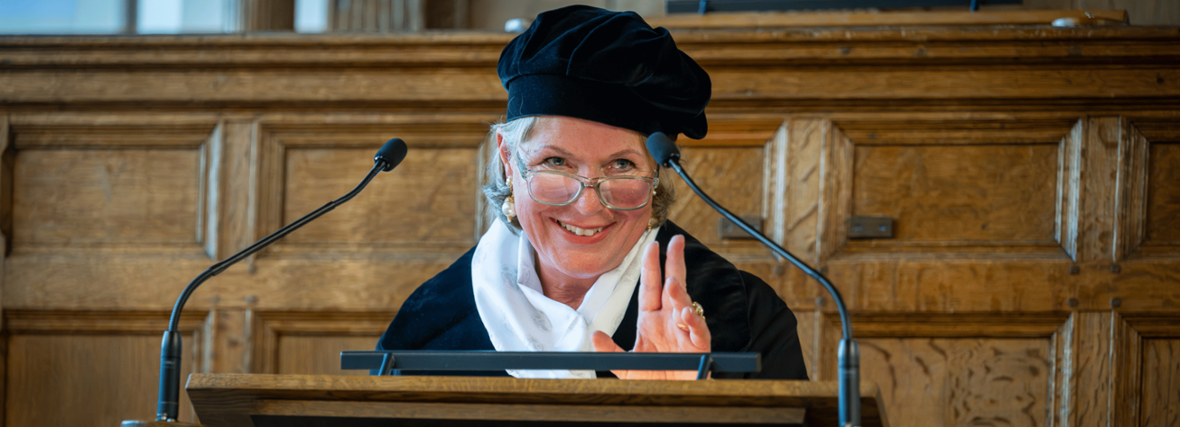
Tanja Bender retires: ‘I may be leaving, but I’ll remain involved’
Emeritaat image: Monique Shaw
Nearly 40 years after Professor Tanja Bender first joined the Department of Tax Law, she is now closing this particular chapter. On 1 July, she reflected one last time with colleagues on developments in international tax law before retiring.
‘I can’t imagine not being connected to this university,’ Tanja Bender said during the mini-symposium held on 1 July in the Great Auditorium of the Academy Building to mark her retirement and transition to emeritus status. By this, the professor refers to the fact that she has been affiliated with Leiden University throughout her entire adult life: first as a student, then as a lecturer, senior lecturer, and, since 1 July 2001, as a professor – a position she has held for exactly 25 years.
Those years were marked by many highlights. ‘Some academics regard teaching as a chore,’ Bender says. ‘But, I’ve always thoroughly enjoyed it. Analysing complex subject matter and presenting it in an accessible way to students has given me immense satisfaction.’ Writing scholarly publications has also been a source of great fulfilment for Bender, who combined her academic career with work in legal practice throughout her professional life. ‘I’m fascinated by the underlying logic and coherence of tax law, and I’ve always considered it a privilege, as a scholar, to explore theoretically challenging questions, even when they weren’t immediately relevant to legal practice at the time.’
Yet, it is the collaboration with colleagues that the professor looks back on most fondly. ‘I believe that collaboration and discussion lead to better outcomes, but what has given me the greatest satisfaction throughout my career is the sense of connection that comes from working closely with wonderful colleagues.’
International tax law then and now
That strong spirit of collaboration was also reflected in the lineup of speakers at the mini-symposium. Chaired by former student and colleague Anna Gunn, the programme featured presentations by emeritus professor of international tax law Kees van Raad (Leiden University), Marlies de Ruiter who played a key role on behalf of the Dutch government in the BEPS (Base Erosion and Profit Shifting) initiative of the Organisation for Economic Co-operation and Development (OECD), and Professor of International and European Tax Law Frank Pötgens (VU Amsterdam). Together, they reflected on the theme of the mini-symposium: ‘International Tax Law: Then and Now.’
History
Van Raad took the audience on a journey through the history of international tax law and its teaching at the university. He was quite brief about the field’s early history before the 1970s, as there was very little to speak of. Apart from a single doctoral dissertation published in 1946, there was, as he put it, ‘in the beginning’ virtually no academic literature on the subject.
It was not until 1978 that he was granted permission to teach international tax law in Leiden, albeit with a very limited number of hours. ‘It was quite a challenge,’ he recalled. ‘There were no textbooks, no source materials, no readers.’ So, it was truly a pioneering time within the discipline. To illustrate, the course materials he had to compile himself back in the day amounted to no more than 50 pages; these days, that’s around 1,000 pages.
-
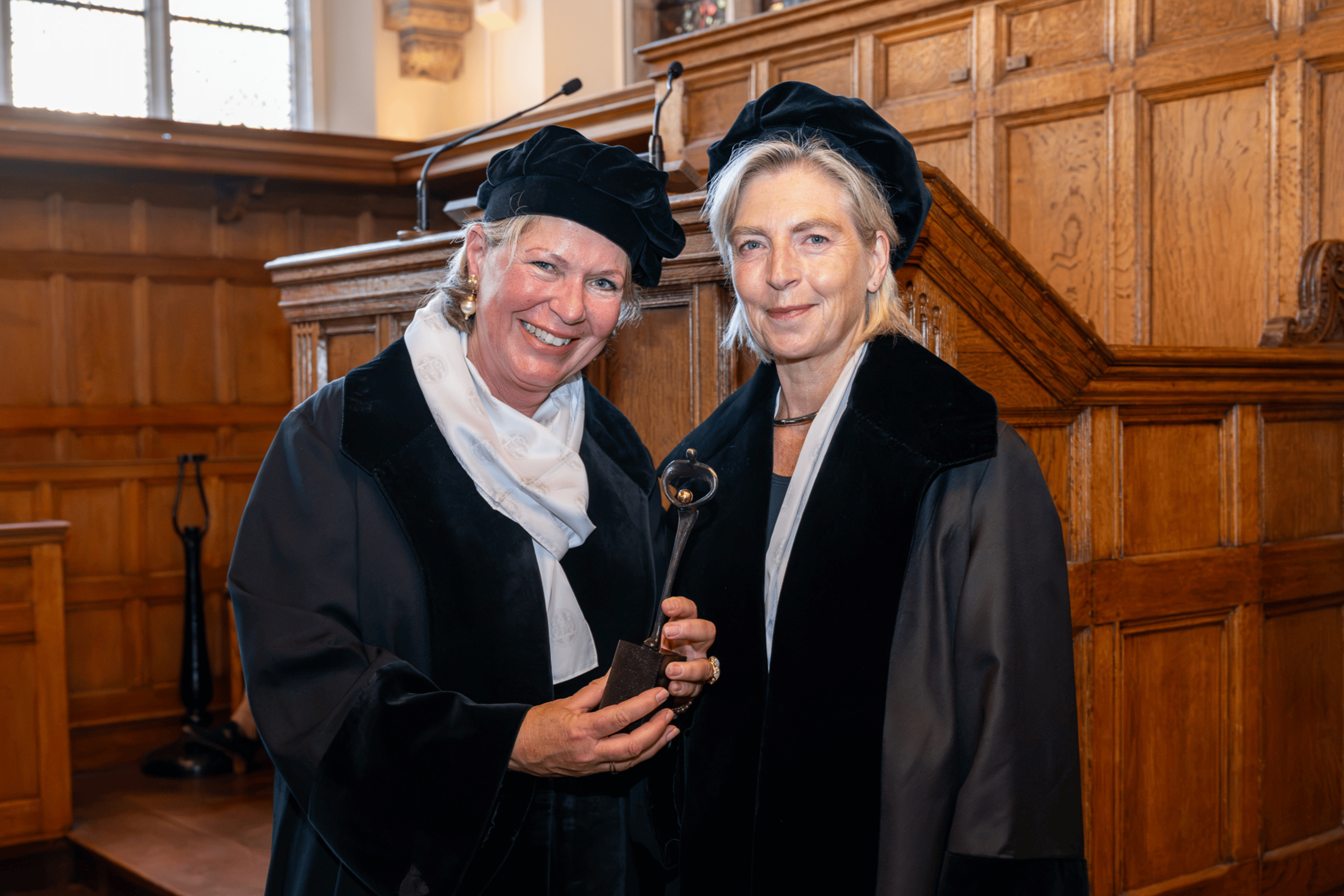
Tanja Bender and Suzan Stoter -
Globalisation
Marlies de Ruiter then outlined how the development of international tax law since the Second World War has been closely intertwined with globalisation. Preventing double taxation was seen as a way of promoting international trade and economic growth. Around the turn of the century, emerging economies such as the BRICS countries began demanding a greater voice in shaping the international tax system, while globalisation, combined with the one-sided focus on eliminating double taxation, created opportunities for tax avoidance. Bilateral tax treaties, which had previously proved effective in preventing double taxation, offered inadequate solutions to the problem of tax avoidance by multinational corporations. A first step towards addressing this issue came in around 2013, when the OECD launched the multilateral BEPS Project.
Future
Frank Pötgens looked ahead to the future of international tax law. One of the major issues is the taxation of tech giants such as Google and Apple, which generate enormous profits without always paying a commensurate amount of tax on them. Traditional principles embedded in existing international tax rules, which are largely based on a company's physical presence in a country, are ill-suited to this challenge. Instead, countries increasingly seek the right to tax profits in the markets where companies earn their revenue. A second major challenge is the increasing mobility of workers, while tax law for individuals still often rests on the assumption that a person must be physically present in a country in order to be taxed there. ‘New legislation is needed to address this,’ said Pötgens.
Liber amicorum
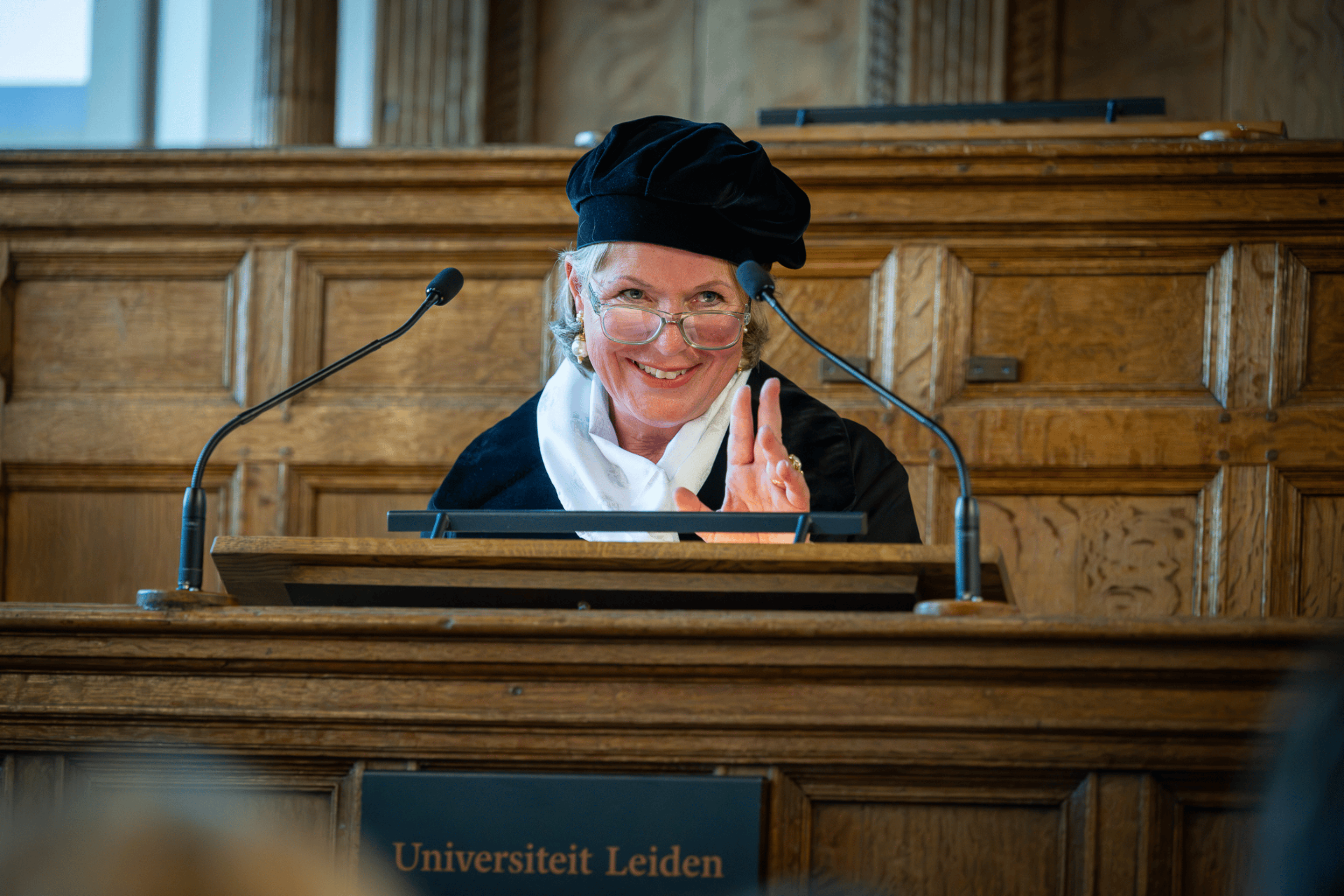
After contributions from the various speakers, the final word was for Tanja Bender. ‘I consider myself very fortunate to have witnessed the development of international tax law from the inside over such a fascinating period,’ she says. ‘For health reasons, my departure comes sooner than expected, but I’m proud and honoured to receive emeritus status today.’ The professor emphasises that she would like to remain connected to the university community in this role. ‘I may be leaving today, but I’ll remain involved’.
Jan van de Streek, Professor of Tax Law and Head of Department, then addressed Bender on behalf of the Department of Tax Law. He presented her with the ‘Bender-bundel’: a liber amicorum, published by Kluwer, containing contributions from 39 current and former colleagues.
Congratulations from Dean Suzan Stoter
‘As one of the first female professors of tax law in the Netherlands, you were a pioneer in more than one respect. You demonstrated that it is entirely natural for women to pursue a career in the traditionally male-dominated field of tax law, and in doing so inspired countless talented women, both within academia and in tax advisory practice.’
‘As a supervisor and academic administrator, your goal was always to create an inspiring environment for young talent. A true member of the Leiden academic community, you have helped shape the institution while continually developing your own scholarship and leadership. Your contribution to the advancement of tax law at Leiden has been profound, and for that, we are immensely proud.’