King brings Japanese Emperor to Leiden University
State visit image: Danique ter Horst
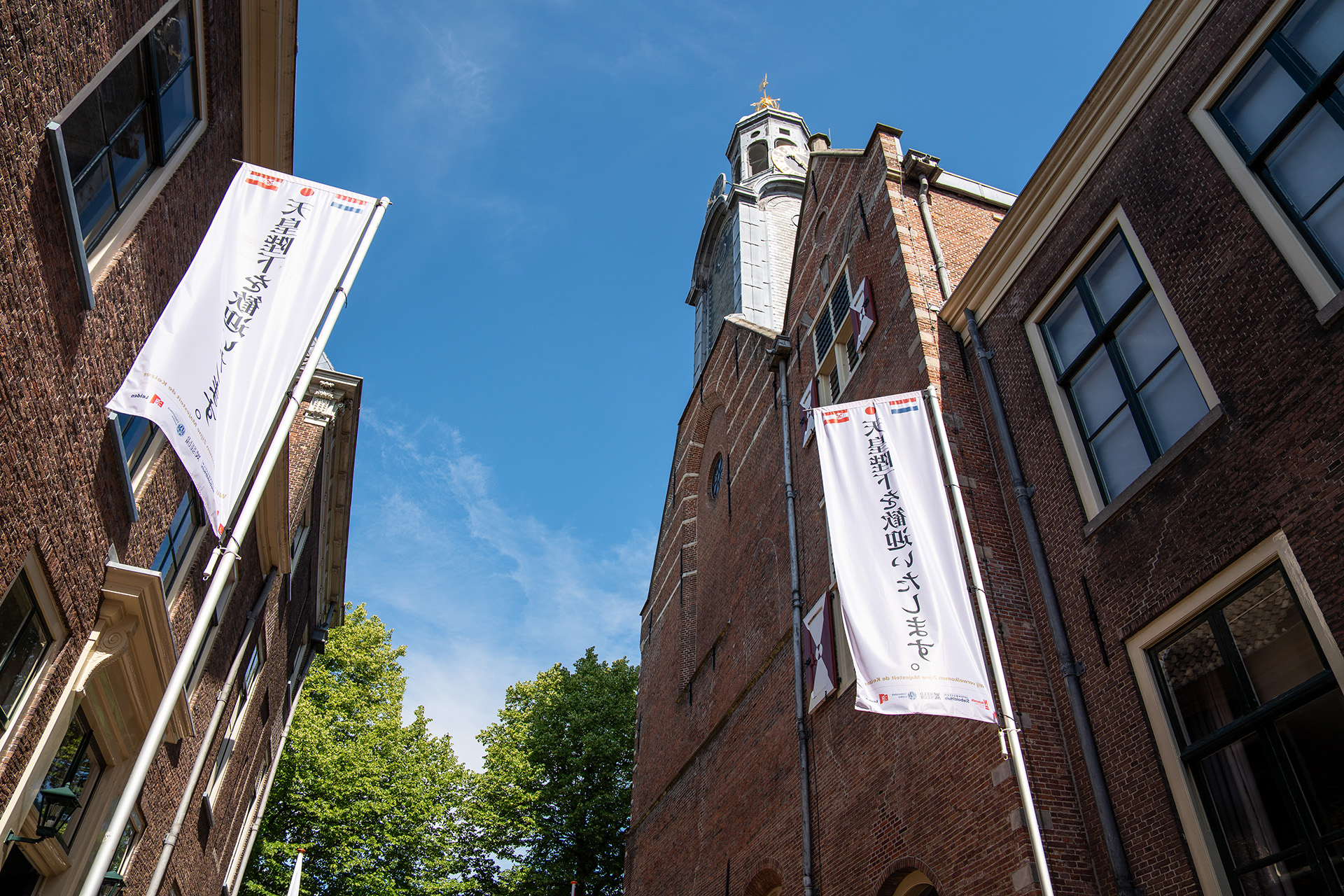
Amidst great interest from locals and visitors, Emperor Naruhito and King Willem-Alexander paid a visit to Leiden University on 18 June. In the Hortus botanicus they talked with students and researchers. ‘This visit emphasises our shared ambition.’
Some three hundred people gathered on Rapenburg to get a glimpse of the emperor and the king. Among them were many students and staff of the university and affiliated institutes. One of those present was Akio Tamura, who works for the Leiden Asia Centre. ‘This is a symbolic and historic visit by the emperor,’ he said. ‘It is good that he has come here and reinforced the bond between us. For me, it is very special that the worlds of Japan and the Netherlands come together here in Leiden.’

State visit
The emperor was with his wife in the Netherlands for a three-day state visit, including the visit to Leiden University. The university and Japan have a long history where knowledge exchange plays an important role. The university now also has a large number of partnerships with Japanese universities. Leiden is the only university in the Netherlands, and one of the few in Europe to offer a programme in Japan Studies. Besides Leiden University, the emperor also visited knowledge institute Deltares, and the Peace Palace in The Hague, and laid a wreath at the National Monument on the Dam. This monument is where the Netherlands commemorates its war victims, including Dutch people who lost their lives as a result of Japanese actions.
King shows signature on wall of Sweat Room
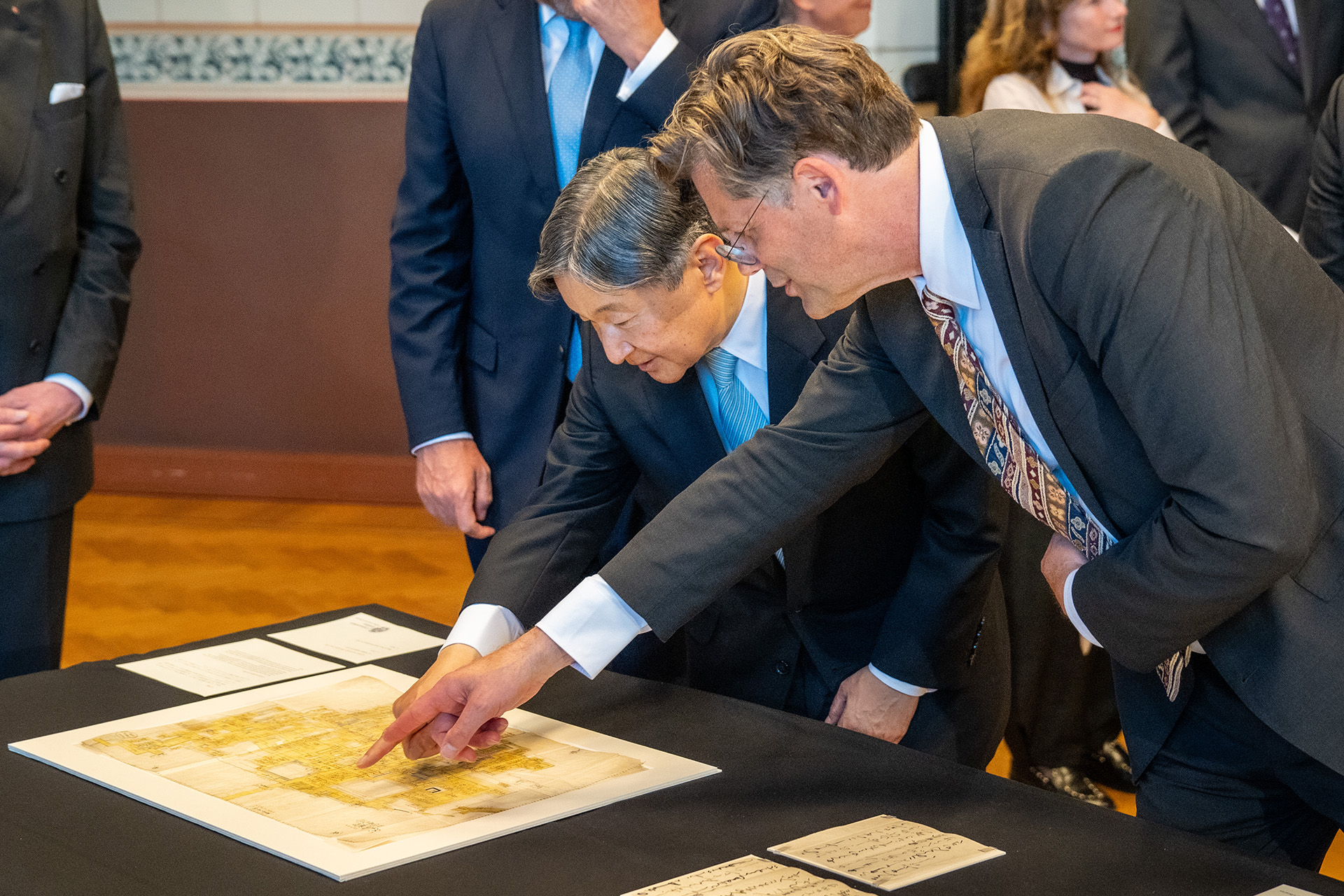
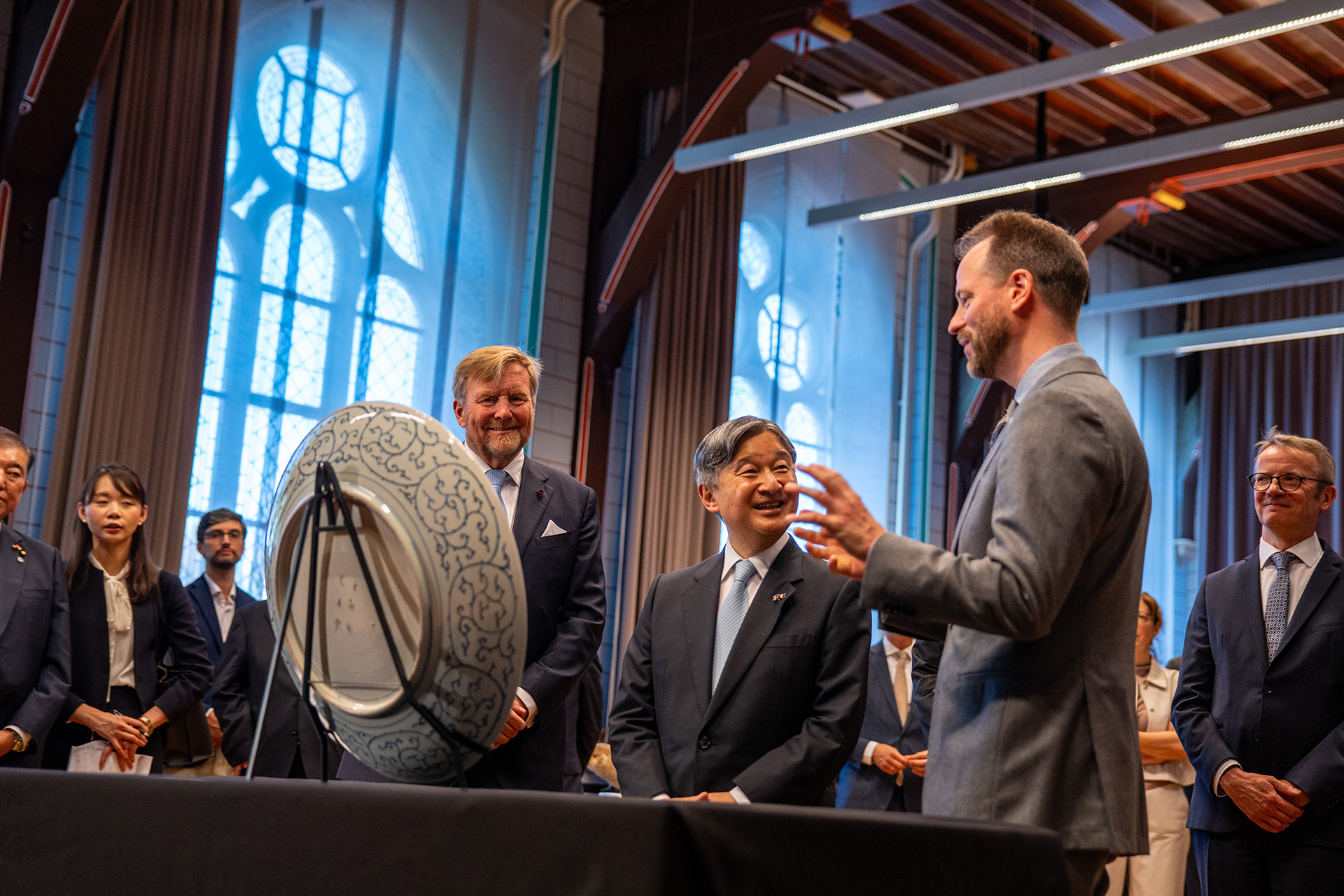
There were loud cheers when Willem-Alexander stepped out of the car, waving briefly to the crowd. Shortly after, the Japanese emperor arrived. After acknowledging the crowd, the delegation visited the Senate Chamber in the Academy Building, where portraits of Leiden scholars are displayed. Rector magnificus Sarah de Rijcke talked here about the history of the university and Willem-Alexander, who studied History in Leiden, recognised two of his professors among the portraits. One door further, the king showed where he had added his signature in the Sweat Room when he graduated. After viewing Japanese artefacts from Leiden museums and the University Library on the next floor, the group were given a tour of the Hortus botanicus.

Emperor interested in research
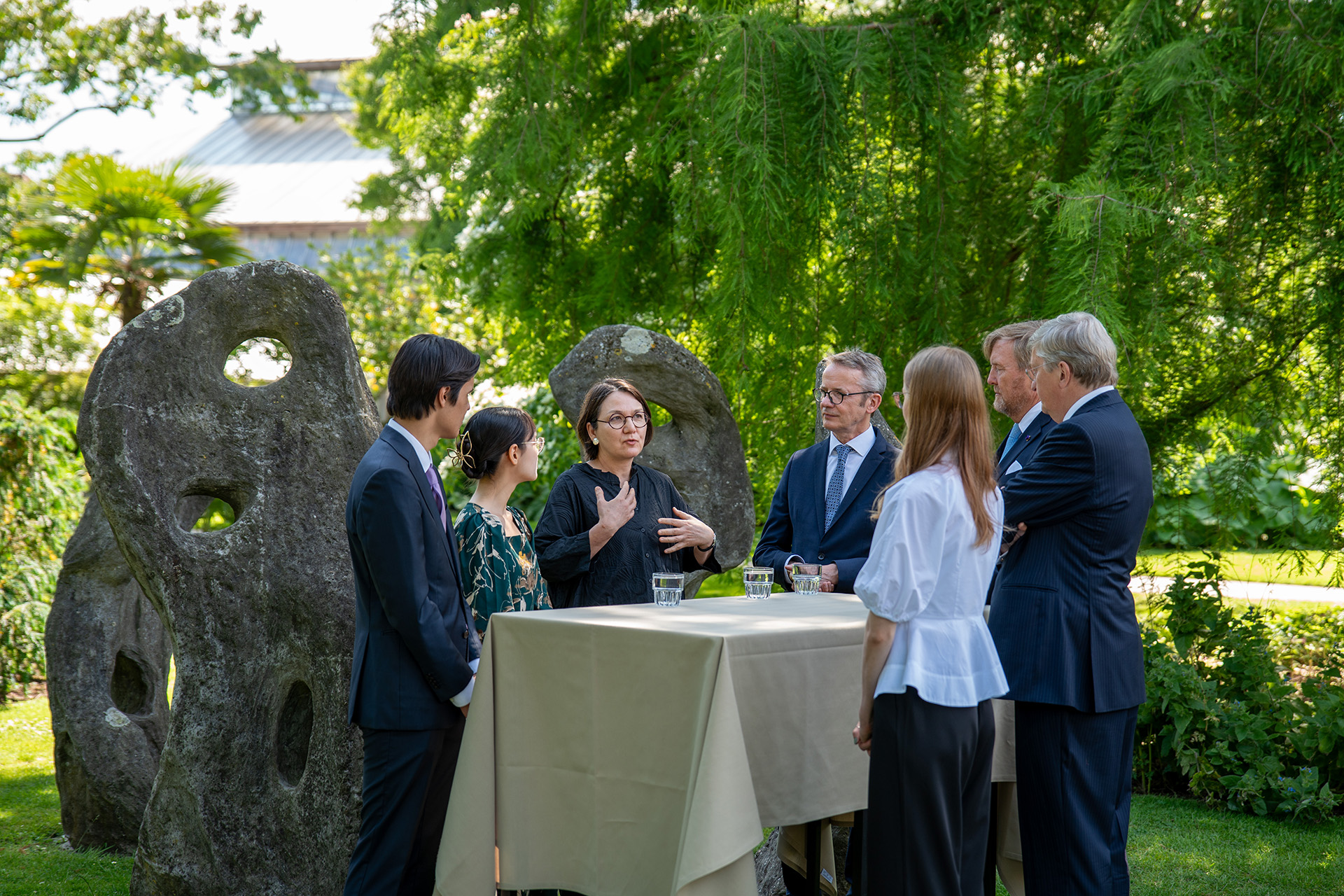
The emperor and king talked in the Hortus with researchers and students of Japan Studies. They didn’t speak in Japanese because when talking to the emperor, the highest form of politeness has to be used. Very few people are competent to speak this old and formal language.
They therefore spoke in English about a very Dutch subject: the beautiful weather. But the emperor was primarily interested in the research carried out at the university. ‘He was very friendly, and asked a lot of questions,’ said master’s student Anna van Ark. ‘The discussion felt very personal, and he paid us a lot of attention. We talked about my internship at the Rijksmuseum where I researched Japanese woodblock prints, and about my current thesis on how images of foxes in Japan changed over a particular period.’
Bachelor’s student Dennis Overzet was asked to say a few words about his bachelor’s thesis on relations between Japan and Korea, China, Europe and the US. ‘It was a very natural discussion. The emperor seemed to want to ask even more questions if he had had more time.’

Centuries of knowledge exchange
After an hour, it was time for the emperor and the king to depart, again viewed by a large crowd. The Executive Board (CvB) of the university waved them off. They were very honoured to receive Emperor Naruhito and King Willem-Alexander at Leiden University, said Luc Sels, President of the CvB.
‘Leiden and Japan share a unique bond, rooted in centuries of knowledge exchange between Japan and the Netherlands, and fortified by a long tradition of academic collaboration. From our leading role in Japan Studies and the special legacy of van Siebold, a broad partnership has developed that embraces almost all academic disciplines. Japan’s involvement in the Horizon Europe research programme provides new opportunities to deepen the partnership.This visit emphasises not only a rich shared history, but also a shared ambition to use science, education and innovation to help find solutions to global challenges.’
-
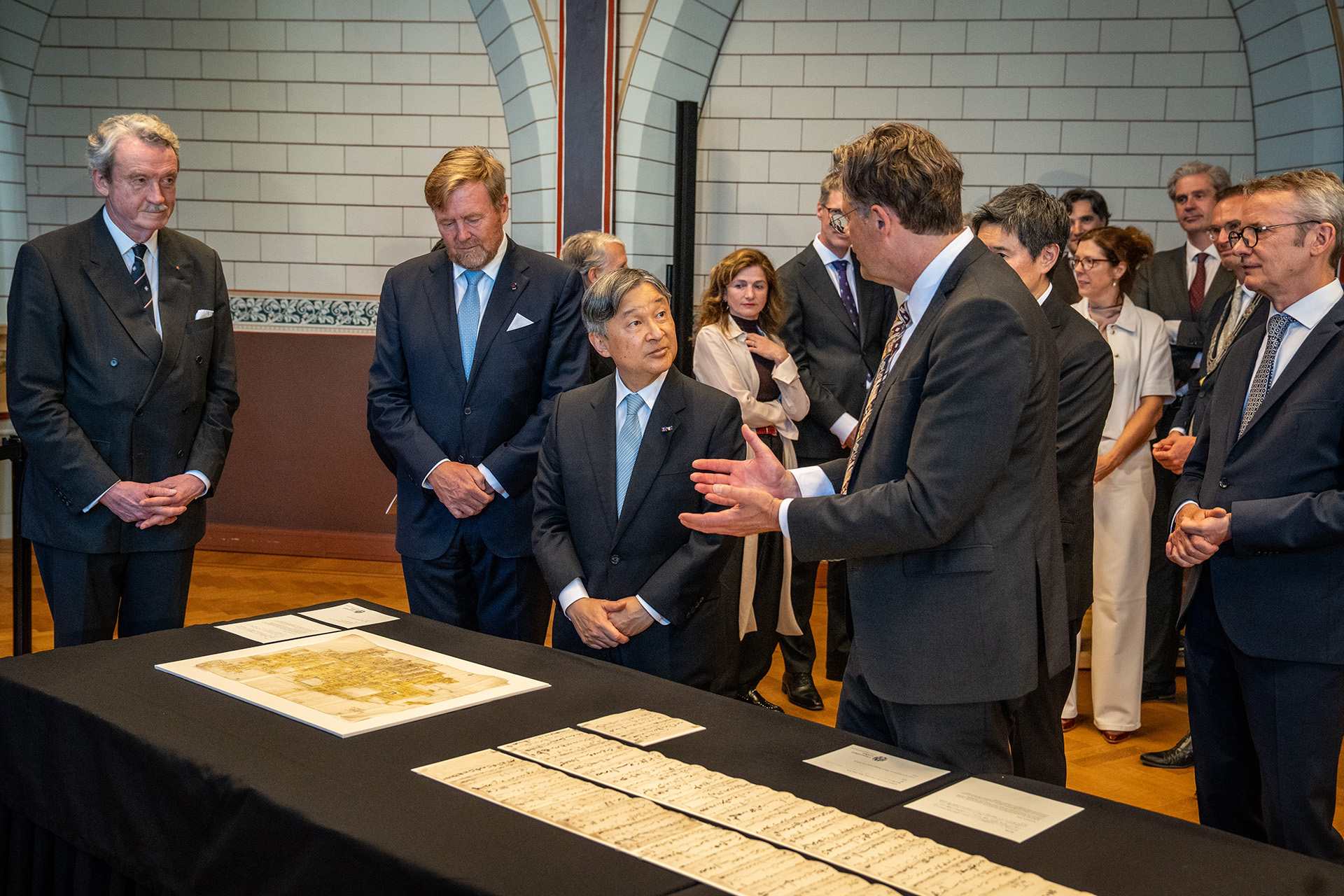
Ivo Smits, Professor of Languages and Cultures of Japan shows some of the Japanese collection. -
-
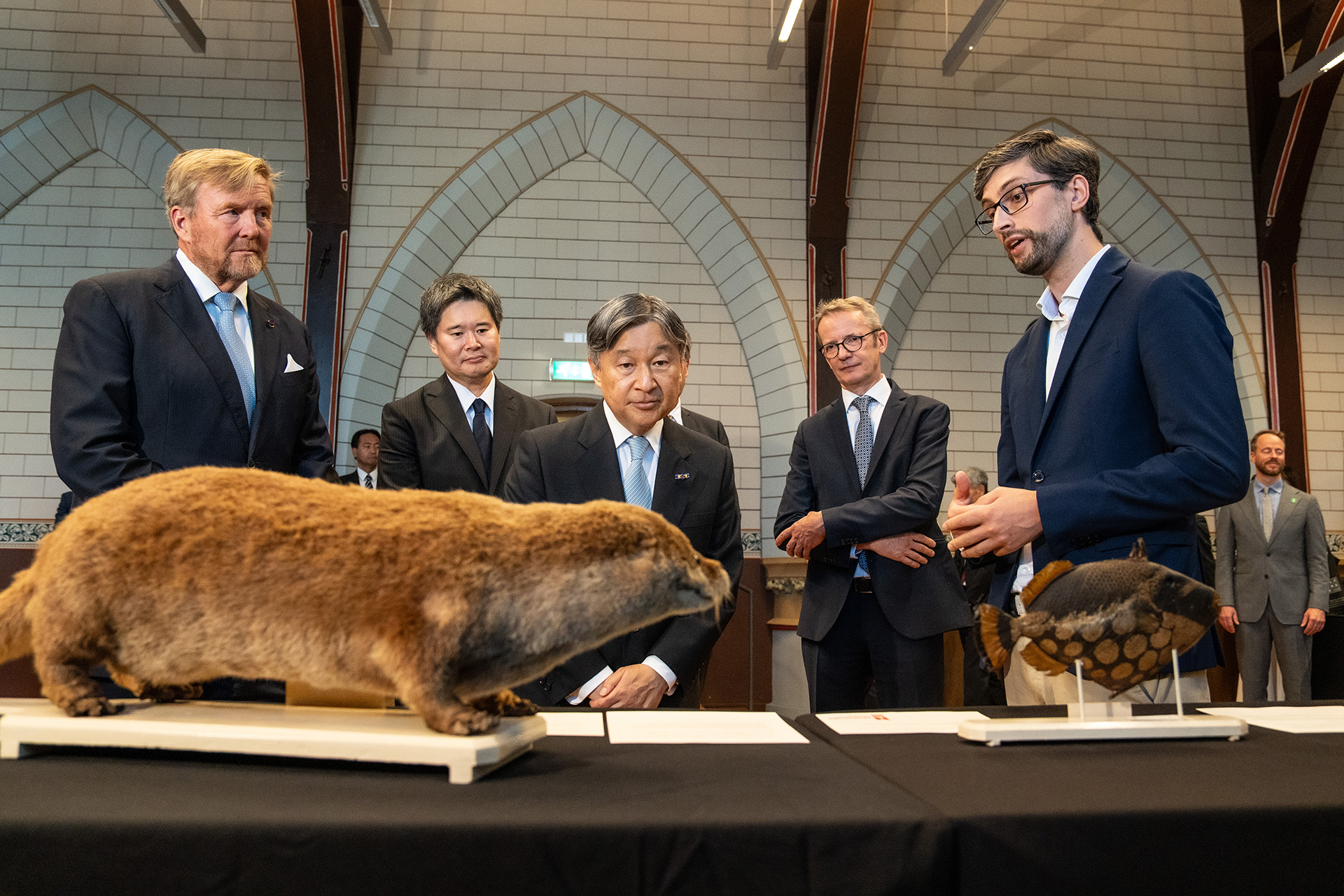
Naturalis collection -
World Museum collection -
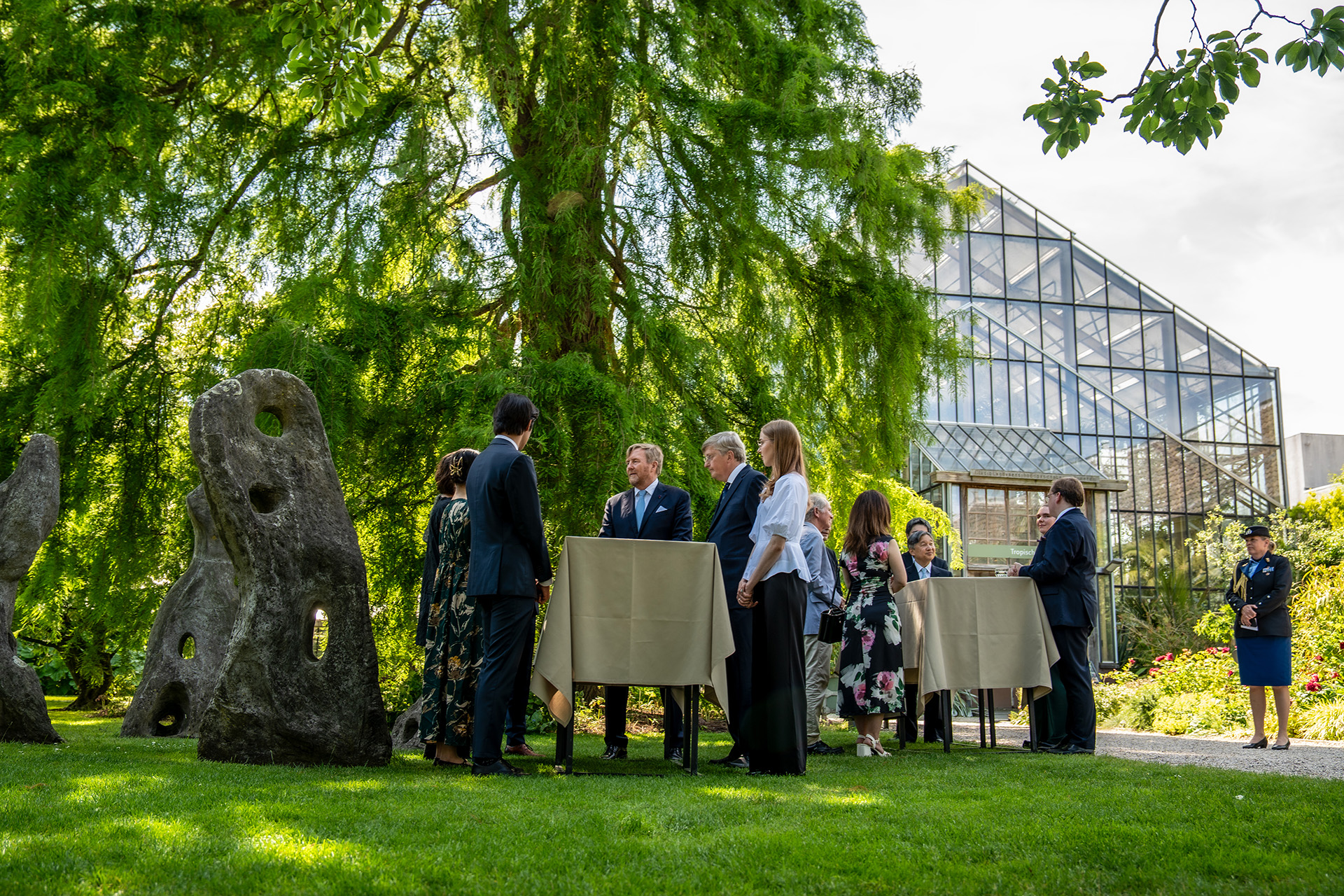
Students talking with Emperor Naruhito -
-