Austria Centre Leiden travels to Olomouc for the Annual Meeting of Austrian Centers
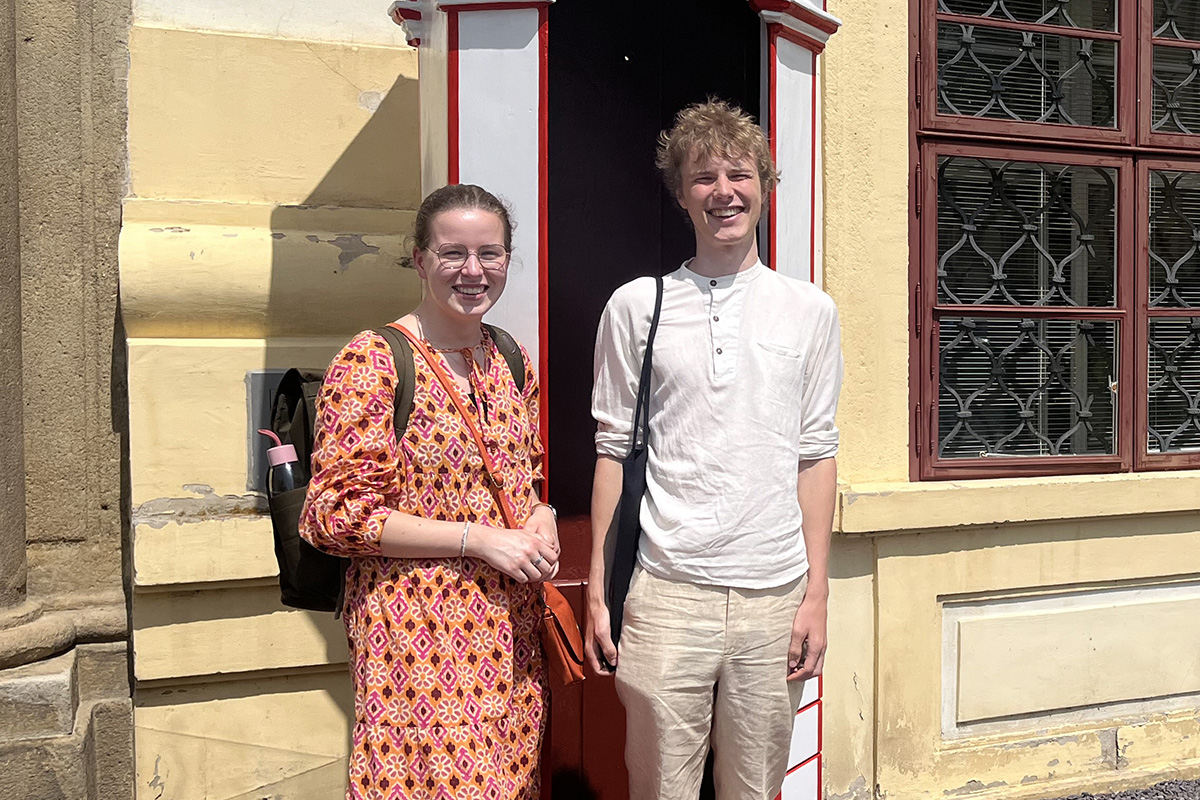
In June 2025, Prof. dr. Sarah Cramsey traveled to Olomouc, Czech Republic with Mr. Jan Verkoren and Ms. Christien Smits, two B.A. History students at Leiden University.
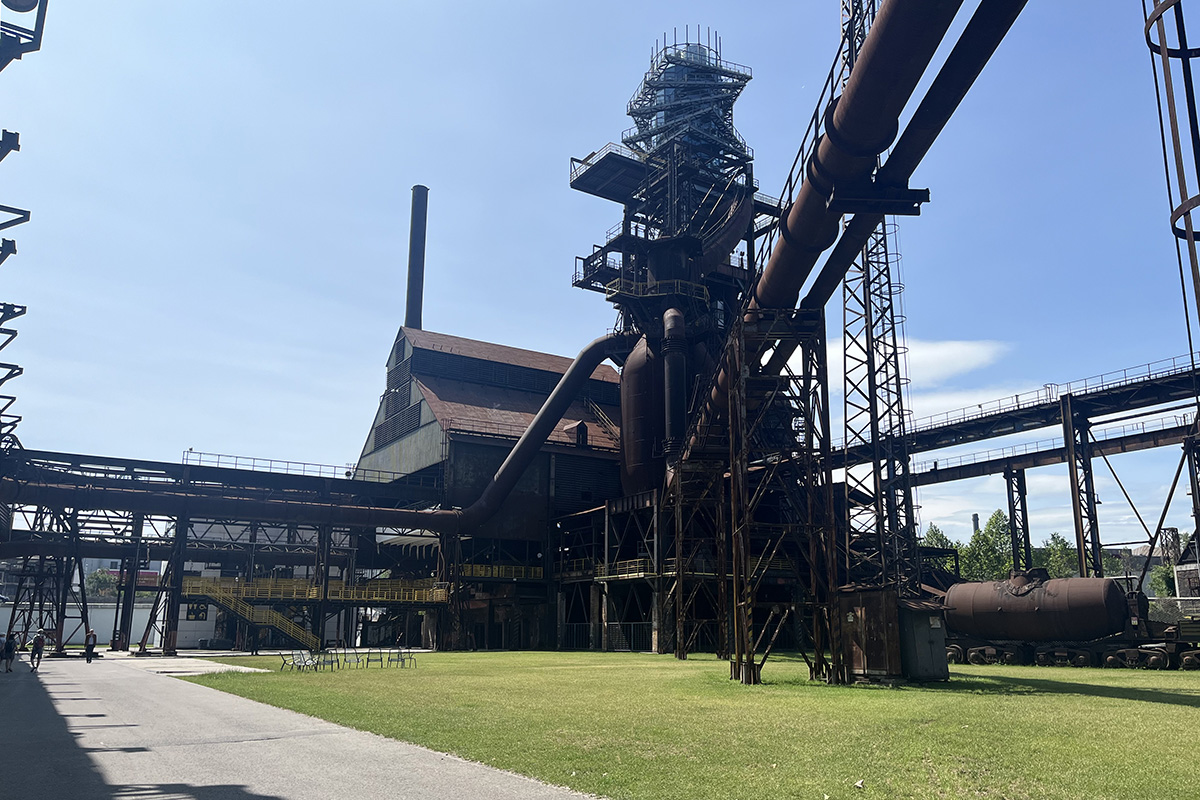
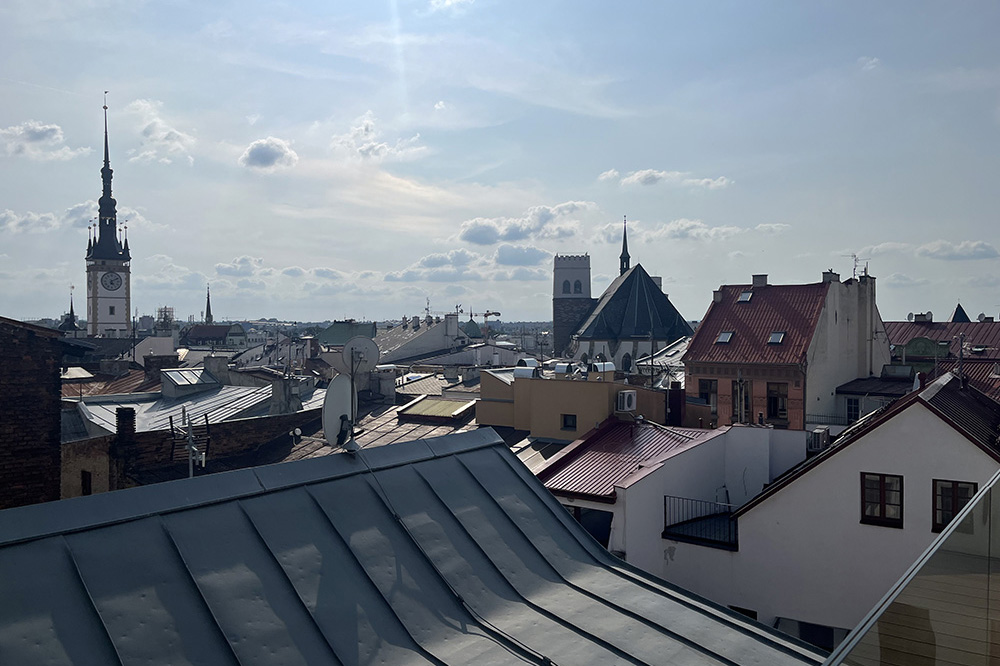
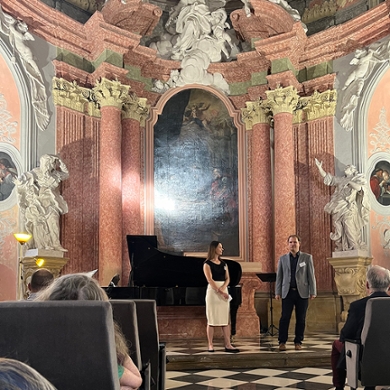
Both students presented papers to an audience filled with colleagues from the eight other Austria Centers, the Federal Ministry of Women, Science and Research and the OEaD (the Austrian Agency for Education and Internationalisation). We also enjoyed exciting day trips to places like Ostrava where we visited the former blast furnace at Dolní Vítkovice that has been turned into an excellent museum and heard a beautful concert in a centuries-old music hall at Palacký University in Olomouc, whose Austria Center hosted this meeting. We even found “Dutch” things, like the “Dutch Garden” and some Dutch masters!
Jan and Christien answered some questions about their time in Moravia:
What did you present on in Olomouc and how was your research received?
Christien Smits: I presented research on nation-building processes in Czechoslovakia and The Netherlands after the Second World War. By comparing these two, quite different, processes, I aim for a bettered understanding of both, while also emphasising the role of nationalism and memory culture in the reconstruction of national identity after a war. I was happy to receive some literature recommendations as well as a few compliments on my presentation and was very positively surprised by the interest the audience showed.
Jan Verkoren: In Olomouc, I presented my bachelor’s thesis research on Empress Eleonora Magdalena von Neuburg Pfalz. I showed the role she played as empress and consort in the politics at the imperial court in Vienna and how she used her influence in both this court and her Neuburgish home court to advance her interests. This research was quite well in line with a good portion of the research being conducted by the other attendees of the conference. I had especially interesting conversations about my research topic with Joseph Patrouch from the University of Alberta, in which we discussed amongst other things Eleonora’s use of specifically her position as empress to advance her family’s interests, for example, securing her coronation in Augsburg, conducted by her brother, the bishop of Augsburg.
How do you feel about the overall conference and the exciting trips you took within and around Olomouc?
Christien Smits: It was an amazing experience! I really enjoyed the company of fellow researchers. Moreover, it was a really nice experience to visit three places of historical importance with a group of history enthusiasts - due to our background knowledge we got to ask so many in-depth questions to the tour guides! The food was delicious too; our hosts of the University of Olomouc have been very generous! Currently I am exploring historical as well as theological research topics, with the goal of becoming a scholar in history and/or theology. This conference has been the perfect opportunity to get better acquainted with this function. Moreover, I gained experience in presenting research as well as in networking with fellow researchers. This will certainly prove helpful in the future!
Jan Verkoren: The conference was incredibly insightful. I loved the many different perspective on Central European history presented in the PHD talks, but also thoroughly enjoyed going out into Moravia and experiencing Huizingaesque historical sensations in an area so central the region of Central Europe. From the conference venue, just a short walk from the site where Ferdinand I abdicated the imperial throne in 1848, to the imposing steel mills in Ostrava, which, though originally constructed by the archbishops of Olomouc reached their peak and took on much of their current form during the communist period. The excursions in Olomouc and the surrounding area gave a tangible and grounded new dimension to the academic work on the region.