

Alumnus and Dutch MP Joost Sneller: ‘Our democracy is vulnerable’
Alumni
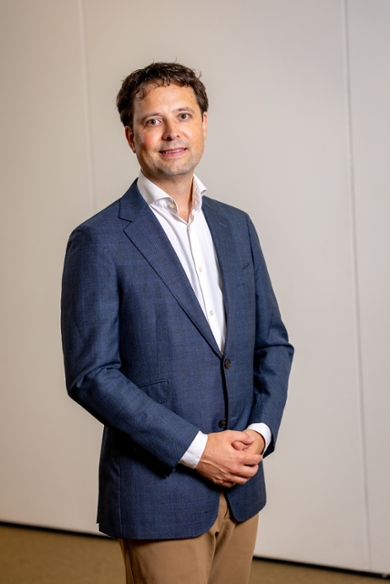
As a member of the ‘Tweede Kamer’, Joost works on issues including the democratic rule of law. His career began in Leiden and The Hague. We asked him about his political career, ambitions, time in Myanmar, and advice for current students.
Why did you decide to study Law?
‘I’d studied previously in Utrecht, Berkeley and Bologna, and joined the D66 parliamentary group in the Dutch House of Representatives as a policy adviser in 2005. It was felt that a degree in Law would help me, so I took up the study alongside my job. During the day I worked at the Binnenhof, and in the evenings I crossed the Plein to attend most of my classes at Leiden University’s Campus in The Hague.’
How did your degree help you in your work?
‘The combination worked really well: during the day I focussed on how we wanted policy to function, and in the evening I learnt how things actually worked in practice. I'd already taken a few law courses in Utrecht, but I'd never studied Dutch law. That additional depth gave me structure and a frame of reference, and it still helps me understand my work to this day. My work covers a wide range of subjects, and in that context it helps to have a solid grounding in law across the board.’
What sparked your interest in politics?
‘At secondary school, I was already involved in activities for the student and municipal council, and my first bachelor’s degree was in politics and philosophy. But I never saw it as a dream to go into politics. After doing various internships in the Netherlands and abroad, I realised that I felt the strongest connection with the practical side of politics in the Tweede Kamer.’
From 2014, you lived for a time in Myanmar. What did you do there exactly?
‘My girlfriend was working in international development, and through my studies I had a background in that field as well as international relations. We ended up in Myanmar because a lot was going on there in the areas of democratisation and good governance. I helped support the development of democracy through various international organisations and NGOs. I provided training to political party candidates and connected former heads of government with local stakeholders. Looking back, it was a fantastic time and a great learning experience, especially as it was a total contrast to the world in which I’d previously studied and worked.’
In your job, one of your focus areas is the democratic rule of law. What’s the main challenge within that area?
‘Our democracy is vulnerable to attempts to undermine it. In countries like Poland, Hungary, and the United States, we can see how quickly things can deteriorate. Our system is very open and relies heavily on trust in those who hold power and in our institutions. That’s what makes us vulnerable and we need to focus in particular on strengthening our resilience.’
How can we do that?
‘Democracy needs to deliver more effectively on people’s biggest concerns and foster a healthier political culture, forge compromises, and ensure that the national government brings about real changes in people’s lives. We also need to take our system of checks and balances more seriously, for instance by making judicial appointments more independent from the government and by removing the Minister of Justice’s authority to issue binding orders to the Public Prosecution Service.
Finally, the rule of law needs to become more accessible. The childcare benefits scandal in the Netherlands showed that, for many people, it feels inaccessible and sometimes even works against them. So, access to legal aid and community-based legal services also needs to be improved.’
What’s your best memory from your time at Leiden University?
‘What I enjoyed most was the diversity. On the one hand, there was the experience of simply going to lectures; on the other, because I’d never studied at a regular Dutch university before, it was my first time taking an exam in a huge sports hall alongside 800 other students. I hadn’t experienced anything like that since the Cito test! [the standardised Dutch school-leaving test at the end of primary school].’
Finally: what’s your advice for our current students?
‘I’d say do internships early on. As I recall, hardly anyone made time for an internship during their bachelor’s degree, and it was only actively encouraged during my master’s. I was an intern at the OECD in Paris and a think tank in Washington, both were really valuable experiences. They exposed me to different career paths at an early stage and helped me discover what suits me best. When you’ve just left university, it can be hard to know straight away the direction you want to take.’