
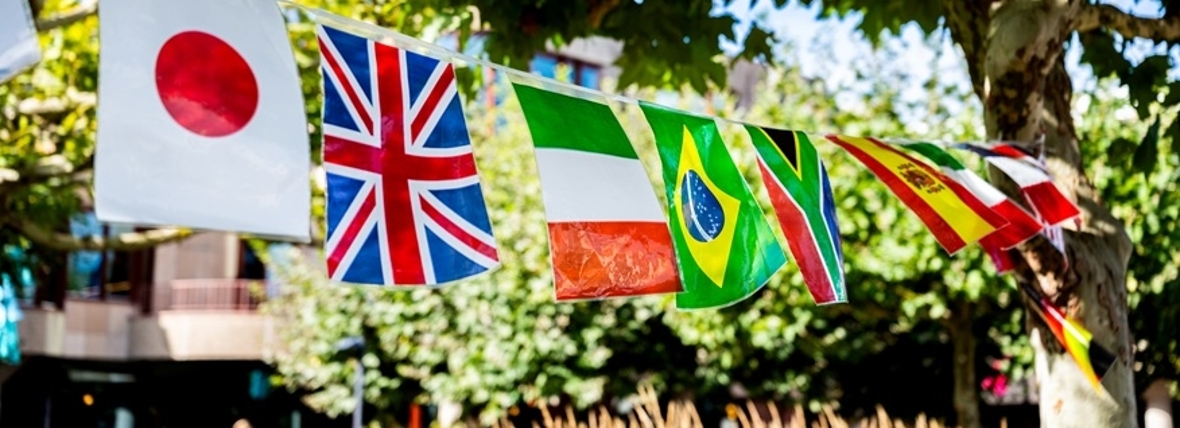
Languages and cultures alive and thriving at sold-out festival
Festival image: Marit Hazebroek
From language speed dates to Japanese ideophones, and from Russian propaganda to a crash course in Hangul. Saturday’s well-attended Day of Languages and Cultures showed just how much languages and cultures can connect people. ‘We don’t want to cut language and culture programmes; we want to strengthen them.’

Leiden’s festival of languages and cultures had sold out well in advance. The packed rooms in the Herta Mohr Building and University Library showed that interest in languages and cultures is alive and thriving.
Rector Magnificus Sarah de Rijcke, who attended the Japanese workshop ‘Food for the Senses’, was equally impressed by what she saw at the Faculty of Humanities.‘They can be very proud of what they have achieved. We all know that smaller language and culture programmes have been under pressure in recent years. Leiden has made a conscious decision not to cut its range of programmes. Instead, we want to strengthen them, partly by working extensively across disciplines. And that is exactly what you see at this festival.’
Language and culture can connect and enrich people when there is mutual understanding. But they can also be used to emphasise divisions. Both sides were explored in workshops, lectures, quizzes and guided tours.
-
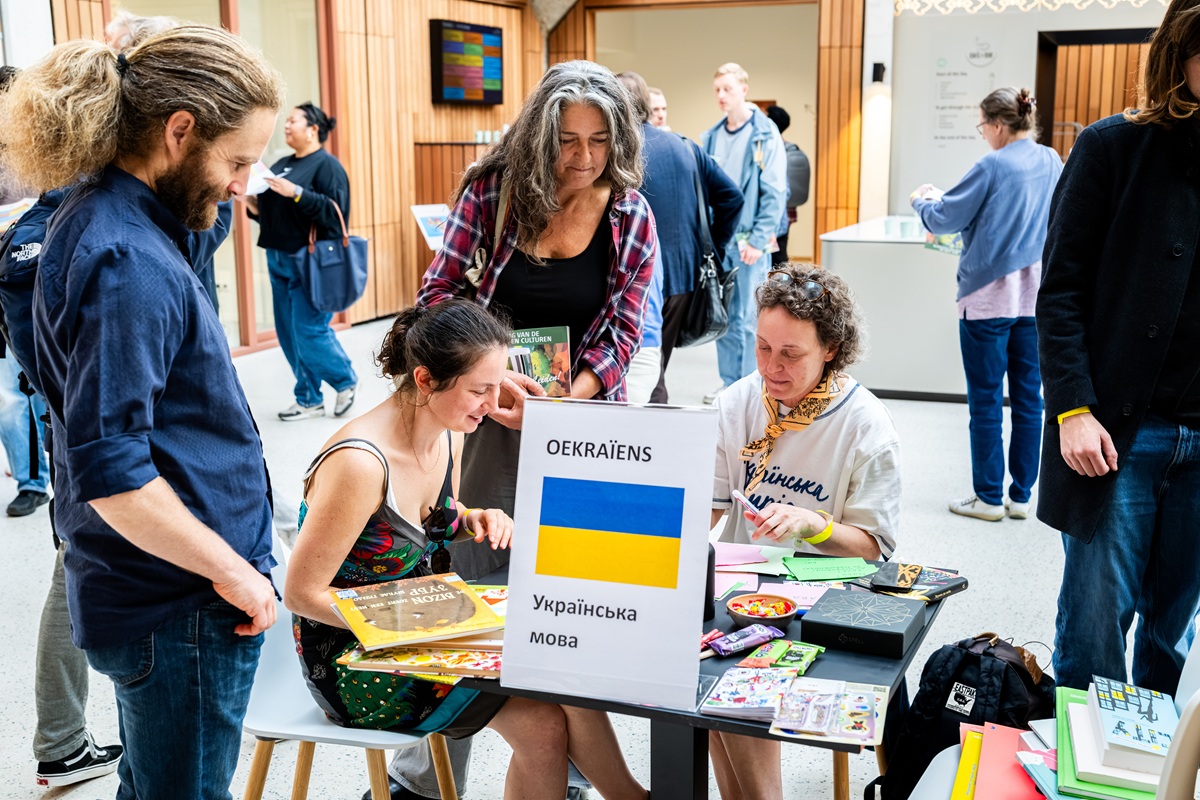
In the central hall of the Herta Mohr Building, even more connections were forged. During the ‘speakdates’, visitors could take their first steps in Finnish, brush up on their German and French, or immerse themselves in Icelandic literature. Here, too, there was a lively atmosphere, with animated conversations and discussions. -

So there was plenty of choice, with more than fifty workshops, talks, current affairs lectures and quizzes. -

The Leiden Festival of Language and Culture had sold out well in advance. The packed auditoriums in the Hertha Mohr Building and the University Library proved that interest in language and culture is very much alive. -

From manuscripts and papyri dating back more than 2,000 years to Tibetan block-printed books and rare manuscripts from Asia and the Middle East, visitors were able to view a fine selection of written works and text carriers. -
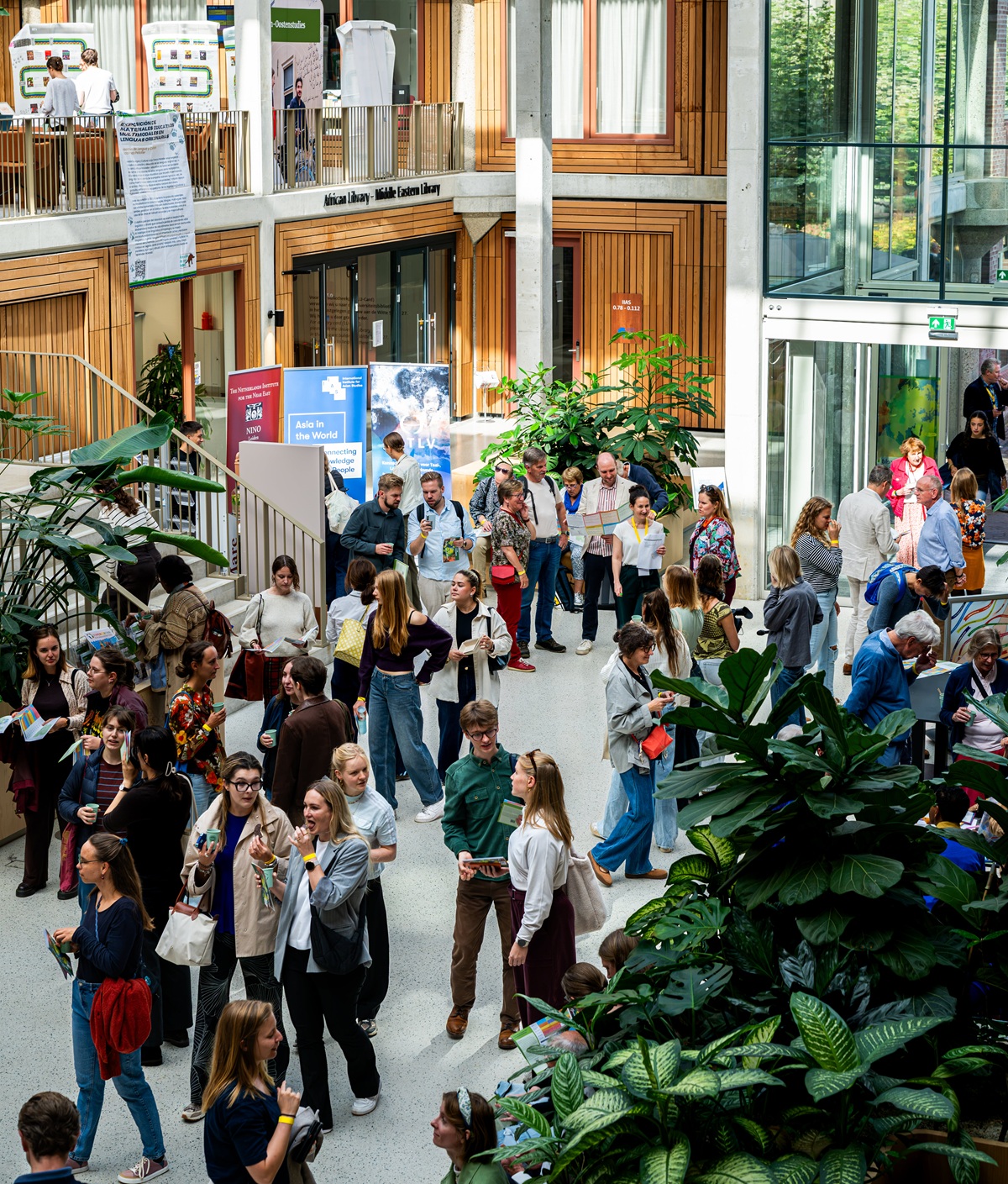
The Leiden Festival of Language and Culture had sold out well in advance. The packed auditoriums in the Herta Mohr Building and the University Library proved that interest in language and culture is very much alive. -
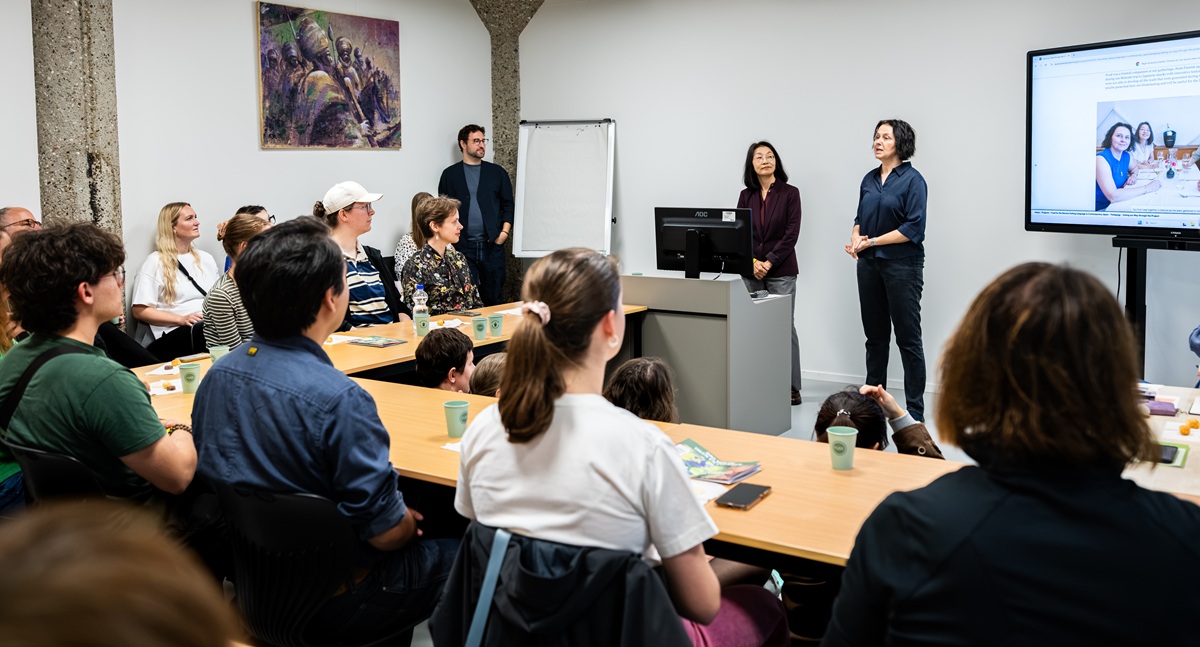
The workshop on Japanese ideophones: words that evoke tastes, feelings and smells. Using the Japanese snacks handed out as examples, the experts take their audience on a journey of discovery. A rice cracker is ‘paripari’, meaning crunchy. A filled snack is ‘funwari’, meaning soft and light. -

Visitors to the ‘Voices of Africa’ escape room solved the African language puzzles. -

Visitors to the ‘Voices of Africa’ escape room solved the African language puzzles. -
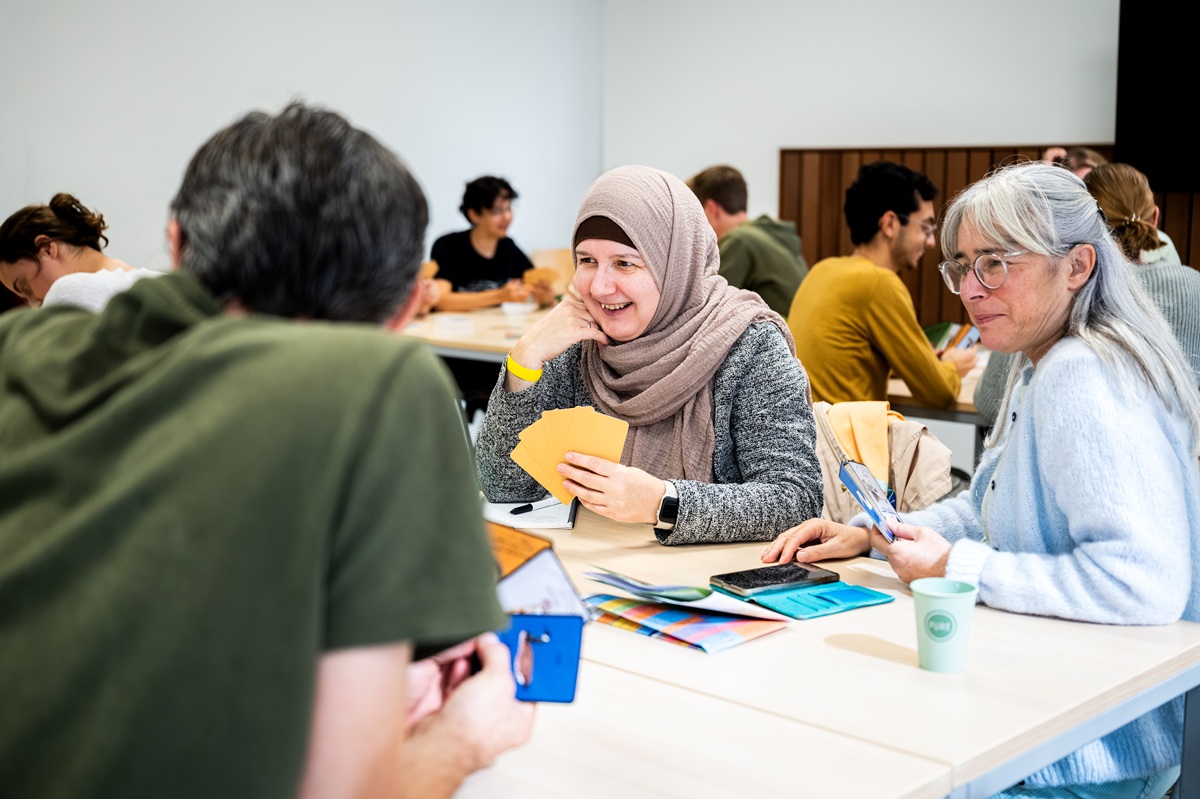
So there was plenty of choice, with more than fifty workshops, talks, current affairs lectures and quizzes. -
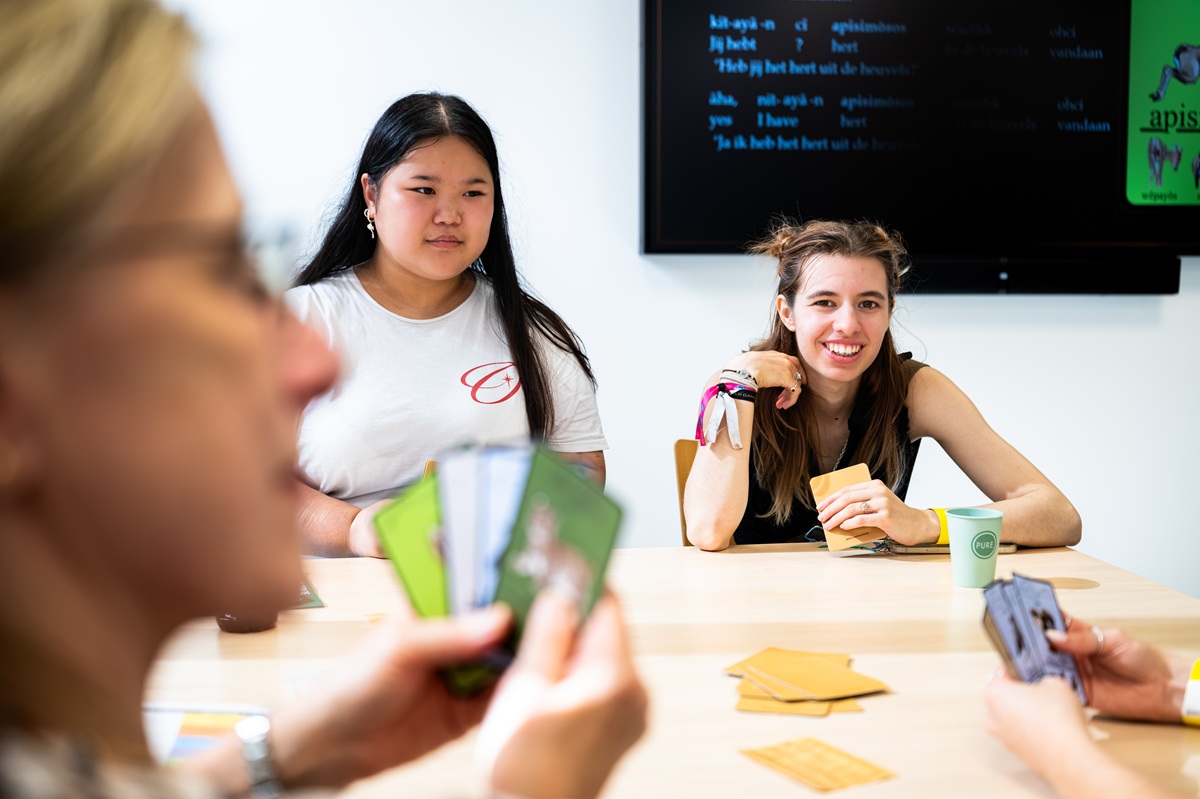
So there was plenty of choice, with more than fifty workshops, talks, current affairs lectures and quizzes. -
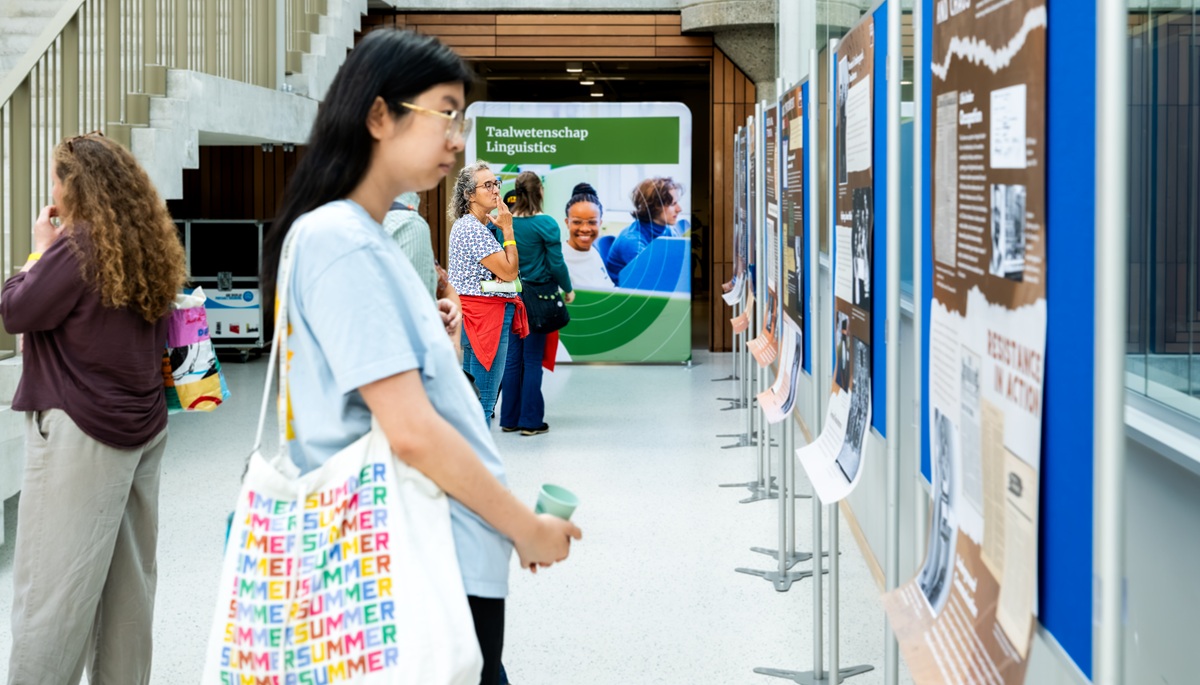
Between rounds, visitors were able to view three exhibitions, including one on the revitalisation of indigenous Latin American languages. -
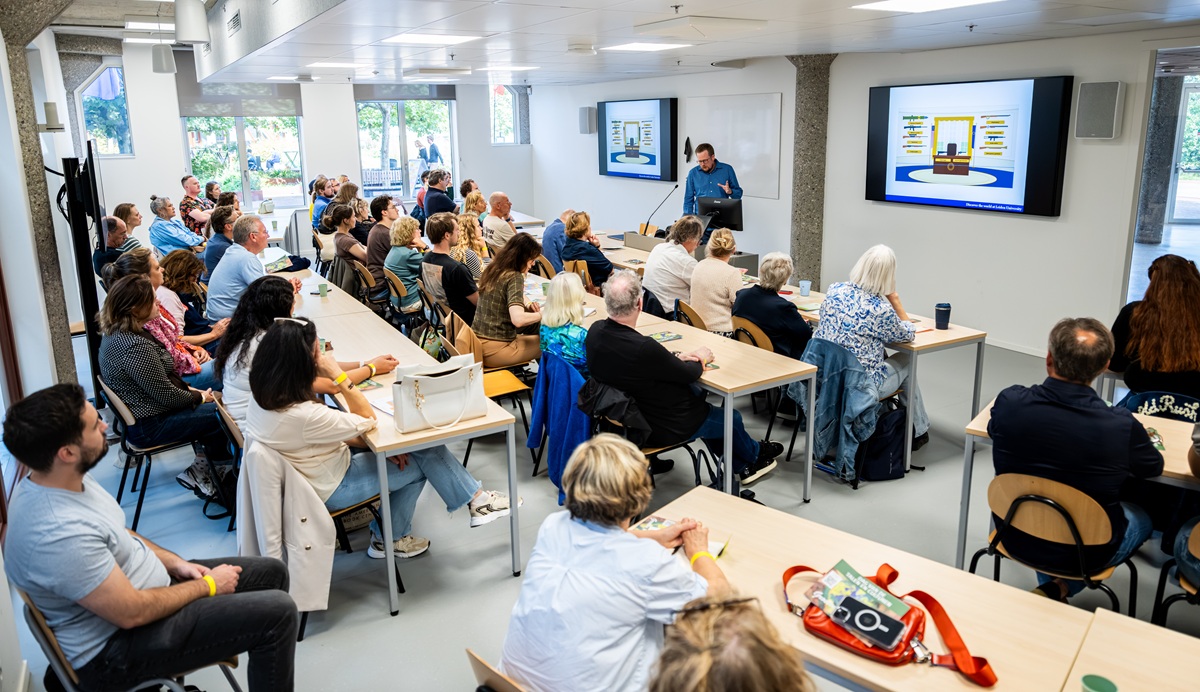
So there was plenty of choice, with more than fifty workshops, talks, current affairs lectures and quizzes. -
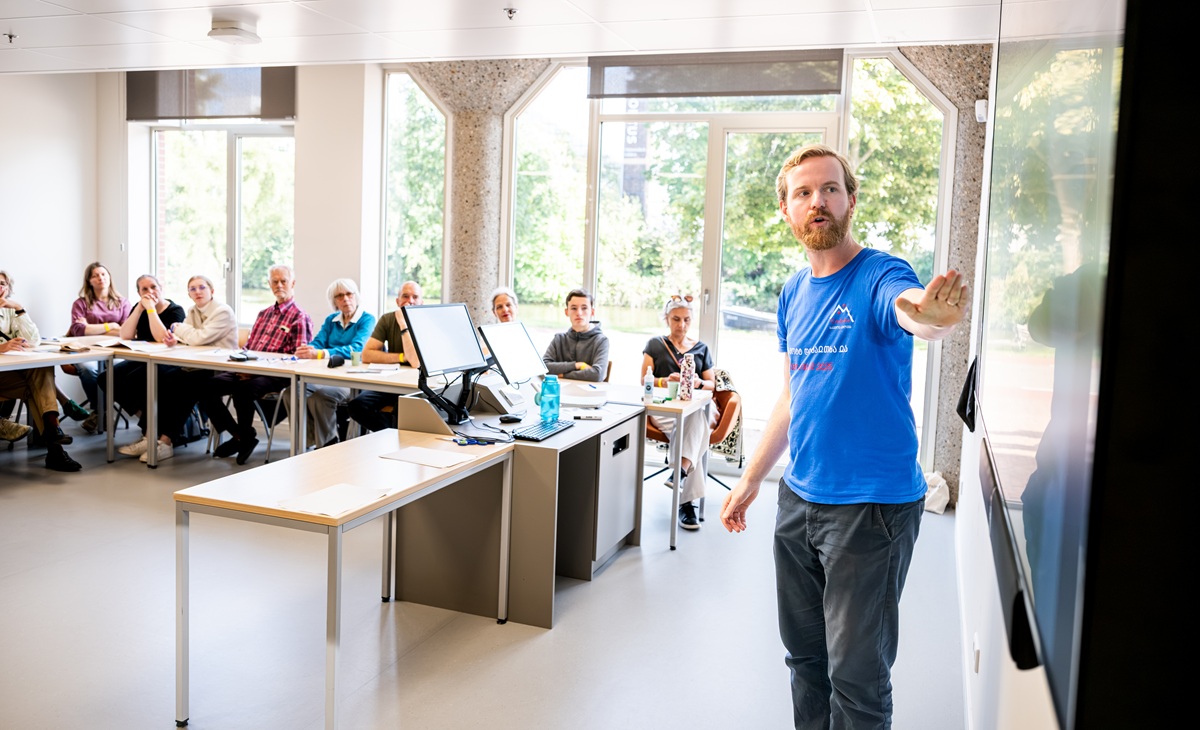
So there was plenty of choice, with more than fifty workshops, talks, current affairs lectures and quizzes. -
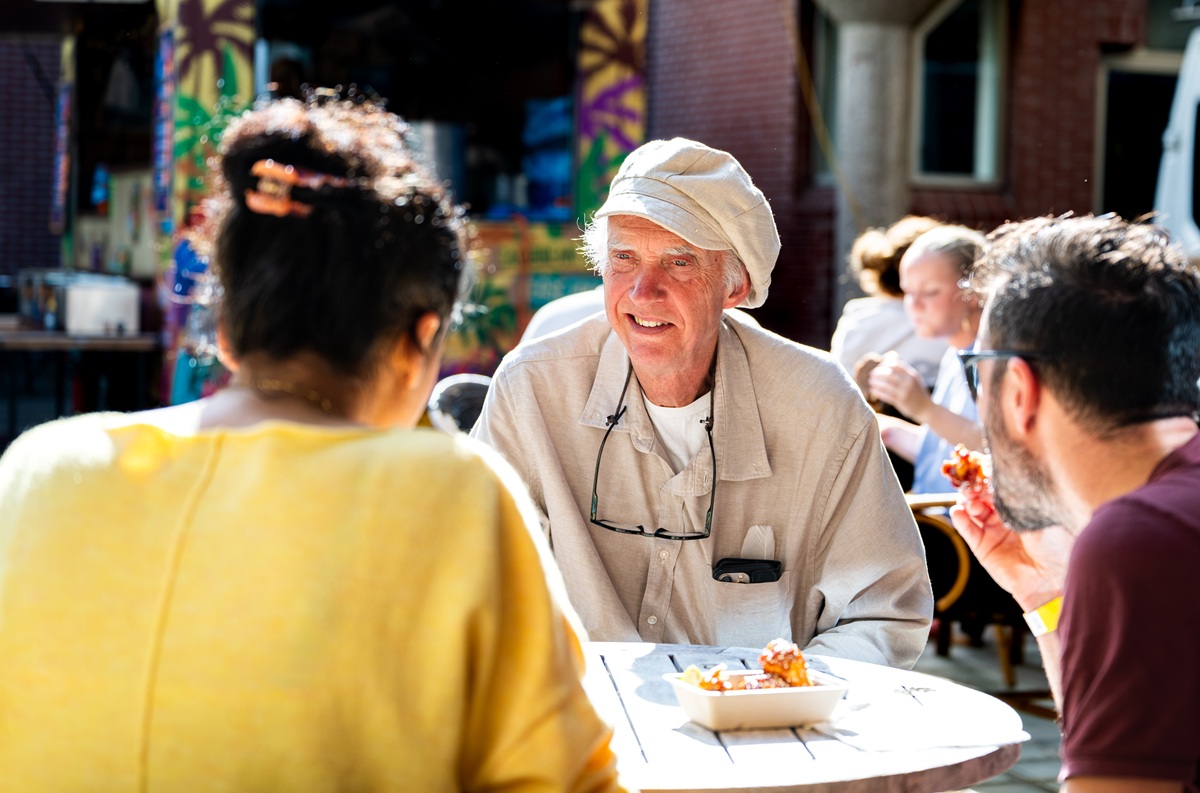
Visitors and speakers were able to grab a bite to eat outside at the Caribbean food truck. -
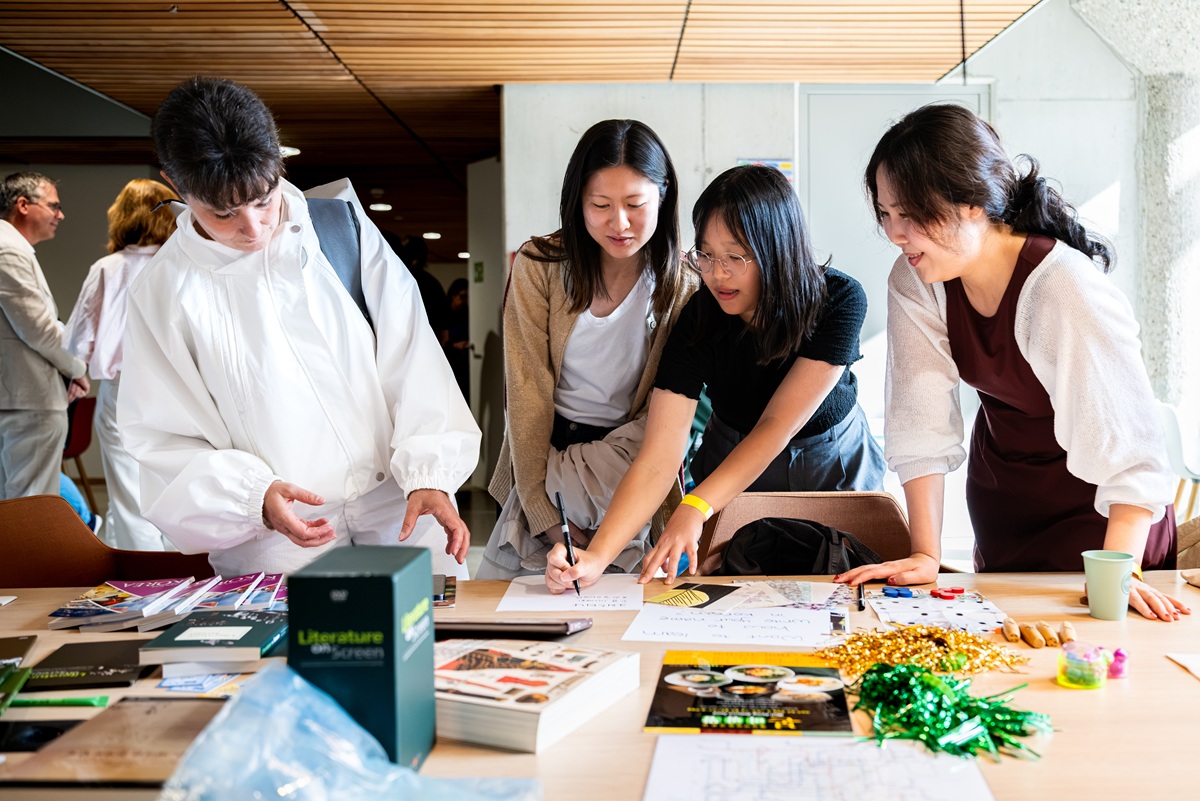
So there was plenty of choice, with more than fifty workshops, talks, current affairs lectures and quizzes.
Treasures from the library
At the University Library, visitors were also able to immerse themselves in the history of language, writing and writing materials. From manuscripts and papyri dating back more than 2,000 years to Tibetan block-printed books and rare manuscripts from Asia and the Middle East: the Special Collections showcased how people have recorded their words and stories throughout the centuries. Unique items had been specially selected for the festival, so that visitors could admire them up close.
Words for the senses
One workshop focused on Japanese ideophones: words that evoke tastes, feelings and smells. Using Japanese snacks handed out to the audience as examples, the experts took participants on a journey of discovery. A rice cracker is paripari, or crunchy. A filled snack is funwari, soft and fluffy. These expressive words complement figurative language in Japanese. Ideophones are not unique to Japanese. They are used in many African languages and can also be found in Basque in Europe. But they are immensely popular in Japan. It is now almost impossible to find food packaging in the country without an ideophone printed on it. Marketing specialists have embraced these sensory words and are even inventing new ones.
This is one way in which language connects people and creates understanding. The same theme reverberated through the speakers at the University Library, where Bad Bunny’s famous halftime show was being used as study material. This year, 138 million people watched the Super Bowl, the championship game of the American football season. During the break, Puerto Rican singer Bad Bunny delivered a performance that put language and culture centre stage.
It was the first time a halftime show had been performed in a language other than English. By choosing Spanish, the singer made a statement, particularly at a time when many Spanish-speaking residents of the United States are under pressure. What is more, he chose the Puerto Rican variety of Spanish, placing additional emphasis on his own heritage.
A single singer
Only at key moments did he switch to written English. One ball bore the words “Together we are America”, while the scoreboard displayed “The only thing more powerful than hate is love”. Dr Paz González, one of the speakers at the session, got a laugh from the audience with another observation. ‘He also announced in English that he was “single”, which was apparently an important message for him.’
More connections were being made in the central hall of the Herta Mohr Building. During language speed dates, visitors could take their first steps in Finnish, brush up on their German and French or immerse themselves in Icelandic literature. Here too, the space was bustling with lively conversations and discussions.
Mirjam Dieperink, who studied English Language and Culture in Leiden, enjoyed discovering the similarities between Icelandic and Old English. ‘I’m here purely for fun. I’ve been to Iceland, and that’s where I became interested in its literature.’ Earlier, Dieperink had attended a lecture by Shadman Shahid on photographs as a universal language. ‘That was really interesting too. Visual language is also a form of language, and a photograph can be created and interpreted in different ways.’
Russian propaganda
The way in which language and culture can also lead to different interpretations of reality – and therefore to division – was explored in greater depth during the lecture ‘The Kremlin’s Bag of Tricks’. Drawing on speeches by President Vladimir Putin, feature films and the influence of sport, speakers Levina de Wolf, Otto Boele and Wiktor Pawlowski introduced the packed audience to the Russian reality.
‘Propaganda isn’t just about brainwashing,’ said De Wolf. ‘It is also about depoliticising the population and showing that, as a government, you have the power to shape language and culture to suit your purposes.’
Contemporary topics such as Bad Bunny, Russia, the language of healthcare and ‘what Europe can learn from East Asia’ thus went hand in hand with the past on Saturday. Other activities included a guided tour of the treasures of the African Library and a lecture on 3,000 years of Sanskrit.
Due to the selected cookie settings, we cannot show this video here.
Watch the video on the original website or