
New genetic toolkit opens the door to undiscovered antibiotics
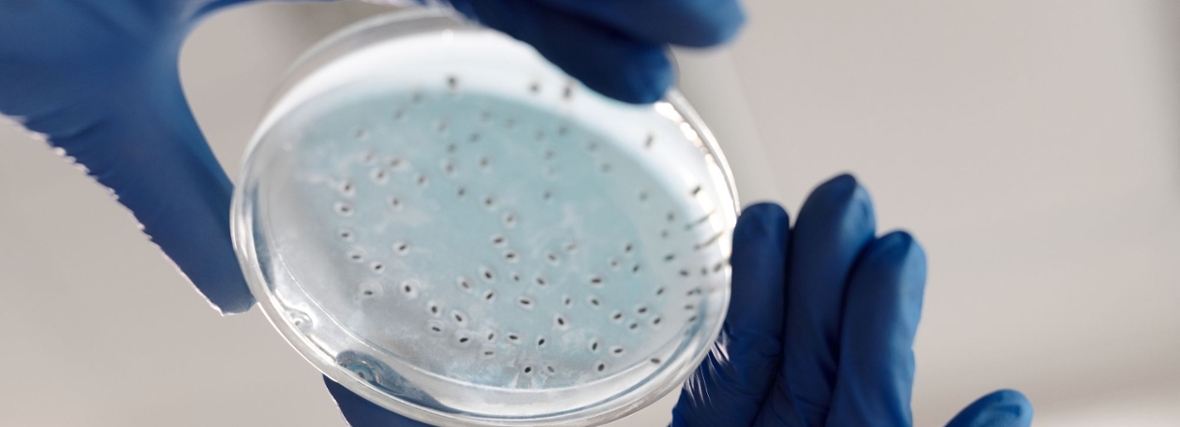
antibiotics image: Pexels
Two-thirds of clinically used antibiotics come from bacteria called Streptomyces. Leiden University researcher Chaoxian Bai has developed new tools to unlock their hidden potential and speed up the search for urgently needed medicines.
Where can researchers find new antibiotics nowadays? Most antibiotics were discovered decades ago. Many of the medicines currently in use originate from the so-called golden age of antibiotic research, roughly spanning the 1940s to 1960s. Since then, scientists have found it much harder to identify new compounds. ‘Most of the low-hanging fruit has already been picked,’ says Chaoxian Bai, a PhD candidate in the research group of Gilles van Wezel.
‘We need new ways to discover compounds that are still hidden within bacteria,’ he continues. Rather than searching for a single antibiotic, Bai’s research focuses on developing a toolkit that makes it easier to uncover these hidden substances.
‘We need new ways to discover compounds that are still hidden within bacteria’
Searching for antibiotics in a familiar bacterium
Bai works with Streptomyces, a group of bacteria that live in soil. Even people who have never heard the name have probably encountered them. The distinctive smell that lingers after rainfall is caused by geosmin, a compound produced by Streptomyces.
These bacteria are remarkable chemical factories. Around two-thirds of all known antibiotics originate from them. They can also produce many other natural compounds.
‘The potential is enormous because these bacteria are found everywhere,’ Bai explains. ‘In each environment, they face different competitors and challenges. As a result, they produce different compounds.’ Some of these compounds could be developed into medicines. The challenge is finding them.
Change the DNA, not the environment
Traditionally, researchers have tried to encourage bacteria to produce new compounds by altering their environment, for example by changing the temperature or the nutrients available to them. That approach can be very time-consuming. Bai chose a different strategy: modifying the bacteria’s DNA.
Using tools such as CRISPR interference, he was able to switch off hundreds of regulatory genes. These genes control which other genes are active and therefore determine which compounds the bacteria produce. This allowed researchers to identify previously hidden biosynthetic gene clusters (BGCs): stretches of DNA that contain instructions for making potentially useful compounds.
‘Without new antibiotics, we risk returning to a time when people died from simple infections.’
Building DNA like Lego to find new antibiotics
One challenge is that the relevant BCGs can be extremely large, sometimes containing as many as 100,000 DNA building blocks. To make them easier to work with, Bai used a technique called Golden Gate Assembly. Instead of modifying the entire cluster at once, researchers divide it into smaller pieces. ‘You can compare it to Lego,’ he explains. ‘You build large structures from smaller, interchangeable building blocks.’ By modifying individual components, the team was able to quickly create different versions of a BGC and investigate how their chemistry changed.
The system Bai developed during his PhD research can also be used with other types of bacteria and in the search for other valuable natural compounds. And that is critically important, Bai stresses. ‘Without new antibiotics, we risk returning to a time when people died from simple infections.’
Preparing for the AI era of antibiotics research
Bai expects artificial intelligence to play an important role in the discovery of new antibiotics in the future. AI systems require large amounts of reliable data to perform well. The platform Bai developed makes it possible to collect such data much faster than traditional methods. As a result, it complements the work of his former colleague Hannah Augustijn and helps lay the groundwork for AI-driven antibiotic discovery.