
The Hortus as a living lab: new technology reveals hidden relationships between species
Inaugural lecture image: Tim Boerlijst
Hortus botanicus Leiden is a treasure trove for research into interactions between species. Surprising discoveries are being made with new techniques such as DNA analysis, machine learning, and audio and video monitoring. Hortus prefect Barbara Gravendeel will explain more in her inaugural lecture on 8 June.i.
Leiden’s Hortus was founded in 1590 as a botanical garden for the study of medicinal plants and for teaching students about them. Over 435 years later, is remains an important site for research. Thanks to the latest methods, there is still much for researchers and students to discover.
New species
In her inaugural lecture, Barbara Gravendeel, Professor of Plants & Society, will highlight the research conducted at the Hortus on interactions between species. Plants from around the world attract insects and other animals, which in turn contribute to pollination, seed dispersal, biological pest control and soil health.
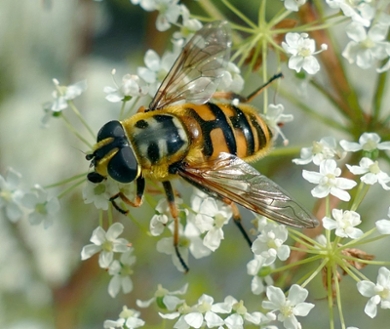
The first links in this unusual food web were observed with the naked eye. Over time, biologists have identified many new species, including amphibians, wild bees, breeding birds, butterflies, ants, moths, fungi, spiders, bats and wasps. Today, these discoveries are also supported by citizen scientists: local residents who collect data on nature and biodiversity in their own neighbourhoods.
Machine learning
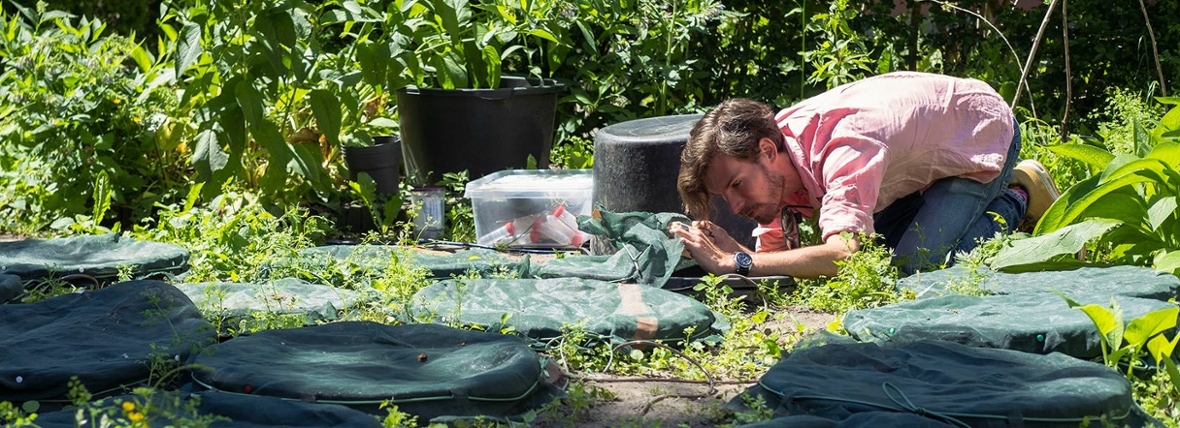
To gain a clearer understanding of this rich biodiversity, more is needed than microscopes or telescopes alone, says Gravendeel. Researchers now use audio and video recordings alongside DNA analysis to study interactions between species. All this data is processed using automated species detection powered by machine learning. This leads to many new insights.
‘One of our thesis students discovered dozens of insect species on Mediterranean holm oaks, including three species new to the Netherlands. The assumption that nothing lived on exotic oaks turned out to be outdated.’
Field biologist and data analyst
This digital monitoring generates vast amounts of new data. Gravendeel works closely with the Leiden Institute of Advanced Computer Science, the Institute of Biology, Naturalis Biodiversity Center, University of Applied Sciences Leiden and the LUMC to analyse this. Mathematicians have also taken an interest in the Hortus and have offered to develop models to help us understand its unique food web.
Student research
Gravendeel also involves students in this research. Computer science students develop algorithms and interfaces to detect and quantify new interactions between species, while biology students collaborate with Naturalis Biodiversity Center and the Hortus to study how species from around the world learn to coexist and how climate change affects them.
Hay fever
This research even extends to interactions between plants and visitors to the Hortus, as Gravendeel explains. ‘We use “pollen sniffers” to measure the allergenic pollen count in the air and compare this with biomarkers in the breath of visitors participating in hay fever studies. This will help us design and manage botanical gardens in ways that support their health.’
Imagine you’re a stick insect
A great deal of research is being carried out on the living collection of Leiden’s Hortus, but most visitors are unaware of this. This is a missed opportunity, says Gravendeel. The Hortus team is therefore collaborating with the Academy of Creative and Performing Arts (ACPA) and the Faculty of Humanities.
‘Multimedia performances introduce festivalgoers in surprising ways to links in the food web that are normally barely visible or audible’, says Gravendeel. ‘Take, for example, a game in which you are stick insect nibbling on a tropical palm and discover the effects this has on other insects. Plants have a positive impact on our physical and mental health. By encouraging visitors to engage more deeply with the plant world, we hope to enhance this effect.’