
‘I’m always proud when a student follows their own interests’
Teacher of the Year awards
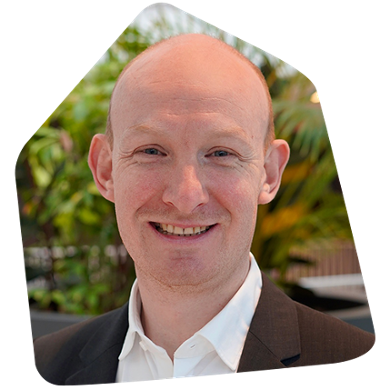
He is always positive towards his students, helps them see the bigger picture of the programme, and tries to remind them that ‘a degree is an enormous opportunity to grow in directions that genuinely interest you.’ Thomas Moerland, assistant professor at LIACS, has been nominated for Lecturer of the Year.
What kind of student were you yourself?
‘I studied out of a sense of discipline and was quite sensitive to getting good marks. It wasn’t until after my studies that I started to see the downside of that. For years, I’ve been trying to focus solely on the content: what do I actually find interesting and important?
I recognise this process in some students, who can also be very focused on their grades. It’s really a pity: a degree is an enormous chance to develop yourself in directions that truly interest you. In some courses, I even say it explicitly at the start: please try to forget about your final mark, and see whether you can learn something from this course and enjoy it. The good grade will follow naturally, I’m convinced of that. Of course, it’s easy to say this in hindsight. But I’m always proud when students put their own interests first.’
‘If you're passionate about the subject yourself, the students automatically get caught up in that.’
Which teacher did you enjoy when you were younger, and why?
‘My secondary school physics teacher immediately comes to mind. I think it was mainly his passion: he seemed constantly excited about the subject himself. As a pupil, you almost automatically get caught up in that.’
If you had to choose: research or teaching?
‘This is the big question for anyone working at a university. But I don’t think you need to choose at all: the job is designed to bring the two together. For me, each appeals to a different type of motivation. Research is mainly a chance to gain new knowledge. Teaching, to be quite honest, probably has the greater societal impact: in the end we are an institution that prepares people to make a meaningful contribution to society. I couldn’t give up either of the two.’
What is the most important lesson you would like your students to take with them?
‘In terms of content, I want my students to see the bigger picture of the field; in my case, artificial intelligence. Students take all sorts of separate courses, but ultimately it’s crucial that they understand how those themes fit together. Wherever possible, I try to broaden the story in my lectures and explain how it connects to other parts of AI. The biggest challenge in any field is, I think, developing an overview: understanding how everything is linked, and where to look for a solution to a particular problem. I hope students leave their degree with that ability.’
What do you do when you get a question you don’t know the answer to?
‘I say so straight away. I really don’t think that’s a problem. In fact, I greatly appreciate it when others openly admit they need to think something through, regardless of hierarchy. It opens the door to looking for a solution together, and shows that you take the other person seriously as an intelligent conversation partner.’
What has been a memorable teaching moment for you?
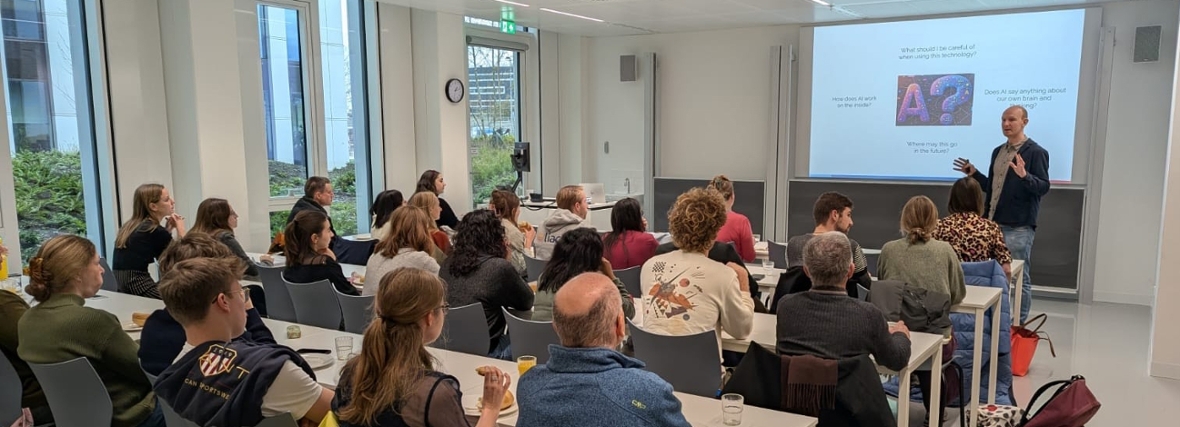
‘Last year we launched a new elective: a robotics challenge. It’s an extracurricular course for motivated students seeking a challenging experience. Throughout the academic year, teams of students program a robot to play ‘tag’ as effectively as possible against another robot. At the end of the year we held the final match in our department’s common room. Other lecturers from the institute also attended. That final, in a crowded room with enthusiastic students and staff cheering them on, showed me what teaching can be at its best.’
About Thomas Moerland
Education: Computer Science
Teaching: Artificial intelligence, with a focus on reinforcement learning
Research: Methods that enable computers to learn through reward and punishment (‘trial and error’)
Other: His book Van IQ naar AI was published in October. You can read an interview with Thomas about the book here.