
Book
Chinese Miners in Japanese Manchuria, 1905–1945: Labouring for Coal
This book chronicles the history of Chinese miners in one of the largest mines in Northeast Asia from 1900 to 1948, situating this emergent working class at the nexus of industrial capitalism, imperial expansion, and nation-state construction.
- Author
- Limin Teh
- Date
- 10 April 2026
- Links
- Publisher: Palgrave Macmillan
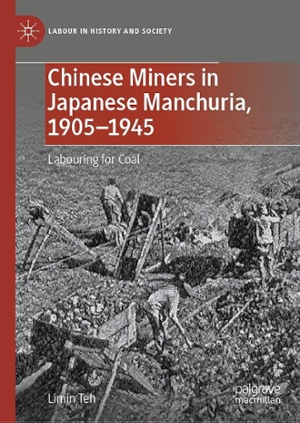
Coal from Fushun (in present-day Liaoning province) fuelled industrial development that enabled the Japanese Empire and later rival Chinese regimes to secure their economic, political, and military presence in the region. In turn, the extraction, processing, and distribution of Fushun coal depended on rendering immobile previously mobile migrant workers through coercion, surveillance, and incentives. The loss of mobility for these migrant workers ultimately resulted in their dependence on the mine for their livelihood. Drawing on Chinese and Japanese archival sources, this book investigates the global forces and environmental conditions that shaped the rise of these interdependent yet asymmetrical relations, and illuminates how coal extraction under industrial capitalism subsumed human labor while concurrently reproducing unequal power relations between social groups.
This book:
- Provides interdisciplinary research for scholars of modern Chinese history, Japanese imperialism, East Asian history, global labour history, mining history, and environmental and energy history
- Foregrounds global forces of industrial capitalism, imperial expansion and nation-state construction in the writing of Chinese labour history
- Unpacks the multiplicity of laboring experiences that coal-powered capitalism engendered