
News
-
 People used bearskins to keep warm 300,000 years ago23 December 2022
Cut marks on the bones of bears show that people in North-West Europe used bearskins to keep warm 300,000 years ago. Archaeologists believe that a met...
-
 Throwback to the panel discussion about the future of archaeology22 December 2022
As part of the celebrations around the 25th birthday of the Faculty of Archaeology, a panel discussion on the future of archaeology was organised on D...
-
 Throwback to the successful LANCE internship and job market22 December 2022
On December 1, the Faculty of Archaeology hosted the LANCE internship and job market 2022 for our BA2 and BA3 students. No less than 14 Dutch commerci...
-
 Robotics and AI in archaeological theory and practice22 December 2022
What can Robotics and AI bring to archaeological theory and practice? In return, how can archaeology contribute to the developments in robotics and AI...
-
 An AI system that tells you why you should eat glass – should that be allowed?Reportage 20 December 2022
The English-language interdisciplinary minor ‘AI and Society’ explores the role of artificial intelligence in our society. The interdisciplinary natur...
-
 Wei Chu receives SNMAP funding for dating earliest dwelling structures in Ukraine19 December 2022
At some point in the deep past the first known dwelling structures were built out of mammoth bones in a country we now know as Ukraine. Archaeologist ...
-
 Mark Driessen's Jordan fieldwork features in Photo Exhibition19 December 2022
The National Museum of Antiquities in Leiden features a small photo exhibition on Mark Driessen's fieldwork research project in Southern Jordan. In th...
-
 Old tradition of ‘golden PhDs’ reinstated06 December 2022
Black-and-white photographs filled with solemn young men and distinguished professors line the walls of the Grand Auditorium. Young women are missing ...
-
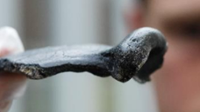 They came, they saw, they left: on the first humans in the Low Countries29 November 2022
Over hundreds of thousands of years, our region witnessed the comings and goings of various types of hominin. This depended on the temperature as ice ...
-
 Cleveringa Lecture by Gert Oostindie: Leiden University should also reflect on its colonial history24 November 2022
It is crucial that Leiden University reflects on its colonial history. These were the words of Cleveringa Professor Gert Oostindie in his inaugural le...
-
 Archaeologist Aris Politopoulos launches Histories We Play as part of new Leiden Teacher’s Academy position08 November 2022
Anyone who knows Aris Politopoulos will be aware of his passion for teaching. Almost winning the Leiden University Teaching Award in 2020, he is known...
-
 New technique makes it easier to determine how our ancestors used fire02 November 2022
The use of fire can tell us a lot about human evolution. Archaeologist Femke Reidsma has developed a more accurate technique to identify how our ances...
-
 Archaeologist Wei Chu explores Carpathian caves with Gerda Henkel grant25 October 2022
Recently, archaeologist Dr Wei Chu received a grant from the Gerda Henkel Stiftung for an excavation in the Carpathian Mountains. Originally planning ...
-
 High school students at the Open Day: 'I want to do my own thing'24 October 2022
Last Saturday, the Turfmarkt in The Hague, where during the week thousands of commuters make their way to the many ministries in the city centre, was ...
-
 Archaeologist Mark Driessen’s book and project in royal spotlights19 October 2022
On September 28, 2022, dr.ir. Mark Driessen presented a publication about the ancient Roman frontier in Jordan. Venue for the book launch was the resi...