

All eyes on quantum in Zuid-Holland
Press tour
For three days, journalists from the Netherlands and abroad stepped into the world of quantum technology in Zuid-Holland. Having visited Rotterdam, Delft and The Hague, the tour ended on Friday at Leiden University’s Quantum Hub.
This initiative by the Province of Zuid-Holland saw the four cities demonstrate how they are collectively shaping the field of quantum and putting this technology into practice. This is happening across a wide range of fields, from encrypted communication, critical infrastructure, healthcare and energy to the relationship between quantum and society. The aim was to show that Zuid-Holland is the place to be for quantum innovation.
‘All aspects of quantum are represented here: fundamental, applied, experimental and software. We have startups and collaborations with various companies at the Bio Science Park.’
Mixed group
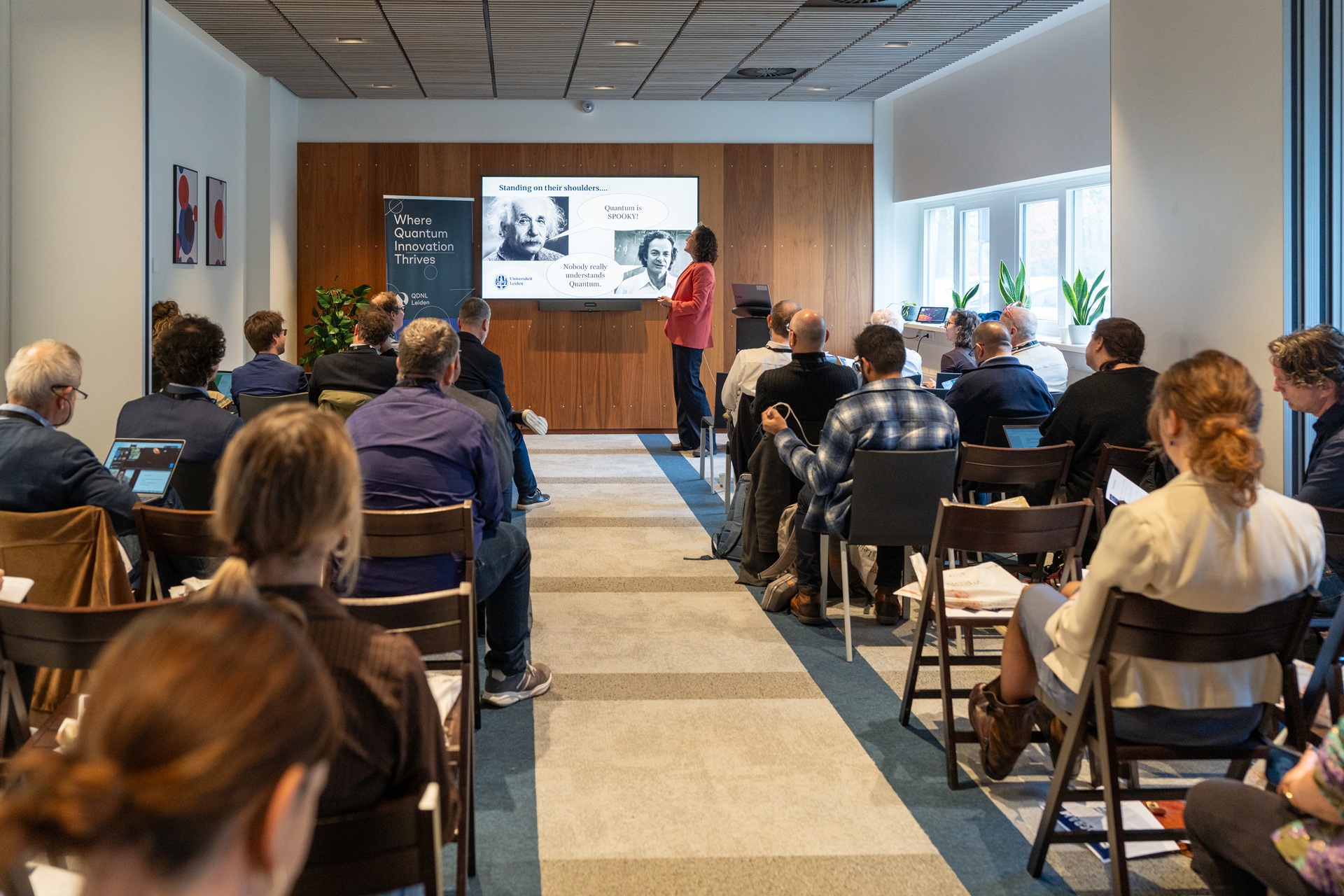
The journalists were welcomed to Leiden at the Quantum Hub on the Bio Science Park. The group was mixed, ranging from regional and national media to international press, and from newspapers to specialised journals. The day began with presentations from various Leiden research groups.
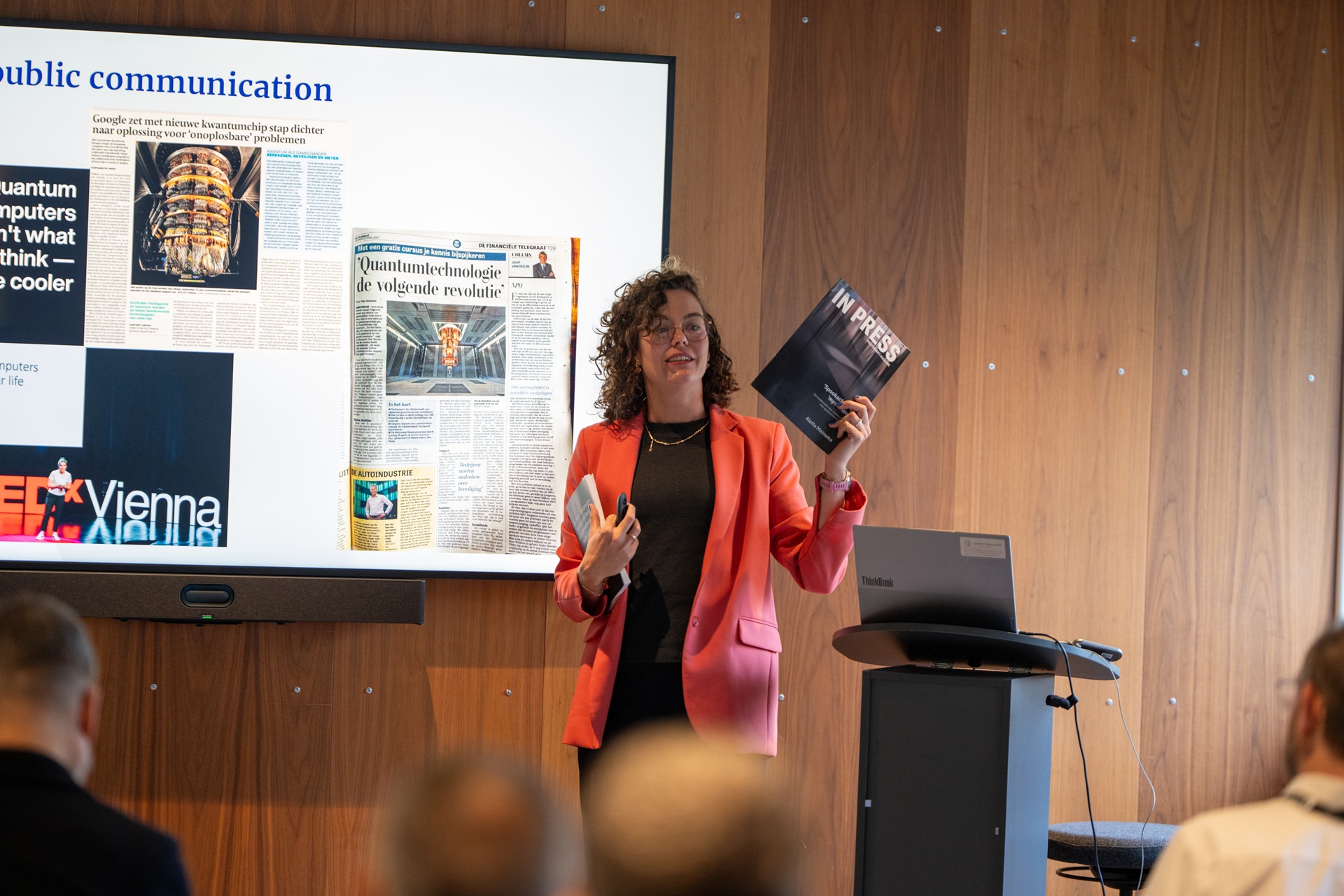
Assistant Professor Julia Cramer spoke about her area of expertise: quantum and society. ‘I spoke about how we should communicate about quantum. There are many important aspects to consider. Who are we trying to reach? How should we reach them, and why? I also explored the way quantum is portrayed in the media and the impact this has on the people who read about it.’
National quantum strategy
The government presented its Rijksbrede Quantumstrategie (National Quantum Strategy) at the start of October. Julia Cramer contributed to the strategy on behalf of Leiden University and wrote the foreword. In the government’s plans (in Dutch), the Netherlands aims to be a leader in quantum technology by 2035. This also means reducing dependence on applications from outside the EU and strengthening resilience against security threats.
Leiden’s strengths
As coordinator of the university’s Quantum and Space theme, Cramer believes it is important to show Leiden’s strengths to journalists. ‘We have all the necessary expertise and perspectives. All aspects of quantum are represented here: fundamental, applied, experimental and software. We have startups and collaborations with different companies at the Bio Science Park.’
The ability to approach quantum from any perspective, combined with Leiden’s location, is an additional advantage, says Cramer. ‘Take ethics, law or society, for example. We work closely with other faculties, and these collaborations are only increasing. Add to that our proximity to Space Campus and our location on the Bio Science Park, and you have a wealth of opportunities for the future. You don’t have to be a physicist to understand that quantum will change the world. It’s important that society is prepared for that.’
Guided tour
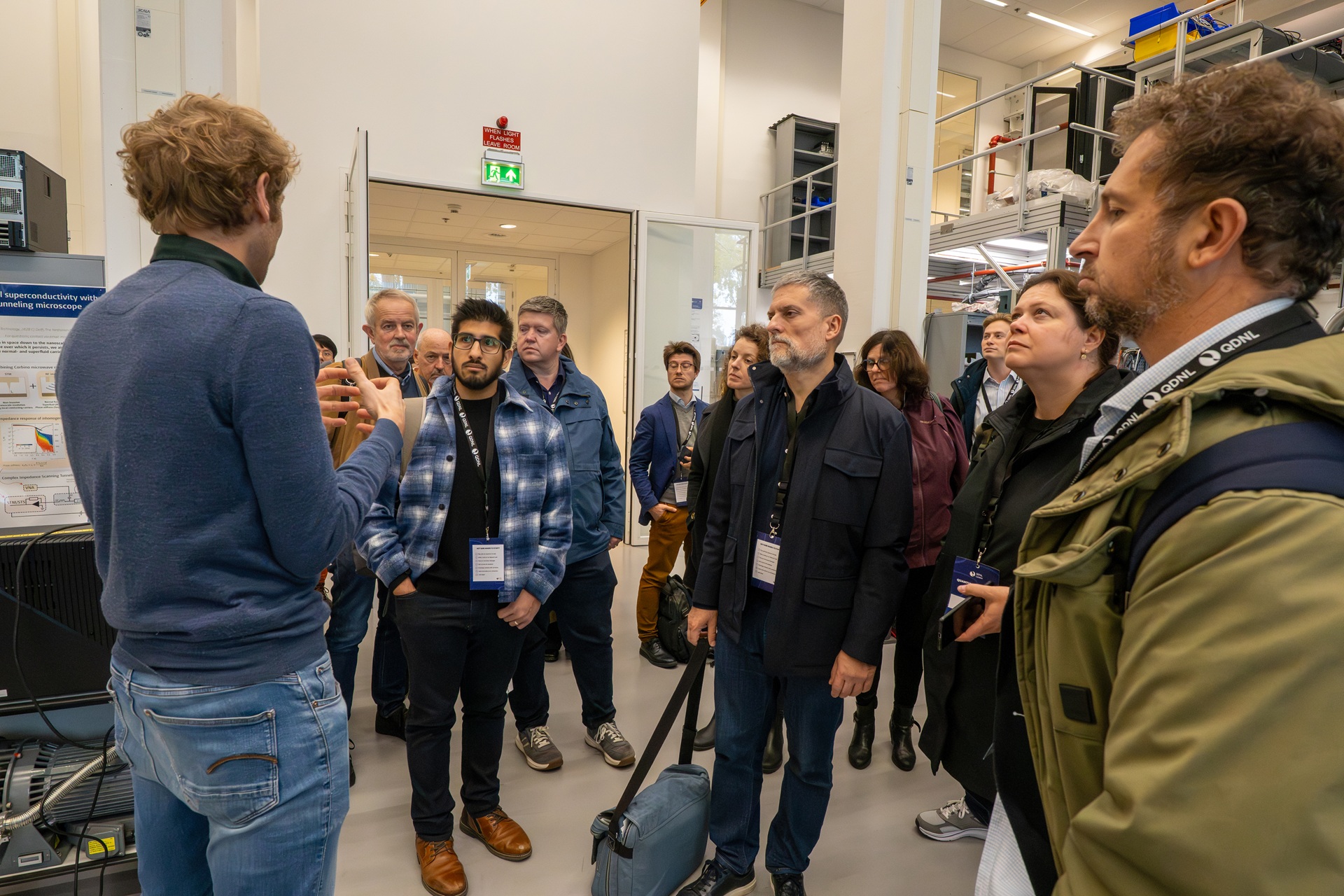
After presentations by Quantum Hub Leiden Director Jan Aarts (‘Welcome to Leiden’s Quantum Ecosystem: Innovation at the Crossroads of Science and Society’ ), Evert van Nieuwenburg (‘Quantum and Citizens: Exploring the Role of Machine Learning in Society’) and Julia Cramer (‘From Citizens to Space: The Growing Impact of Quantum Innovation’), it was time for the guided tour of the low-vibration hall and several laboratories.
Sense Jan van der Molen, Scientific Director of the Leiden Institute of Physics, led the journalists past the Ehrenfest Signature Wall in the main hall of Leiden’s Faculty of Science, where Albert Einstein and Niels Bohr left their signatures, and into vast halls housing advanced equipment on vibration-free floors.
This is where Leiden’s contribution to quantum research becomes clear. Measurements serve as a bridge between fundamental physics and software development through the combination of existing instruments and the development of new ones. One example is the impressive Low-Energy Electron Microscope (LEEM), which uses energy-efficient electrons rather than light to scan ultra-thin quantum materials.
Leiden’s complexity
For Cramer, the tour will have been a success if ‘everyone comes away with an understanding of the complexity of the quantum field in Leiden.’ For knowledge about quantum technology to take root in society, clear and accessible information is needed, which the press can share as they report on the work of Leiden researchers. ‘Hopefully, this press tour will make it even easier for journalists to connect with our experts.’