

Three psychologists receive Veni grants for research into healthy habits, social anxiety and focus
Psychology
How can we better understand and predict fluctuations in our attention? Which treatments for social anxiety are best suited to different children? And what is needed to maintain healthy habits? With funding from the Dutch Research Council (NWO), psychology researchers Steven Miletić, Anke Klein and Pam ten Broeke will spend the next three years investigating these questions.

'By analysing a large international dataset, we are working towards more tailored and effective care for children with social anxiety'
‘Childhood social anxiety is highly prevalent, has major impact and increases the risk of social difficulties, school dropout, and suicidality. Unfortunately, more than half of children continue to experience substantial symptoms after treatment. One important reason is that social anxiety can present differently from one child to another, while treatment protocols largely rely on one standard approach. This project investigates which distinct patterns of social anxiety symptoms occur in children and how patterns are related to treatment outcomes. By analyzing a large international dataset, this project aims to contribute to more tailored and effective care for youth with social anxiety.’
One diagnosis, many faces: towards better treatment of childhood social anxiety – Anke Klein
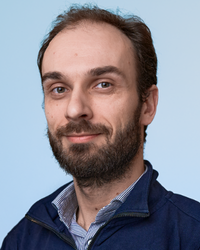
'I want to predict lapses in focus before the happen, so we can support healthier and more sustainable work'
‘Staying focused over time is crucial for safe driving, monitoring complex systems and everyday work. Yet we still do not understand how mental effort rises and falls from moment to moment. This project develops mathematical models that treat effort as a hidden process that changes over time and leaves traces in the speed and accuracy of our reactions, pupil size and brain activity. By precisely and quantitatively “reading out” effort from these signals, the project aims to predict lapses before they happen and support safer, healthier, and more sustainable work.’
Hidden effort: Tracking how the mind loses and regains focus - Steven Miletić

'In this project, we are working on proven strategies that help people form habits and establish sustainable healthy routines'
‘Maintaining healthy behaviours over time is hard, but crucial for health and wellbeing. The solution, according to psychologists, is habit formation. Popular media often claim that it takes 66 days to form a habit, but research shows a different picture: some habits form within days, others take many months, some never form at all. In this project, I study which behaviours are most likely to become habits, and how people can deal with setbacks along the way. I deliver a practical guide and evidence-based strategies to support researchers, healthcare professionals, and citizens in using habit formation for lasting behaviour change.’
Making change stick: Unlocking the potential for habit formation - Pam ten Broeke