

Physics alumni with a dream: making MRI scanners available worldwide
PHYSICS image: Caren Huygelen
Building a high-quality MRI scanner at the lowest possible cost. That was the challenge Thomas O’Reilly and Karina Soemarwoto set themselves. This year, they are selling their self-built MRI scanner to their first ten customers, with many more expected to follow soon. In doing so, they hope to make a difference for thousands of doctors and patients who currently have no access to MRI imaging.

Imagine you are a doctor in Uganda. A child with hydrocephalus is brought into your hospital, and you need to know exactly how much fluid has built up in the child’s head. An MRI scanner can provide the information you need, but patients often have to travel for days to reach one. Uganda, a country of more than 40 million people, has only three MRI scanners, all located in the capital city.
‘According to the WHO, 80% of the world’s population currently has no access to MRI imaging,’ says Thomas O’Reilly. ‘This affects low- and middle-income countries, but also remote areas in wealthier nations. Once you take in that figure, you begin to understand the scale of the medical consequences.’
From PhD research to entrepreneurship
During his PhD research at the LUMC, O’Reilly worked with some of the newest and most advanced MRI systems available. He collaborated with the research group led by Andrew Webb. Around the same time, O’Reilly also became involved with another of Webb’s research groups, which focuses on making MRI technology accessible and affordable. The idea immediately appealed to him, and he decided to help Webb design the hardware for this new type of scanner.
‘And if you want to manufacture and market a completely new type of MRI scanner yourself, you need a company,’ adds Karina Soemarwoto. Like O’Reilly, she studied physics in Leiden. After several years working on sustainability projects in the financial sector, she became a partner in the new company Open Imaging.
Career advice from Thomas and Karina
O’Reilly: ‘Follow your dreams. Don’t see an academic career as the only option for your future. Think instead about the knowledge and skills you gain. What you learn during a physics degree turns out to be useful in almost every kind of job later on.’
Soemarwoto: ‘Physics is a demanding degree programme, and for most students it requires a lot of hard work. But don’t forget that developing interests and social skills alongside your studies is just as important. Those skills will always be valuable in your career.’
The physics behind MRI
O’Reilly: ‘Building an MRI scanner brings together all my favourite areas of physics: electrodynamics, electrostatics, electromagnetism, radio-frequency fields and, of course, quantum mechanics. In simple terms, MRI techniques are used to create images of the body’s soft tissues. At the atomic level, different tissues respond differently to the magnetic field inside an MRI scanner. These responses can be turned into images, allowing doctors, for example, to see how much fluid is present in a child’s head.’
-
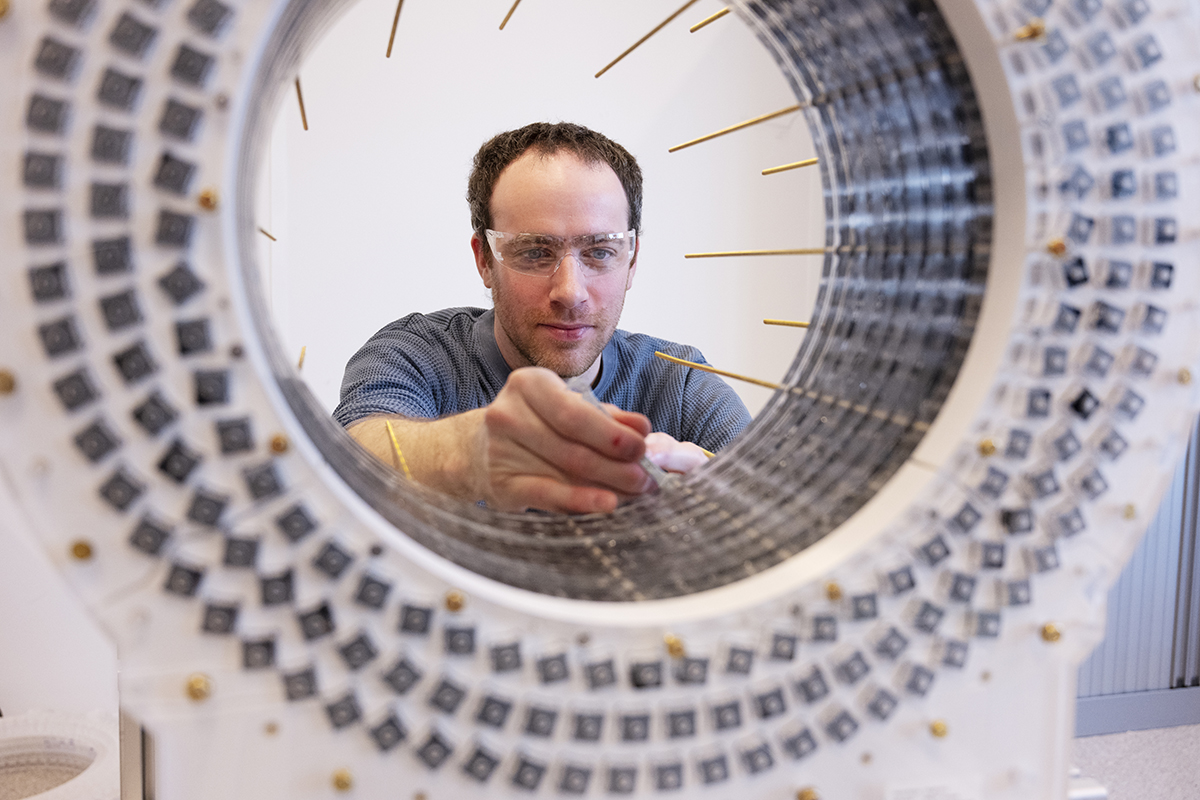
O’Reilly working in the Open Imaging workshop -
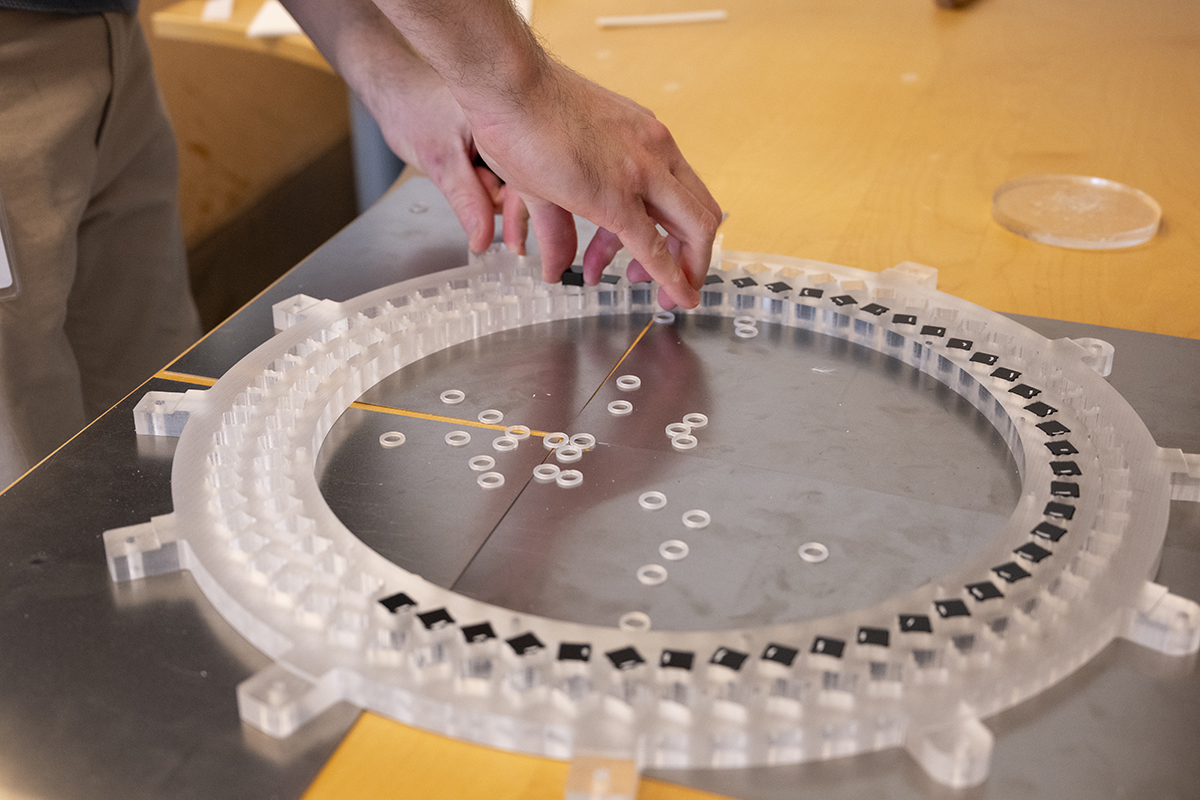
O’Reilly working in the Open Imaging workshop
A scanner that fits inside a van
Lack of funding is one of the biggest obstacles to making MRI imaging more widely available around the world. Soemarwoto explains: ‘The high-end MRI systems we use in the Netherlands produce truly outstanding images. But they also require investments of millions, partly because of all the safety measures needed in the scanning room and the building itself.’
Open Imaging is developing a much cheaper system that fits inside a van and can therefore travel from one hospital to another. ‘Our scanner can be installed safely almost anywhere and used immediately. The image resolution is lower than that of high-end systems, but it still provides the information doctors need most,’ says O’Reilly. ‘At the moment, we are developing the scanner for brain imaging, but we already see opportunities to use it in future for scanning hands and feet as well.’

An open-source approach for maximum impact
The Open Imaging scanner has a modular design and is sold as a ready-to-use product. The pair build the scanners in their workshop at Biopartner 1. O’Reilly explains: ‘We are making more and more parts of our scanner open source. By making the technology accessible to everyone, users can adapt the system to their own needs. Customers can also carry out maintenance themselves if they want to.’ The approach fits perfectly with the team’s ambition to achieve the greatest possible impact in a short time.
Specifications of the Leiden MRI scanner
- Thousands of small, powerful magnets that are precisely aligned and permanently active
- No cooling with liquid helium required
- No hearing protection needed during use
- Transportable anywhere by van