
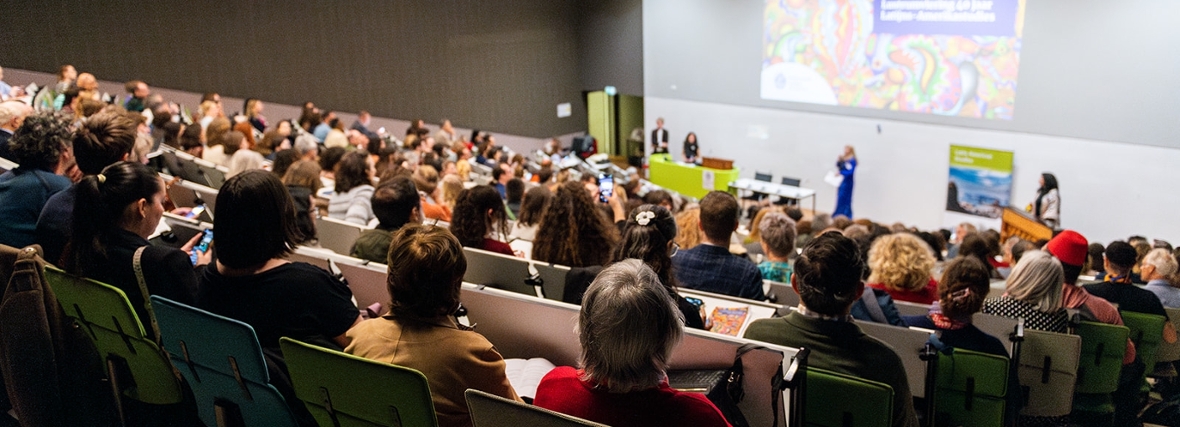
Duende and Café: The 40th Anniversary of Latin American Studies
image: Marit Hazebroek, Justin Pasman and María Gabriela Palacio
“Europe must look […] southward, where the global majority resides. The BRICS countries alone represent almost 50% of the world economy and a quarter of the world trade, it is where the youngest populations lives, with an enormous amount of creative energy, something that is often lacking in the northern part of the world,” stated Kathleen Ferrier in her closing lecture last Friday, 10 April, during the 40th anniversary of Latin American Studies.
The 270 attendees who rose to their feet in applause clearly shared her conclusions. The hundreds of alumni present from Talen en Culturen van Latijns-Amerika (TCLA), or Latin American Studies (LAS) as the programme is now called, know better than anyone the potential and creativity of the Global South, and of Latin America in particular. In addition to alumni, students, and staff, ambassadors from Bolivia, Brazil, Chile, Costa Rica, Cuba, Colombia, Ecuador, El Salvador, Guatemala, Mexico, Panama, Peru, the Dominican Republic, Spain, Uruguay, and Venezuela were also in attendance.
Sixteen ambassadors
With some astonishment, Henk te Velde, Dean of the Faculty of Humanities, noted that nowhere else at the university is there a programme capable of bringing together no fewer than sixteen ambassadors. Yet this is hardly surprising: Latin American Studies in Leiden combines distinctive expertise in a unique interdisciplinary programme in which the study of society, cultures, and languages converge, as chair Nanne Timmer also emphasised.
Forty years ago, the programme Talen en Culturen van Latijns-Amerika (TCLA) was founded. In a speech by Adriana Churampi, former staff members were recalled, including professors such as Erika García (†), Raymond Buve (†), Pieter Muysken (†), but also Luz Rodríguez-Carranza, Michiel Baud and Patricio Silva, among others, all of whom have passionately represented their fields. Spanish and Portuguese language and culture had already been taught in Leiden since 1954, but in 1986 the focus shifted specifically to the Latin American region. Since then, the programme has grown into a unique multidisciplinary centre of expertise. Spread across three research institutes (LUCL, LUCAS, LUIH), it may appear something of an odd one out, yet it is precisely this diversity of disciplines that makes the programme so distinctive.
Keynotes
This may also explain why alumni go on to such a wide variety of careers, something evident from the two keynote speakers alone. First to address the gathering was Valika Smeulders, alumna, Head of History at the Rijksmuseum and Professor of Museums & Heritage at the University of Groningen. The second keynote speaker was Kathleen Ferrier, alumna and Chair of the Dutch UNESCO Commission. [You can find her speech here.]
The audience also included policymakers from the Ministry of Foreign Affairs, the Ministry of Justice, the Ministry of the Interior and Kingdom Relations, and the Ministry of Education. Alumni were also present working at embassies in Latin America, for NGOs, or in the corporate world. Another group is active in the cultural sector, for example in journalism, in museums, as organisers of cultural festivals, as literary translators, or as curators and conservators. Yet another large group of alumni works as teachers of Spanish or Portuguese in education, or as teachers of Dutch for Spanish speakers. As if to emphasize the variety of career paths alumni have followed, among those present were even a mayor and a cabaret performer.
Text continues below the photos
-
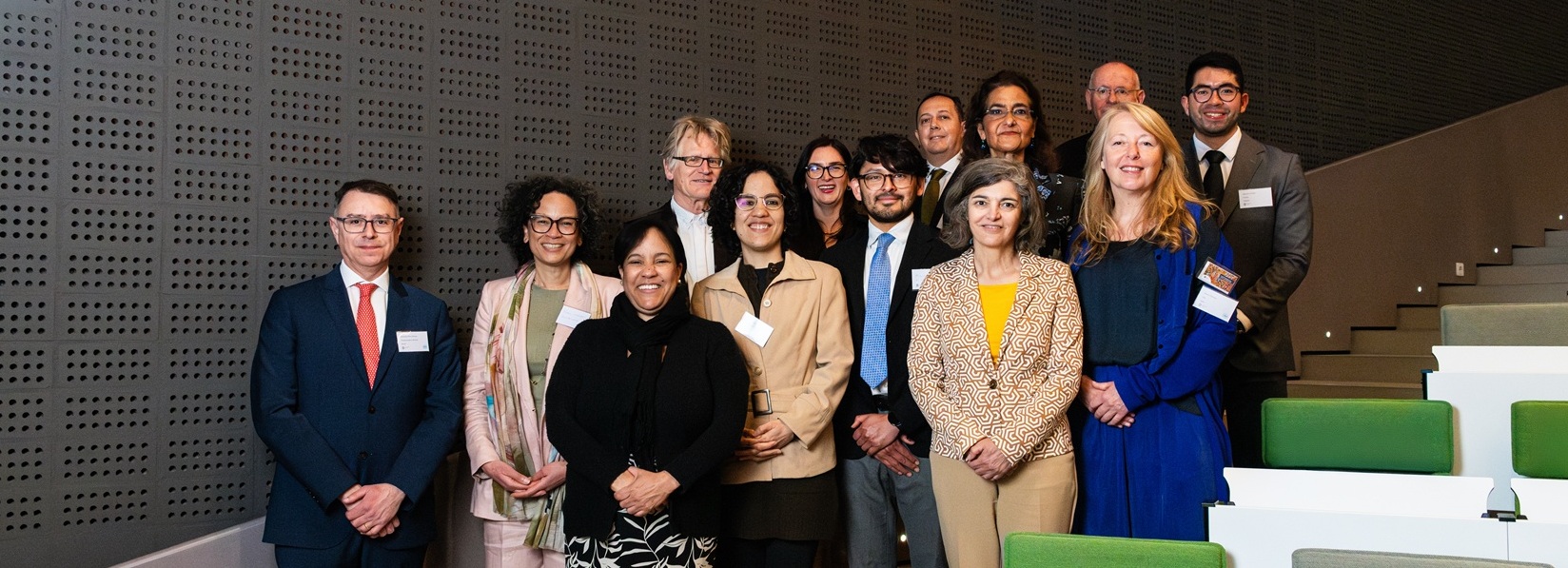
The afternoon programme was already attended by a sizeable delegation of ambassadors. Also pictured: keynote speakers Kathleen Ferrier and Valika Smeulders, programme chair Nanne Timmer, Dean Henk te Velde, and Vice Dean Jos Schaeken. -
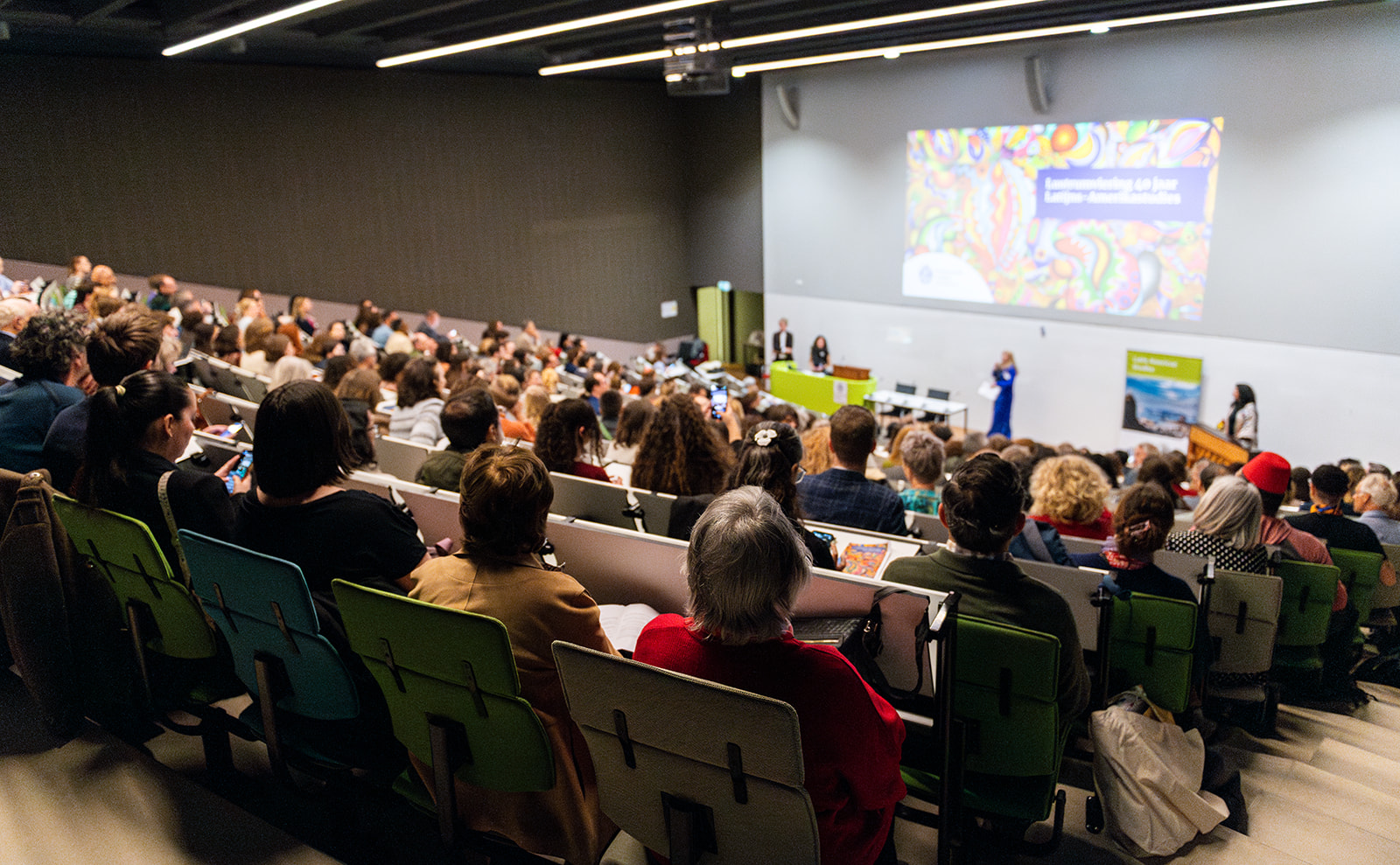
Full house! -
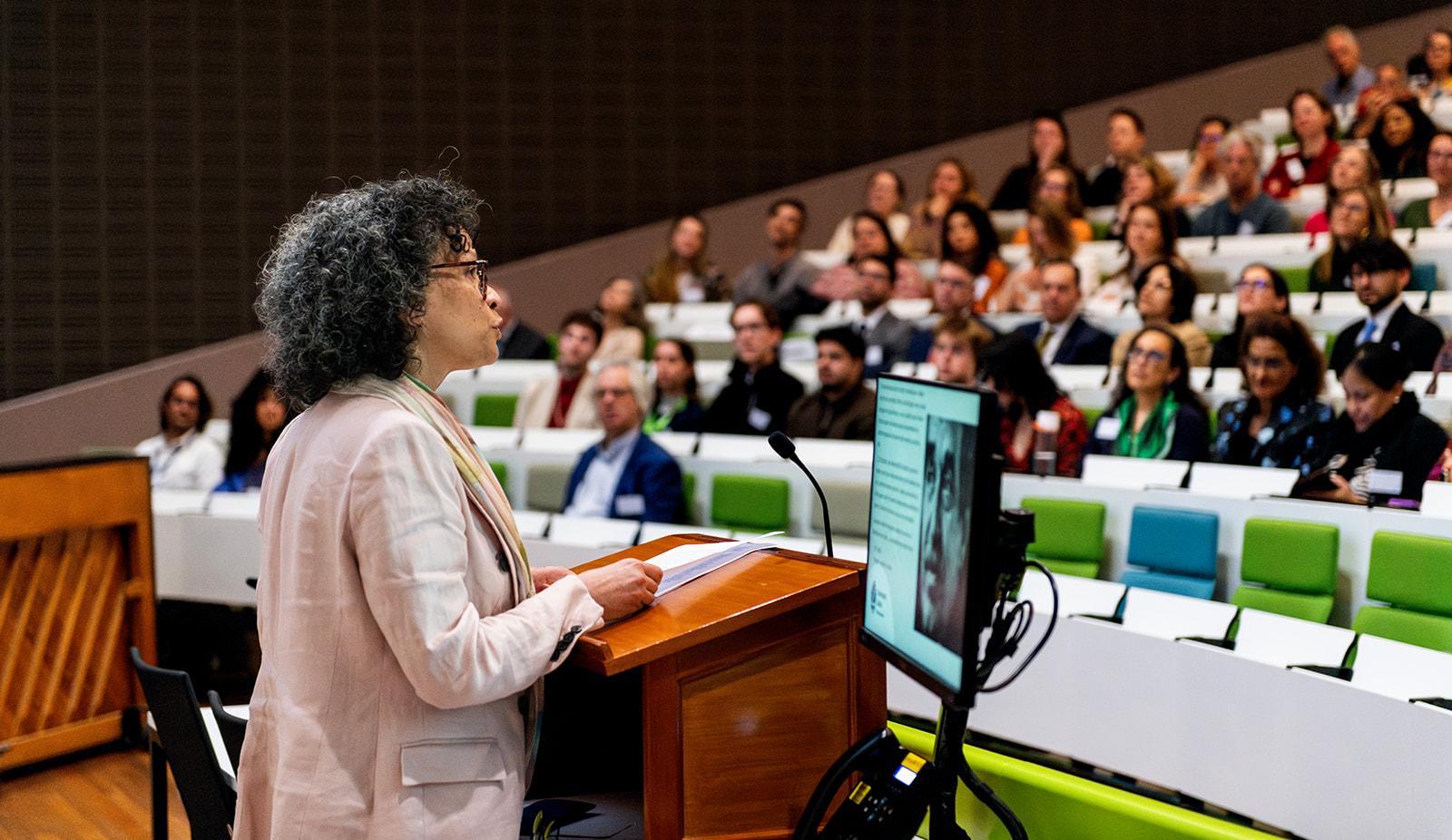
Valika Smeulders -
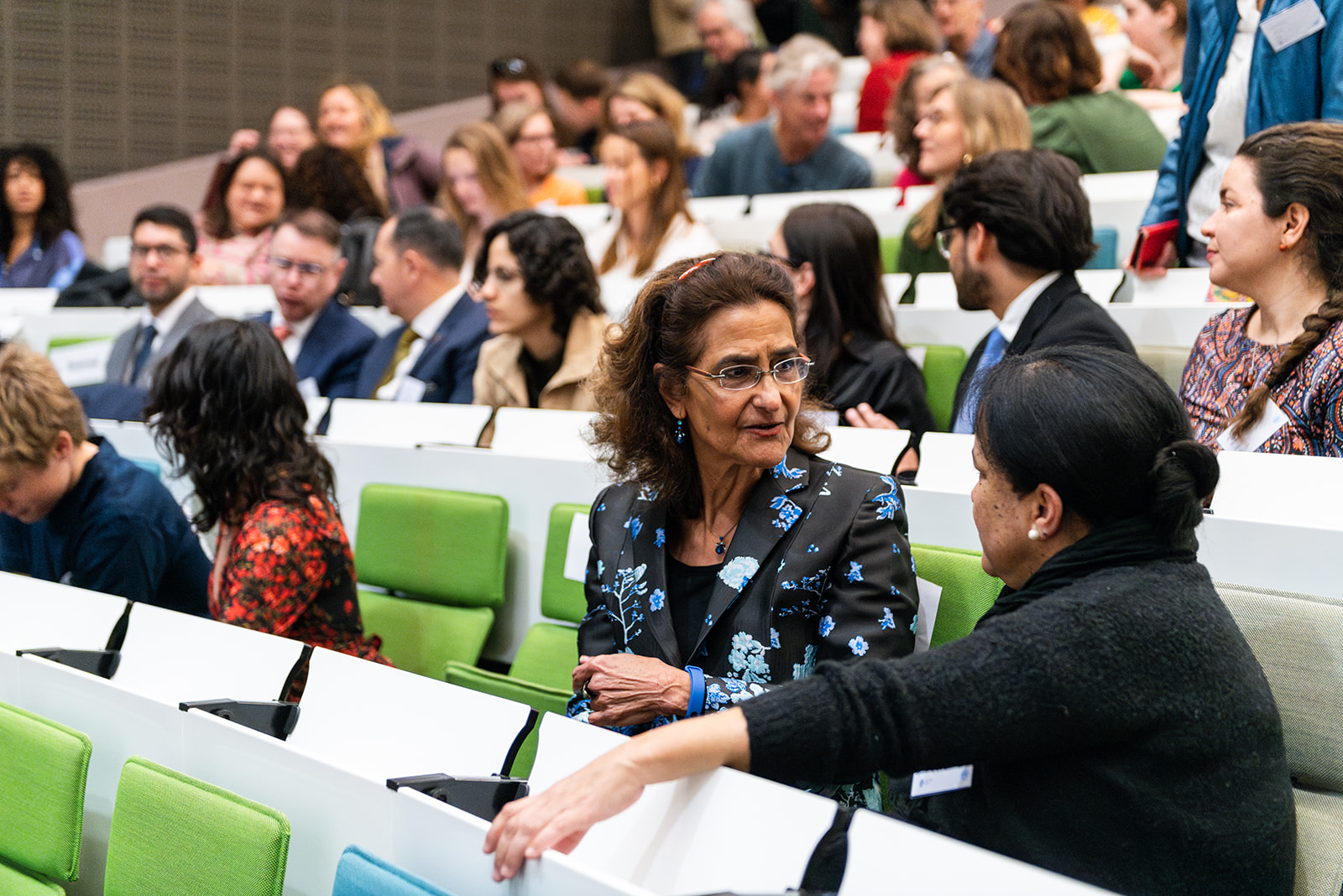
Kathleen Ferrier in conversation with the Cuban ambassador -
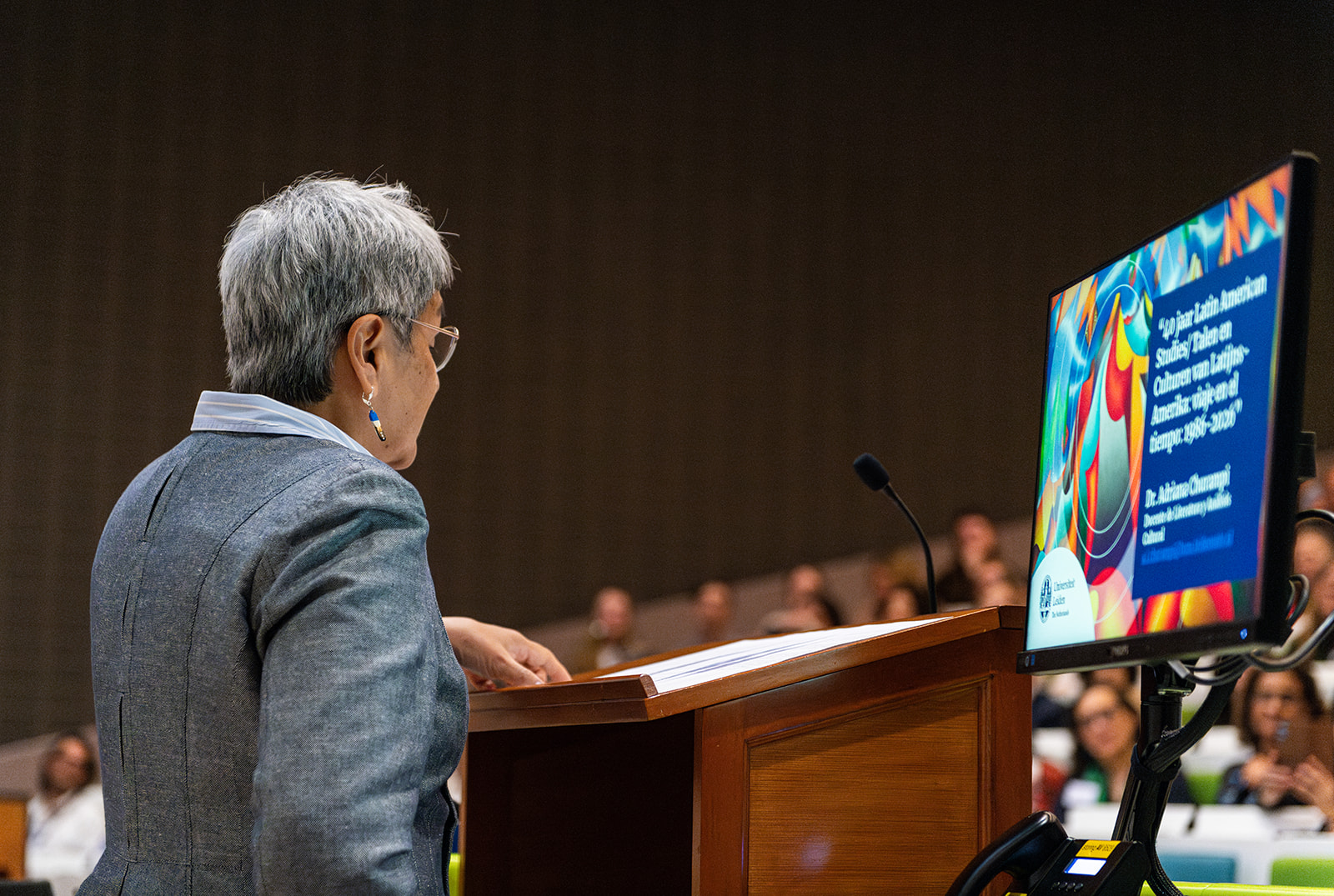
Lecturer Adriana Churampi -
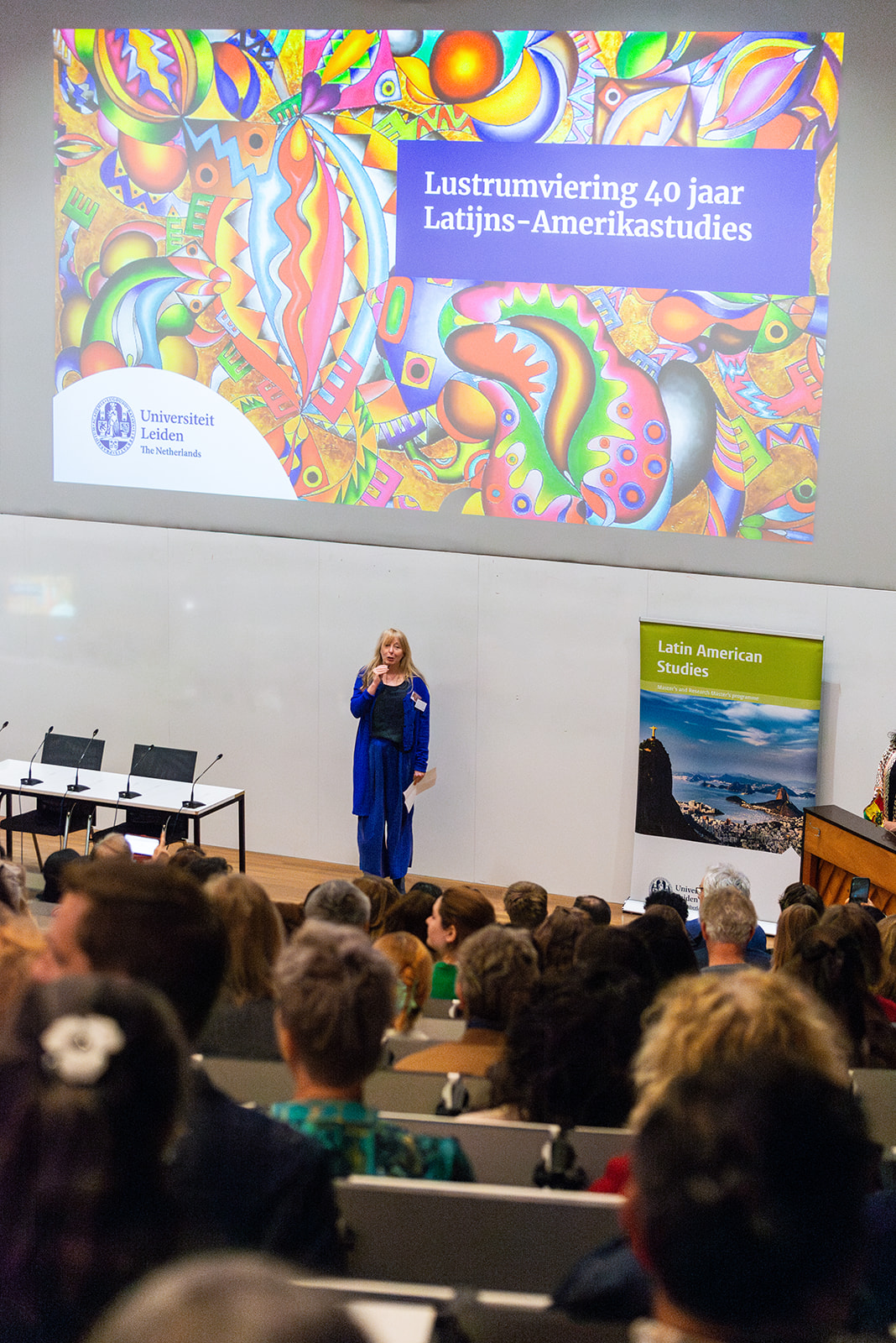
Programme chair Nanne Timmer, master of ceremonies for the programme -
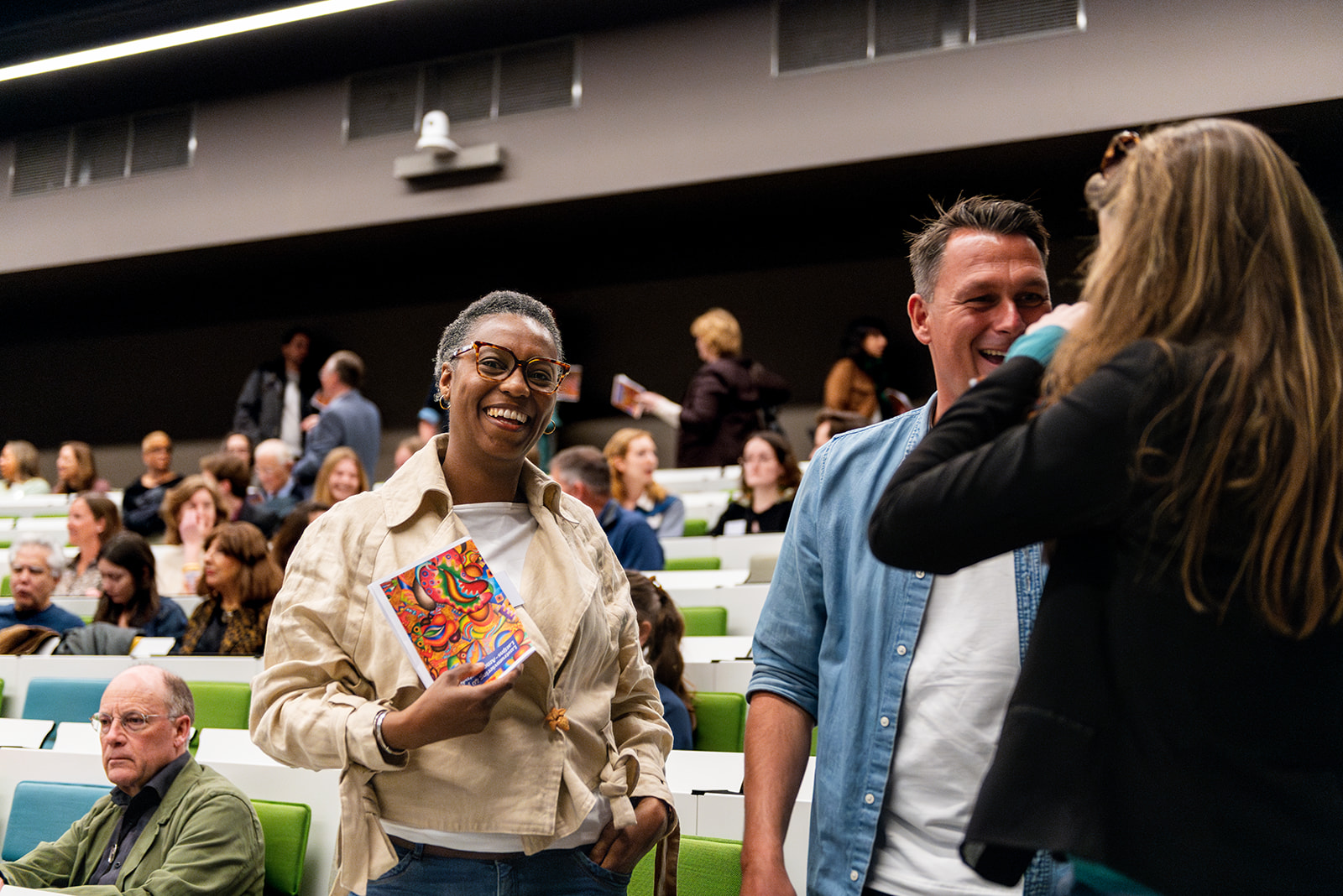
Happy faces -
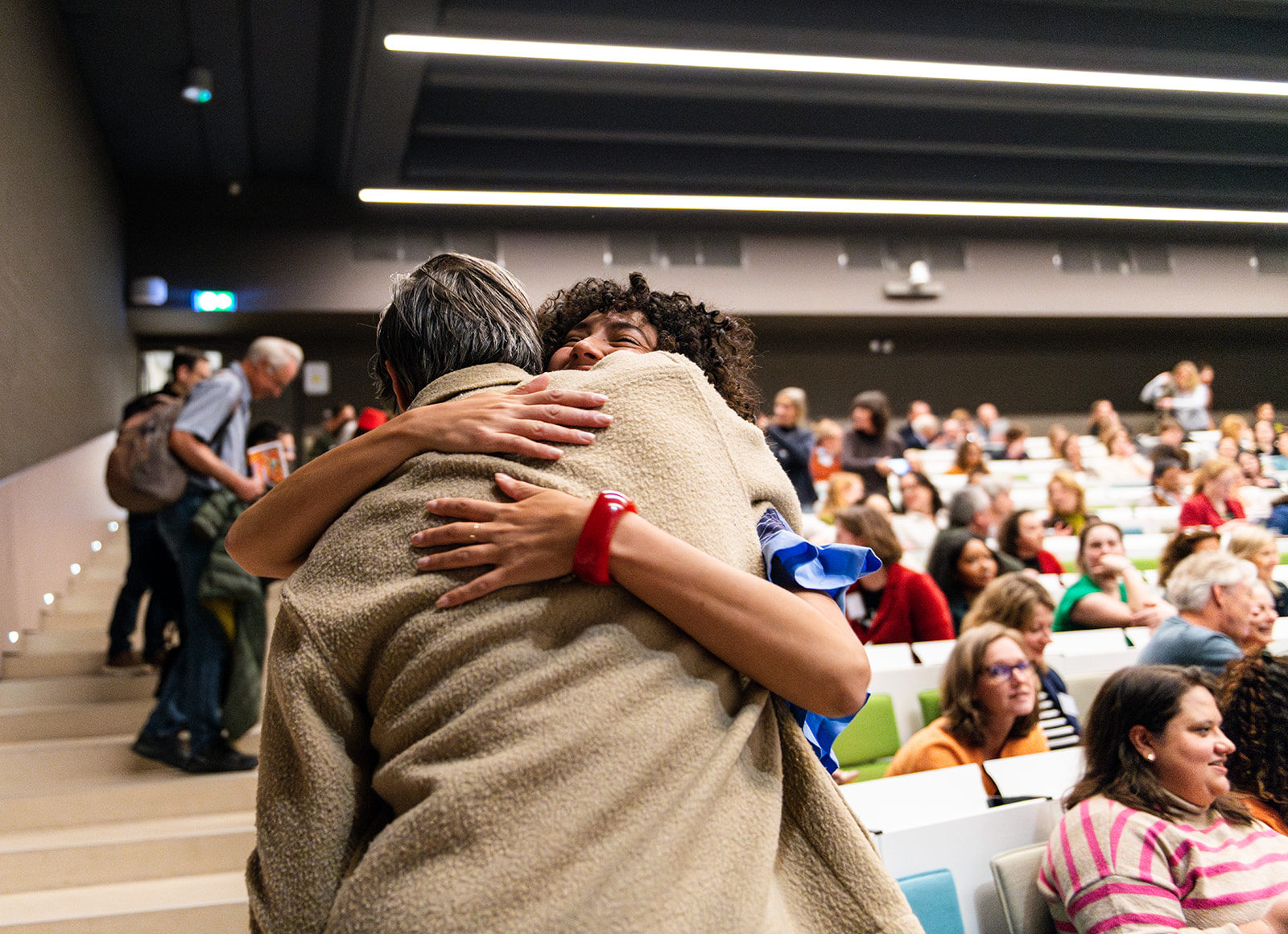
And warm embraces -
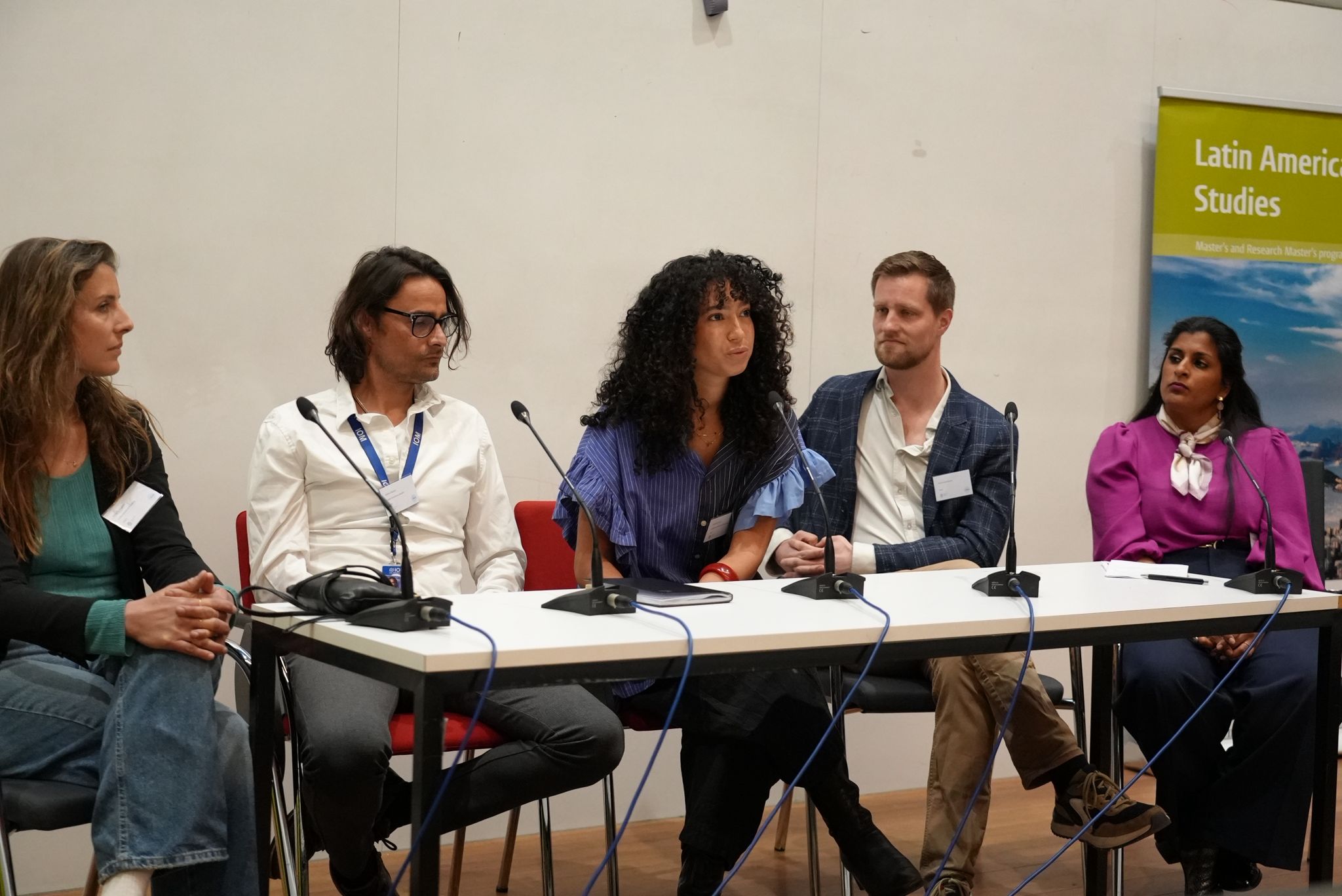
The alumni panel -
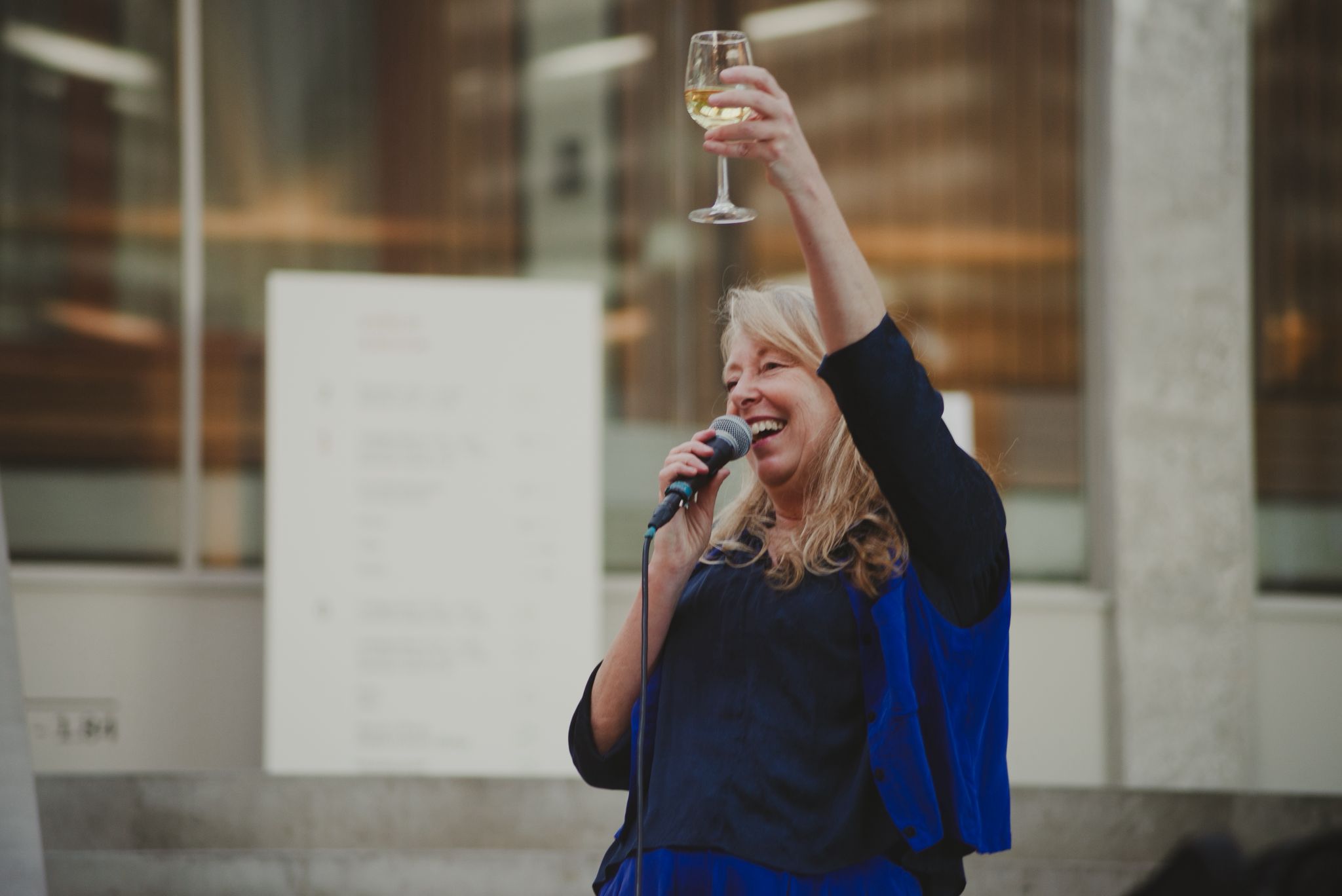
Nanne Timmer opened the celebration in Herta Mohr; there were Peruvian snacks, music, and dancing late into the night. -
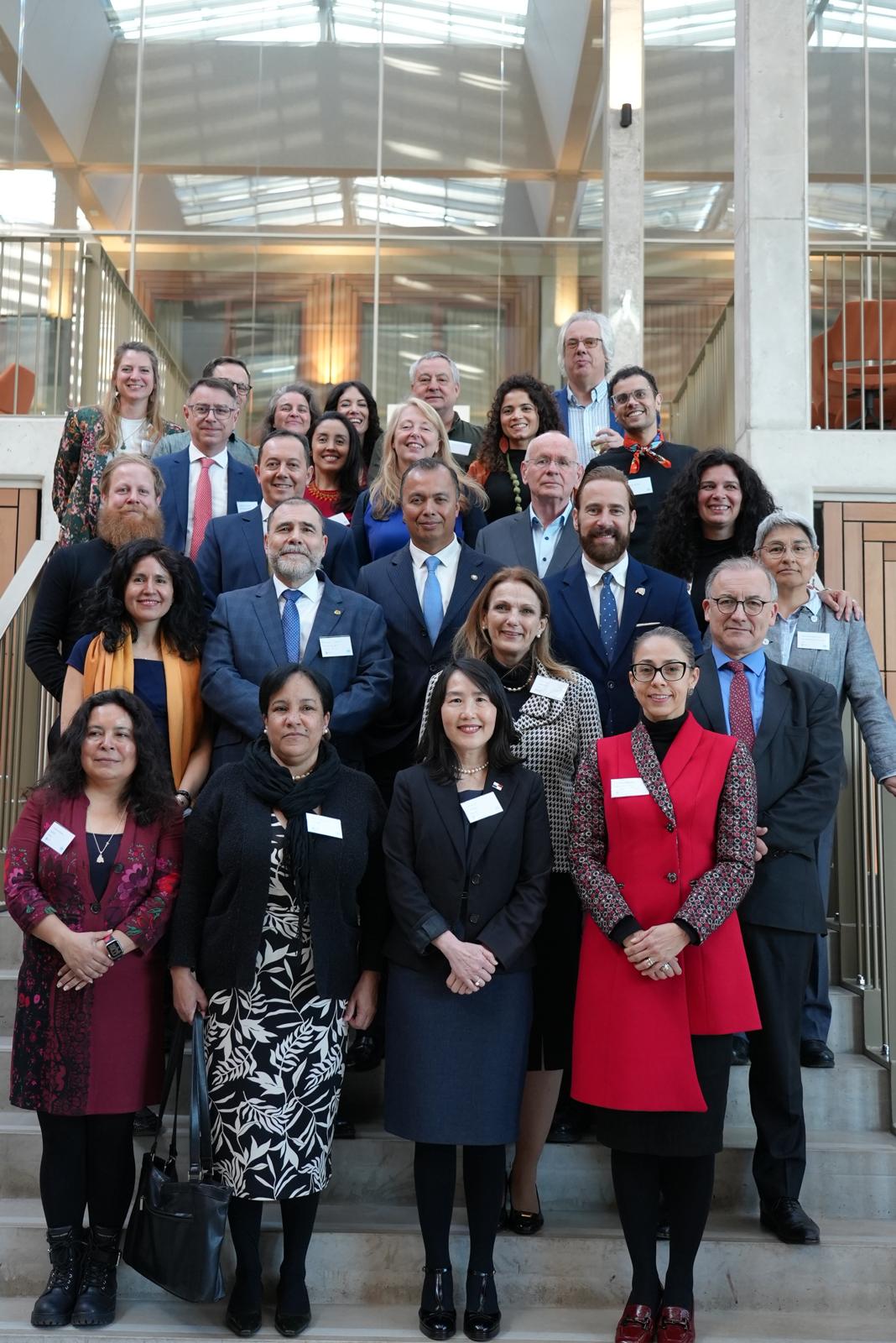
Group portrait: all ambassadors with staff members, including the lecturers who organised the anniversary celebrations: Nanne Timmer, Paz González, and Soledad Valdivia. -
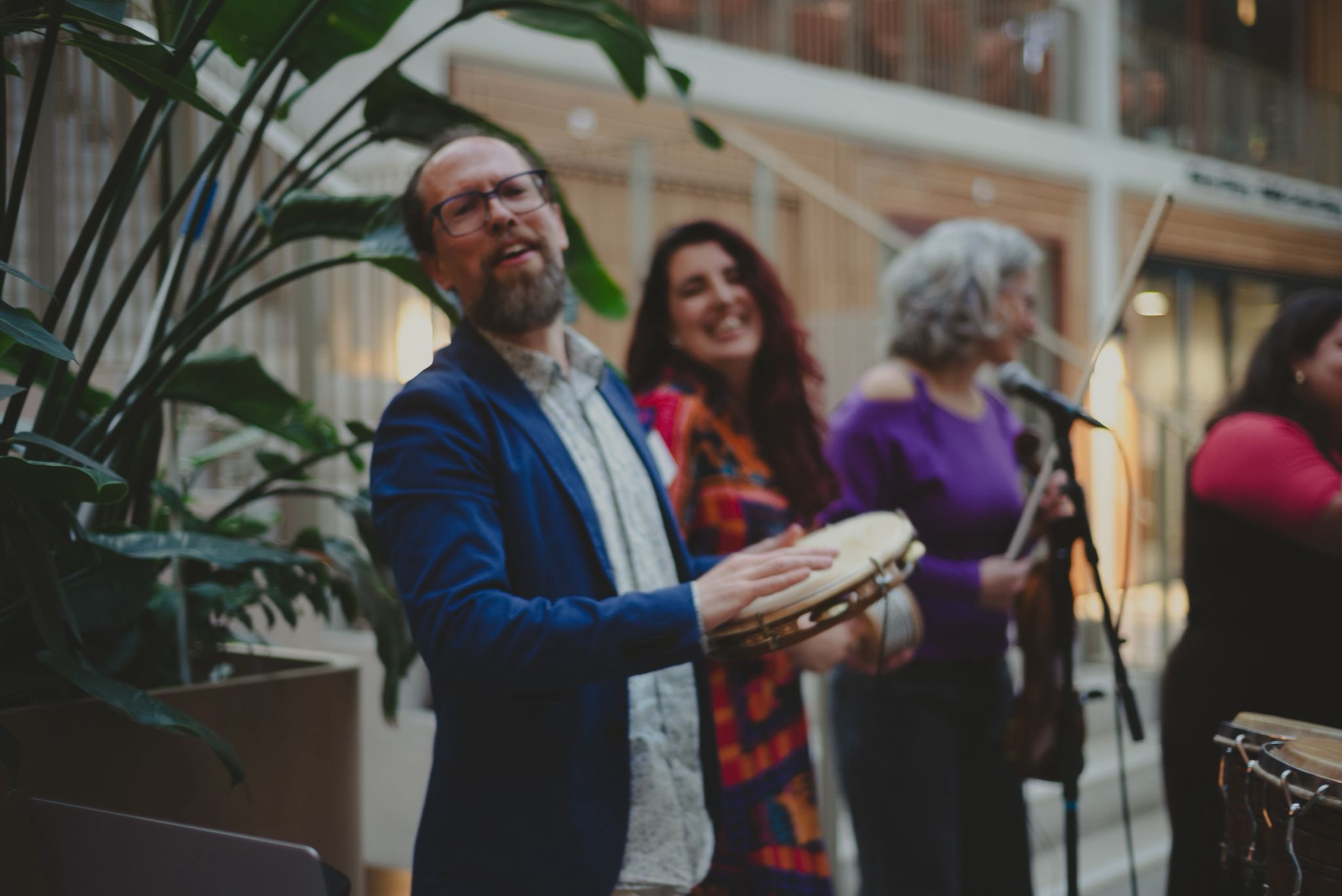
DJ Pablitosss put on a spectacular show with his band that evening
Memories of the programme
It was heartwarming to hear alumni speak about their life paths and their memories of the programme. In the alumni panel, Paz González spoke with Hedwig Hupkes, Senior Project Manager Festivals; Arthur J. Swarts, Operations Assistant, Movements at the International Organization for Migration (UN IOM); Isabelle Best, curator at the Allard Pierson; Gerjan Ekenhorst, journalist and Spanish teacher; and Eva Verschoor, Program Manager Critical Materials at the Port of Rotterdam.
One aspect returned in all speakers’ contributions: the warm memories of the programme, the passionate and inspiring lecturers, and the valuable intercultural skills the programme has provided students with. Many alumni also emphasised the value of self-knowledge gained through the study of languages and cultures. This was also reflected in Valika Smeulders’ keynote “Café”. By delving into the history of the Latin American region, one is inevitably led to re-evaluate Dutch and European history as well. One becomes more critical in the process.
In the staff panel, Soledad Valdivia spoke with Professor of Brazilian Studies Edmund Amann, Assistant Professor of Cultural Analysis Tatiana Vargas Ortiz, and Assistant Professor of Sociolinguistics Eduardo Alves, about geopolitical turbulence and the importance of the region. Furthermore, Marianne Wiesebron honored Raymond Buve in an In Memoriam speech, we were able to gratefully enjoy a piano interlude thanks to the Bolivian Embassy, and delicious wine was served during the reception thanks to the Embassies of Chile and Peru.
A vibrant celebration
Finally, the volume Je zult geen bloemen dromen (Wereldbibliotheek, 2026) was presented, for which alumna and literary translator Lisa Thunnissen selected and translated sixteen short stories. The first copy was presented to the University Library and received by alumnus and subject librarian, Latin America and the Caribbean, Dennis Bus.
If there is one thing alumni are proud of, it is the cultural sensitivity and appreciation they have developed. Could this be why the university caterer looked on with some surprise at the vibrant celebration unfolding in the Herta Mohr building, complete with instruments, singing, and dancing? This thanks to the alumni band of Paul van Nispen / DJ Pablitoss together with Nadia Ramer, Jeffrey Pijpers, Francianne dos Santos Velho, Gabriel and Paulina Rabah Ramírez
On LinkedIn, posts are pouring in from alumni and staff expressing their pride in being part of this special community, a community with duende. To sit in a room with nearly 300 people, all recognising and embracing the field of Latin American Studies, is something truly special. Engaging in a dialogue with Latin America is not merely an academic pursuit, but, as staff member Maria Gabriela Palacio describes on LinkedIn, “a situated way of looking at the world, a prism that connects and reconfigures how we understand ourselves.”
Photography: Marit Hazebroek, Justin Pasman en María Gabriela Palacio