
Honorary Doctorate Recipients - Safiya Noble and Catherine Malabou: The Reading List
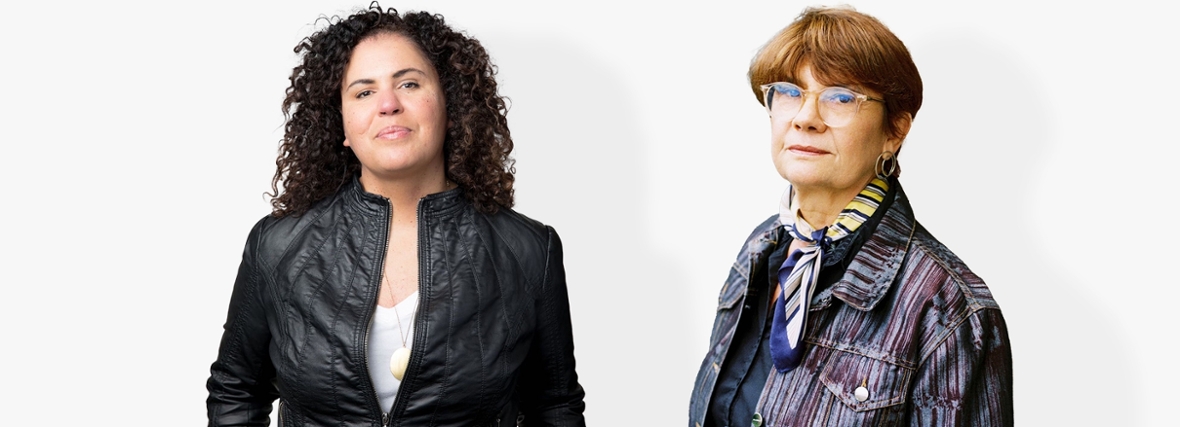
This February, Leiden University honors two scholars who have responded to the challenges of modern society in important, innovative and exemplary ways. Catherine Malabou and Safiya Umoja Noble will receive honorary doctorates for their ground breaking research in philosophy and internet/media studies respectively. In the list below, we present a few samples of these inspiring scholar’s most important works from our collections.
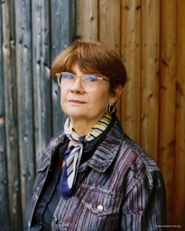
French philosopher Catherine Malabou is the author of a large and wide ranging oeuvre, with earlier works in continental philosophy and later works branching out to interactions with neurobiology and epigenetics, political philosophy, and feminist thought. Central to her research is the concept of plasticity, the ability of things or systems to both give and receive shape simultaneously, or to be destroyed and remade.
Safiya Umoja Noble’s works were highly influential in creating awareness about how the internet and algorithms of platforms like Google perpetuate harmful stereotypes, racism and gender discrimination. Her work empowers users to investigate these now ubiquitous algorithms for themselves through critical searching, and calls policy makers to start thinking about representation in algorithmically driven online spheres.
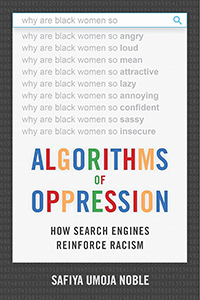
Safiya Noble Algorithms of oppression : how search engines reinforce racism
2018
How is our perception of society shaped by the search engines we use every day? Noble shows that search engines are not at all neutral: search algorithms are racist and perpetuate societal problems because they reflect the negative biases that exist in society. When you Google ‘black girls’, you will find many stereotypical and often negative qualities ascribed to Black women. When you Google ‘white girls’, the results are dramatically different. This shapes how we look at ourselves and at others.
This book calls to reflect on how the systems we use to find information have a deep influence on the ways we perceive reality. It was originally published in 2018: much has changed since, but teaching ourselves to be critical when browsing the internet has become only more vital for creating a socially just society.
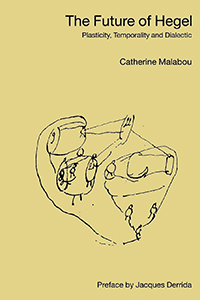
Catherine Malabou, The Future of Hegel: Plasticity, Temporality, and Dialectic
2004 (Translated by Lisabeth During)
In this early work Malabou reflects on how we can read Hegel today, how we can give him actuality. In modern philosophy, Hegel is often thought of as the thinker of the end of history. But does his system allow us to think of the future, as well? In this book, Malabou introduces her famous concept of plasticity.
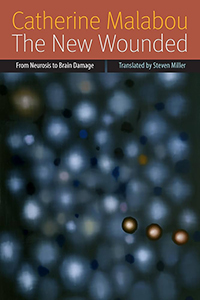
Catherine Malabou, The New Wounded: From Neurosis to Brain Damage
2012 (Translated by Steven Miller)
Malabou here turns her eye to ‘the new wounded’: those who are suffering from mental trauma as a result of accidents, degenerative diseases such as Alzheimer’s, or also sociopolitical trauma – caused by experiences of for example torture, terror or sexual assault. Such wounds have profound effects on the brain. How to deal with these wounds? And what can philosophy offer here?
Philosophy and psychology traditionally occupy realms very separate from the natural sciences such as neurobiology and epigenetics. In this volume, Malabou philosophically engages with these fields in her reflection on the brain’s plasticity – it’s capacity to give, receive and (in this case) suffer destructive losses of form.
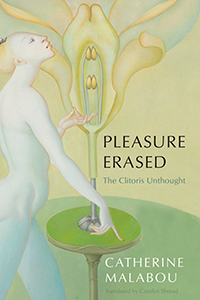
Catherine Malabou, Pleasure Erased: The Clitoris Unthought
2022 (Translated by Carolyn Shread)
The clitoris has long been eliminated by patriarchal society, in women’s bodies and in science, art, psychology and philosophy. Even today, genital mutilation is still a common practice. Western philosophy has left the clitoris, ‘the only organ whose sole purpose is pleasure’, largely unthought.
For the first time, Malabou renders the clitoris philosophically visible, making it not only an organ of pleasure but also an organ of thought. This book is a refreshing contribution to contemporary feminism. At the same time, Malabou does not fall victim to sexual binarism, leaving space for queer experience: the feminine exceeds woman, and the clitoris is for everyone. Malabou succinctly and memorably characterizes the clitoris as an organ of thought in her assertion that ‘the clitoris is an anarchist’.
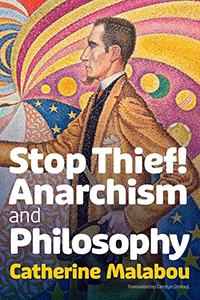
Catherine Malabou, Stop Thief!: Anarchism and Philosophy
2024 (Translated by Carolyn Shread)
Does philosophy need anarchism? And do anarchists really need philosophy? Many philosophers have ascribed value to anarchism, but none have ever called themselves an anarchist. In this rich book, Malabou shows how anarchism has long been excluded from philosophy. In her readings of key philosophical thinkers, she helps us understand how philosophy has left anarchy unthought, but at the same time also steals from it.
Malabou re-elaborates a concept of anarchy articulated around a notion of the “non-governable” far beyond an inciting of disobedience or common critiques of capitalism. Anarchism thus becomes a pathway to philosophically question the legitimacy of political domination – a questioning that is gaining resonance in our global society every day.
All books in the list above are available for viewing in print and/or digitally through our Catalogue. You can also find much more work by both authors there. And why not search for your favorite author?