
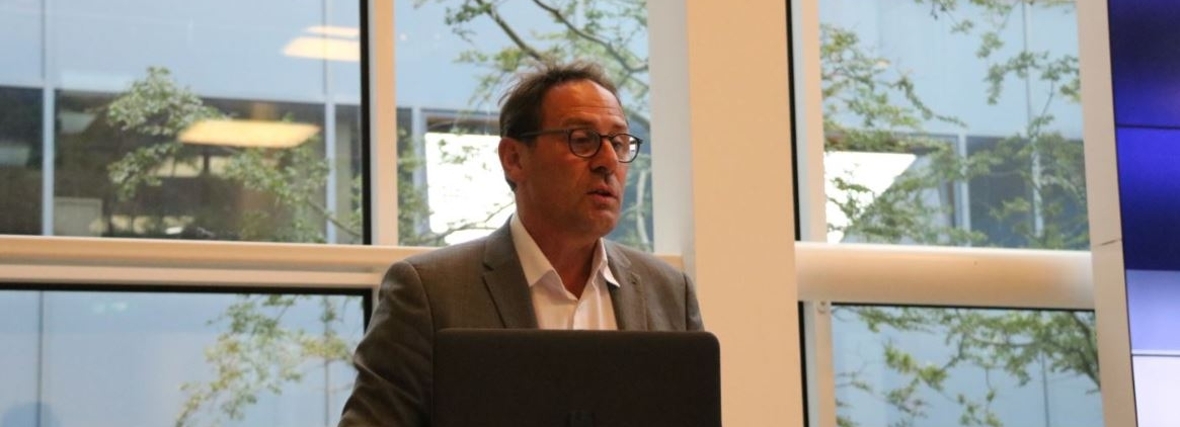
Jan Kolen concludes his term as Dean of Archaeology: 'It's part of the role'
After 7.5 years, Jan Kolen is stepping down as Dean of the Faculty of Archaeology. For him, it does not feel like a dramatic moment. ‘It is part of the role: you pass the baton on to someone else.’ He adds with a smile: ‘And I will remain connected to the faculty, so it is not really a farewell.’
Looking back: an educational and challenging period
How does Jan Kolen look back on his time as dean? ‘It went by quickly, without me even noticing. Every day, I was busy with the Faculty. It was very enjoyable, but there were also some rough edges. Sometimes you have to make decisions in the general interest, even though you know they go against the feelings of a group. That's part of the challenges of being a Dean.’
The role gave him unique insight into the field: ‘I learned more about archaeology in general and from my colleagues than I did during my studies and research work. You see how broad and rich our research is, from young people doing amazing projects to translating that research into education.’
Interdisciplinarity as a strength
Kolen emphasises the importance of collaboration: ‘Archaeology is interdisciplinary by definition. That makes us strong as a Faculty, also internationally. It is not without reason that we have been ranked so highly in international rankings for so long.’ He sees a great willingness to collaborate: ‘In projects, you see colleagues from different departments seeking each other out. Yet departments sometimes give the impression of being compartmentalised, while in fact we work together across the Faculty. Perhaps we need to focus more on that as a Faculty.’
Changes in the field
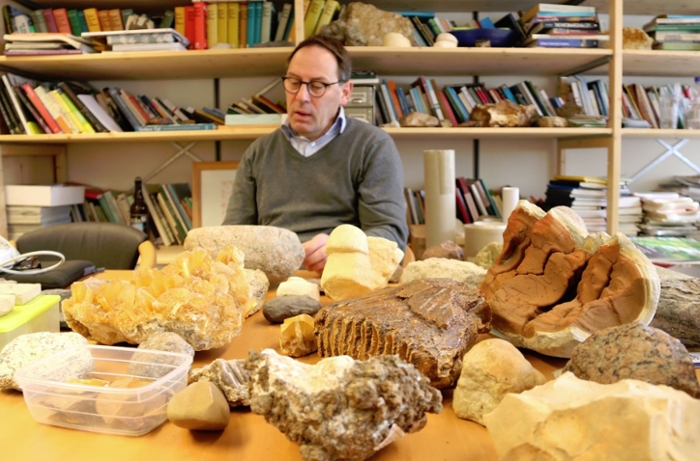
During his time as Dean, he witnessed changes in the field: ‘The natural sciences have become even more important in archaeology. This proved to be not incompatible with social science and humanities approaches, but rather complementary. For a long time, it was thought that innovation would mainly come from theory formation. Now it is becoming clear that much innovation comes from natural science applications.’
The culture within the field also changed: ‘Twenty years ago, archaeology was the domain of tough geologists and adventurers. That image has shifted to a culture that is more in line with the times, just as in other sciences: a keen eye for the behaviour and values of the community.’
Looking ahead: confidence in successor
Kolen is positive about his successor, Alex Geurds: ‘He has a broad vision, is calm and analytically strong. That is important for a dean. He has experienced the cultural change and will not break with the past, but offer a logical continuation.’ He also offers a word of caution: ‘The enormous success in securing research grants in recent years will not be easy to repeat, because the researchers who have secured large projects will be busy with them in the near future. The emphasis will have to be more on young researchers and Veni grants. There is also much to be gained in education.’
What does the future hold for Jan Kolen?
His schedule for the coming year is well filled: ‘More teaching! Bachelor’s, master’s and research master’s courses, thesis supervision, and helping PhD students reach the finish line.’ In addition, he is launching the major research project Traumascapes: ‘We are going to look at landscapes that are connected to collective traumas: former concentration camps, Moluccan residential areas, but also the earthquake landscape of Groningen. It is not always a pleasant subject, but it is fascinating and important.’