
Digital Bookshelf
The Hague Journal of Diplomacy regularly updates its digital bookshelf with recommendations of recent books on diplomacy, global affairs, and international studies.
Prospective reviewers are welcome to choose a book from the bookshelf below for a proposal, or to suggest any other contribution.
The shelves are divided into four sections: (1) Special Focus on Shifting Orders, Emerging Alternatives, (2) Diplomatic Studies, (3) Feminist Lenses on Global Affairs, and (4) Perspectives from the Global Majority.
Special Focus on Shifting Orders, Emerging Alternatives
Da Kong, Museums, International Exhibitions and China's Cultural Diplomacy (Routledge 2021)
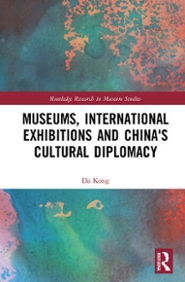
Museums, International Exhibitions and China’s Cultural Diplomacy examines the role museums and, more specifically, international exhibitions, have played in shaping China’s international image to date.
Drawing on theories and methods from museum studies and international relations, the book evaluates the contribution international exhibitions make to China’s cultural diplomacy strategy. Considering their impact on the country’s international image, Kong also probes the mechanisms and processes involved, examining in detail the policy of, and international activities promoted by, the Chinese government. The book also analyses the motives of the Chinese and overseas museums that host these exhibitions. Taking some major exhibitions that were on show in the UK during the 21st century as a representative case study, the book reveals the mechanisms by which these exhibitions were developed and shared overseas. Questioning who really shapes the image of China, Kong challenges Western assumptions and looks ahead to consider whether, moving forward, the Chinese government and museums could work together in a mutually beneficial way.
Museums, International Exhibitions and China’s Cultural Diplomacy contributes to the growing literature on museums and diplomacy. As such, it will be of interest to academics and students engaged in the study of museums and heritage, international relations, culture, politics, China and wider Asia.
Xin Liu, China's Cultural Diplomacy: A Great Leap Outward? (Routledge 2019)
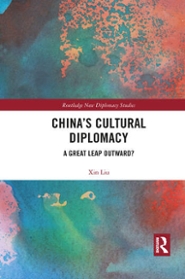
As with many spheres of public life, public diplomatic communication is being transformed by the boom of social media. More than 165 foreign governmental organisations in China have embarked on the use of Weibo (a hybrid of Facebook and Twitter in China) to engage with Chinese citizens and reach out to youth populations, one of the major goals of current public diplomacy efforts. This exciting new pivot, based on systemic research of Weibo usage by embassies in China, explores the challenges and the limits that the use of Chinese Weibo (and Chinese social media in general) poses for foreign embassies, and considers ways to use these or other tools. It offers a systematic study of the effectiveness and challenges of using Weibo for public diplomatic communication in and with China. Addressing the challenges of e-diplomacy, it considers notably the occurrence of cyber-nationalism on Weibo and encourages a critical look at its practice, arguing how it can contribute to the goals of public diplomacy.
Wang Xiaowei, Blockchain Chicken Farm: And Other Stories of Tech in China's Countryside (Palgrave Macmillan 2020)
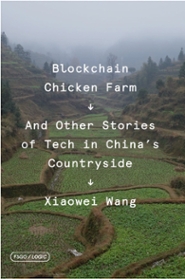
In Blockchain Chicken Farm, the technologist and writer Xiaowei Wang explores the political and social entanglements of technology in rural China. Their discoveries force them to challenge the standard idea that rural culture and people are backward, conservative, and intolerant. Instead, they find that rural China has not only adapted to rapid globalisation but has actually innovated the technology we all use today. From pork farmers using AI to produce the perfect pig, to disruptive luxury counterfeits and the political intersections of e-commerce villages, Wang unravels the ties between globalisation, technology, agriculture, and commerce in unprecedented fashion. Accompanied by humorous Sinofuturist recipes that frame meals as they transform under new technology, Blockchain Chicken Farm is an original and probing look into innovation, connectivity, and collaboration in the digitised rural world. FSG Originals x Logic dissects the way technology functions in everyday lives. The titans of Silicon Valley, for all their utopian imaginings, never really had our best interests at heart: recent threats to democracy, truth, privacy, and safety, as a result of tech's reckless pursuit of progress, have shown as much. We present an alternate story, one that delights in capturing technology in all its contradictions and innovation, across borders and socioeconomic divisions, from history through the future, beyond platitudes and PR hype, and past doom and gloom. Our collaboration features four brief but provocative forays into the tech industry's many worlds, and aspires to incite fresh conversations about technology focused on nuanced and accessible explorations of the emerging tools that reorganize and redefine life today.
Daya Thussu, Changing Geopolitics of Global Communication (Routledge 2024)
Changing Geopolitics of Global Communication examines the rapidly evolving dynamics between global communication and geopolitics.
As an intersection between communication and international relations, it bridges the existing gap in scholarship and highlights the growing importance of digital communication in legitimizing and promoting the geopolitical and economic goals of leading powers. One central theme that emerges in the book is the continuity of asymmetries in power relations that can be traced back to 19th-century European imperialism, manifested in its various incarnations from ‘liberal’ to ‘neo-liberal’, to ‘digital’ imperialism. The book includes a discussion of the post–Cold War US-led transformation of the hardware and software of global communication and how it has been challenged by the ‘rise of the rest’, especially China. Other key issues covered include the geopolitics of image wars, weaponization of information and the visibility of discourses emanating from outside the Euro-Atlantic zone.
The ideas and arguments advanced here privilege a reading of geopolitical processes and examples from the perspective of the global South. Written by a leading scholar of global communication, this comprehensive and transdisciplinary study adopts a holistic approach and will be of interest to the global community of scholars, researchers and commentators in communication and international relations, among other fields.
Karen Hao, Empire of AI: Dreams and Nightmares in Sam Altman's OpenAI (Penguin Random House 2025)
From a brilliant longtime AI insider with intimate access to the world of Sam Altman’s OpenAI from the beginning, an eye-opening account of arguably the most fateful tech arms race in history, reshaping the planet in real time, from the cockpit of the company that is driving the frenzy.
When AI expert and investigative journalist Karen Hao first began covering OpenAI in 2019, she thought they were the good guys. Founded as a nonprofit with safety enshrined as its core mission, the organization was meant, its leader Sam Altman told us, to act as a check against more purely mercantile, and potentially dangerous, forces. What could go wrong?
Over time, Hao began to wrestle ever more deeply with that question. Increasingly, she realized that the core truth of this massively disruptive sector is that its vision of success requires an almost unprecedented amount of resources: the “compute” power of high-end chips and the processing capacity to create massive large language models, the sheer volume of data that needs to be amassed at scale, the humans “cleaning up” that data for sweatshop wages throughout the Global South, and a truly alarming spike in the usage of energy and water underlying it all. The truth is that we have entered a new and ominous age of empire: only a small handful of globally scaled companies can even enter the field of play. At the head of the pack with its ChatGPT breakthrough, how would OpenAI resist such temptations?
Spoiler alert: it didn’t. Armed with Microsoft’s billions, OpenAI is setting a breakneck pace, chased by a small group of the most valuable companies in human history—toward what end, not even they can define. All this time, Hao has maintained her deep sourcing within the company and the industry, and so she was in intimate contact with the story that shocked the entire tech industry—Altman’s sudden firing and triumphant return. The behind-the-scenes story of what happened, told here in full for the first time, is revelatory of who the people controlling this technology really are. But this isn’t just the story of a single company, however fascinating it is. The g forces pressing down on the people of OpenAI are deforming the judgment of everyone else too—as such forces do. Naked power finds the ideology to cloak itself; no one thinks they’re the bad guy. But in the meantime, as Hao shows through intrepid reporting on the ground around the world, the enormous wheels of extraction grind on. By drawing on the viewpoints of Silicon Valley engineers, Kenyan data laborers, and Chilean water activists, Hao presents the fullest picture of AI and its impact we’ve seen to date, alongside a trenchant analysis of where things are headed. An astonishing eyewitness view from both up in the command capsule of the new economy and down where the real suffering happens, Empire of AI pierces the veil of the industry defining our era.
Auriane Guilbaud, Frank Petiteville & Frédéric Ramel (eds.), Crisis of Multilateralism? Challenges and Resilience (Palgrave MacMillan 2023)
This book explores the challenges that multilateralism faces today and questions the idea of a ‘crisis’ of multilateral cooperation and international organizations. It accounts for the pressures on and power shifts in multilateralism in recent years - such as the war in Syria, the Covid-19 pandemic, challenges for NATO, the erosion of multilateral norms, the transition from Trump to Biden, the rise of China, the post-Brexit European Union, and the mobilization of countries from the South. The authors illustrate the resilience of multilateralism and lessons learned from the WTO, UN Women, International Organizations’ Secretariats and global environmental governance. Written in part by members of the Research Group on Multilateral Action (GRAM), this volume argues that ‘crisis’ should not be considered a pathology but the ‘matrix’ of multilateralism, which is more resilient than commonly thought. This book will be of interest to students and scholars of International Relations, globalgovernance, and international organizations.
Blake W. Mobley & Carl A. Wege, The Fragile Dictator: Counterintelligence Pathologies in Authoritarian States (Lexington 2023)
Authoritarian states are digitizing mass surveillance to extend the reach and depth of autocracy in the service of their shared political goals of precluding organized dissent or the possibility of genuine republican governance. The Fragile Dictator: Counterintelligence Pathologies in Authoritarian States will explore how authoritarian pathologies impact the use of these technologies in terms of the authoritarian secret police, and internal and foreign security services and how larger autocratic pathologies are reflected in the behaviors of security organizations seeking their own survival under the autocratic state. The resilience of authoritarianism suggests that twenty-first century globalization is not a particular argument for the demise of dictatorship and Western powers must think about new approaches to defeat authoritarian internal and foreign security services as intensified by authoritarian sponsored clandestine networks. While authoritarianism has been a subject of scholarship before, the emerging digital authoritarianisms are increasingly powerful adversaries to the world's remaining liberal democracies and suggest a need for a different strategic approach when engaging digitized autocracies.
Alexander Cooley & Alexander Dukalsis, Dictating the Agenda: Authoritarian Resurgence & Influence in World Politics (Oxford 2025)
Dictating the Agenda: The Authoritarian Resurgence in World Politics examines how authoritarian states have repurposed tools, norms, and actors previously used to promote Western-backed liberalism, now turning them against liberal ideas. After the Cold War, democratization appeared to signal the decline of authoritarianism, but recent developments show a significant shift. The authors introduce the concept of “authoritarian snapback,” in which non-democratic states curb the spread of liberal ideas domestically while promoting anti-liberal norms globally. Drawing on case studies, purpose-built databases, and interviews, the book demonstrates how authoritarian states challenge liberal influence through media agreements, consumer boycotts, sports investments, university programs, and restrictions on foreign journalists, among other methods. It offers a fresh perspective on the shifting global political landscape and the limits of liberal influence.
Carolina Aguerre, Malcolm Campbell-Verduyn & Jan Aart Scholte (eds.), Global Digital Data Governance: Polycentric Perspectives (Routledge 2024)
This book provides a nuanced exploration of contemporary digital data governance, highlighting the importance of cooperation across sectors and disciplines in order to adapt to a rapidly evolving technological landscape. Most of the theory around global digital data governance remains scattered and focused on specific actors, norms, processes, or disciplinary approaches. This book argues for a polycentric approach, allowing readers to consider the issue across multiple disciplines and scales.
Polycentrism, this book argues, provides a set of lenses that tie together the variety of actors, issues, and processes intertwined in digital data governance at subnational, national, regional, and global levels. Firstly, this approach uncovers the complex array of power centers and connections in digital data governance. Secondly, polycentric perspectives bridge disciplinary divides, challenging assumptions and drawing together a growing range of insights about the complexities of digital data governance. Bringing together a wide range of case studies, this book draws out key insights and policy recommendations for how digital data governance occurs and how it might occur differently.
Written by an international and interdisciplinary team, this book will be of interest to students and scholars in the field of development studies, political science, international relations, global studies, science and technology studies, sociology, and media and communication studies.
Invisible Nation, documentary, directed by Park Chan-Wook (2025)

Unprecedented access to Taiwan’s first female president, Tsai Ing-wen, centers this portrait of the constantly colonized island, as it struggles to preserve its hard-won democracy, autonomy, and freedom from fear of authoritarian aggression. Thorough, incisive, and bristling with tension, Invisible Nation is a living account of Tsai’s tightrope walk as she balances the hopes and dreams of her nation between the colossal geopolitical forces of the U.S. and China. Invisible Nation captures Tsai at work in her country’s vibrant democracy, while seeking full international recognition of Taiwan’s right to exist. At a time when Russia’s invasion of Ukraine has demonstrated the ever-present threat of authoritarian aggression around the world, Invisible Nation brings a punctual focus to the struggles of Taiwan.
The Grab, film, directed by Gabriela Cowperthwaite (2024)

Quietly and seemingly out of sight, governments, private investors and mercenaries are working to seize food and water resources at the expense of entire populations. These groups are establishing themselves as the new OPEC, where the future world powers will be those who control not oil, but food.
And it's all beginning to bubble to the surface in real time. Global food prices have hit an all-time high, threatening chaos and violence. Meanwhile, Russia is using food as a weapon against the Ukrainians, and as a geopolitical tool to wield global power.
THE GRAB is a global thriller combining hard-hitting journalism from The Center for Investigative Reporting with the compelling character-driven storytelling of director Gabriela Cowperthwaite, taking you around the globe from Arizona to Zambia, to reveal one of the world’s biggest and least known threats.
Sangita Dhal, Nachiketa Singh & Amir Mohammad Nasrullah (eds.), Mapping Governance Innovations: Perspectives from South Asia (Routledge India 2025)
This volume explores the nature, success, and challenges of governance innovations in South Asia. It compares innovations and reforms that have been undertaken specifically in Bangladesh, Bhutan, India, Nepal, Pakistan, and Sri Lanka. It examines how these South Asian nations have fared in promoting the values of good governance both at the national and local levels.
The volume focuses mainly on three themes innovations and reforms in public administration, e-governance, public service delivery and innovations in local governance. It assesses how South Asian countries have sought to mitigate the challenges of governance and overcome the obstacles that characterized the transition from the old, traditional architecture of governance to the new and modern technologically enabled models of governance.
Lucid and topical, this book will be of great interest to scholars of politics, public administration and governance, public policy, public management, international relations, development studies, and related social science disciplines.
Dominik Mierzejewski, Jarosław Jura, Bartosz Kowalski & Mario Esteban, China's Vertical Multilateralism and the Global South: Narratives, Networks, and Money (Routledge 2026)
This book provides an in-depth analysis of China-led multilateralism and decodes China’s narratives, and political and business practices, both from theoretical and practical dimensions.
Introducing the mechanisms that govern China-led multilateral formats in what China sees as the Global South, the study offers a comparative analysis and checks whether China uses a one-size-fits-all strategy towards the selected case study formats and adopts a more differentiated regional approach. The case studies cover the following China-led multilateral formats: China-ASEAN, Forum on China-Africa Cooperation (FOCAC), China-Central and Eastern Europe, and China-CELAC. The authors introduce four primary practices of China’s management of relations within these platforms: executing discursive power, cultivating elite diplomacy, influencing public opinion, and navigating economic interactions to illustrate the bilateral and informal nature of China-led multilateralism practices. They argue that the bilateral approach is driven by China’s will to keep its paramount position within the formats and its pursuit to exploit the divisions among countries in these formats. Moreover, China’s relations with the Global South community are governed by informal networks that give the impression of non-interference and position China as the principal power due to these relationships’ inherent asymmetry. Cognizant of bilateral and informal drivers of China’s multilateral practices, the book compares China’s relations with selected case studies of countries under the multilateral umbrella: Brazil, Cambodia, Chile, Kenya, Poland, Serbia, South Africa and Thailand. It considers the growing tensions between China and the West surrounding the crisis of the COVID-19 pandemic, the centralisation of power in China and the Russian war in Ukraine.
Shedding light on China's policies and practices on bilateral and multilateral levels, this book will be of interest to researchers studying International Relations, Asian Politics, the politics of the Global South and Chinese Studies.
Diplomatic Studies
Jan Melissen, HwaJung Kim & Githma Chandrasekara (eds.), Home Engagement in Diplomacy: Global Affairs and Domestic Publics (Brill 2025)

How do governments engage their own citizens in global affairs? Home Engagament in Diplomacy explores the emerging practice of ‘home engagement,’ where diplomacy reaches beyond traditional state actors to interact directly with society. This volume examines how domestic audiences influence foreign policy, the challenges governments face in fostering meaningful dialogue, and the diverse approaches seen across democracies and authoritarian states. Featuring fresh empirical insights and multiple theoretical perspectives, this book offers a ground-breaking look at diplomacy’s evolving role in an interconnected world.
Contributors are: Githma Chandrasekara, Andrew F. Cooper, Anna Geis, Scott Harrison, Quinton Huang, César Jiménez-Martínez, HwaJung Kim, Christian Lequesne, Jan Melissen, Christian Opitz, Hanna Pfeifer, Anna Popkova, Allison Scott, Toshiya Takahashi, Geoffrey Wiseman, Yun Zhang, and Štěpánka Zemanová.
Natalia Grincheva and Elizabeth Stainforth, Geopolitics of Digital Heritage (Cambridge University Press 2024)
Geopolitics of Digital Heritage analyzes and discusses the political implications of the largest digital heritage aggregators across different scales of governance, from the city-state governed Singapore Memory Project, to a national aggregator like Australia's Trove, to supranational digital heritage platforms, such as Europeana, to the global heritage aggregator, Google Arts & Culture. These four dedicated case studies provide focused, exploratory sites for critical investigation of digital heritage aggregators from the perspective of their geopolitical motivations and interests, the economic and cultural agendas of involved stakeholders, as well as their foreign policy strategies and objectives. The Element employs an interdisciplinary approach and combines critical heritage studies with the study of digital politics and communications. Drawing from empirical case study analysis, it investigates how political imperatives manifest in the development of digital heritage platforms to serve different actors in a highly saturated global information space, ranging from national governments to transnational corporations.
Andrew F. Cooper, The Concertation Impulse in World Politics: Contestation over Fundamental Institutions and the Constrictions of Institutionalist International Relations (Oxford University Press 2024)
This book unravels the centrality of contestation over international institutions under the shadow of crisis. Breaking with the widely accepted image in the mainstream, US-centric literature of an advance of global governance supported by pillars of institutionalized formality, Andrew Cooper points to the retention of a habitual impulse towards concertation related to informal institutionalism. Rather than endorsing the view that world politics is moving inexorably towards a multilateral, rules-based order, he places the onus on the resilience of a hierarchical self-selected concert model that combines a stigmatized legacy with the ability to reproduce in an array of associational formats.
Relying for conceptual guidance on the recovery of a valuable component in the intellectual contribution of Hedley Bull, a compelling case is made that concertation represents a fundamental institution as a peer competitor to multilateralism. In effect, the debate over institutional design is recast away from an emphasis on utilitarian maximization towards a wider set of cardinal - and highly contested - questions: the nature of rules at the global level, the salience of institutional clubs, and the meaning and impact of (in)equality and cooperation/coordination among states across the incumbent West/non-incumbent Global South divide.
Ilan Manor and Pawel Surowiec, Public Diplomacy and the Politics of Uncertainty (Palgrave Macmillan 2020)
This edited book explores the multi-layered relationships between public diplomacy and intensified uncertainties stemming from transnational political trends. It is the latest wave of political uncertainty that provides the background as well as yields evidence scrutinised by authors contributing to this book. The book argues that due to a state of perpetual crises, the simultaneity of diplomatic tensions and new digital modalities of power, international politics increasingly resembles a networked set of hyper-realities. Embracing multi-polar competition, superpowers such as Russia flex their muscles over their neighbours; celebrated ‘success stories’ of democratisation – Hungary, Poland and Czechia – move towards illiberal governance; old players of international politics such as Britain and America re-claim “greatness”, while other states, like China, adapt expansionist foreign policy goals. The contributors to this book consider the different ways in which transnational political trends and digitalisation breed uncertainty and shape the practice of public diplomacy.
G.R. Berridge, Diplomacy: Theory and Practice (Palgrave Macmillan)
This fully revised and expanded edition of Diplomacy written by an internationally respected researcher and teacher of the subject is richly illustrated with examples from the worlds of health and commerce as well as high politics. The instances included are mostly contemporary but considerable historical background to the diplomatic methods themselves is always provided. Among other features new to this edition is a list of topics for seminar discussion or essays as well as annotated further reading at the end of each chapter.Following a chapter on the foreign ministry Part I of this book deals with the art of negotiation (prenegotiations, around-the-table negotiations, diplomatic momentum, packaging agreements, and following up) Part II covers conventional modes of diplomacy (embassies, telecommunications, consulates, secret intelligence by ‘legals’, conferences, summits, and public diplomacy) and Part III examines diplomacy in hostile circumstances (embassy substitutes such as representative offices and interests sections, special missions, and mediation). Students and educators of diplomacy will find much of value in the latest edition of this highly regarded and much-cited textbook.
Hafize Zehra Kavak (ed.), Understanding Humanitarian Diplomacy: Principles and Practice (Routledge 2025)
This book introduces readers to the development, principles, and philosophy of humanitarian diplomacy, before demonstrating how it works in practice, using a range of case studies from humanitarian work in the field.
Humanitarian diplomacy seeks to create avenues to persuade decision makers and opinion leaders to act, at all times, in the interests of vulnerable people and with full respect for fundamental humanitarian principles. This book considers the historical evolution of humanitarian diplomacy, its theoretical underpinnings, its relationship with classic diplomacy, international law, and the greater ecosystem in which it exists, and the characteristics and attitudes essential for humanitarian diplomats. The book also draws on a range of first-hand experiences to showcase humanitarian diplomacy’s success in solving humanitarian issues. In doing so, it draws attention to the challenges faced by humanitarian workers and serves as an invaluable roadmap for aspiring humanitarians.
Bringing an excellent balance of theory and practice, this book will be a perfect guide for students and practitioners looking to understand the historical, philosophical, legal, and practical foundations of humanitarian diplomacy.
David Lindsey, Delegated Diplomacy: How Ambassadors Establish Trust in International Relations (Columbia University Press 2023)
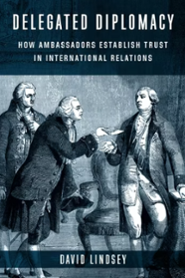
Why do states still need diplomats? Despite instantaneous electronic communication and rapid global travel, the importance of ambassadors and embassies has in many ways grown since the middle of the nineteenth century. However, in theories of international relations, diplomats are often neglected in favor of states or leaders, or they are dismissed as old-fashioned.
David Lindsey develops a new theory of diplomacy that illuminates why states find ambassadors indispensable to effective intergovernmental interaction. He argues that the primary diplomatic challenge countries face is not simply communication—it is credibility. Diplomats can often communicate credibly with their host countries even when their superiors cannot because diplomats spend time building the trust that is vital to cooperation. Using a combination of history, game theory, and statistical analysis, Lindsey explores the logic of delegating authority to diplomats. He argues that countries tend to appoint diplomats who are sympathetic to their host countries and share common interests with them. Ideal diplomats hold political preferences that fall in between those of their home country and their host country, and they are capable of balancing both sets of interests without embracing either point of view fully.
Delegated Diplomacy is based on a comprehensive dataset of more than 1,300 diplomatic biographies drawn from declassified intelligence records, as well as detailed case studies of the U.S. ambassadors to the United Kingdom and Germany before and during World War I. It provides a rich and insightful account of the theory and practice of diplomacy in international relations.
Katerina Antoniou, Tourism as a Form of International Relations: Insights from Contemporary Practice (Edward Elgar 2023)
This timely book introduces the tourist as a non-state actor on the international political stage. Discussing the ways in which tourism has enabled political dynamics to unfold and shape political affairs, Katerina Antoniou suggests how tourist activity can be used to foster inclusive and empowering political conduct, as well as suggestions on how it can support the UN’s Sustainable Development Goals.
Through a combination of theoretical and analytical models from both the fields of International Relations and Tourism, this book provides an analysis of how tourist activity shapes global political processes and phenomena, and adopts a post-disciplinary approach to the topics discussed. Chapters explore how contemporary tourist activity, driven by cosmopolitan values and cultural literacy, has the capacity to generate inclusive and sustainable development, shape dynamics in international security, and foster sustainable peace. The book further introduces four typologies of tourist-performed diplomacy, covering factors of state interests, global causes, intentional diplomatic activity, and coincidental diplomacy.
The blend of insightful case studies and theory will make this an invigorating read for tourism – particularly sustainable tourism – scholars, students, and practitioners. It will also be a critical book for International Relations academics as well as policymakers and international organization representatives looking for a deeper understanding of the inter-relationships between tourism and international relations.
Antonios M. Karvounis, City Diplomacy: An Introduction (Routledge 2024)
This book examines the theoretical, historical, and practical dimensions of how a city operates internationally. It explores the various approaches of the contentious term ‘city diplomacy’, its impact and follows examples throughout history, the origins of city diplomacy and its evolution through traditional town-twinning, city networks and smart cities. Cities have become important actors on the world stage, they have developed diplomatic apparatus, and play an important role in securing sustainable futures across a range of key global issues, including climate change, inclusive economic growth, poverty eradication, housing, infrastructure, basic services, productive employment, food security and public health. Practitioners along with scholars and students of political science, spatial planning, economic geography, international relations, and local government will find this an insightful, invaluable view of the subject.
Monika Szkarłat, Aleksandra Kuczyńska-Zonik, Wojciech Szczerbowicz, Damian Szacawa & Anna Moraczewska, Science Diplomacy and Foreign Policy in Northern Europe: Models, Frameworks, and Strategies (Routledge 2026)
This book analyses the foreign policy and science diplomacy models of 10 Northern European countries, focusing on the Baltic Sea and European Arctic regions.
Through a comparative, regionally grounded approach spanning post-Cold War developments to current geopolitical tensions, the volume analyses each country’s foreign policy framework alongside its science diplomacy model—covering normative foundations, institutional mechanisms, and strategic priorities. The book draws attention to how small and medium-sized states deploy science diplomacy not only as a tool of soft power and cooperation, but increasingly as a strategic resource in a competitive, security-conscious global environment. It goes beyond a mere examination of official documents and the activities of institutions and governmental bodies, particularly ministries of foreign affairs and science, responsible for shaping and implementing foreign and science policies. Rather, the study also takes into account the engagement of a broader and more diverse group of stakeholders. By integrating foreign policy analysis with science diplomacy models, the volume provides a comparative and policy-relevant perspective for understanding how scientific collaboration shapes international relations and regional governance.
This book will be of much interest to students of diplomacy studies, foreign policy, European politics and International Relations.
Jonathan Vickery, Stuart MacDonald & Nicholas J. Cull (eds.), Understanding Cultural Diplomacy and International Cultural Relations (Edward Elgar 2025)
This compelling book provides a comprehensive overview of cultural diplomacy, examining history, theory, practice and real world examples from an array of spheres and institutions. Leading scholars and practitioners discuss the role of culture within international affairs, exploring how it can be used as a channel for addressing foreign policy issues.
Organised into three parts, each of which investigate a different area of concern, chapters outline key theoretical approaches and historical developments, identify the mechanisms and practices through which cultural diplomacy is enacted and reflect on critical contemporary challenges. The book showcases case studies on a range of topics, including Australian sports diplomacy in the Pacific, cultural relations at the Venice Biennale and K-pop as a vehicle of Korean museum diplomacy. It further sheds light on crucial concepts such as ‘nation brand’ and ‘soft power’. Featuring expert contributors from across the globe, this definitive volume presents diverse insights into the rapidly evolving field of cultural diplomacy and relations.
Scholars and students of international relations, political science and public policy will greatly benefit from this illuminating book. With a broad scope covering education, sport, arts and media, it is also a helpful resource for policymakers and practitioners working in NGOs and government institutions, as well as creative producers, artists and community leaders.
Feminist Lenses on Global Affairs
Swati Parashar, J. Ann Tickner, Jacqui True (eds.), Revisiting Gendered States: Feminist Imaginings of the State in International Relations (OUP 2018)
State sovereignty and autonomy in the twenty-first century are both under challenge and continually reasserted in diverse ways through gender, sexuality, and race-making. This paradox makes it pertinent to revisit the idea of states as gendered political entities. Bringing together scholars from international relations and postcolonial and development studies, this volume collectively theorizes the modern state and its intricate relationship to security, identity politics, and gender. Drawing on postcolonial and critical feminist approaches, together with empirical case studies, contributors engage with the ontological foundations of the modern state and its capacity to adapt to the global and local contestations of its identity, histories, and purpose. They examine the various ways in which gender explains the construction and interplay of states in global politics today; and how states, be they neoliberal, postcolonial, or religious (or all three together), impact the everyday lives and security of their citizens. Such a rich array of feminist analyses of multiple kinds of states provides crucial insight into gender injustices in relatively stable states, but also into the political, economic, social, and cultural inequalities that produce violent conflicts threatening the sovereignty of some states and even leading to the creation of new states.
Carolina Leprince & Cassandra Steer, Women, Peace, and Security: Feminist Perspectives on International Security (McGill-Queen’s University Press, 2021)

Greater participation by women in peace negotiations, policy-making, and legal decision-making would have a lasting impact on conflict resolution, development, and the maintenance of peace in post-conflict zones. Women, Peace, and Security lays the groundwork for this enhanced participation, drawing from insightful research by women scholars and applying a feminist lens to contemporary security issues.
This timely collection of essays promotes the adoption of a feminist framework for international security issues and presents the voices of some of the most inspiring thinkers in feminist international relations in Canada. Women, Peace, and Security provides insightful recommendations to researchers conducting fieldwork, as well as methodological insights on how to develop feminist research design in international relations and how to adopt feminist ethical considerations. Contributions include gender-based analyses of the challenges faced by the Canadian military and by families of serving members. From Canada's Famous Five to the women's marches of 2017, lessons are drawn to inform new generations of women activists, concluding with a clarion call for greater allyship with Indigenous women and girls to support decolonization efforts in Canada.
Offering a unique range of perspectives, narratives, and contributions to international relations and international law, this volume brings women's voices to the forefront of vital conversations about fundamental peace and security challenges.
Jill Campbell-Miller, Greg Donaghy, and Stacey Barker (editors), Breaking Barriers, Shaping Worlds: Canadian Women and the Search for Global Order (UBC Press)
Where are the women? Breaking Barriers, Shaping Worlds answers this question in a comprehensive exploration of the role of women in twentieth-century Canadian international affairs. Foreign policy historians have traditionally focused on powerful men. Though hidden, forgotten, or ignored, women – in paid or unpaid positions, in public or private spheres – have also shaped Canada’s relations with the world over the past century. They can be found not only on the margins of traditional diplomacy, as political and community activists, missionaries, or aid workers, but also at its centre, as diplomatic spouses or as diplomats themselves.
Patricia Owens and Katharina Rietzler (eds.), Women’s International Thought: A New History (Cambridge University Press)
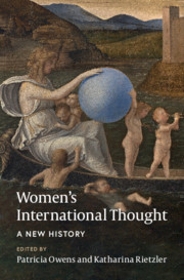
This book is the first cross-disciplinary history of women's international thought. Bringing together some of the foremost historians and scholars of international relations working today, this book recovers and analyses the path-breaking work of eighteen leading thinkers of international politics from the early to mid-twentieth century. Recovering and analyzing this important work, the essays offer revisionist accounts of IR's intellectual and disciplinary history and expand the locations, genres, and practices of international thinking. Systematically structured, and focusing in particular on Black diasporic, Anglo-American, and European historical women, it does more than 'add women' to the existing intellectual and disciplinary histories from which they were erased. Instead, it raises fundamental questions about which kinds of subjects and what kind of thinking constitutes international thought, opening new vistas to scholars and students of international history and theory, intellectual history and women's and gender studies.
Maria Stern and Ann E. Towns (eds.), Feminist IR in Europe: Knowledge Production in Academic Institutions (Palgrave Macmillan)
The aim of this book is to take stock of, critically engage, and celebrate feminist IR scholarship produced in Europe. Organized thematically, the volume highlights a wealth of excellent scholarship, while also focusing on the politics of location and the international political economy of feminist knowledge production. Who are some of the central feminist scholars located in Europe? How might the concentration of these scholars in Northern Europe and the UK shape the contents of their scholarship? What have some of the main contributions been, in the study of the following themes: security; war and military; peace; migration; international political economy and development; foreign policy; diplomacy; and global governance and international organizations? The volume offers both an intellectual history and a sociology of feminist IR scholarship in Europe. It showcases the vitality and breadth of feminist IR traditions, while simultaneously calling attention to their partial nature, exclusions and silences.
Elise Carlson Rainer, From Pariah to Priority: How LGBTI Rights Became a Pillar of American and Swedish Foreign Policy (SUNY Press)

From Pariah to Priority gives a unique insider perspective that explains the unexpected incorporation of LGBTI rights into the United States and Swedish foreign policies. From original data case study analysis and interviews with high-level officials within the State Department Swedish Foreign Ministry and international institutions former diplomat Elise Carlson Rainer provides insights from leaders responsible for shaping emerging global LGBTI policies. The research findings highlight the advocacy process of reforming US and Swedish foreign policy priorities to include LGBTI rights shedding light on how normative values evolve in foreign affairs. The book examines Sweden as the first country to implement a feminist foreign policy and commence formal LGBTI diplomacy. Through this lens Rainer contextualizes the diplomatic precedent of revamping foreign assistance to Uganda when lawmakers there proposed a death penalty law for homosexuality. Scrutinizing effective tactics for advocacy to influence foreign policy From Pariah to Priority explores not only current debates in the area of gender and sexuality in foreign affairs but also offers pragmatic policy recommendations for civil society organizations foreign policy leaders and human rights practitioners.
Perspectives from the Global Majority
Efe Sevin, César Jiménez-Martínez & Pablo Miño, Nation Branding in the Americas: Contested Politics and Identities (Routledge 2025)

Nation Branding in the Americas: Contested Politics and Identities provides an overview of nation branding in the Americas, an often neglected continent(s) in debates about the creation, dissemination and management of national images.
Drawing on insights from promotional cultures, nationalism, geopolitics, media and communication, as well as their own research, the authors look at national promotion experiences in twelve countries - Canada, the United States, Mexico, Costa Rica, Colombia, Ecuador, Peru, Bolivia, Brazil, Uruguay, Argentina and Chile - , examining how these cases relate to broader challenges and commonalities, such as the relationship between nation branding and stereotypes, invisibility, heritage or internal contradictions.
Nation Branding in the Americas: Contested Politics and Identities is an important contribution to the study of practices and concepts such as nation branding, public diplomacy, soft power, and strategic communication. It highlights the multifaceted nature of nation branding, and how this can be used to perpetuate local and global hierarchies, legitimize the agendas of specific governments, and discipline the inhabitants of a nation, but also become a venue for people to negotiate and communicate the kind of society they want to be. The book will therefore be of interest for undergraduate, postgraduate, and doctoral students specialized in marketing, media and communication, and international relations. It will also appeal to professionals in public diplomacy, strategic communication, public relations, and branding, offering a broad overview to the practice and discussion of national promotion in an increasingly contested and cacophonic global communication environment.
Kira Huju, Cosmopolitan Elites: Indian Diplomats and the Social Hierarchies of Global Order (Oxford 2023)
Cosmopolitan Elites narrates the birth, everyday life, and fracturing of a Western-dominated global order from its margins. It offers a critical sociological examination of the elite Indian Foreign Service and its members, many of whom were present at the founding of this order. Kira Huju explores how these diplomats set out to remake the service in the name of a radically anti-colonial global subaltern, but often ended up seeking status within its hierarchies through social mimicry of its most powerful actors. This is a book about the struggles of belonging: it revisits what it takes to be a recognized member of international society and asks what the experience of historically marginalized actors inside the diplomatic club can tell us about the evident woes of global order today. In interrogating how Indian diplomats learned to live under a Westernized world order, it also offers a sociologically grounded reading of what might happen in spaces like India as the world transitions past Western domination.
An awkward balancing act animates the order-making of India's cosmopolitan diplomats: despite a genuine desire to strive toward a postcolonial world founded on diversity, difference, and the symbolic representation of a global subaltern, there is a strong sense of a lingering caricature-like notion of a white, European-dominated homogenous club, to which Indian diplomats feel a deep-rooted and colonially embedded desire to belong. Cosmopolitanism operates inside this balancing act not as an international ethic upholding an equal, tolerant, or liberal global order, but rather as an elite aesthetic which presumes cultural compliance, diplomatic accommodation, and social assimilation into Western mores.
Based on 85 interviews with Indian diplomats, politicians, and foreign policy experts, as well as archival work in New Delhi, the book asks what the experience of historically marginalized actors inside the diplomatic club tells us about the social hierarchies of race, class, religion, gender, and caste under global order.
Christopher Tounsel, Bounds of Blackness: African Americans, Sudan, and the Politics of Solidarity (Cornell 2024)

Bounds of Blackness explores the history of Black America's intellectual and cultural engagement with the modern state of Sudan. Ancient Sudan occupies a central place in the Black American imaginary as an exemplar of Black glory, pride, and civilization, while contemporary Sudan, often categorized as part of "Arab Africa" rather than "Black Africa," is often sidelined and overlooked. In this pathbreaking book, Christopher Tounsel unpacks the vacillating approaches of Black Americans to the Sudanese state and its multiethnic populace through periods defined by colonialism, postcolonial civil wars, genocide in Darfur, and South Sudanese independence. By exploring the work of African American intellectuals, diplomats, organizations, and media outlets, Tounsel shows how this transnational relationship reflects the robust yet capricious terms of racial consciousness in the African Diaspora.
Ekaterina Kosevich, Extra-regional Power in Latin America in the 21st Century (Brill 2025)
Latin America and the Caribbean (LAC) is a unique region, with a sharply changing political and ideological orientation from a “left turn” to a “right curve", which means it is difficult to build stable and predictable international relations with the region. At the beginning of the 21st century, we witnessed a sharp increase in interest in LAC from extra-regional powers that, due to historical, cultural, and geographical factors, traditionally did not have strong ties with the region.
The 2020s is a time of competitive and systemic rivalry, when the value of each individual partnership, union, or alliance is increasing. In this regard, this wave of interest in LAC is not caused by a desire to expand trade and investment presence, but by the desire of new actors in the Americas to use the region to gain greater global geopolitical influence. This book addresses the question: What role do extra-regional actors—the US, China, the EU, and Russia—play in the new system of international relations formed in LAC at the beginning of the 21st century? Ultimately, the book opens up a new multilateral perspective on the role and place of LAC in global processes in the context of the interaction and confrontation between the worldviews of the West and the non-West.