
Papyrological Institute
Not just Greek
Hieratic, Demotic, Latin and Coptic.
Most texts in the collection of the Leids Papyrologisch Instituut are in Greek, apart from texts in ancient Egyptian (Hieratic, Demotic and Coptic) and Latin. After the conquest of Egypt by Alexander the Great in 332/331 BCE Egypt was ruled by a Greek administration. The indigenous population continued to use Demotic in daily life, even though Greek was increasingly used to write official and legal documents. Egypt became a Roman province in 30 BCE, but Greek remained the most popular language for writing. This explains why most papyri found in Egypt are in Greek.
Papyrology covers a number of languages: Greek (including Latin), Demotic, Coptic and Arabic. In ancient Egypt these languages were often used side by side. Under the Ptolemies people spoke and wrote both Greek and Egyptian (Demotic), during the Roman period Greek, Latin and Egyptian (Demotic, later evolving into Coptic) were used, and Greek continued to be popular for some time under Arab rule, apart from Arabic and – until today – Coptic. For this reason papyrologists study papyri in these languages in context.
Ancient Egyptian comprises various types of writing. It is generally written from right to left (except Coptic). The oldest script – Hieroglyphs – is a pictorial script, which is beautiful to the eye of the beholder, but somewhat unpractical in daily life. That is why early in history the Egyptian scribes devised a more cursive script, Hieratic (literally ‘sacred writing’). From c. 650 onwards Hieratic developed into an even more cursive script for office use, namely Demotic.
Hieratic. 3rd-2nd cent. BCE
Click here for a larger image.

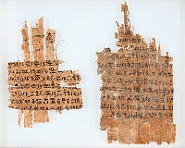
Fragments with Hieratic writing. This text comes from the same mummy cartonnage as, a.o., inv. 1002, meaning that it may be dated to the 2nd century BCE. [unpublished; publication rights reserved]
Demotic. 2nd cent. BCE
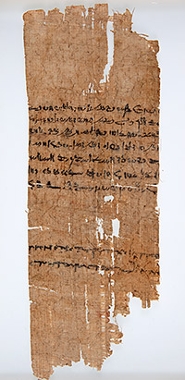
Fragment of a broad Demotic notary contract. This contract – cut on the left and right – is about the sale of a house. The Demotic text is on top. Below is a Greek docket, written with an Egyptian brush. [unpublished; publication rights reserved]
Click here for a larger image.
Latin. 48 AD
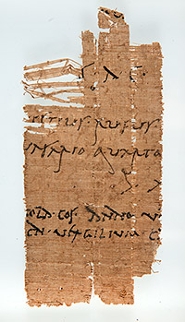
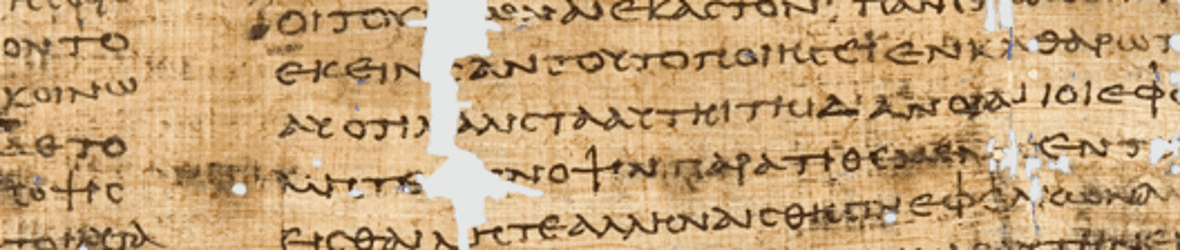
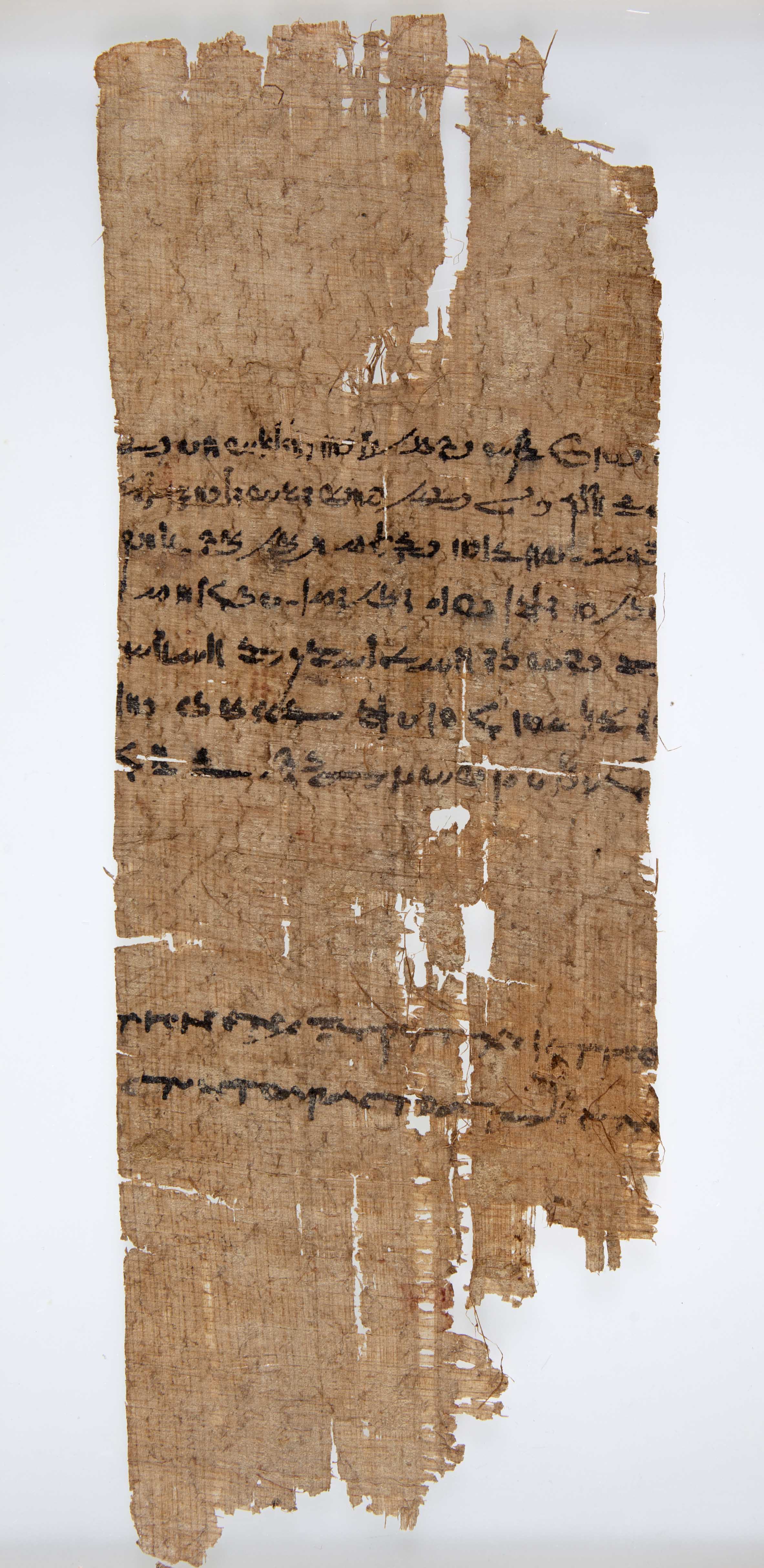
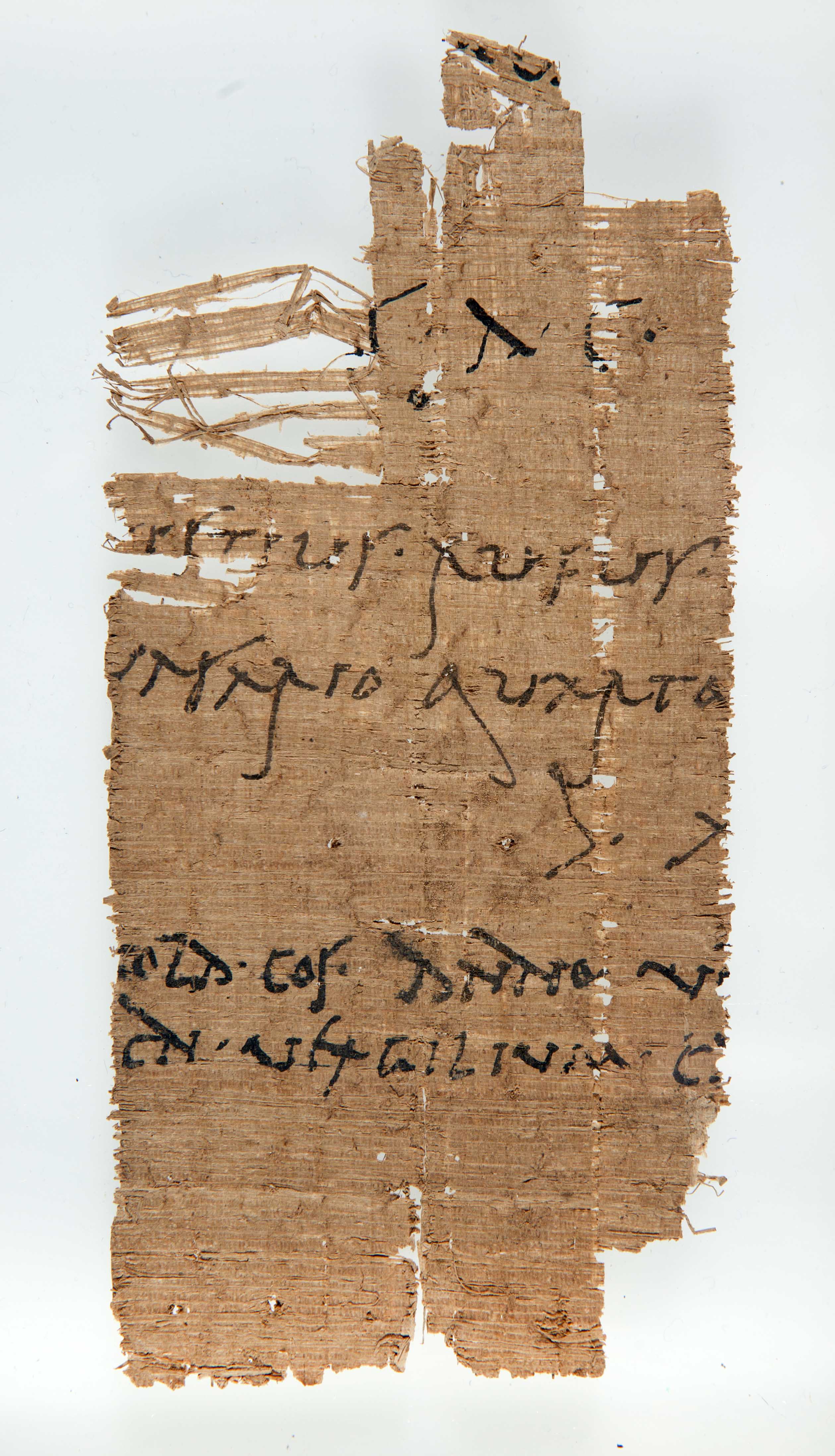
After the victory of Octavianus Augustus over Cleopatra, turning Egypt into part of the Roman empire, Greek remained the language used by the official administration, which explains why only few Latin papyri have been found in Egypt. This fragmentary text probably deals with the use of a warehouse by the military. Lines 6-7 provide us with a clue to the dating. They mention Lucius Vipstanus Poplicola, who became consul in 48 AD, and Gnaius Vergilius Capito, who was prefect in Egypt between 48-52 AD.
6. POPLI]C̣OLA・COS・ANNO・VI[II
7. ]CN・VERGILIVM・CẠ[
Click here for the Latin text in the DDbDP.
Click here for a larger image.
Coptic. 7th-8th cent.
Click here for a larger image.
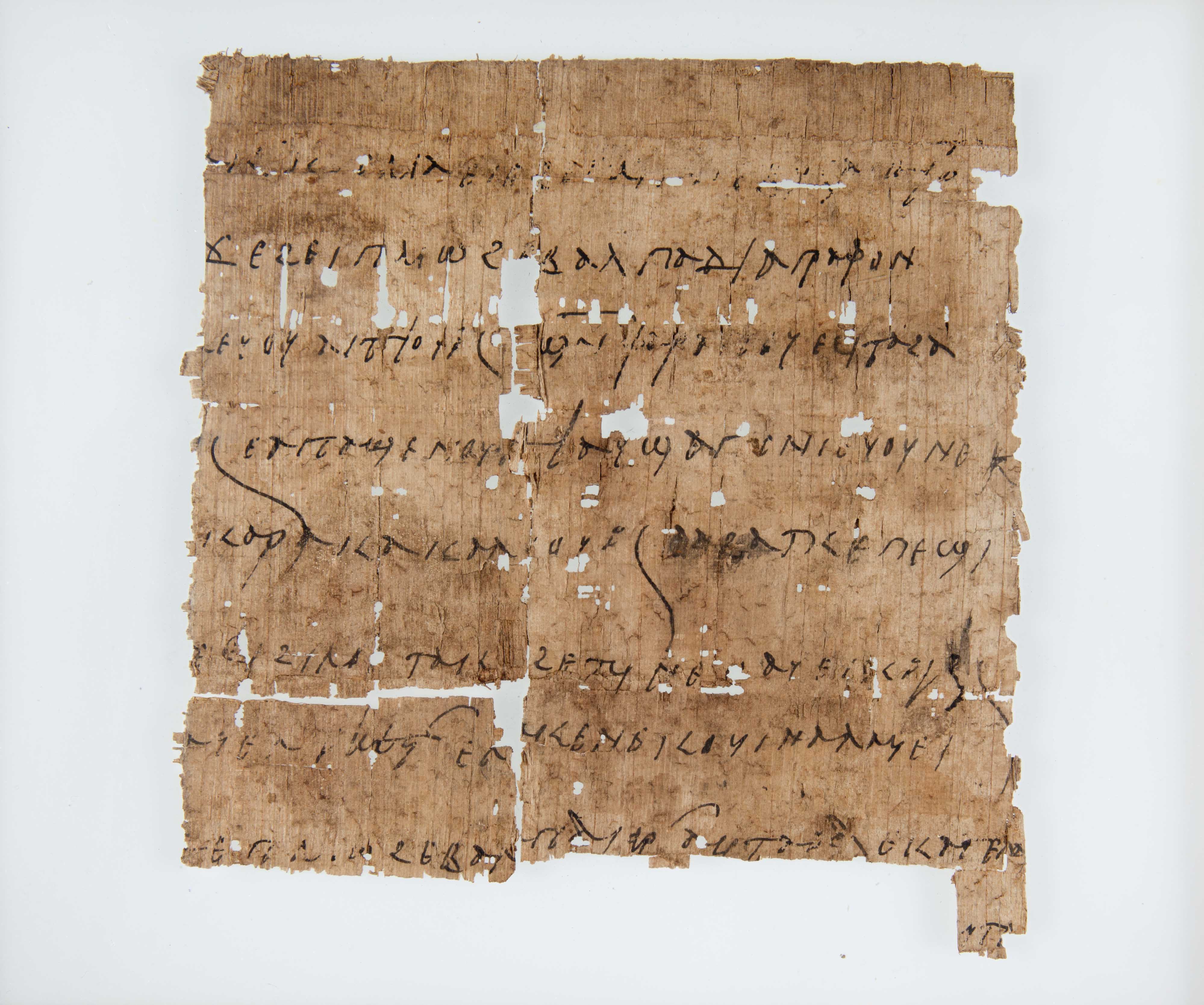
Coptic refers to both the language and the script of the Egyptians from the 4th century AD onwards, also containing many Greek loan words. The script is a variant of Greek, supplemented by several special signs from Demotic. In this tax receipt the following Demotic signs can be recognised:
Ϩ hori ‘h’
Ϣ shai ‘sj’
Ϥ fai ‘f’
Ϫ djandja ‘dj’
[unpublished]