
Papyrological Institute
Magic, religion, superstition
Magic, religion and superstition were closely related in Antiquity. In this section we combined a drawing of a temple, a list of gods, magic, horoscopes, amulets and Christian texts.
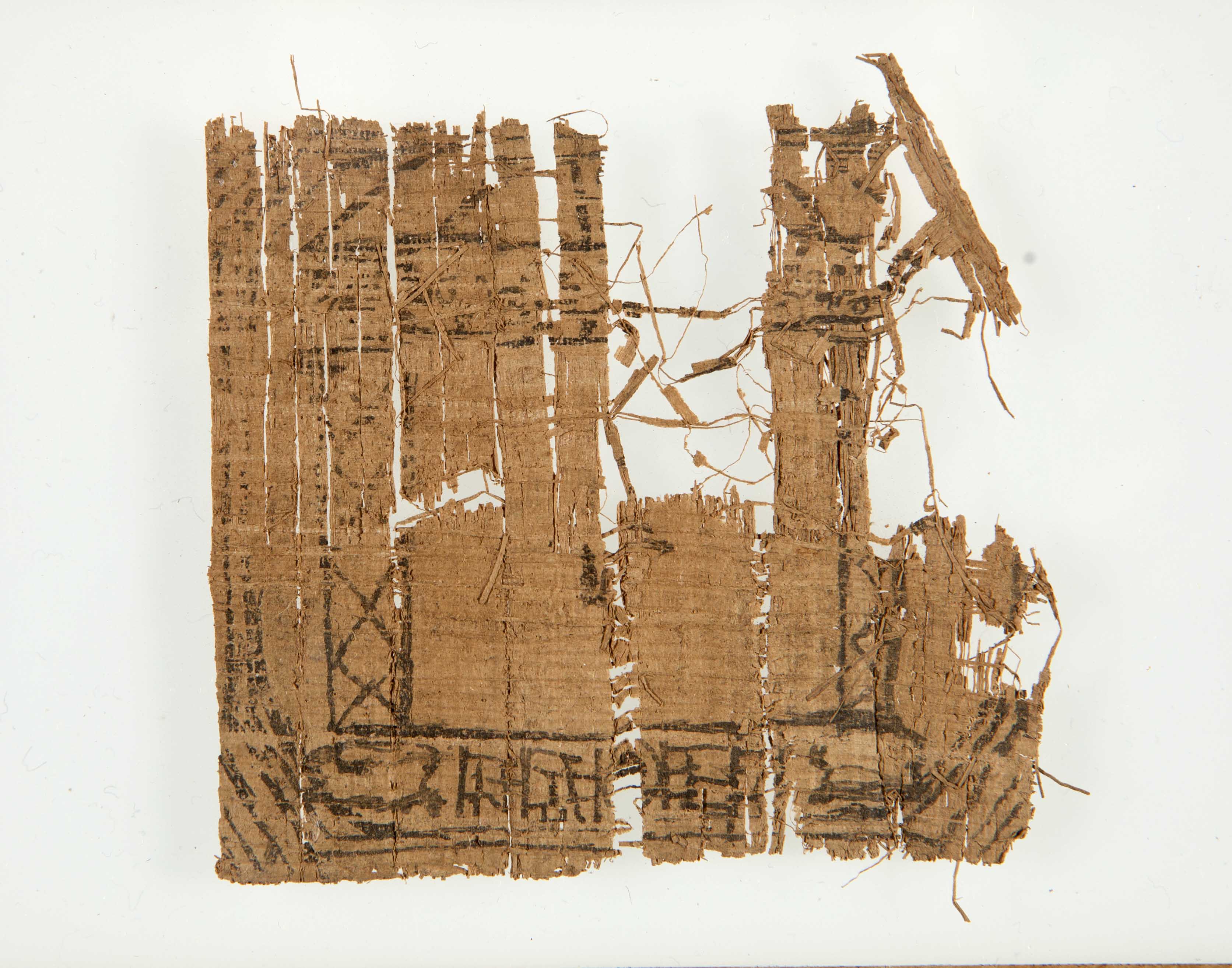
Drawing of a temple? Graeco-Roman period
Papyrus fragment from Egypt, possibly depicting a temple. Two columns, a freeze and a dromos (access to temple) can be seen.
Click here for information in LDAB.
Click here for larger image.
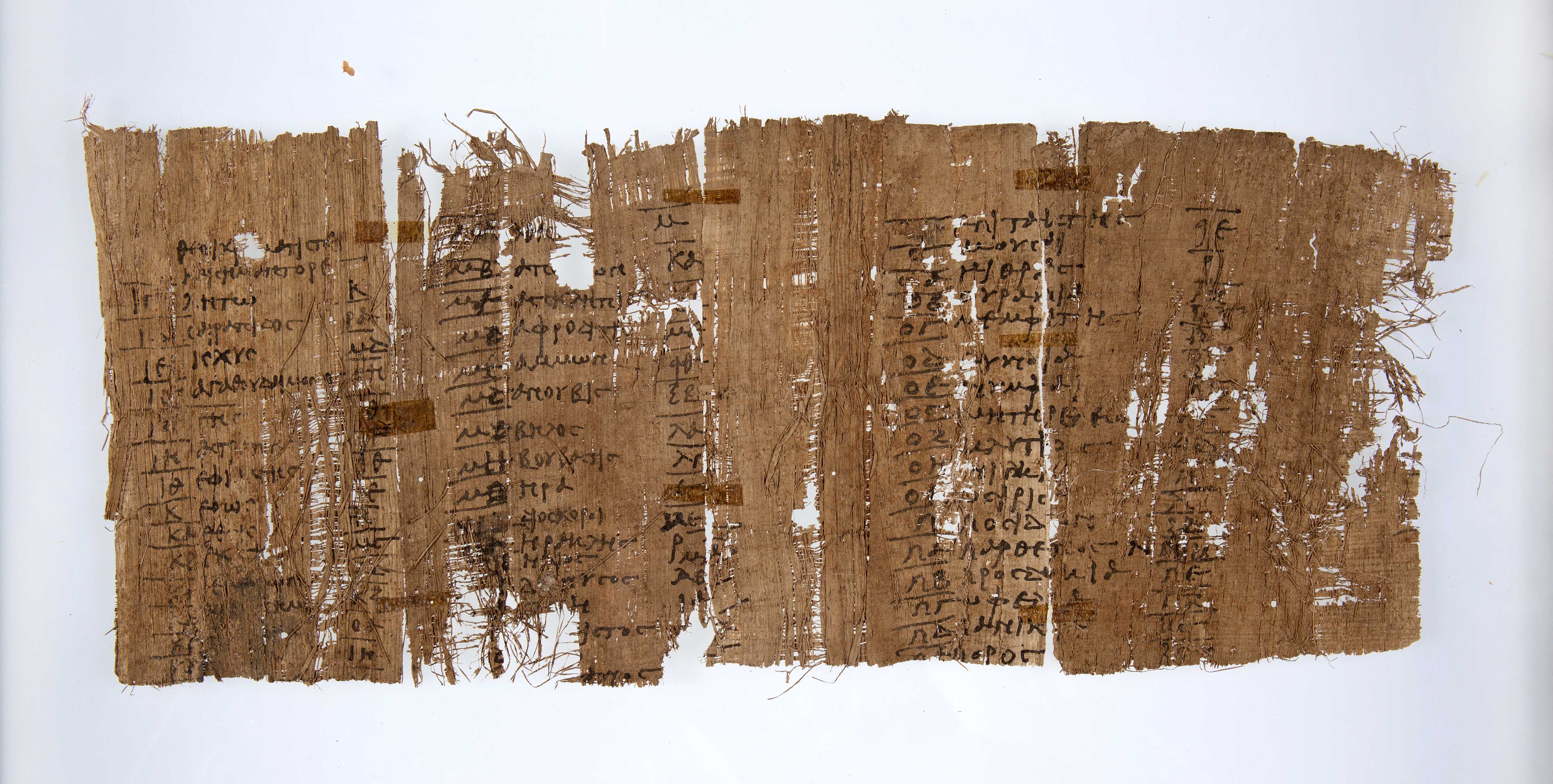
List of divine names from an oracle book. 3rd cent. AD
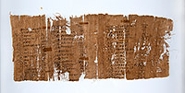
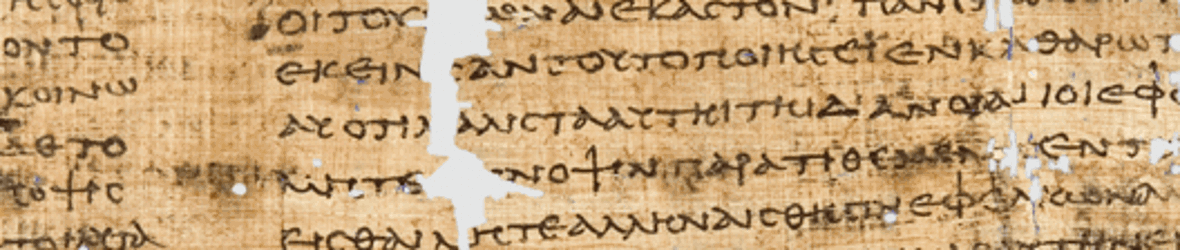
This list of divine names was used as a concordance with an oracle book, the so-called Oracle of Astrampsychos. It was used to match a (numbered) question with the (numbered) answer. The Greek letters (each with two little lines above) before and after the divine name are the numbers in question. The list – more or less ordered according to the alphabet – is titled Θεοὶ χρηματισταὶ καὶ σημάντορες: ‘Gods who give oracles and signs’.
Click here for information in LDAB.
Click here for larger image.
Horoscopes and magical texts. 3rd cent. AD
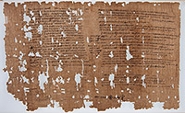
This is probably a private collection of magical texts on a single papyrus. The front contains a love spell, and spells to summon and send away the god. There is also a method to calculate whether someone has already died or is still alive.
Translation of recto column II: This is an example of a so-called φιαλο- or λεκανομαντεία, “dish-divining”. First comes the incantation, then follow the other instructions. The magician operates with a dish or cup filled with olive-oil and some other ingredients; the man himself or rather his boy assistant are expected to see phantoms on the shining surface of the oil.
‘”Come to me, god of gods, manifestation from fire and spirit, who alone wearest truth on thy head, who cleavest the darkness, lord of spirits, (magic words). Hail lord (magic words)”. Say this many times. And if as you proceed, the phantom delays: “Open, heaven; open, Olympus; open, Hades; open, abyss; let the darkness be divided at the command of the most high god and let the sacred light come forth from the infinite into the abyss”.
If it again delays, speak thus again aloud, enchanting the boy: “(Magic words). Approach, o lord god; hail, sacred light; hail, eye of the world; hail, ray of dawn upon the world; and give me an answer concerning the things I beg of thee”. And ask what you wish.
Release: “ I thank you that you have come at the god’s command. I beg you to keep me whole, unaffrighted, un-spectre-stuck (magic words). Betake yourselves to your hallowed seats”.
With a cup, into which you put a cotyle of good oil, and which you place on a brick; and you shall inscribe these characters on a live magnet stone. These characters are made [probably refers to the characters written at the foot of the column]. And you shall set the stone outside on the left of the cup and, grasping it with both hands, recite as it was explained to you. Throw the magnet into the cup. Plunge in it the afterbirth of a bitch called White, viz. of a pup white when born, or a --- membrane (?). And write with myrrh on the boy’s breast “Karbaoth”.’
Click here for information in LDAB.
Click here for larger image.

Click here for larger image.
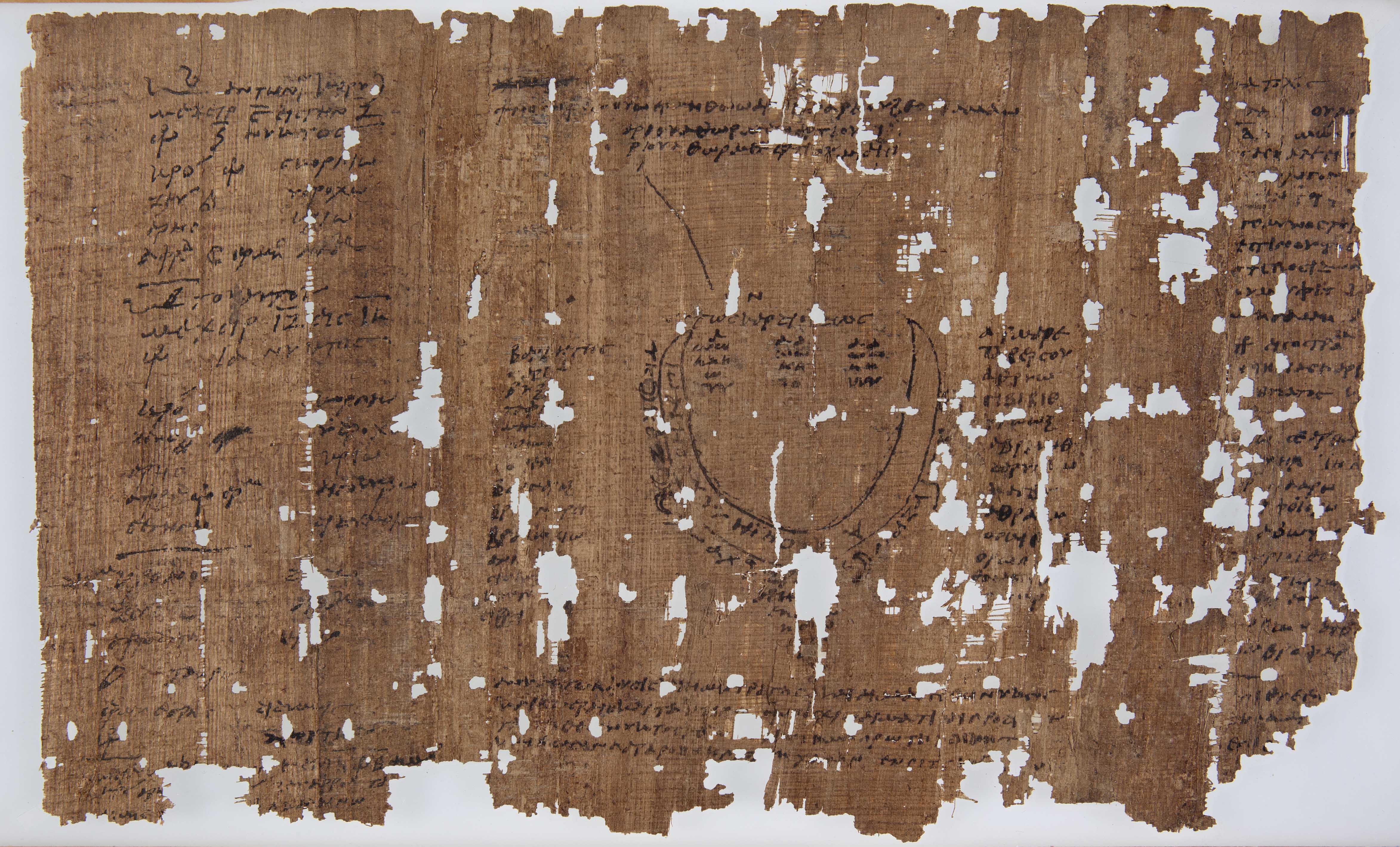
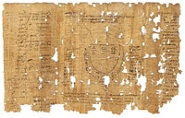
The back contains four birth horoscopes, a curse against a woman, magical spells and a drawing. The third column (broken away) started with a new spell.
Column I: Birth-horoscopes of 4 persons, born 1 February 219, 12 February 219, 12 or 13 May 217 and 2 July, 244 AD respectively:
‘2nd year of Antoninus the <sexually tinted nickname>, Mecheir 6th to 7th, 7th hour of the night:
Saturn, ascendant in Scorpio
Jupiter, Sun in Aquarius
Mars in Aries
Venus, Moon, Mercury in Capricorn
2nd year of the same, Mecheir 17th to 18th, 11th hour of the night:
Saturn in Scorpio
Jupiter, Sun in Aquarius
Mars in Aries
Venus, ascendant, Mercury in Capricorn
Moon in Gemini
Didymos:
Saturn in Libra
Jupiter, Moon in Capricorn
Venus in Aries
Sun in Taurus
Mercury, Mars in Gemini
ascendant in Leo
Dionysia, 1st year of Philippus, Epeiph 8th, 2nd hour of the day:
Saturn, Mars in Virgo
Jupiter, Venus in Gemini
ascendant, Sun in Cancer
Moon in Libra’
Love spell on lead. Provenance unknown, 3rd-4th cent. AD
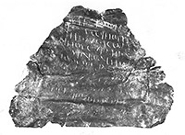
In antiquity people liked to use lead for magical texts. These are mostly curses, but sometimes also love spells, such as this one. The lead plates were left behind in graves and pits and the assumption was that this way they would find their way to the underworld. This piece shows spells and magical letters spurring on the gods to perform a rather difficult task:
(l. 10-13) ‘Bring Termoutis, born by Sophia, to Zoel, born by Droser, with burning, irresistible and undying love; quickly, hurry!’
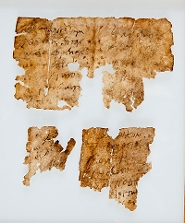
Minicodex with LXX Psalm 90. 5th cent. AD

Parchment, which was invented in Pergamum (hence the name) in the 2nd cent. BCE, is made of animal skin. It was stronger than papyrus, but also more expensive. The text of Psalm 90 was written in a tiny booklet (folded 6 x 5 cm), which may have been used as an amulet.
Click here for information in LDAB.
Click here for larger image.

Click here for larger image.
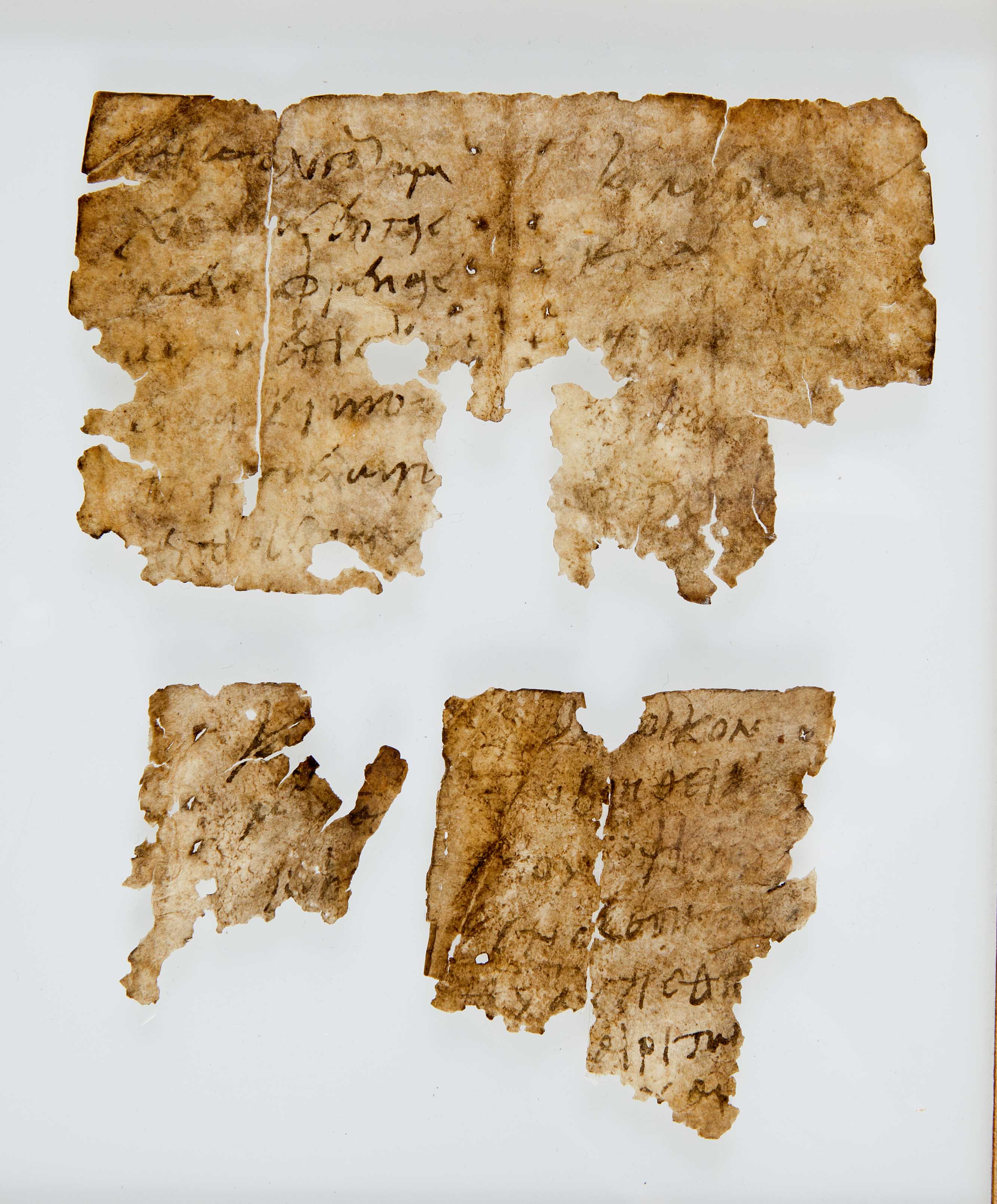
This is the other, 'flesh-side'of the parchments.
Amulet with Christian creed. 6th cent. AD
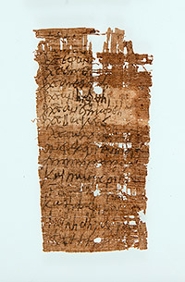
In antiquity the Christian faith often walked hand in hand with pagan magical beliefs. The use of amulets was a very ancient pagan custom. It was tolerated by the Church because of its widespread popularity.
‘† † † † [† † †]
† Christ was proclaimed in advance
† Christ appeared
† C hrist suffered
† Christ died
† Christ was raised
† Christ was taken up
† Christ reigns
Christ saves Vibius, whom Gennaia bore, from all fever and from all shivering, daily, quotidian, now now, quickly quickly.† † † † † † †’
Click here for information in LDAB.
Click here for Greek text and translation in DDbDP.
Click here for larger image.
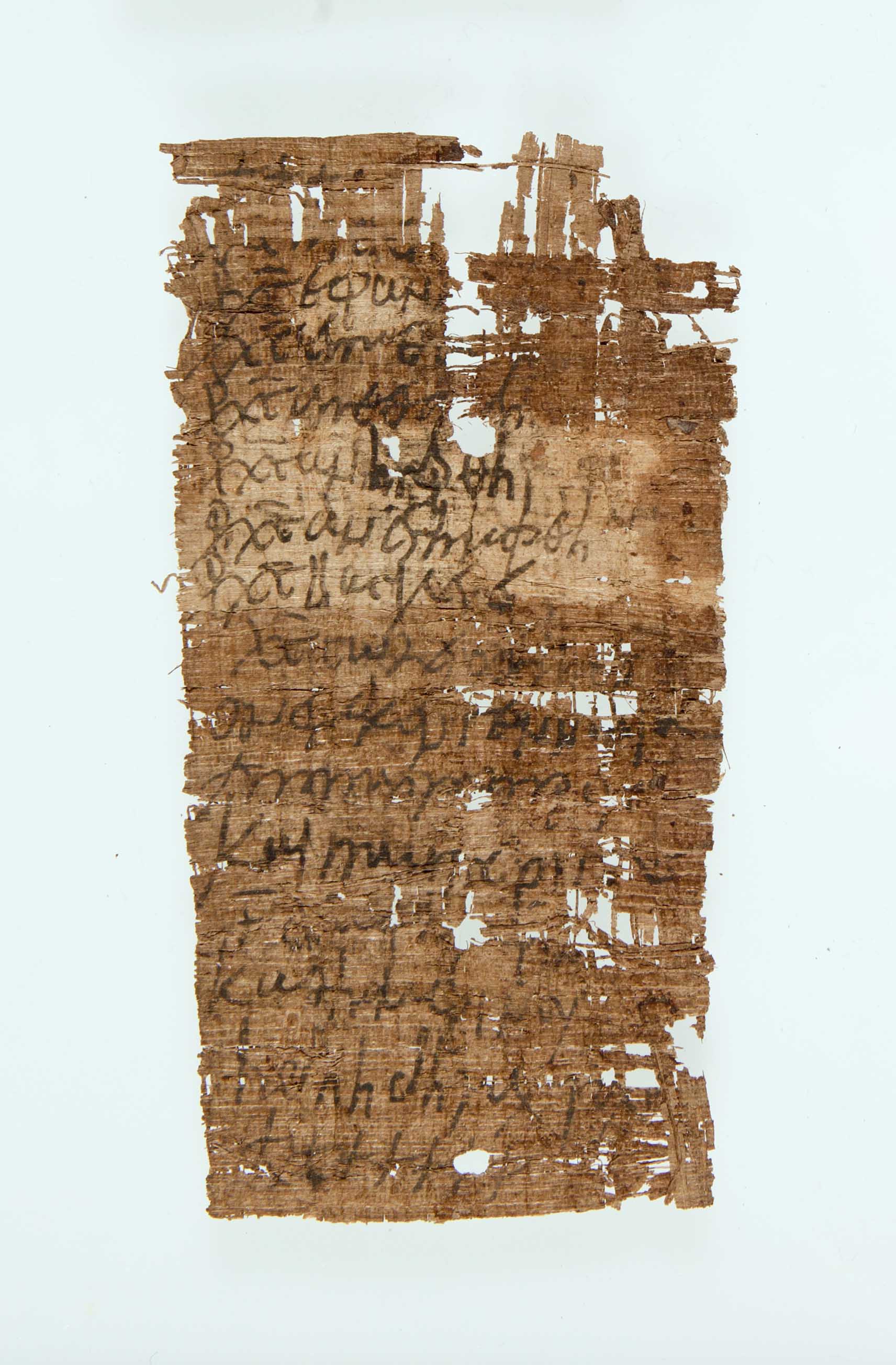
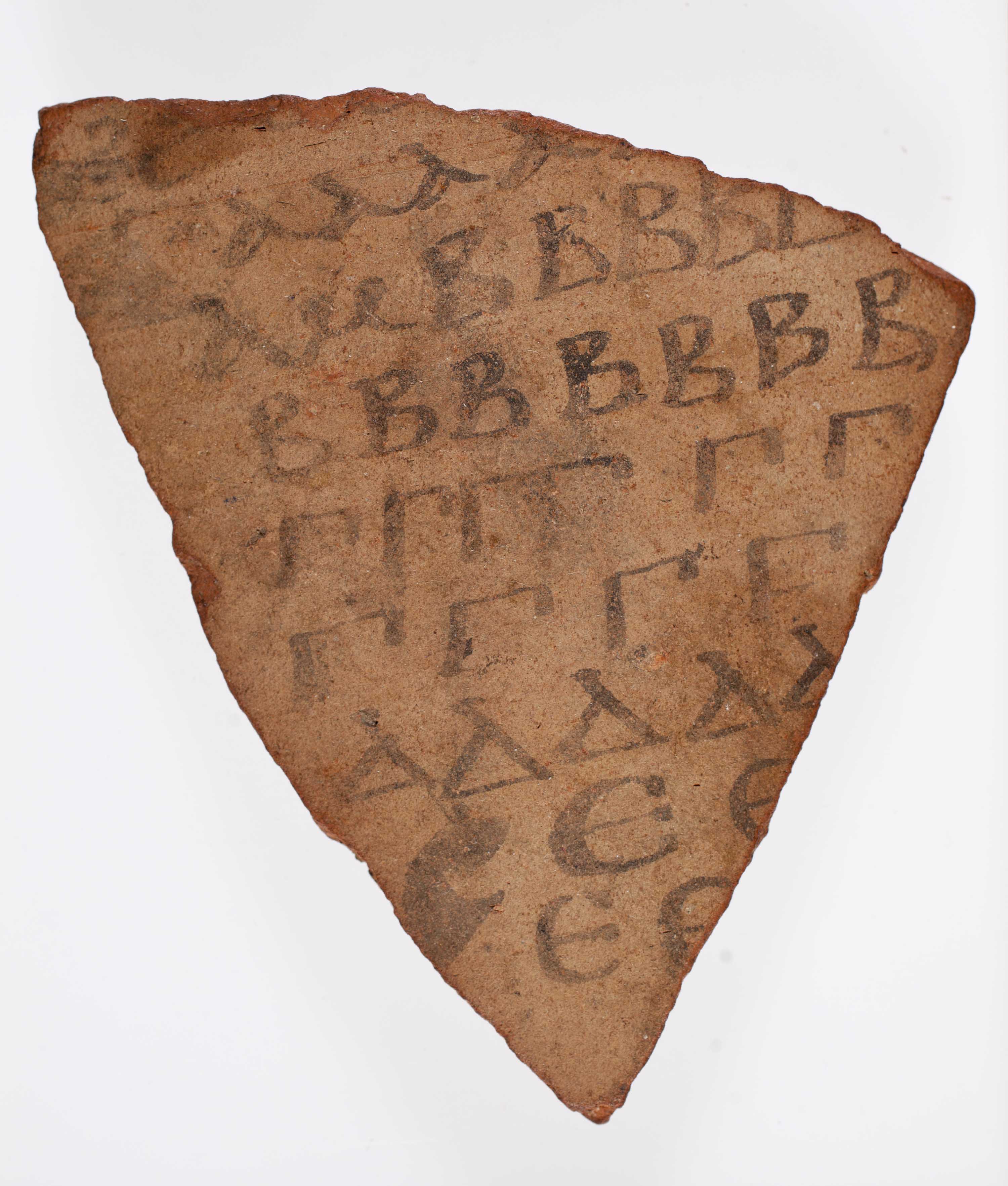
Writing exercise. Deir el-Gizaz, 6th-7th cent. AD
A Coptic monk used this shard to practise the alphabet. It is clear that he was a trained scribe, but here he is trying out the so-called Bible majuscule. Another part of this same exercise was found (during an excavation in the monastery of Apa Samuel in the nineties) that fits exactly to the Leiden piece. The erroneous mu in between the alphas and betas (a hearing mistake) and the lapsus calami at the beginning of the row of epsilons are remarkable.
Click here for information in LDAB.
Click here for larger image.
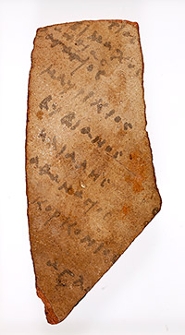
The forty martyrs of Sebasteia. 7th-8th cent. AD
Click here for information in LDAB.
Click here for larger image.
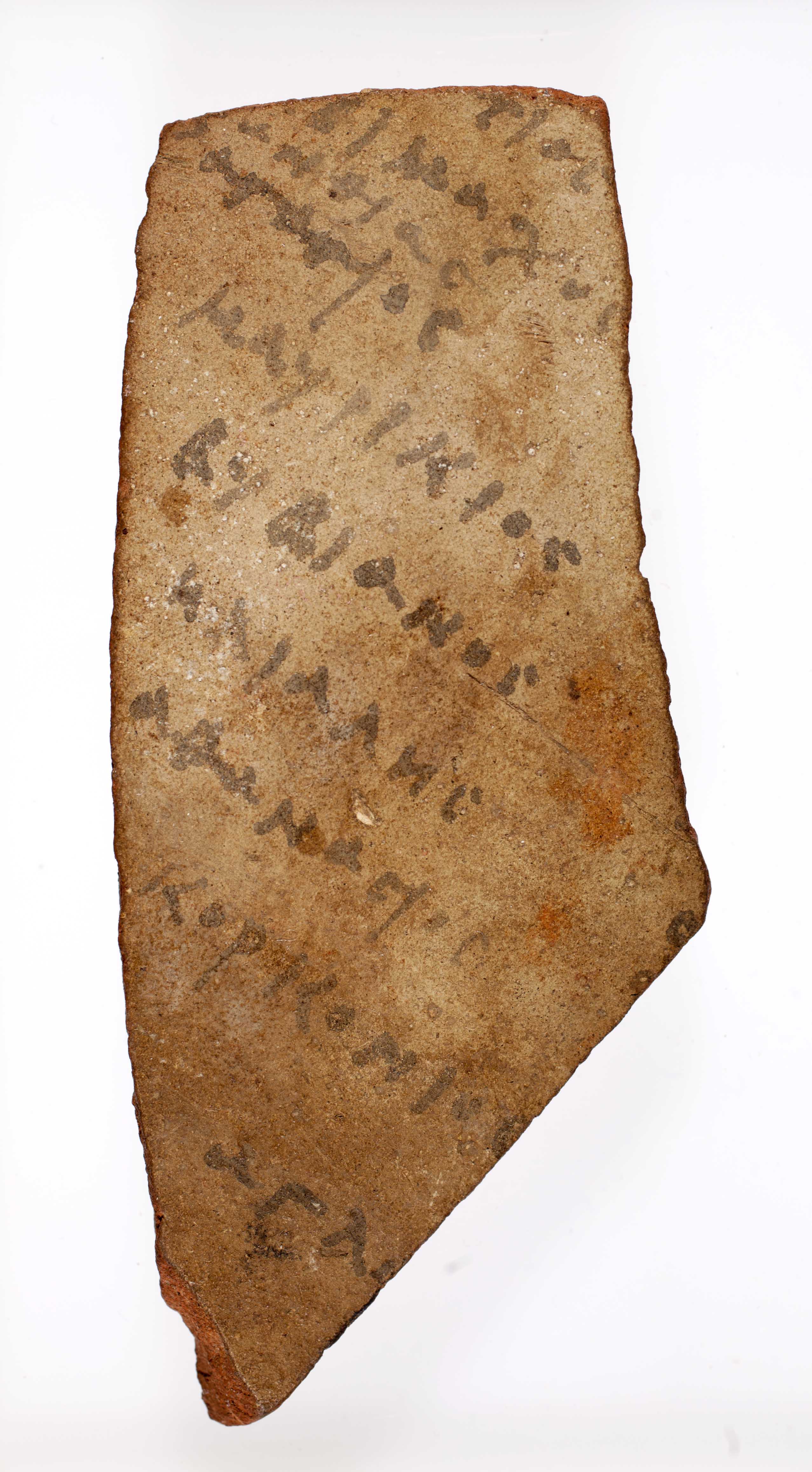
Part of the list of names of the forty martyrs of Sebasteia. According to tradition these were soldiers of a Roman legion (Legio XII Fulminata) who died as martyrs near the Armenian city of Sebasteia in the era of Licinius. The names that we can read are: Leontios, Lesimachos, Xanthias, Agagios, Maurikios, Bybianos, Heliales, Athanasios, Korkonios and Aglaios.