Week 7: 15-21 February 2026
This week started with a day full of excursions to Coptic Cairo. At 10.30 am, we arrived at the Coptic Museum. The building in which the museum is located is as beautiful as the collection itself. Most of the artefacts in the museum were gifted by the Coptic community or came from the Egyptian Museum in Cairo. Almost next to the Coptic Museum is the Hanging Church. This was buzzing with tourists, so we just followed the stream through the church. Its name comes from its position above the gatehouse of the Roman-period Babylon Fortress, which lies approximately 6m lower than the church.
The National Museum of Egyptian Civilization (NMEC) was our last stop of today, but definitely not the least. The NMEC has an amazing collection and a nice, structured layout. The underground network, where the mummies of the Royal Cache are located, is intimate and serene. It recreates the atmosphere of their original tombs.
The next day was more relaxed, as the only obligation was giving our progress reports. This consisted of a short five-minute presentation on the progress of our papers. We had to present our research question, our object, basic information on our object, the layout of our paper, our most-used sources, and any possible conclusions. Afterwards, everyone asked questions which helped us see our paper through a different lens. Thankfully, we still have time to work on our papers, but the deadline is coming closer!

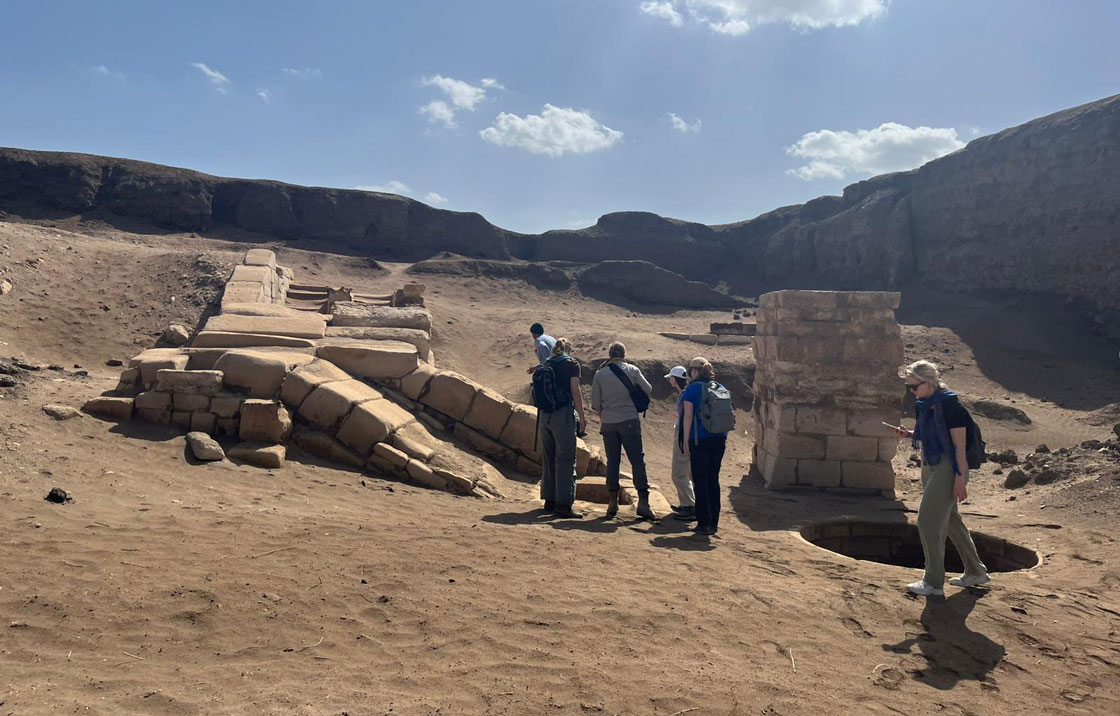
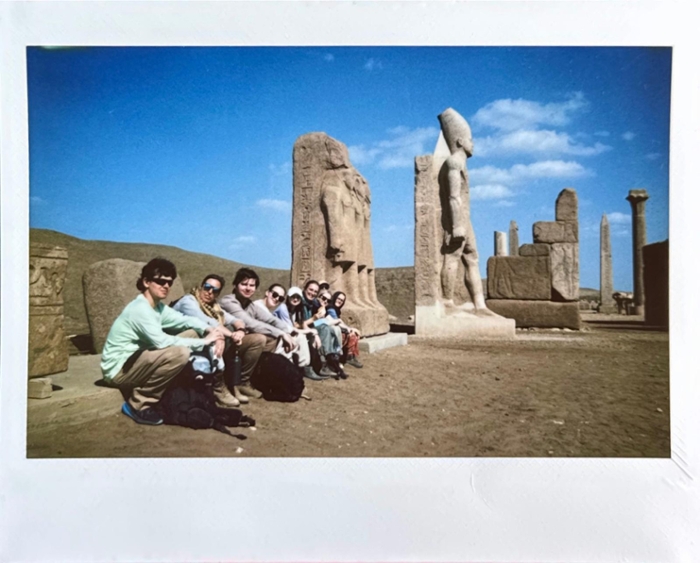
On Tuesday, we spent most of the time on the bus (six hours in total) and two hours on site. The site in question was Tanis! One of the not-so-many temple sites still preserved in the Delta of Egypt. The site consists of many temples, a sacred lake, royal tombs of the 21st and 22nd dynasties, and a settlement area. The temples are not well preserved. Most of it is just blocks, but some of the material is re-erected. A lot is gone because the stones were reused which makes it difficult to reconstruct the temples with the limited material left.
The royal tombs are better preserved, and we had a very interesting site presentation from Lenneke on this topic! There are seven royal tombs found from the 21st and 22nd Dynasties, labelled NRT1 to NRT7. NRT3 is a special one with five chambers and multiple coffins found inside, undisturbed. Lots of silver was found in this tomb, even silver sarcophagi! That is why these kings were also called the silver pharaohs. Unfortunately, we could not enter the tombs.

Wednesday was our first free day of the week, which we mostly spent working on our paper. Some of us went to the NVIC to look for sources, and some stayed at the apartment. After lunch, we headed to Sufi’s, our usual spot to work. The women working there already know our order.

On Thursday, we had our last official trip of this semester, to the Fayoum. We visited Karanis, where Freya gave us an interesting talk about the South and North Temples. She guided us through the big site as if she had done this many times. Ariel gave us some more information on the settlement that surrounds the temples.

Our very last site of this semester was the Qasr Qarun temple. A beautiful Ptolemaic temple from the outside, but a maze on the inside with all its chambers and secret tunnels. We finished our last day trip with lunch at the Ibis restaurant (they have amazing pizza and apple crumble) and visited the local pottery workshop, where some of us bought a lot of beautiful handmade pieces.

On Friday, we had our second free day. Some of us, restless as we are, decided to use this free day to visit the Gayer Anderson Museum and the Ibn Tulun Mosque. We could walk on the roof of the mosque and climb the minaret, which gave us a beautiful view of Cairo! The rest of the day was used to study, and in the evening, we had a nice dinner with the group at an Indian restaurant.

Luna Toye