Week 6: 8-14 February 2026
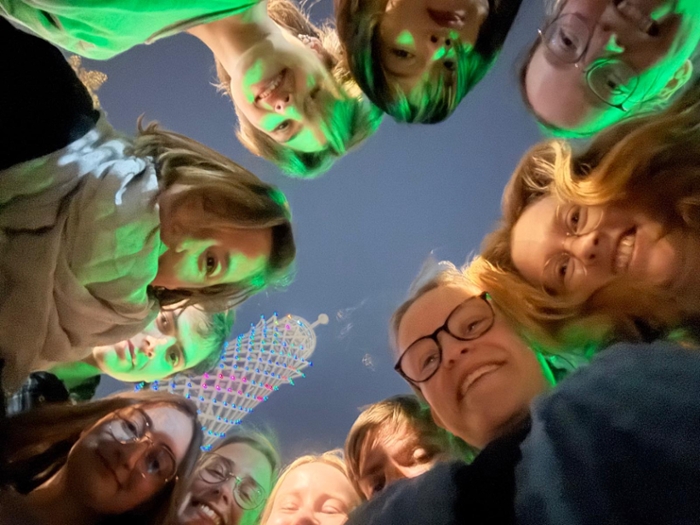
Our trip from Aswan to Cairo was a bumpy train ride, which only allowed some of us to sleep. We arrived on the 8th of January at 8 am and had a well-deserved resting day, which we filled with naps and laundry. In the evening, we went to the Cairo Tower. Unfortunately, the queue for going up the tower was too long, but we did enjoy a nice dinner at the foot of the tower. Zoé treated us to some wine on her last evening. We walked back to the northern part of Zamalek, where we all had to say goodbye. We are going to miss her in our close-knit group.
The next morning started early again because we had to meet at 8 at the passport office to receive the extensions for our visas, which we received after waiting for only about 20 minutes. The rest of the day, people still needed to recover from our long trip, and we slowly started working on kashkuls, papers, and presentations for the GARDEN (Graduate Annual Research Discussions on Egypt and Nubia) conference this Saturday. Some people also gathered to watch Olympic speed-skating in the evening.
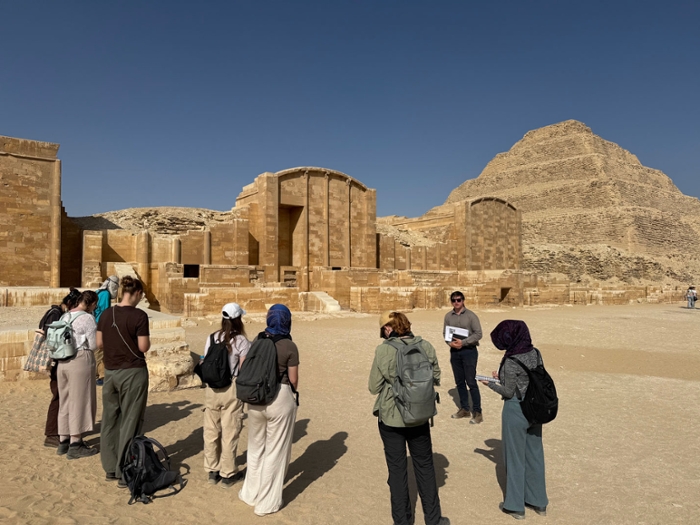
After our not-so-eventful tenth day, Wednesday was a lot busier. We arrived at 9:30 at Saqqara, where many time periods came together. Ariel first told us a bit about the 1st and 2nd Dynasty mastaba tombs. We moved towards the 3rd Dynasty gate of the enclosure wall of the Djoser complex, where Jelle gave his site presentation, telling us about the different building stages of the Djoser Pyramid, starting as a large mastaba. We went into the pyramid, and some even ran a circle in the Heb-Sed court. We also visited the exterior of the pyramid of Unas (unfortunately the entrance was closed when we arrived), some Old Kingdom tombs, and the New Kingdom tombs of Maya & Merit (which we from Leiden really enjoyed), Tiya, and Horemheb. Afterwards, we drove to the pyramid of Teti, where Dagmar had her site presentation. She showed us the different systems in the pyramid to prevent robbing, and the beautiful pyramid texts and star ceilings.
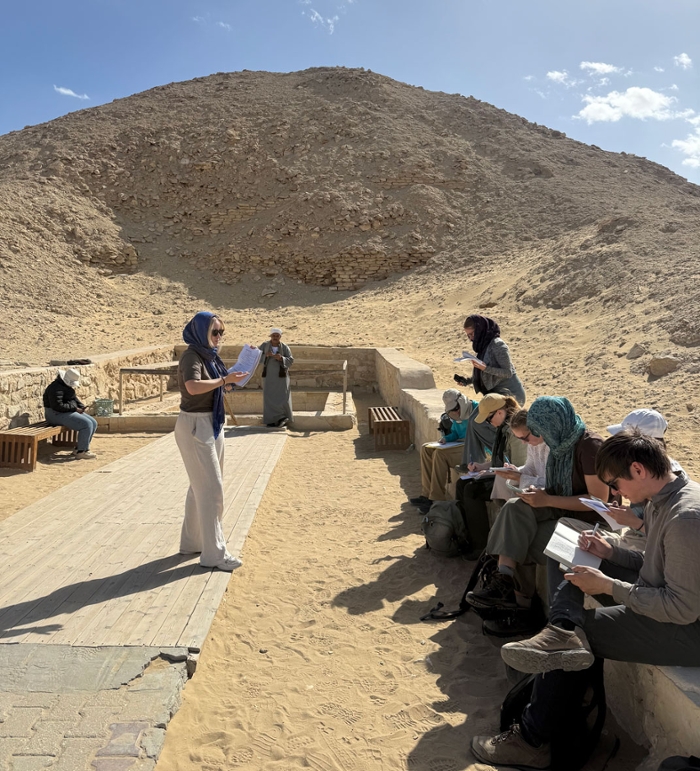
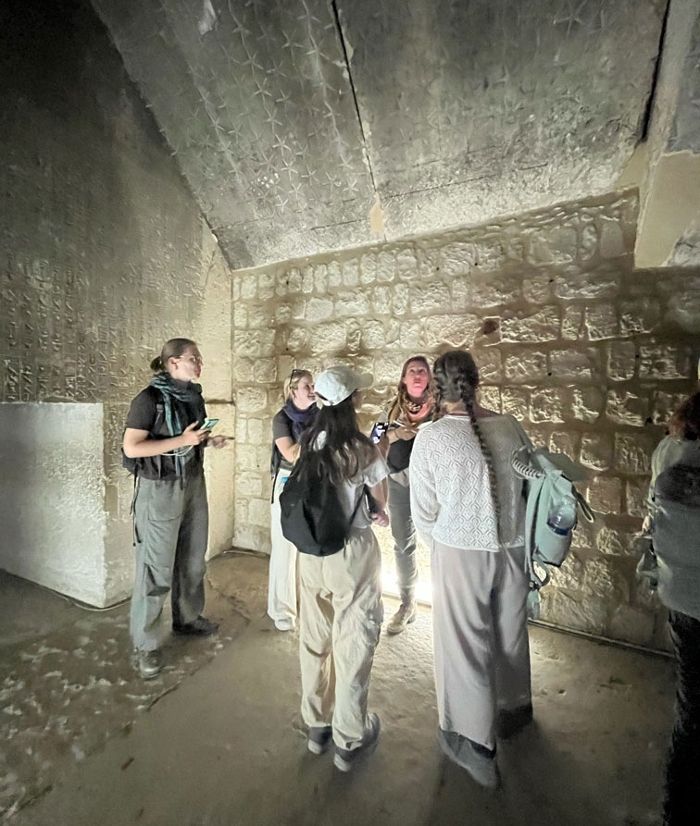
Then, we moved next door to the big tomb of Mereruka with his wife and son, where some nice images of (cute) animals were visible. Later on, we went to the Serapeum, where we were welcomed – completely in theme – by a group of dogs. In the Serapeum, we saw the big tombs of many Apis bulls and niches where stelae for the animal gods were once placed.
In the evening, we had a lecture at the German Institute by Dr. Lea Rees about the social topography of Dahshur, where she talked about different kinds of settlements – construction, elite, and priestly – and their place in the landscape, where desert, pyramids, tombs, and fertile land came together. We could see the Bent and Red Pyramid on the horizon during our trip to Saqqara today, so it was a nice and fitting end to a long day.
On Thursday, Ariel showed us her skills and interests by giving a beginner’s course on epigraphy. We had already gotten some information earlier from Brett McClain at Chicago House, but it was fun to get to know more about the process of epigraphy and its evolution, such as a slow transformation from analogue to digital drawing and collation. During the rest of the day, most of us studied. At night, there was a lecture at the NVIC from Daan Smets about the milling business from the Middle Kingdom through the Greco-Roman Period. Friday was the weekend, but we all had enough to do with GARDEN around the corner and the deadline for our papers creeping up.
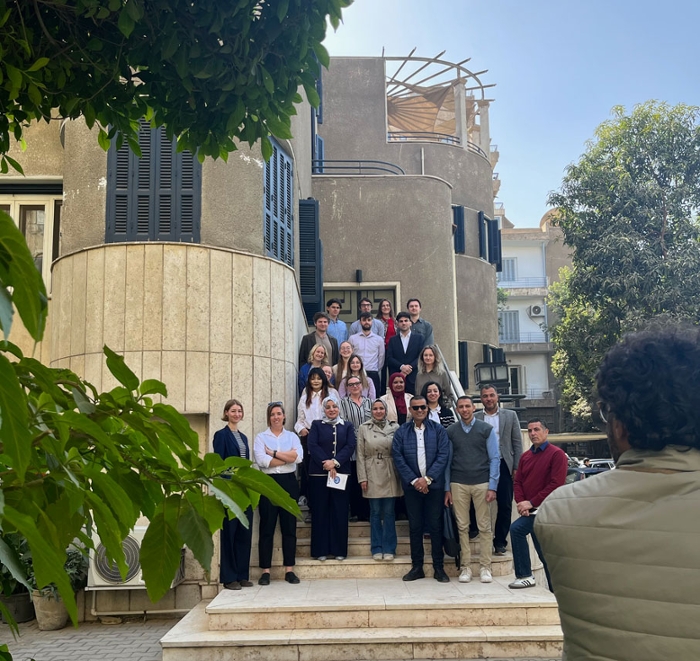
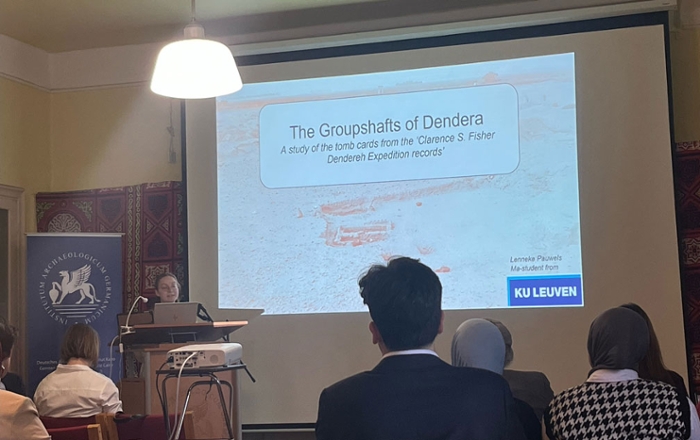
Saturday, Valentine’s Day, was not a day of relaxing, for the much-anticipated GARDEN XI conference took place at the German Institute. Of our group of nine students, three gave talks, and four presented posters during lunch break. Lenneke started the day off with an interesting presentation on the group shafts in Dendera, showing us the challenges of working with the archive of Clarence S. Fisher.
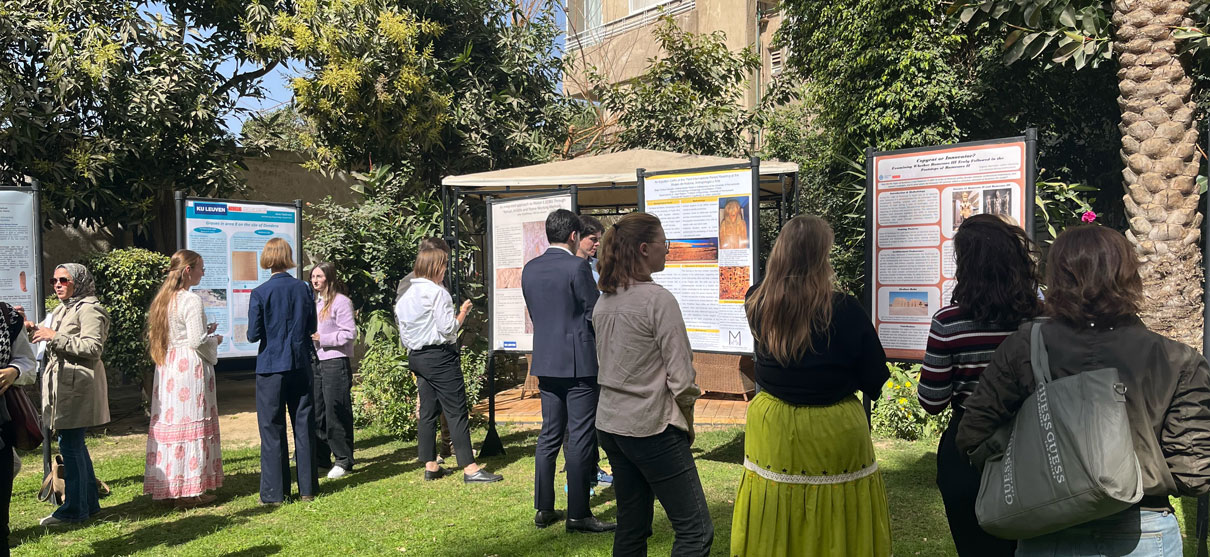
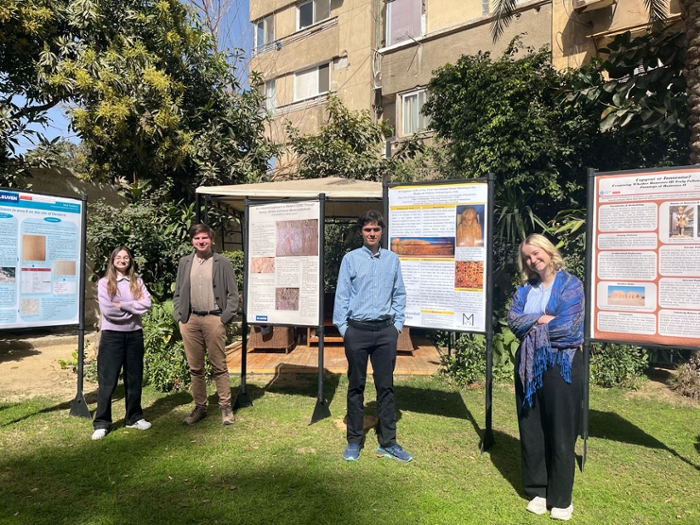
During the lunch break, our four poster presenters were getting ready to explain more about their work in the beautiful garden of the DAIK, while having to eat koshari at the same time. Our brave multitaskers made this happen and enlightened other students and colleagues.
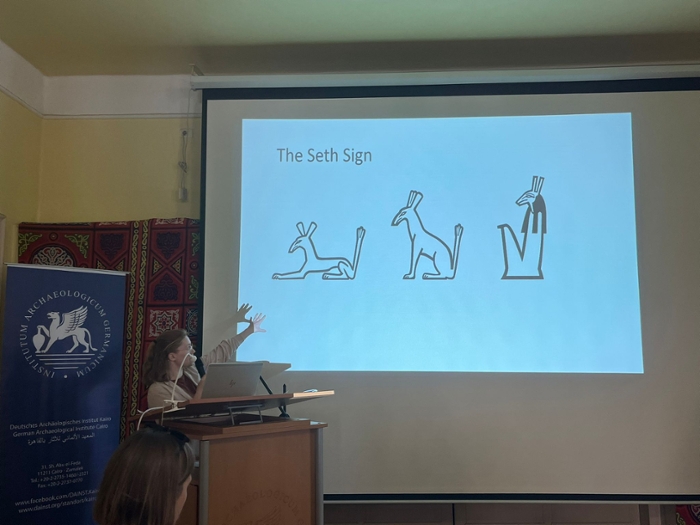
After lunch, Lena spoke about the semantic ranges of the Seth sign in Hieratic texts, and she reminded us to keep looking at the original Hieratic texts – and not blindly trust transcriptions – for information might get lost otherwise.
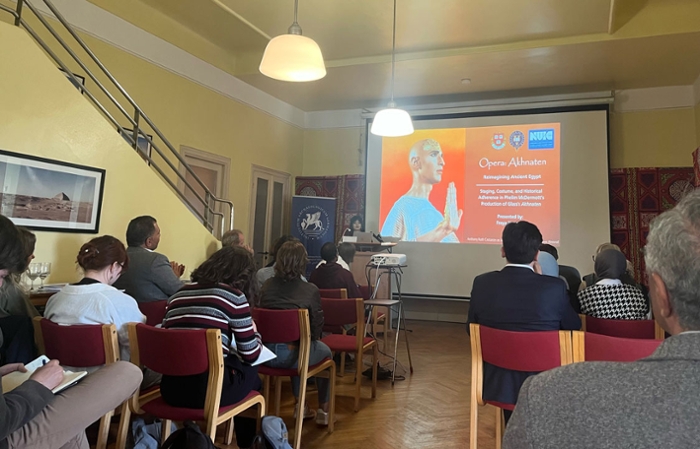
The last presentation of the day was from Freya, who discussed the more modern approach of ancient Egyptian elements in the opera Akhnaten, directed by Phelim McDermott. The rest of the afternoon, we all enjoyed the nice Aten rays.
Fieke van der Smagt