

Societal Transitions and Behaviour Change
Leiden researchers explore how behavioural insights can inform transitions in areas such as sustainability, security, and digitalisation. With strong expertise in governance, public administration, and global affairs, they analyse how individual behaviour, institutions, and policy interact — and how this understanding can guide fair and sustainable change. This work supports the development of evidence-based policies and innovations that enable societies to adapt responsibly to global transformations.
Stefan Ćetković

Institute of Political Science, Faculty of Social and Behavioural Sciences
Theme: Societal Transitions and Behaviour Change
Stefan Ćetković is an Assistant Professor of Environmental and Energy Politics and Policy at Leiden University’s Institute of Political Science. His research focuses on the governance of low-carbon energy transitions, exploring how political institutions, policy frameworks, and social actors interact to shape the pace and direction of climate and energy change.
Ćetković investigates how national and local governments respond to the challenges of decarbonisation, and how political, economic, and societal factors influence the deployment of renewable energy technologies. His comparative research, which includes case studies from across Europe, examines how institutions and collective behaviour drive or hinder sustainable transitions.
Within the Sector Plan theme Societal Transitions and Behaviour Change, Ćetković contributes insights into how policies and political systems can support the transformation toward more sustainable and resilient societies. His work highlights the political dynamics behind climate governance and the behavioural shifts necessary for achieving energy transition goals.
Before joining Leiden University in 2023, Ćetković was a postdoctoral researcher at the Munich School of Politics and Public Policy at the Technical University of Munich. He earned his PhD in Political Science from the Freie Universität Berlin. His work has been published in leading journals including Journal of European Public Policy, Environmental Politics, and Energy Research & Social Science.
Gus Greenstein

Institute of Public Administration, Faculty of Governance and Global Affairs
Theme: Societal Transitions and Behaviour Change
Gus Greenstein is an Assistant Professor of Public Policy and Administration at Leiden University’s Institute of Public Administration. His research focuses on environmental governance, public administration, and policy studies in the context of climate change and international development. Drawing on both quantitative and qualitative methods, he examines how organizational structures, management practices, and institutional dynamics shape the performance of public agencies.
Within the Sector Plan theme Societal Transitions and Behaviour Change, Greenstein’s work contributes to understanding how public institutions and international organizations adapt to the social and environmental challenges of the twenty-first century. His research illuminates how bureaucratic systems, administrative capacity, and governance arrangements influence the effectiveness of environmental and climate policy across scales—from national to transnational levels.
Greenstein’s current and past projects address these issues in the context of deforestation control in Brazil, World Bank environmental policy, and the allocation of U.S. development assistance, among other areas. His work advances insights into how institutional change occurs within complex governance systems, and how policy design and administrative structures can support sustainable and equitable transitions.
He serves on the Steering Committee of the European Consortium for Political Research (ECPR) Standing Group on Environmental Politics, is a Research Fellow of the Earth Systems Governance Project, and a former Research Fellow at the School for Advanced International Studies (SAIS), Johns Hopkins University.
Before joining Leiden University, Greenstein worked as a consultant and research analyst for the World Bank Environment Practice, World Bank Independent Evaluation Group, The Brattle Group, International Rivers, and Conservation Strategy Fund. As a Thomas J. Watson Fellow, he conducted fieldwork across South and Southeast Asia, sub-Saharan Africa, and Latin America on the social and environmental impacts of large hydropower projects.
He holds a PhD from Stanford University’s Emmett Interdisciplinary Program in Environment and Resources, an MPhil in Development Studies from the University of Oxford, and a BA in Environmental Studies from Amherst College.
Radhika Gupta

Institute of Cultural Anthropology and Development Sociology (CADS)
Theme: Societal Transitions and Behaviour Change
Radhika Gupta is an Assistant Professor of Cultural Anthropology at Leiden University. Her research explores how minority communities in the border regions of South Asia experience belonging, security, and change in their daily lives. Her book Freedom in Captivity: Negotiations of Belonging along Kashmir’s Frontier (Cambridge University Press) ethnographically examines the affective attachments, ethical orientations, and political claims-making among Shia Muslims living along the strategic geopolitical India–Pakistan border in Kargil .
Within the Sector Plan theme Societal Transitions and Behaviour Change, Gupta’s work contributes to understanding how people adapt to geopolitical, social, and environmental transformations. She leads the ERC Consolidator Project Entangled Universals of Transnational Islamic Charity, which investigates the role of Islamic charitable networks in addressing global crises through embedded practices of care and solidarity.
She also collaborates in the interdisciplinary LDE Seed Grant project Beyond Remittances, studying how diaspora communities respond to crises in their countries of origin, and conducts research on heritage and climate governance in the Himalayas. Through these projects, Gupta connects anthropological insights to broader questions about social resilience, mobility, and environmental change.
Hsini Huang

Institute of Public Administration, Faculty of Governance and Global Affairs (FGGA)
Theme: Societal Transitions and Behaviour Change
Hsini Huang is an Assistant Professor at Leiden University’s Institute of Public Administration. Her research examines how governments and public organizations navigate technological and societal transitions, with a particular focus on the governance of innovation and the use of artificial intelligence (AI) in public decision-making. She investigates how human–AI collaboration shapes professional judgment, organisational behaviour, and public trust — core dynamics that influence how institutions and citizens respond to change.
Huang’s academic background spans public administration, digital governance, and science and technology policy. Before joining Leiden University, she served as an Associate Professor at National Taiwan University and as a Postdoctoral Research Associate at University College London. She holds a PhD in Public Policy from the Georgia Institute of Technology.
Her recent work explores how digital transformation can act as both a catalyst and a barrier to behavioural change within public institutions. For example, she examines how civil servants’ perceptions of AI evolve through exposure to digital governance training, showing that such interventions can function as “synchronizers” that build shared understanding or as “amplifiers” that reinforce existing divisions. These insights are crucial for designing governance systems that support adaptive behaviour and collective problem-solving in times of societal transition.
Within the Sector Plan theme Societal Transitions and Behaviour Change, Huang brings an institutional and governance perspective to understanding how public organisations adapt, learn, and innovate amid complex social and technological shifts. Her research contributes to developing evidence-based approaches that help institutions and communities respond more effectively and equitably to major societal transitions.
She is an active member of the Hague Centre for Digital Governance, where she collaborates on interdisciplinary research into digital transformation, public trust, and the future of governance.
Marc-Lluís Vives Moya

Institute of Psychology, Faculty of Social and Behavioural Sciences
Theme: Societal Transitions and Behaviour Change
Marc-Lluís Vives is an Assistant Professor in the unit of Social, Economic, and Organisational Psychology at Leiden University. His research explores how people perceive and respond to uncertainty, and how these cognitive and emotional processes shape behaviour, decision-making, and adaptation during societal transitions.
Within the Sector Plan theme Societal Transitions and Behaviour Change, Vives studies the mechanisms that influence behavioural resilience and emotional regulation in the face of uncertainty. His current project, The Joy of Perfect Predictions, investigates how people extract extra value from nailing their predictions of the environment — a question that has implications not only for clinical interventions but also for understanding how individuals adapt to the uncertainty during social change.
By combining insights from cognitive neuroscience, social psychology, and computational modelling, Vives aims to identify the psychological foundations that enable or hinder people’s capacity to adjust in dynamic and unpredictable environments. His interdisciplinary collaborations with cognitive scientists and clinical psychologists contribute to developing more effective strategies for promoting behavioural flexibility and mental well-being in times of uncertainty and transition.
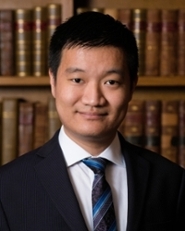
Yuan Yi Zhu
Institute of Political Science, Faculty of Social and Behavioural Sciences
Theme: Societal Transitions and Behaviour Change
Yuan Yi Zhu is an Assistant Professor of International Relations and International Law at Leiden University’s Institute of Political Science. His research explores the historical and legal foundations of the modern international order, focusing on how ideas of sovereignty, statehood, and law have evolved across time and regions.
His current work examines the legal and political rules governing the extinction and transformation of states, as well as the adaptation of sovereignty norms in new domains such as cyberspace. Zhu’s research bridges international relations theory and international law, offering insights into how institutions and norms shape global political behaviour.
Within the Sector Plan theme Societal Transitions and Behaviour Change, Zhu contributes a historical and legal perspective on how global governance systems adapt to change. His work highlights the long-term processes through which international norms are created, contested, and reinterpreted—insights that are essential for understanding today’s shifting world order.
Zhu’s scholarship has been recognised with several awards, including the International Studies Association’s English School Junior Scholar Award and the Asian Society of International Law’s Young Scholar Prize. His work has been cited in the British and Canadian parliaments, and he regularly writes for publications such as The Spectator, The Telegraph, and The Times (London).
He is also a Research Fellow at Harris Manchester College (Oxford), a Research Associate at the University of British Columbia’s Centre for Constitutional Law and Legal Studies, and a Senior Research Fellow at Policy Exchange.