How do you pay attention to the world?
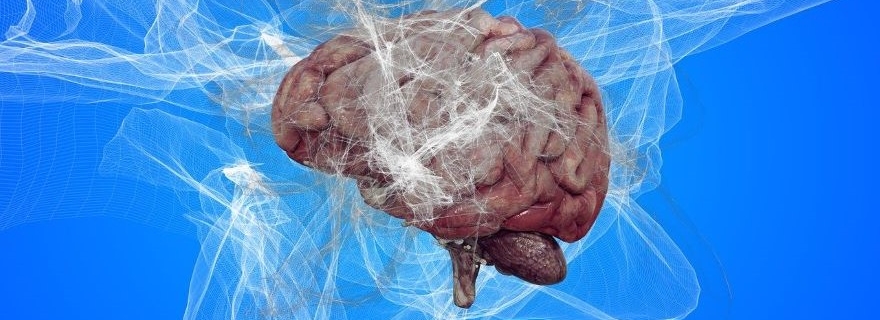
British psychiatrist and author Iain McGilchrist argues in his books The Master and His Emissary* and The Matter with Things** that the two hemispheres of our brain operate in fundamentally different ways. In our current cultural moment, he argues, the way of attending to the world associated with the left hemisphere, the ‘emissary’, has become dominant.
We analyse things in isolation, we categorise them, grasp and control them, and focus on what is known and predictable. At the same time, the right hemisphere, the ‘master’, has lost its primary role: attending to the broader, living reality by focusing on the whole, on experience, encounter, understanding, meaning, value and openness to the unknown.
McGilchrist’s concern is not that one hemisphere is good and the other bad. We need both. But when the left hemisphere becomes dominant, we lose a great deal; our representations of the world become more important than the reality they represent. We may think that we have become masters of our world, while losing sight of why we are doing the things we do, what it all means, and what really matters.
This made me think of International Studies.
Our programme tries to incorporate both ways of paying attention to the world. Yes, we ask you to analyse, categorise, construct arguments and demonstrate your grasp of the material. But we also ask you to look beyond isolated facts and arguments: to understand context, relationships and meaning. You have all specialised in a region, but we have asked you to understand local developments in a wider global context. And understanding a region also means understanding its people, which is why we believe culture, history and language are so important.
And then there is the perhaps most important element of our programme: the international classroom. A place where people from different backgrounds and with different worldviews meet. A place where you learn not only to discuss, but also to listen, to encounter people and perspectives different from your own, and to understand each other.
We hope that this is one of the things International Studies has given you: not simply knowledge about the world, but a particular way of paying attention to it. Getting both the left and the right hemisphere to do their work.
So we would like to ask you: has it?
Has studying International Studies changed the way you look at the world? Has it helped you to understand people, cultures or events differently? Has something you learned in the programme stayed with you in your professional or personal life? Did we actually manage to activate both your hemispheres?
We would love to hear your story. You can send it to me at j.kamphuis@hum.leidenuniv.nl. You can follow the format of the Alumni Dreams, where we have collected many of your stories already (and if you are already part of the Alumni Dreams, please give us an update), but any format is fine. Let us know how you are doing, how International Studies has shaped the way you pay attention to the world, and, if you like, what you would say to current or prospective students.
We hope to hear from you!
Jaap Kamphuis
Programme Manager International Studies.
* Mcgilchrist, I. (2019). The master and his emissary: The divided brain and the making of the western world. Yale University Press.
** Mcgilchrist, I. (2021). The matter with things: Our brains, our delusions, and the unmaking of the world. Perspectiva Press.