Tips for the winter break 2025-2026
As we wrap up the semester and prepare for a well deserved break, it is that time of the year again when we exchange recommendations to read, watch and listen our way through the dark days. Do not forget to support your local bookstore, such as De Kler, Kooyker, Paagman or the equivalent in whatever town you will be spending the holidays. Or borrow your books form the library.
Maria Gabriela Palacio Ludeña, lecturer Economies: Latin America
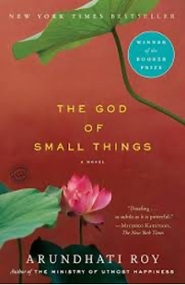
For the winter break, I would like to recommend a book that is not recent, but that I return to whenever I need something that gently opens a crack in my heart and helps me inhabit the present moment more fully. The God of Small Things by Arundhati Roy remains, for me, an extraordinary invitation to hold sadness, beauty, pain, poetry, and the mundane all at once. It does not offer comfort in an easy way, but rather cultivates a kind of attentiveness to everyday life, memory, and injustice that feels deeply relevant to our current moment. It is especially meaningful for students of International Studies because of how it weaves together intimacy, politics, colonial legacies, and social hierarchies without separating the personal from the structural.
Second, for those staying in the Netherlands in January, I would warmly recommend The Opera Circus by OPERA2DAY. This production brings together music by Handel, performed on period instruments, with elements of circus and highly visual theatre. It draws inspiration from Baroque theatrical traditions, where music, gesture, movement, and spectacle formed a single expressive language. By combining historical aesthetics with contemporary performance, the production offers an accessible and engaging way of experiencing opera not as a distant or elite art form, but as something playful, embodied, and collective. For students, it can be an interesting way to reflect on how cultural forms travel across time and how historical sensibilities continue to speak to the present.
Mike Schmidli, lecturer History: North America
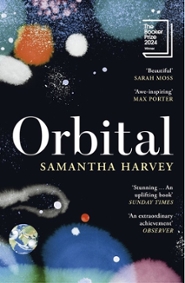
I recently read Orbital by Samantha Harvey. It's a marvelous little novel that explores what it means to be human through the eyes of four astronauts and two cosmonauts circling the earth. I am in awe of a writer who can do so much—and make me think so deeply—in less than 150 pages.
Thanasis Stathopoulos, lecturer Politics and International Relations
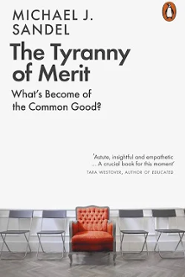
The Tyranny of Merit, by Michael Sandel
I would recommend almost everything by Michael Sandel, if you’re interested in political philosophy in general, and justice or ethics more specifically.
This book takes aim at the comforting idea that success is simply the result of talent and hard work. Sandel carefully unpacks how meritocracy, rather than creating fairness, has produced humiliation for those left behind and moral arrogance among the “winners.” By tracing how educational systems, markets, and political rhetoric reward credentialism while eroding solidarity, he shows how resentment and populism thrive in societies that claim to be merit-based. A sharp and accessible read for anyone wondering why inequality feels not only unjust, but deeply personal—and what a more humane understanding of dignity might require.
In the Garden of Beasts, by Erik Larson
This historical narrative follows the American ambassador to Nazi Germany and his family as they settle into Berlin during Hitler’s early years in power. Through diaries, letters, and meticulous research, Larson shows how ordinary life continues alongside the gradual normalization of brutality, denial, and political blindness. What makes the book unsettling is not the presence of monsters, but how long so many observers—including diplomats—failed to grasp what was unfolding before them. A compelling read for anyone interested in how authoritarianism takes hold quietly, while the world hesitates to name it.
When breath becomes air, by Paul Kalanithi
What happens when a neurosurgeon, trained to confront death in others, is forced to face his own mortality? Kalanithi writes from within the unraveling of a life interrupted by terminal illness, reflecting on medicine, literature, ambition, and the search for meaning when the future collapses into the present. A highly moving book for anyone grappling with finitude, purpose, and what makes a life worth living when time runs out.
Goldfinch, by Donna Tart
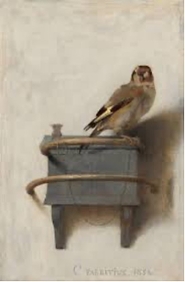
This novel follows a young boy whose life is shattered by a terrorist attack in a museum, after which he impulsively takes a small painting that will haunt him for years to come. Tartt weaves grief, guilt, and longing into a coming-of-age story that moves between loss and beauty, chaos and obsession. ‘Bonus point’: you can enjoy Goldfinch, the painting, if you visit Mauritshuis in The Hague!
Jaap Kamphuis, programme manager International Studies
I recently listened to a very moving podcast about death, but it's only available in Dutch: Waarom we de dood moeten herwaarderen. It may not be a very cheerful topic for Christmas, but I think it is worthwhile because it is about something we all (will) have to deal with. It gives words to that experience, allowing us to more easily share it with others. Especially at a time when we're talking about new life, it's okay to pay attention to the other side of life as well.
For those who feel like delving into complex literature about how we see the world and how that relates to our two brain hemispheres, there is The Master and his Emissary or, for the real nerds, the two thick volumes of The Matter with Things. This is not the familiar psychology of the cold ground about a “male” and a “female” brain hemisphere, but serious neuropsychological research with attention to consequences in our culture, philosophy, etc.
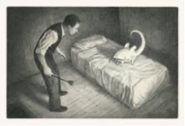
And then, for something a little more light-hearted, I would recommend The Arrival, a wordless graphic novel about a man who leaves his family and his country behind to emigrate. The images provide a wonderful insight into the life of a migrant.
Nathaniël Linssen, subject librarian for International Studies
Who’s afraid of gender? by Judith Butler. Butler’s newest book is urgent and approachable; I read it in just a few days, despite it not being the slimmest volume produced. It's lighter reading than some of Butler’s other works and not strictly speaking an academic text at all. It’s a clear and direct work that refers to news stories, public figures and the mass consciousness it produces, and showcases that the hysteria and debates about gender aren’t abstract or theoretical. The narrative produced is directly affecting people’s rights and lives, and is becoming ever more inflammatory and dangerous. What becomes poignantly clear from their writing is how the hostility towards gender-diverse people is deliberately created; the targeting of an extremely marginalized group also showcases an important-to-recognize mechanism of authoritarian and fascist regimes. It’s likely a tough read for gender-diverse and transgender readers and empathetic allies, as it so clearly lays bare the intentional mechanics of hate. However, it’s an important read for anyone who wants to understand why trans people are targeted, and why now.
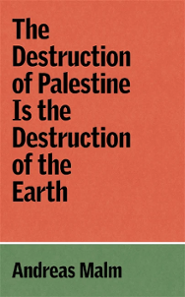
The Destruction of Palestine is the Destruction of the Earth, by Andreas Malm. Malm’s book is a quick but unsettling read. It is more of an essay than anything else, but no less important for it. Malm argues that Israel’s destruction of Gaza and its people is not only a humanitarian disaster but also an environmental one. He draws a clear connection between the violence of settler colonialism and fossil-fueled warfare. Malm writes in a persuasive manner, and seamlessly connects history, politics, and ecology in an approachable way. It’s a sobering and enraging read, and yet another important book that shows how colonial domination and ecological collapse reinforce one another.
Les Misérables (2019) Les Misérables (2019) - IMDb
This movie is raw, violent, and emotional. A European movie about police violence, classism, and racism. The injustices depicted are not abstract; they are immediate and infuriating. You cannot look away, and as a viewer you are forced to sit with the moral compromises, power abuse and violence that define the life in the banlieue. It is a deeply unsettling watch and a brilliant film.
*Nathaniël Linssen is subject librarian for various programmes, including International Studies. Students and staff can approach him with library questions and acquisition requests (for the latter, fill in a request form).
Judith Naeff, lecturer Culture and Language: Middle East
With our MENA reading club we read the novel Enter Ghost by Isaballa Hamad this Summer, which follows a Palestinian British actress who decides to participate in a Palestinian production of Shakespeare’s Hamlet.This novel is very impressive because it accomplishes many different things at once: it gives insight into the fragmentation of the Palestinian people on a very personal and humane level: the 48 Palestinians living in Israel, the Palestinians of the West Bank navigating varying restrictions across Area A, B, C and D, and Palestinians from the diaspora and their complex relation to the land (the novel doesn’t involve Palestinians in Gaza or from the camps). It plays with Shakespearean themes of staging, politics, power and vengeance. And it is a well-written novel about love, loss, migration and family relations - all of this without ever becoming contrived. Want to join our informal online reading club? You can sign up by sending an email to j.a.naeff@hum.leidenuniv.nl .
Following up on my tips for well-narrated audio documentaries at the intersection of music and international politics (Wintertips 2023), I would like to recommend the new 12-episode podcast Fela Kuti: Fear No Man from Jad Abumrad (Radiolab), a deep dive into the life and legacy of Nigeria’s musical legend and rebel Fela Kuti. The series Dolly Parton’s America from the same maker is also really worth listening, especially for students of the North America track.